Kojima tells his story through memes in a book
Childhood, loneliness, libraries from MGS to Death Stranding
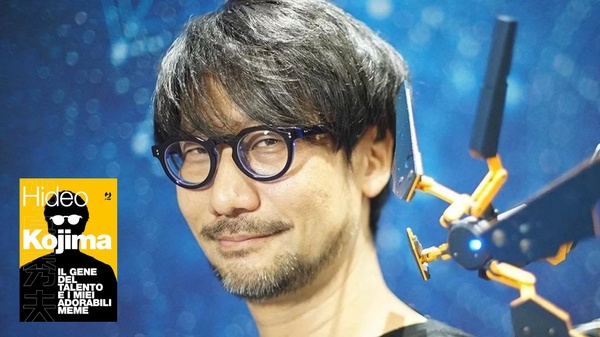


Kojima was a meme before the word meme could be freely uttered in public, in places frequented by other human beings, without eliciting looks of bewilderment or pity. Perhaps, before him, many of his games were too. Snake hidden in a box, Fatman on rollerblades, the game that reads the content of the memory card and comments on it are situations cited and re-enacted in endless online discussions. But with the announcement of every new MGS, in every video game forum (like the ancestor of social media, for the younger ones) on the planet, Kojima's quote would inevitably pop up, taken at random from one of the numerous occasions when he would have sworn to the press that this would be his last Metal Gear Solid before dedicating himself to something else. Reading The Gifted Gene and My Adorable Memes, a collection of essays written by Hideo Kojima himself, I learned that the Japanese game designer has his own idea of what a meme is, but also (among many other things) that those statements were sincere and that Death Stranding was already vaguely forming in his head back then.
The Gifted Gene and My Adorable Memes, a book by Hideo Kojima
Programmer, screenwriter, game designer, producer, entrepreneur, director, showman, and (perhaps involuntary) frontman of the video game industry: among Hideo Kojima's many talents, the least known is that of a writer. Between 2007 and 2013, Kojima collaborated with two different Japanese magazines, writing a regular column of criticism. First for Papyrus, an art and culture magazine that covers various aspects of Japanese life: here Kojima writes about his great classics, songs, books, films, or even concepts that have influenced his personal growth. Then for DaVinci, a monthly literature magazine, where he reviews books ranging from current releases to volumes read in the past that have shaped his visions.
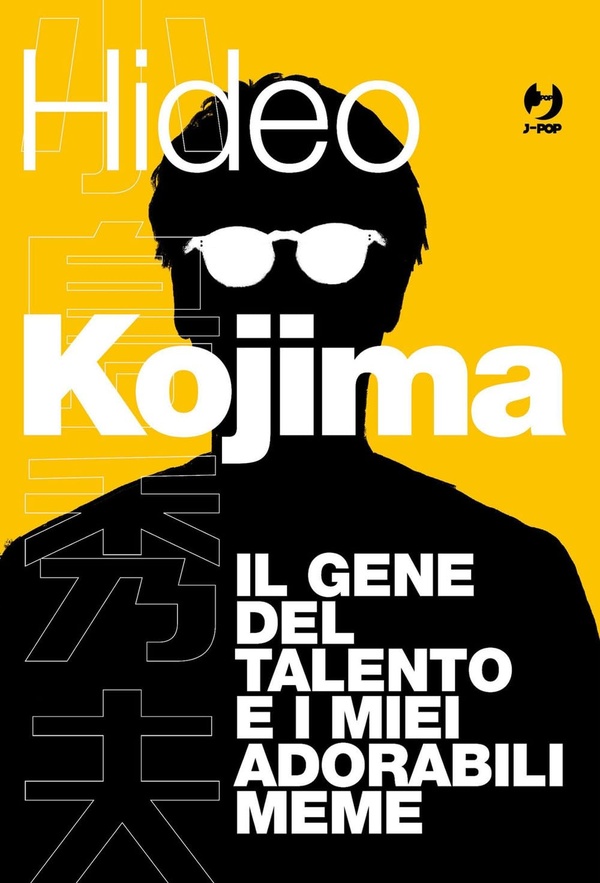
The Gifted Gene and My Adorable Memes is a collection of essays, specifically the articles published at the time, accompanied by an introduction and an afterword both penned by Kojima himself, as well as a dialogue between the author and Gen Hoshino (Japanese musician, actor, and writer), a very useful “Who's Who,” and a summary of the main works cited. However, a simple analysis of the table of contents does not at all convey the image of what the volume contains. Scattered among dozens of reviews and analyses is a subtle, underlying minimal autobiography of Kojima before the video game industry, snapshots that often serve as a starting point for the article in question and build a network of connections that runs through the entire volume. The usual Kojima.
The return of the volume to bookstores with a new edition published by JPop (which had already brought the volume to Italy under the brilliant 451 label in 2021) obviously takes advantage of the long wave of the recent release of Death Stranding 2, but it is also a truly useful tool for understanding where his often cryptic video game production originates.
Memes according to Kojima
The idea of a meme that Kojima refers to (which is also the same as the concept of internet-era memes) is the formulation elaborated by Richard Dawkins, who defines a meme as an idea, a behavior that spreads through imitation across a culture. It is a minimal unit of culture, transmissible: in their intentions and descriptions, memes are, in short, the cultural equivalent of genes (understood as the basis of genetics), that part of us that we transmit to new generations, and they function roughly in the same way.
Kojima unconsciously began collecting his memes as a child, discovering reading on his own by picking up a mystery novel in a bookstore, by chance, almost an act of rebellion against his parents' countless attempts to push him to read. He grew up with house keys in his pocket, returning home alone after school and filling the house with voices from the TV to ease the grip of loneliness. The latter, loneliness, represents the common thread of Kojima's childhood, a condition that the author ultimately almost learned to accept by seeking elsewhere, often among library shelves, the exchange of ideas missing in his social and school life.
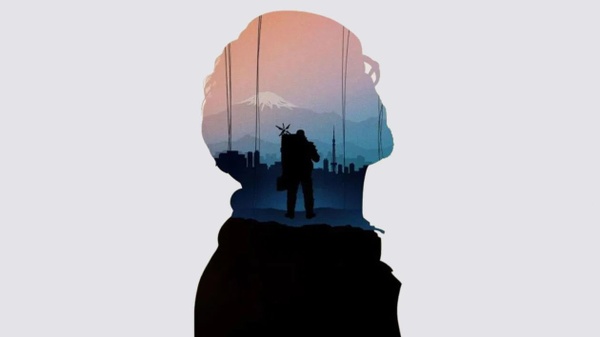
It is there that the fundamental idea of Death Stranding undoubtedly germinates, but it alone is not enough to fill an imaginary world. Through his relationship with culture, including foreign culture, Kojima also develops a particular bond with the stories he reads, but also with the abstract concepts that compose them, often reflecting on the modalities of their conclusions and on the differences in perception between author and reader. Excerpts from reviews, always referring to something else, but which build a theoretical trajectory through which Kojima's professional career can then be re-read and rediscovered.
Kojima is a measured, reflective writer, always calm in tone and in his (not so rare) judgments, never polemical, but moving from the philosophy that engaging with culture serves to refine intuition for the 10% of masterpieces that populate bookstores, he takes a far from fastidious approach, perhaps sometimes too indulgent, but effective in finding a meme within almost every work. The measure in his writing is also expressed through the simplification of concepts, which pass through simple, short sentences, devoid of unnecessary complications. In the background, then, small details of daily Japanese life emerge, habits as well as works, which constitute a further level of discovery granted by the volume.
What The Gifted Gene and My Adorable Memes offers is certainly an opportunity to get to know a part of Kojima, albeit mediated by Kojima himself through his approach to writing, in which on the one hand he opens glimpses into his youth and personal life, while on the other he blunts his critical sense too much, giving the impression of offering in some cases a publicly presentable version of a more remote thought. It is, however, still a fairly unmissable opportunity (regardless of what one thinks of Kojima) to peek beneath the superficial statements of an author and discover anecdotes, episodes, and reflections through which his poetics were formed. In cinema, it often happens, perhaps in conjunction with press events related to a film's release, that a director gets lost in chats, interviews, or podcasts where working methods, choices, or perhaps modifications during production emerge. In video games (for a long list of reasons) it happens much more rarely, and our understanding of the medium unfortunately suffers. Of course, not all game designers could be part-time literary critics, like Kojima.
Similar articles