The Atomic Refuge: The End of Humanity in the Bunker of Secrets
In the new Spanish Netflix series, from the creators of Money Heist, a group of rich people takes refuge in an underground bunker at the outbreak of World War III.


World War III, long threatened, now seems imminent, as ineluctable as the rising sun the next day. The entire world holds its breath, awaiting what could be the first nuclear attack, poised to change the face of the planet as we know it.
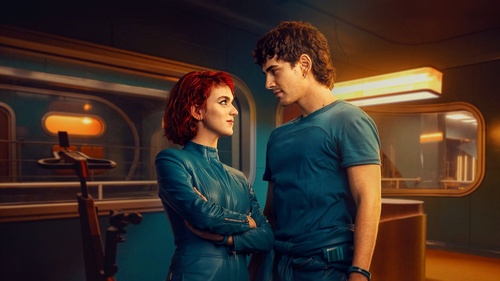
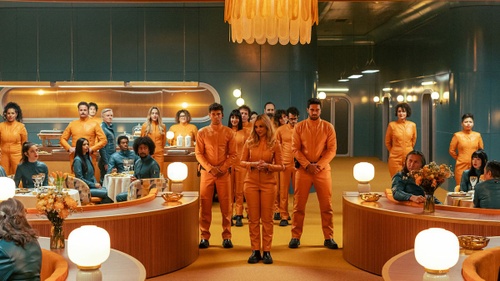
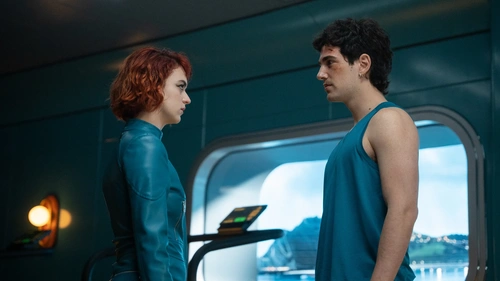
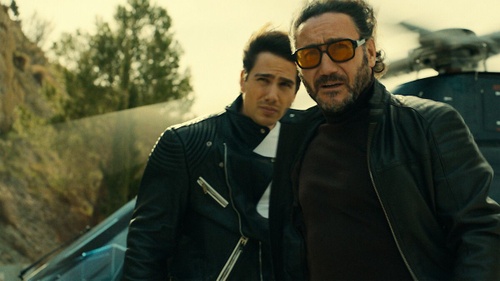
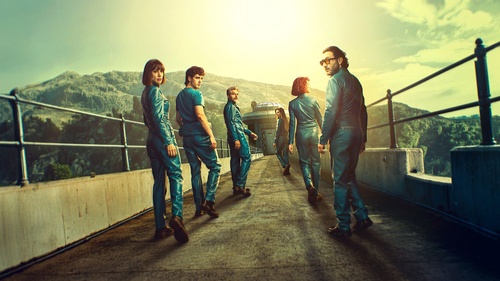
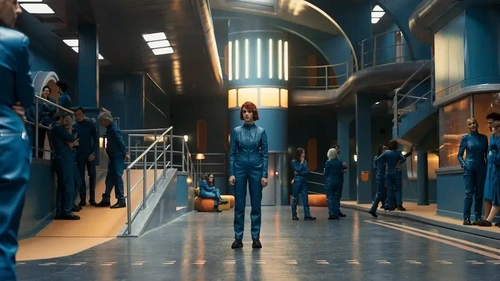
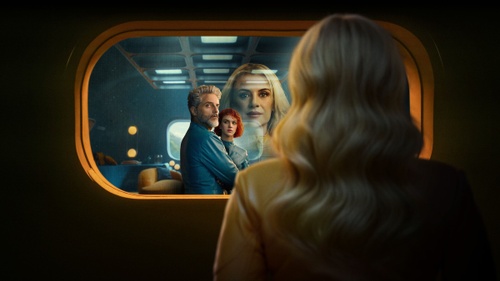
In this climate of global panic, some of Europe's wealthiest men and women decide to temporarily relocate to the so-called "Kimbala", the most exclusive and secure bunker ever built, which will protect them should the situation escalate. Among those who will reside in this very limited "underground resort", we find in particular two family units linked by a past tragedy: the disappearance three years prior of a girl in a car accident.
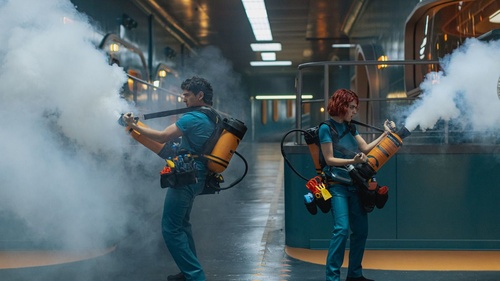
Serving these affluent guests is a highly qualified staff ready to execute their every command. But when the conflict truly erupts and the surface becomes a helpless stage for devastating nuclear explosions, the protagonists' fate becomes increasingly uncertain. And as they will soon discover, not everything is as it seems.
Gallery


The Atomic Refuge: Inside or Out
That not everything is as it seems is actually known to the viewer by the end of the first episode, with the sensational cliffhanger that changes all the coordinates on the table. If you want to maintain the right amount of surprise, we advise you to read this or other reviews only after watching it, as it is almost impossible to analyze the series without reckoning with said early plot twist.

The apocalypse has become, in contemporary audiovisual imagination, a privileged means to explore the moral cracks of our society, increasingly on the brink of the abyss. And if the specters of a new world war hover, more or less founded, even in reality, it is normal for the world of fiction to exploit the theme while it's hot, even with a playful approach as in this new Spanish series from the creators of the cult Money Heist. Will it be another golden goose for Netflix? Judging by the number of views in the first few days since its release, it seems like a winning bet, but after watching the eight episodes that make up the first season, we are not sure that such success will be lasting: the operation, in fact, though captivating, has more limitations than merits.
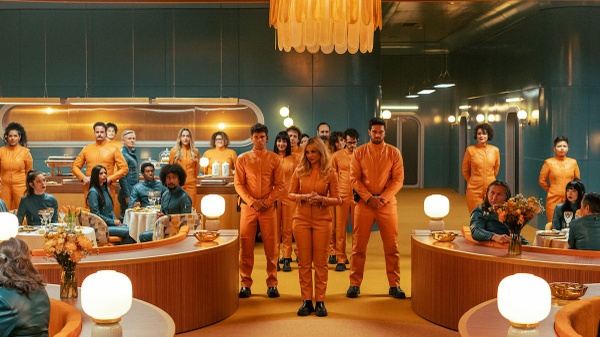
Yet the screenplay exploited a potentially fertile and idea-rich narrative territory, a kind of cross between the post-atomic drifts of Fallout and the sadistic game of Squid Game, where the presumed end of the outside world coincides with the emotional collapse of those who remained inside that isolated refuge, thus revealing the true nature of the human being placed in extreme conditions.
What Time Is the End of the World?
The series aims to narrate the nuclear holocaust not from the rubble above, but from what is collapsing below, with an approach that is at least morbid to the core group of main characters, mostly belonging to two distinct family groups and the members of that staff who hide everything behind an apparently impeccable facade. And already from here arise the first implausibilities, since to stage that mise-en-scène that chains the unwitting "prisoners" would have required such an amount of money that one wonders why anyone, in possession of such sums, should get involved in such an absurd and risky fraudulent enterprise.
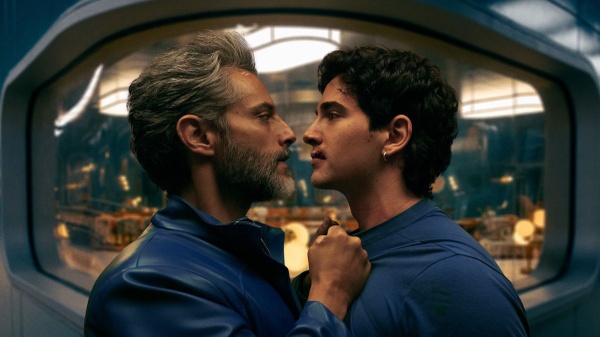
The problem is that the entire narrative construct relies on a series of contrivances that escalate, with the final episodes where the story definitively "goes off the rails", setting in motion an unstoppable sequence of human ugliness that is not repulsive in itself, but because of daring and unnecessary solutions that pit the various characters against each other. Secrets and betrayals that emerge casually, in the continuous search to shock a viewer who is overwhelmed by a series of atrocities, often related to the sexual sphere, that are ultimately meaningless. An experiment in grotesque cinema that aims to use satire as a scalpel to dissect the arrogance and emptiness of the elites, but instead brandishes a crude, gratuitous, and unjustified moral.
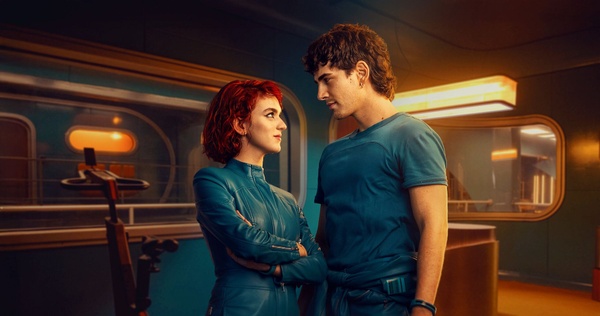
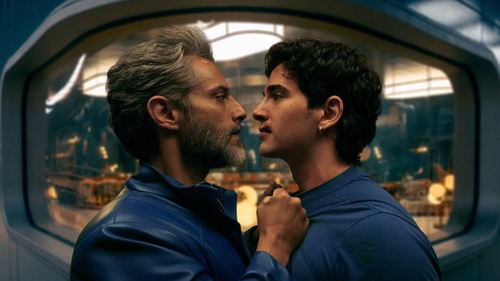
The hyper-technological luxury bunker is conceived not so much for survival, but for maintaining a lifestyle of opulence. Inside this gilded cage, equipped with a spa, restaurants, bars, and service staff, the end of the world is little more than a news report to watch on plasma screens, sipping champagne. The plot kicks into gear when this artificial ecosystem, based on a rigid hierarchy between those who pay and those who serve, begins to crack. The power dynamics of the outside world prove useless in a context where the only resources that matter are practical ones, and social tensions, long suppressed under a veneer of civilization, explode with violence both psychological and physical. Especially due to the deception into which these billionaires have been dragged, certainly financial geniuses but incredibly gullible in letting themselves be fooled with abnormal simplicity.
The Shades of the Apocalypse
After Russia's invasion of Norway and NATO's retaliatory attack on St. Petersburg, a scenario we hope remains purely fictional, panic erupts in that microcosm which becomes a hotbed of lies and mysteries, even though the audience itself is informed, as mentioned, almost immediately about how things actually stand. Perhaps curiosity could have been maintained longer, and in doing so, the management of the various relationships, some developing, others on the verge of breaking, could have proceeded more smoothly and cohesively. Here, instead, skeletons in the closet multiply non-stop, with an accumulation of situations bordering on the ridiculous, culminating in melodramatic scenes with a kitsch flair.
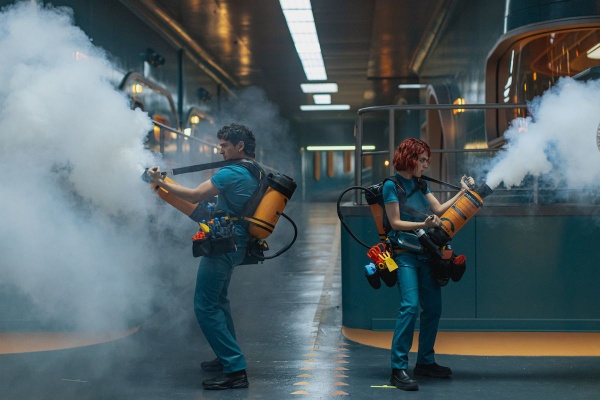
Psychological coherence is sacrificed in the name of momentary and immediate shock. The satire risks becoming too didactic in several passages, relying on dialogues that explicitly state concepts that were already widely understood. When it then tries to push the accelerator, as in the season finale where a myriad of key events are concentrated in an hour and ten minutes, it definitively overflows. An open ending, leading to a second season – not yet officially announced, but certain if the success meets predictions – that leaves much in suspense, but little that is truly captivating.
Gallery
Score
Editorial team
The Atomic Refuge: The End of Humanity in the Bunker of Secrets
Lock some of the richest people on the planet in an underground bunker, with the specter of a nuclear war – real or presumed – on the surface as a warning to stay down there, away from the outside world, for an indefinite period of time. Obviously, the situation will explode, even if The Atomic Refuge takes the premise too literally, concentrating skeletons in the closet within two family units that would have been enough for at least three or four times the number of characters. And here, amidst contradictions, secrets, jealousies, and betrayals, it matters little that the staff hides the enormous plot twist, which is instead revealed to viewers from the very beginning, since these stone-hearted billionaires with perpetually full wallets are the first to harm themselves. But more than a new Money Heist, here we are faced with a house of cards, ready to collapse at the first gust of wind, radioactive or not.
Similar articles