Nouvelle Vague – Linklater's Cinema in 2K
The birth of a cult classic, with a period-faithful negative and dual DTS lossless audio tracks
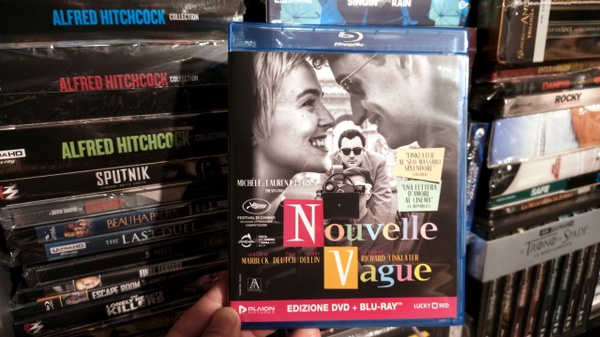


Richard Linklater undertakes a task that is anything but simple: to tell the story of the birth of Breathless without turning Jean-Luc Godard into an untouchable figure. The result is a work that observes the French director with great respect, but without giving up on showing his complex character and often unpredictable working method.
More than a traditional biopic, Nouvelle Vague becomes a journey into one of the most revolutionary moments in cinema history. Through the story of the set, the spirit of a generation that changed the way cinema was made emerges, constantly questioning existing rules.
A tribute that looks beyond the myth
Guillaume Marbeck offers an intense interpretation of Godard, avoiding mere imitation and conveying all the determination of the French filmmaker. Alongside him, Zoey Deutch as Jean Seberg and Aubry Dullin as Jean-Paul Belmondo contribute to credibly recreating the artistic atmosphere of the era, along with appearances by fundamental figures such as François Truffaut, Agnès Varda, and Éric Rohmer.
The black and white cinematography further enhances the immersion, recalling the aesthetic of the Nouvelle Vague without appearing as a simple exercise in style. More than celebrating a cinematic movement, Linklater reflects on the very meaning of filmmaking, showing how every artistic choice arises from the desire to push beyond what has already been done.
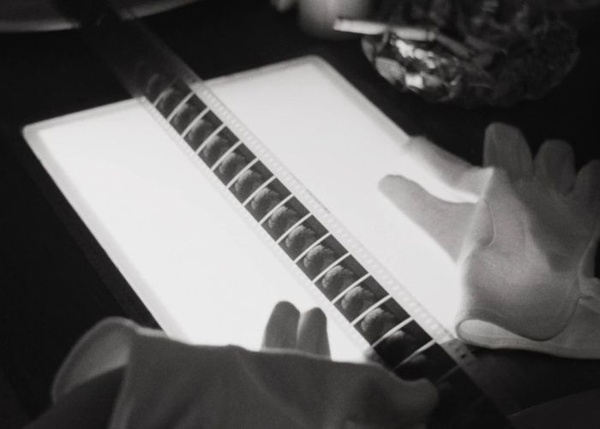
Shot primarily on analog film, remaining faithful to the B/W style of the era starting from the film stock: the Eastman Double-X 5222 is a 35mm panchromatic cinematic negative, introduced by Kodak in 1959 and still appreciated today for its classic rendition (Arricam LT, Arriflex 35-IIC). It offers a balanced contrast, wide exposure latitude, and a natural grain that delivers images rich in nuances. Also used in modern productions like Oppenheimer, it is often chosen to evoke the aesthetic of 1950s and 1960s cinema. There are also splices and reel change marks. Some elements were also shot digitally in 6K with a final 4K master.
In Nouvelle Vague, it contributes to recreating with great authenticity the look of that unrepeatable season of illuminated minds of the Seventh Art. Image format 1.33:1 (1920 x 1080/23.97p), AVC/MPEG-4 encoding on a single-layer BD-25. The slightly yellowish veil that pervades the entire work gives a wonderfully vintage touch; there are deliberately dirty and in some cases scratched frames. The "roughness" is an integral and constant part, with blacks having partially limited depth due to the type of film.
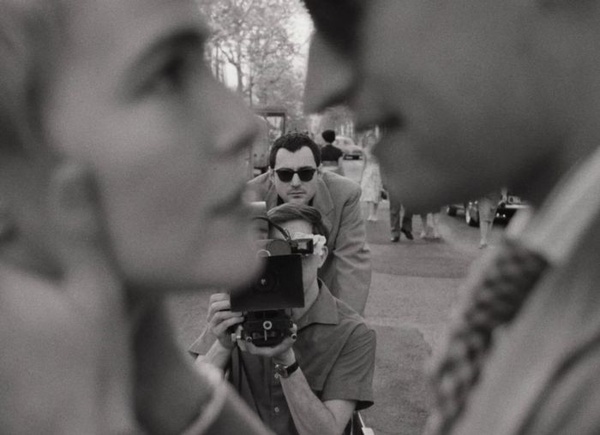
DTS-HD Master Audio 5.1 Italian and French (always 16 bit), some English inserts are subtitled. For a dialogue-centric work, multichannel listening is favored with echoes from the street and crowded environments, musical dynamics, and excellent dialogue from the center channel. The French track inevitably has an edge. Extras include the trailer; the amaray box includes the DVD edition.
Similar articles