The Drama will be compared to many films, but the one it most resembles is our own Perfect Strangers
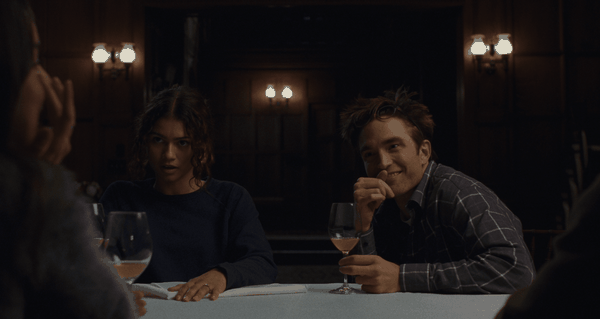
Zendaya and Robert Pattinson are grappling with the revelation of an unexpected secret that threatens to derail their marriage, revealed during a dinner with friends.*
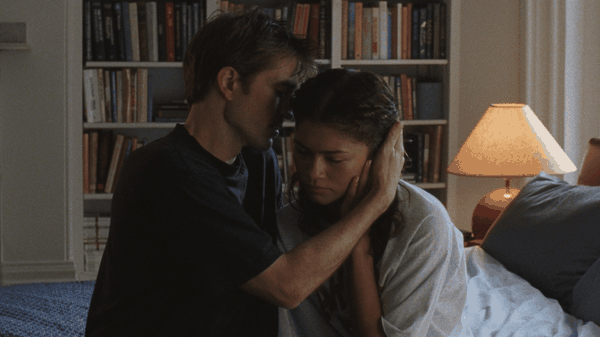


In the weeks leading up to the filming of The Drama, Norwegian director Kristoffer Borgli showed his protagonists Zendaya and Robert Pattinson a series of films that would serve as thematic compasses for the working group: Melancholia by Lars Von Trier on the disastrous marriages front, The Piano Teacher by Michael Haneke for how it handles a protagonist who reveals herself to be extreme in how and what she feels, and The Passion of Anna by Ingmar Bergman for the presence of a shocking secret that abruptly changes the film's direction. The Drama has nothing so important or disruptive to say to truly measure itself against the three epochal films with which he asked his protagonists to measure themselves, but it is aware of this, and this is its strength. It is a perfectly calibrated and managed film, aware but not complacent, which quite easily avoids some of the controversies it will be subject to because it knows and accepts that it will end up being divisive.
In the weeks leading up to the filming of The Drama, Norwegian director Kristoffer Borgli showed his protagonists Zendaya and Robert Pattinson a series of films that would serve as thematic compasses for the working group: Melancholia by Lars Von Trier on the disastrous marriages front, The Piano Teacher by Michael Haneke for how it handles a protagonist who reveals herself to be extreme in how and what she feels, and The Passion of Anna by Ingmar Bergman for the presence of a shocking secret that abruptly changes the film's direction. The Drama has nothing so important or disruptive to say to truly measure itself against the three epochal films with which he asked his protagonists to measure themselves, but it is aware of this, and this is its strength. It is a film perfectly calibrated and managed, aware but not complacent, which quite easily avoids some of the controversies it will be subject to because it knows and accepts that it will end up being divisive.
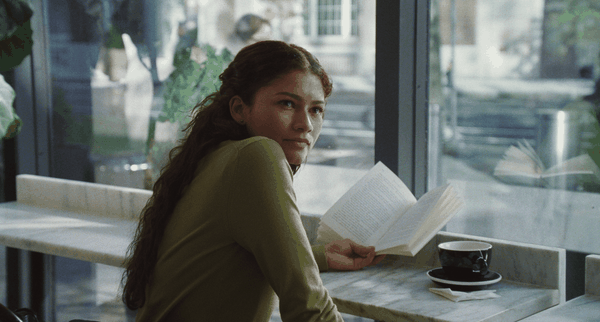
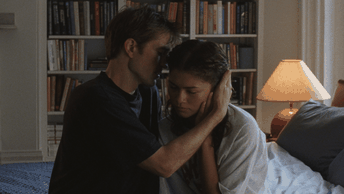
At the heart of The Drama are two moral issues: one is explosive. The other, however, questions how to find a balance between something long reflected upon and weighed, like one's own morality, with something profoundly instantaneous, irrational, and ultimately uncontrollable, like true love. This is the focal point of the film, which begins with the casual meeting between its protagonists and ends with a greater awareness of how one of the cornerstones of a lasting relationship is a compromise with one's own rationality. However, it risks being overshadowed by the other issue, the trigger that the protagonist unintentionally pulls during a conversation between friends, the fuse that the two fiancés try in every way to extinguish before it detonates on their wedding day.
Every good reviewer out there will not reveal what it is to the public prematurely: partly because it is the plot twist that the trailer announces but omits, partly because it is a well-conceived device, but it remains a device. The point of The Drama is the imbalances of a couple who love each other and discover a critical issue that jeopardizes their stability, much like what happens to all relationships that last long enough to get stuck on the rock of who the two people who now form a unit were before.
The Drama tells of privileged America that never truly accepts outsiders
Suffice it to say that Charlie Thompson (Robert Pattinson) is a museum curator who meets editor Emma Harwood (Zendaya) and, in a somewhat awkward and very constructed way, approaches and introduces himself. The two like each other, then fall in love, and finally decide to get married in an affluent and somewhat snobbish setting like Boston, one of the most European and upper-class cities in the United States. Beautiful, young, in love, and successful, the two are called to a high-level performance, so to speak: beautiful photos, a champion-level first dance, impeccable flowers, memorable wedding outfits. That's fine: they have the resources, qualities, and privilege necessary to spend so much time and social capital on this type of wedding preparation. This is despite both having a handicap, which positions them as outsiders in the privileged world they inhabit: Charlie is English and therefore a foreigner, Emma grew up in a very different cultural and social context in Louisiana and is perhaps even more foreign than him compared to the rich and brilliant friends the couple frequents.
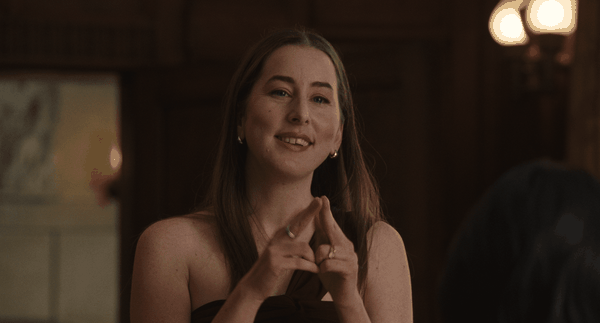
During a dinner preparing for the wedding banquet, thanks to excellent wine flowing freely between the future bride and groom and two already married friends (among whom a caustic, narcissistic, fantastic Alana Haim stands out), a kind of truth or dare is launched that forces everyone to say the worst thing they have ever done in their lives. Emma, who probably doesn't handle alcohol well or perhaps simply doesn't truly have the measure and sensitivity of a social context to which she doesn't belong, makes the mistake of being too sincere, launching a revelation that completely shuffles the situation. Shaken, confused, and scared by each other's reaction, Emma and Charlie, while remaining in love, begin to act as if the marriage is hanging by a thread, because perhaps it is.
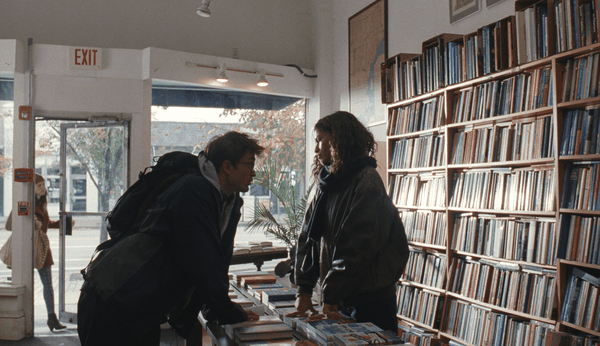
The Drama talks about how difficult it is to love who your partner was before you met them
The truth, this one indeed uncomfortable, in the debate that The Drama will generate (and which risks being even more compelling than the film) is that the initial question could, should be very different to achieve the same effect in another country, in another social context. It is artfully calculated to challenge certain moral assumptions we think we have and which we rediscover as potentially moralistic: the fact that the “culprit” of this something is a woman, an African American, someone not from an affluent class, puts us, the viewers, and the progressive characters of the film in difficulty.
However, one must be very prejudiced, if not hostile, not to notice how the film actually focuses on something else. For example, how the Charlie of the always remarkable Robert Pattinson is essentially a good guy whom life has never tested, revealing all his falsehood and cowardice. Emma, on the other hand, Zendaya's “culprit” (a “tough” side that she is starting to portray very well) is revealed for who she is precisely by how she doesn't shy away from confrontation, by how she doesn't hide behind the careful and passive-aggressive use of words.
A very amusing passage in the film sees Charlie confront his friend Rachel, immediately reading the truth in her carefully weighed words: a child “a bit slow” is someone with a mental disability who, thus defined, could cast a bad light on a woman who, from childhood, shows a deep aversion to the weakness of others. Especially when they put her in a position of having to “suffer” a minimal annoyance or harm, especially if caused by someone she doesn't recognize as truly belonging to her social circle.
As you may have gathered, The Drama is a film that should be watched with a profession of faith similar to marriage itself, deriving pleasure from the viewing, certainly, but also and above all from the subsequent discussion with friends and acquaintances. It is constructed with great care, scattering here and there all the revealing clues about the true nature of its protagonists, their weaknesses, the relationship between the sexes, within the couple and between couples. Perhaps the film it most resembles, in the end, is Perfect Strangers, whose title is also the summary of what Charlie and Emma feel on the eve of the ceremony.
Score
Editorial team
The Drama will be compared to many films, but the one it most resembles is our own Perfect Strangers
In summary, The Drama is a film built on a dramatic move that, compared to the Norwegian director's previous works (Sick of Myself, Dream Scenario – Have You Ever Dreamed This Man?), demonstrates greater awareness (of its capabilities, but also its limitations), without overdoing the length and complexity, maintaining its coherence and narrative tension until the end. Unlike many ambitious but disastrous films of this type that crowd the A24 catalog, The Drama is a very successful and enjoyable film precisely because it does not collapse under the weight of its own premises.
Similar articles