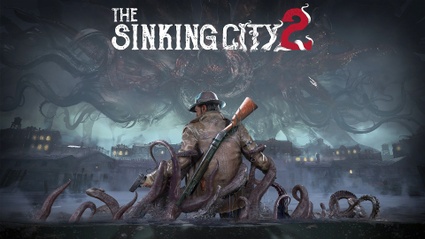
The Sinking City 2 Review: Frogwares Changes Genre Without Losing Its Identity
The survival horror is convincing, investigation truly fuels survival, and Arkham is rich with stories to discover. What's missing are characters capable of fully utilizing the world Frogwares has built.
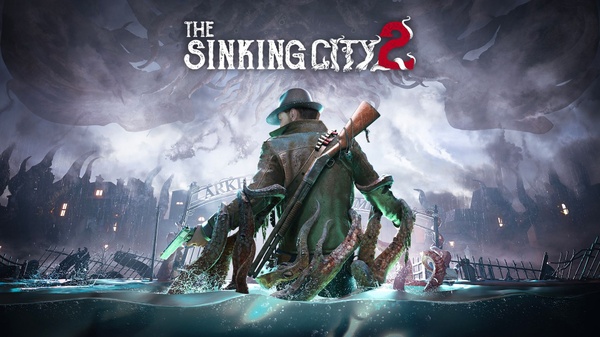


For much of its history, Frogwares has taught us that a clue is only truly useful when connected to something else. In their Sherlock Holmes games, and then in the first The Sinking City, observing a room, reading a document, or reconstructing a sequence of events meant slowly approaching the solution to a mystery. Combat existed, at least in the first The Sinking City, but it was rarely the main reason to keep playing.
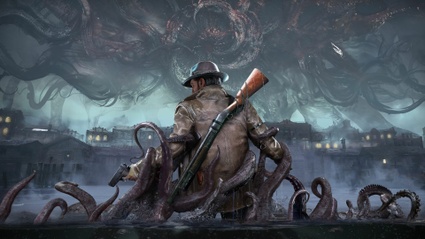
The Sinking City 2 partly reverses this hierarchy. Calvin Rafferty, the protagonist of this new adventure, traverses Arkham with an extremely personal goal: to find a way to save Faye, the woman he loves, who remains in a coma after the events that open the game. To do so, he won't be able to rely solely on deductions and insights, because this time Frogwares also puts a decent arsenal in his hands and asks him to learn how to use it.
Gallery
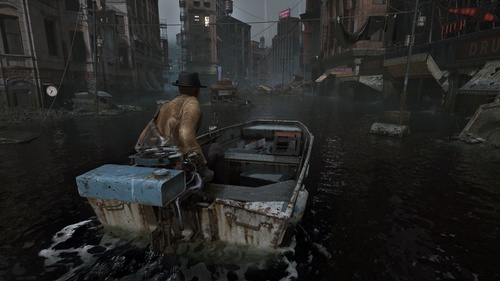
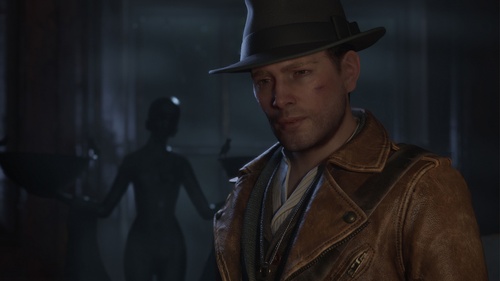
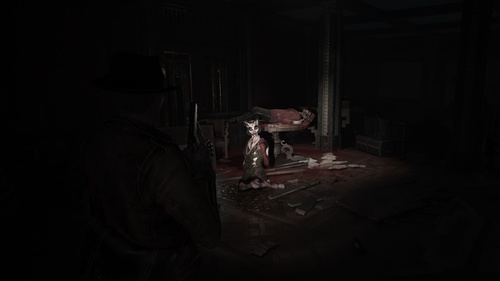
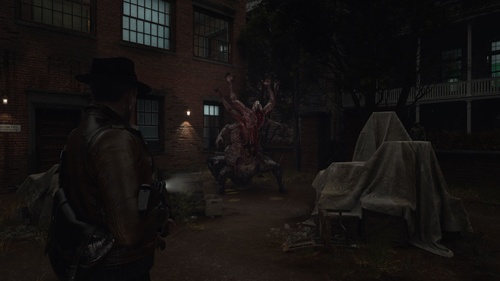
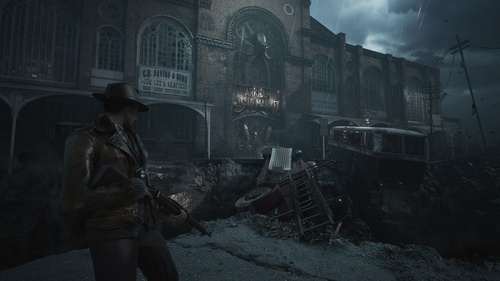
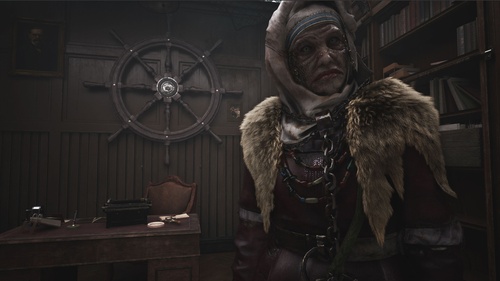
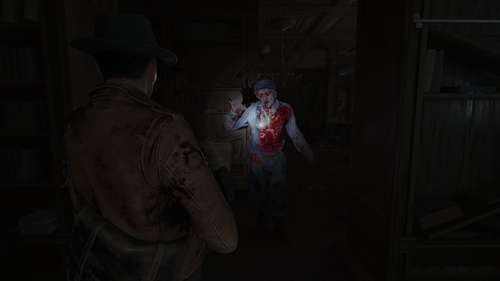
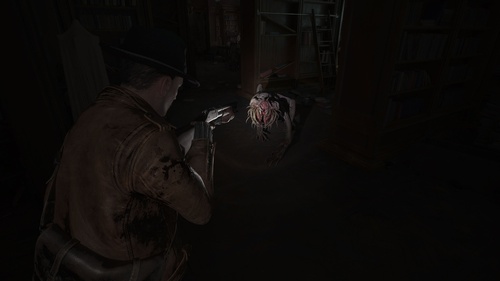
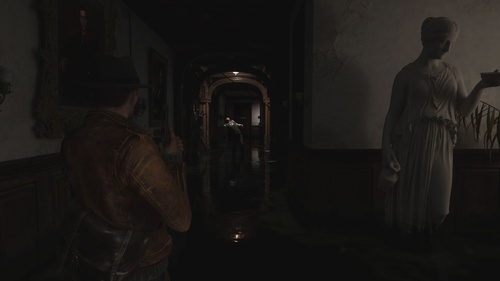
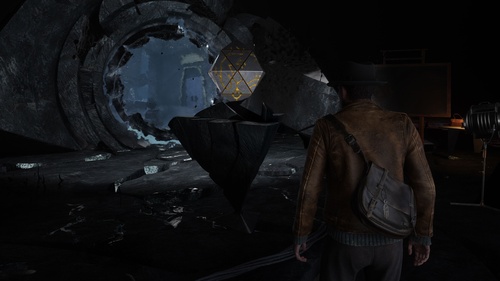
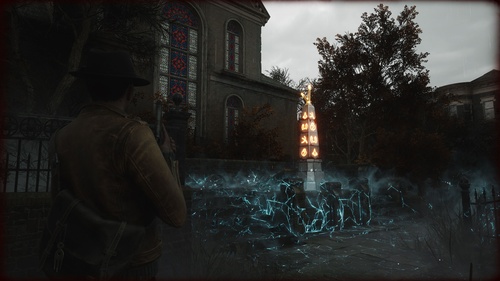
After about sixteen hours of gameplay, the most interesting discovery was that the studio hasn't disavowed what it did well. It has simply changed how those skills factor into the experience. Documents, clues, and a few "little grey cells" still carry weight (no offense to good Poirot for the quote), but in Arkham, you also need to wield a rifle, conserve ammunition, and understand what a nearly completely submerged city hides.
It's on this transformation that The Sinking City 2 builds its identity. The genre shift holds up, combat is finally solid enough to sustain the adventure, and resource management gives weight to exploration, especially when our good Calvin's pockets are nowhere near comparable to Guybrush Threepwood's. Where the game most clearly shows its limitations is in its ability to give equal space to the people who inhabit this world.
From Oakmont to Arkham Without Truly Starting Over
The Sinking City 2 is not a direct sequel to the first installment. Oakmont is far away, Calvin is a new protagonist, and it's not necessary to know the 2019 game to get a clear idea of what's happening in Arkham. Frogwares still retains several elements of continuity in the setting's construction, scattering places, names, and small recognizable references for those who have already traversed Oakmont, but without making them necessary knowledge to understand the new story.
As anticipated in our introduction, Calvin remains in Arkham because Faye needs to be saved. We don't initially know what truly happened or what forces are involved, and Frogwares uses this lack of information to draw us into a classic esoteric adventure where every answer seems to open another question. Calvin thus enters a world that wants to devour him without right of reply, forcing him to advance when probably the most rational choice would be to leave.
Arkham is, first and foremost, a dying city. The first few minutes, comprising the prologue, serve precisely to observe the last signs of a city on the brink: people trying to leave, buildings still recognizable in their function, and a normalcy that seems about to disappear. Human presence quickly thins out, and when we truly begin to explore, it's primarily the environments and what remains within them that tell us who lived there before the disaster.
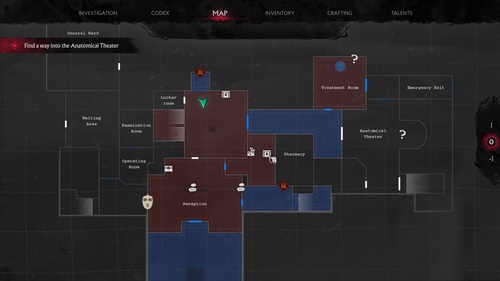
The boat once again plays an important role in traversing the flooded areas and allows the first macro-area to feel more interconnected than subsequent settings. We can move between already visited buildings, retrace our steps, and better check an area before proceeding. Later, the structure becomes more circumscribed: the hospital and the fish market are large and articulated environments, but more self-sufficient. Once a chapter is left, there's no going back, so exploring thoroughly before advancing takes on concrete value, especially for those who can't stand the idea of having left something behind.
Arkham Tells Better Stories Than Its Characters
Frogwares has worked extensively on lore writing. Letters, reports, scientific notes, accounts, and the recordings of Arkham Stories progressively build the context in which Calvin moves. Not all documents are necessary to finish the game, and some pleasantly introduce even a novice to the Lovecraftian imagination, without requiring them to know every name or reference beforehand.
In addition to the monsters shown in promotional material, presences and concepts appear that possess a background built well outside the game itself. Frogwares often avoids stopping to explain everything and prefers to scatter names, places, artifacts, and references to the Old Ones, Shoggoths, N'Kai, or the Silver Key throughout the documents. Those already familiar with this imagery will inevitably grasp something more, while others can still follow the events without feeling the need to consult an encyclopedia before entering each room.
The entire narrative component thus achieves an important result: making Arkham feel like a place with a history predating the protagonist's arrival. One of the best examples is found in the hospital, where certain experiments have transformed something normally mundane like a lock into an image difficult to forget (perhaps disturbing on the level of Silent Hill, to be clear). We prefer not to say more, because part of the effect comes precisely from discovering what happened once you arrive on site.
After all these merits, however, a strong contrast emerges with the writing of non-playable characters. Some figures are introduced through images, behaviors, or situations that immediately suggest much broader stories, only to then be used primarily to advance Calvin towards the next objective. It's a shame because Frogwares continuously demonstrates its ability to imagine unsettling and extraordinary characters, but rarely grants them enough space to truly become important presences in the journey.
The problem isn't necessarily the quantity of NPCs, but rather what the game decides to do with the ones present. Several side situations start from fascinating premises, build a convincing atmosphere, and suggest broader consequences, only to conclude without truly altering Calvin's relationship with Arkham. We wouldn't have needed artificially inserted choices or additional boss fights for the sake of it: it would have been enough to see a few more consequences to make the city feel like a place more autonomous from our path.
The limitation also partly involves Calvin and Faye. Their relationship rests on an extremely simple motivation: he is willing to do practically anything to save her. Over the course of the adventure, the relationship progressively gains more weight, and there are some moments where the writing finally manages to make us feel how much Calvin is willing to sacrifice to avoid losing her. These are brief but important interludes, because they represent some of the few occasions where we felt real empathy for the protagonist.
Frogwares Didn't Eliminate Investigation: It Made It Useful for Survival
Before release, it was easy to think that the new survival horror direction would relegate investigation to a few secondary puzzles. The reality is more interesting. The Sinking City 2 first allows you to separate the difficulty of combat from that of investigation. For our first run, we tackled the campaign with normal difficulty combat, while for puzzles, we initially opted for easy difficulty, which is excellent for having more "telling" clues within the dedicated documents. At the highest investigative difficulty, you must directly interpret what you read, without expecting the game to highlight important elements.
This is an option designed for those who desire more autonomy, although the overall experience doesn't revolve so much around deduction as to necessarily make it the best choice for everyone. Puzzles range from rather immediate combinations to moments that truly require you to stop and re-read what you've collected to reach the solution. Some can be described as basic, like discovering a safe combination, while others require more ingenuity, such as the one encountered at the fish market (pay attention to Old Freddy's song: there's a clue hidden in plain sight).
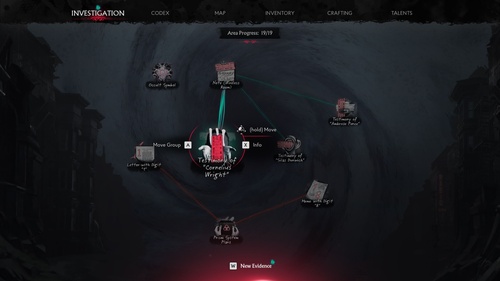
The system most directly attributable to Frogwares' Sherlock Holmes games allows you to connect collected clues and derive a deduction. The difference from the past lies in the consequences: solving an investigation can produce a concrete advantage in survival, because correctly connecting the collected elements yields runes to be used through the appropriate talent bench. It must be said, however, that at easy difficulty, this component loses some of its meaning: each element presents a fairly unambiguous indication, and arriving at the correct combination becomes rather elementary (poor Watson!).
The Night Mask well represents how Frogwares tries to connect the different systems. It allows you to use runes obtained through progression and can be charged with Night Ore, a rare substance that should be carefully conserved. Accumulating enough, the mask can even bring Calvin back to life after a death, transforming what we find during exploration into a concrete second chance.
Talents follow a multi-level progression. Some reduce damage taken, accelerate reloading, or improve effectiveness against weak points, while more advanced ones significantly increase resistance or damage dealt under certain conditions. During our playthrough, the talent that increases the effectiveness of healing items proved particularly useful, especially in phases where resources began to become more precious. There isn't a complex enough build to transform The Sinking City 2 into an RPG, but the choices concretely modify how the campaign is approached.
Exploring also means looking in every corner in the hope of finding something useful. The game offers an interesting crafting system based on four main components: gunpowder, chemicals, metal scraps, and healing herbs. From these resources, we can obtain ammunition and three levels of health items, namely pain pills, regenerating tonic, and life-saving kits. Recipes are unlocked once the corresponding item is found, thus maintaining a direct link between exploration and survival.
Further rewarding those who decide to check every room are the Emergency Relief Cases, or ERCs, containers sealed with a chemical lock that requires a specific activator pen. They can contain useful resources and, most importantly, expansions capable of increasing Calvin's inventory slots. Considering how quickly ammunition, cures, and materials end up occupying available space, being able to expand carrying capacity becomes one of the most important advantages for careful explorers. The pens needed to open them didn't seem artificially hidden: by poking around enough, we found them without turning the search into a pixel hunt.
Initially, the availability of resources might make you think it's possible to confront every creature encountered, but we can guarantee that if you manage to economize, good Calvin will thank you. Ammunition for more powerful weapons progressively becomes precious, and fighting everything that moves means risking arriving at subsequent arenas with few resources precisely when they would be most needed.
The Sinking City 2 thus approaches much closer than its predecessor to a third-person shooter with enjoyable and functional gunplay. The arsenal includes a pistol, shotgun, Thompson, sniper rifle, and grenade launcher, weapons that provide fairly different sensations and can be quickly selected, up to a maximum of four simultaneously. Creatures, on the other hand, require identifying growths and mutations that function as weak points: some beings still retain a vaguely human form, while others explode worms and appendages from their bodies that radically alter their behavior.
The reference to Resident Evil is inevitable, especially when some transformations recall the logic of the Plagas, but the real point of contact comes from resource management. The inventory must contain ammunition, cures, materials, and everything needed to continue exploration, so deciding what to carry and, above all, what to consume progressively becomes more important. Shooting remains enjoyable, but understanding when it's better to avoid a confrontation becomes equally important.
Arenas periodically interrupt exploration and instead force us to fight. Enemies arrive in succession, and often a larger creature takes on the role of the main adversary while other beings continue to occupy the space. At normal difficulty, these are not particularly elaborate encounters, and even boss fights remain relatively simple. Some encounters could have required greater mastery of the arsenal, but the best tension often arises earlier, when you have to decide whether to use three cartridges to clear a corridor or conserve everything and run towards the next door.
Safe rooms also participate in this balance. They are recognizable by the seal at the entrance and truly represent a refuge: enemies cannot enter them. All other doors, however, offer no protection. A creature chasing Calvin can reach him in the next room and try to force entry, preventing the pressure from being artificially broken simply by moving from one environment to another.
Dark Objectives Provide a Concrete Reason to Replay
Finishing the campaign doesn't exhaust everything The Sinking City 2 offers. During the game, several Dark Objectives are recorded, linked to progression but also to specific actions: crafting, inventory expansion, using certain techniques against creatures, or completing small challenges. Achieving them awards Darkness Points that can be invested in rewards designed primarily to modify subsequent playthroughs.
In our case, for example, we unlocked the ability to obtain the Thompson very early along with infinite ammunition, inevitably changing the economy of encounters. We are therefore not facing a traditional New Game Plus, but rather a system that allows for progressively altering the conditions of subsequent runs, accompanied by objectives designed for those who want to know the game better and better, including a challenge that requires completing it in less than three hours.
After completing the adventure, the Ex Oblivione mode also opens up, adding a further incentive to return to Arkham without relying on the presence of alternative endings. Replayability primarily stems from the ability to re-experience familiar environments using different advantages and with a much greater awareness of which resources to conserve, which enemies to avoid, and which paths to explore before definitively leaving a chapter.
The Final PC Build Is Much More Solid Than What We Had Tested
The previous pre-release test had raised serious doubts about the game's technical state. The final version we used fortunately presents a very different picture. We tested The Sinking City 2 on two PC configurations, one with an NVIDIA GeForce RTX 3060 and one with an RTX 4060 Ti. On the latter, we used the High preset, DLSS in automatic mode, V-Sync disabled, and frame rate limited to 60 frames per second. During the campaign, 60 fps remained substantially stable.
The most evident anomalies occurred during some transitions between in-game engine sequences and gameplay, where the GPU load can suddenly increase and cause a marked drop in frame rate. However, these are isolated incidents that, in our test, did not compromise the overall fluidity of the experience.
Upon startup, there is also a rather long shader compilation wait. Once in the game, however, we did not experience crashes, progression blockers, or significant loading issues. Small environmental clipping and some errors in the Italian localization remain, with phrases that would have deserved further revision, but we are far from the performance problems encountered in the pre-release build.
Artistically, The Sinking City 2 primarily focuses on the composition of spaces, submerged buildings, degraded interiors, and the ability to transform seemingly ordinary places into something progressively more disturbing. The hospital remains one of the most successful environments precisely because it doesn't need to be gigantic: the operating rooms, the consequences of the experiments, and what remains of the patients are enough to tell that something went terribly wrong. The fish market works on another form of degradation and, more generally, Arkham manages to change its tone without losing that feeling of a city now too compromised to be truly saved.
The final version thus delivered a game that is technically much more reliable than the one we previewed. Some imperfections remain, but Frogwares uses lighting, architecture, and environmental degradation to sustain an atmosphere that remains convincing for most of the adventure.
The Sinking City 2 represents something more interesting than a simple shift from investigative to survival horror. Frogwares used what it already knew to strengthen precisely the systems that were less convincing in the first installment: combat now sustains the adventure, resource scarcity gives weight to exploration, and investigation continues to have concrete consequences on progression.
The limitation emerges elsewhere. Arkham is full of stories, documents, and ideas that constantly invite curiosity, but the characters don't always receive the same attention. Fascinating figures are introduced and abandoned too soon, some situations stop just when they could develop further, and even Calvin and Faye would have benefited from a few more moments to make their relationship even more impactful.
Frogwares has therefore overcome the riskiest part of the transformation: changing genre without losing its identity. The Sinking City 2 doesn't disavow what the studio knows how to do, but tries to use it within a different structure and, in most cases, succeeds. A regret remains for a cast that would have deserved the same attention given to Arkham, because this time it is primarily the city, with all it hides, that leaves a lasting impression after the credits.
Score
Editorial team
The Sinking City 2 Review: Frogwares Changes Genre Without Losing Its Identity
The Sinking City 2 succeeds in a genre shift that was far from guaranteed. Frogwares builds a solid survival horror experience, with finally convincing gunplay, good resource management, and investigation that continues to have an intriguing impact on progression. Arkham is the real strong point, rich in atmosphere and anecdotes that reward exploration (and those who love the Lovecraftian world). Some limitations remain in character writing and the development of certain narrative ideas, but not enough to compromise a successful, personal, and decidedly more mature adventure than the first installment.
Similar articles