Mortal Shell 2: Review of a game so good it seems forged by From Software
Mortal Shell 2 is proof that great souls-like games can be made even if you're not From Software


After extensively trying the demo - almost by chance, by the way - I immediately became very curious. Everything had improved: animations, situations, combat, and environments… but let's find out how it performed in the final version.
It's not just an empty shell...
Mortal Shell 2 takes the foundations of the first chapter and expands them quite significantly. If the first Mortal Shell was a compact, almost claustrophobic soulslike, built around the Shell mechanic and a deliberately enigmatic world - albeit extremely short -, the sequel aims for a vaster structure, with more articulated areas, greater freedom of exploration, and a significantly deeper progression system.
In combat, you immediately find the weight of encounters typical of the series. Attacks are slow, deliberate, and always require careful evaluation of the distance from the enemy.
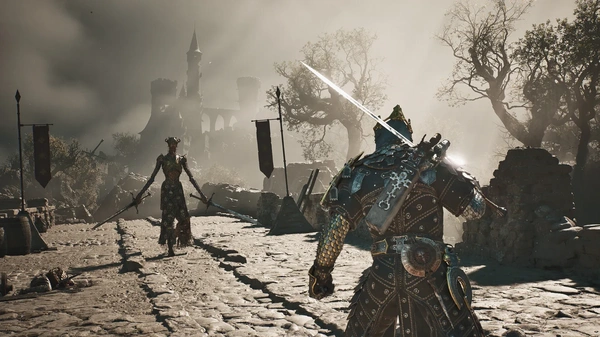
This is not a game where you can repeatedly press the attack button hoping to win through aggression. Each blow involves a time commitment and often leaves you exposed for a few moments. However, compared to the first chapter, the system appears more dynamic. Animations are more fluid and weapon management offers a greater number of tactical options, especially thanks to the expansion of secondary weapons and upgrades unlockable through the Forgitar. Here I must open a small personal aside, as due to some bugs, despite having found certain components, I had to do without some upgrades because an NPC did not "understand" that I had found an element useful for improving his forge and so… oh well.
It seems to have come out of From Software's forges, but...
The main difference compared to FromSoftware's Souls games is that Mortal Shell 2 continues to reward the ability to absorb enemy pressure rather than limiting it to simple dodging. In Dark Souls, Elden Ring, or Bloodborne, the player bases much of their survival on movement, positioning, and the temporary invulnerability of dodges. In Mortal Shell, the concept of resistance and timing remains central, but the game continues to revolve around managing your host body and its specific abilities. The result is an often more methodical and brutal pace.
However, consider that parrying now has a fundamental weight and some builds particularly benefit from it, but you will have to study your opponents a lot.
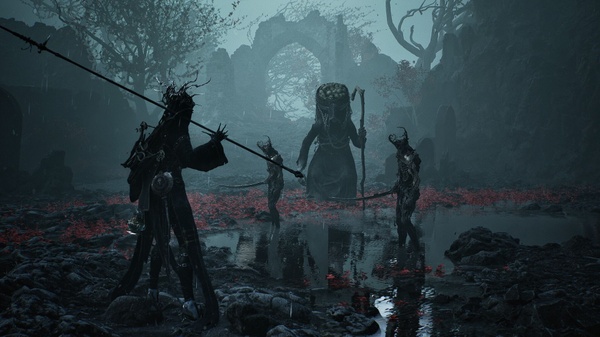
A very interesting element, in fact, is the behavior of enemies. In many traditional soulslikes, the world often seems to await the player. Enemies patrol or remain on alert until they are engaged. In Mortal Shell 2, however, it is more frequent to witness autonomous situations. Some creatures fight among themselves, rival groups can come into conflict, and certain events seem to occur independently of the protagonist's presence.
This helps to make the world feel more alive and less artificial. Sometimes the player can even exploit these clashes to conserve resources or attract the attention of particularly dangerous adversaries.
The progression system has also changed significantly. In the first Mortal Shell, character growth was strongly linked to the knowledge and improvement of the available Shells. Customization existed, but it was relatively controlled. In Mortal Shell 2, leveling takes on a more important role. While maintaining the series' unique identity, the game introduces a feeling closer to classic action role-playing games. The player gains new development possibilities, invests resources in weapons and abilities, and progressively builds a more defined combat style.
Even the lore retains the series' cryptic approach. The first Mortal Shell told its story through item descriptions, fragmented dialogues, and decaying environments. Many details were left to the player's interpretation. Mortal Shell 2 continues on this path but significantly enriches the number of characters, factions, and historical references present in the game world. The narrative remains indirect and mysterious, but the context appears broader and more structured.
However, this remains, in my opinion, the weakest element of the entire package. There is an infinity of inspiration in the environments, but not an equally adequate in-depth study of them, despite the fact that it still allows the player to "dress" it impeccably.
From the point of view of exploration, perhaps the biggest difference compared to the first chapter is perceived. The original had a compact and intertwined structure, with a limited number of large areas. Mortal Shell 2 conveys more the impression of a journey through different regions, with dungeons, settlements, and secondary paths that invite you to deviate from the main road. This does not transform it into an open world like Elden Ring, but it significantly increases the sense of adventure.
Score
Editorial team
Mortal Shell 2: Review of a game so good it seems forged by From Software
Mortal Shell 2 seems built for those who appreciated the oppressive atmosphere and brutal combat of the first chapter but desired greater depth. It maintains the weight of encounters, the enigmatic narrative, and the punitive philosophy typical of the series, while expanding progression, variety of situations, and freedom of action. It doesn't simply try to imitate Dark Souls or Elden Ring: it takes many ideas from classic soulslikes, but continues to propose its own identity based on the toughness of encounters, the strategic use of Shells, and a world that appears more alive and independent than that of its predecessor. To sum it all up: do you like souls-likes? Buy it!
Similar articles

Rainbow Legends: Review of a Card Game with Good Premises but Mediocre Representation

Mortal Kombat II proves it learned from its predecessor's mistakes
Mortal Shell 2 Cancels Stamina: A Truly Electric Beta, Giving Us High Hopes for the Game - Preview