Fjord is one of the few Cannes films not afraid to confront our complicated present
The (true) story told by Romanian director Cristian Mungiu resonates strongly due to its many similarities with Italian social chronicles.
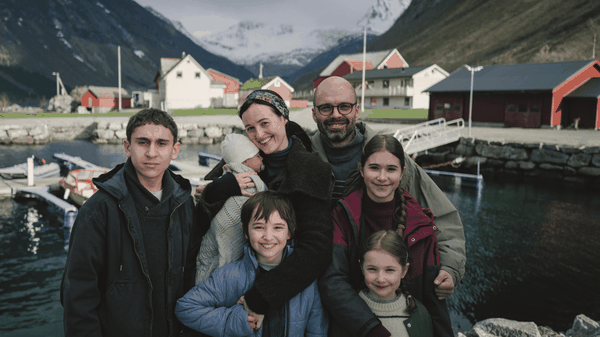


A foreign family with its numerous children decides to move to a remote region of a country with a culture very different from their own and a radically different view of life and educational values. However, a series of seemingly marginal episodes triggers a dispute with social services that first ignites the courtrooms and then the media, offering no easy answers from a political and social perspective, especially given how the case is manipulated by the institutions involved. Is this the summary of a well-known Italian judicial news story or the plot of the new film by Romanian director Cristian Mungiu?
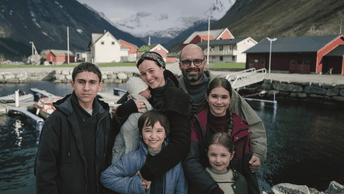
The latter, with a minimum of prior selection to make the description “fit.” The case recounted by the Palme d'Or winning director for 4 Months, 3 Weeks and 2 Days (freely inspired by a Norwegian legal case) is even more nuanced and less prone to simplistic interpretations, because the distinction lies precisely in the different value that Romanian and Nordic cultures attribute to gestures such as slaps and spankings. In the Gheorghius family (Romanian father and Norwegian mother, a deeply observant Catholic missionary), these are considered educational tools to be used cautiously to correct children. For the Norwegian teachers and social workers involved in the affair, however, any physical contact is equivalent to abuse punishable by law.
Mungiu does not shy away from showing the episode that sparks the incident: brother and sister push each other on the stairs, risking spilling boiling water on their mother and newborn brother. The woman intervenes abruptly to separate them and puts them in time-out. However, it is not clear whether the bruises the girl shows the next day were caused by the scuffle with her brother, her mother's intervention, or even physical education activities. For the school and social services, however, it is already too late: the children are removed from the family, and a double proceeding, civil and criminal, begins to determine if there was intent and if the parents can regain custody of their children.
Events related to parenthood and social workers are not new in auteur cinema, which is often inclined to very critical positions — if not openly arbitrary — towards systems that try to balance child protection and an understanding of extremely complex economic, cultural, and social dynamics. One thinks, for example, of Ana Rocha de Sousa's Listen, a strongly biased film that portrayed social workers as almost monstrous figures, ready to snatch children from their parents at the first mistake. Certain news reports also often tend to reduce complex cases to a “gut” reaction, claiming absolute decision-making autonomy for parents.
Mungiu talks about family without simplifications
Mungiu, however, is not a director interested in simplifications. His approach is almost Farhadian in the way he exposes the issue in all its dramatic complexity. The only certainty that emerges from Fjord is that both parties involved start from irreconcilable ideological positions, inevitably destined to clash with the Nordic ideal of an inclusive multicultural society, in which different cultures and ethnicities can coexist. But what happens when a cultural and religious minority brings with it educational practices considered criminal in the host country?
Mungiu asks this question and constructs a very long, but never unnecessarily drawn-out, film that progressively broadens the discussion to issues of gender, age, social expectations, and religion. What clearly emerges is that the Gheorghius family's position is in many ways extreme, given the ultra-orthodox setting of their daily life. The children grow up immersed in a rigidly religious cultural framework: from the music they learn to the educational quizzes proposed by their parents, to daily evening prayer. Yet the parents are not put on trial for excluding their children from contemporary culture, from access to the Internet, or for teaching them that homosexuality is a sin, but for a gesture that can be interpreted in very different ways.
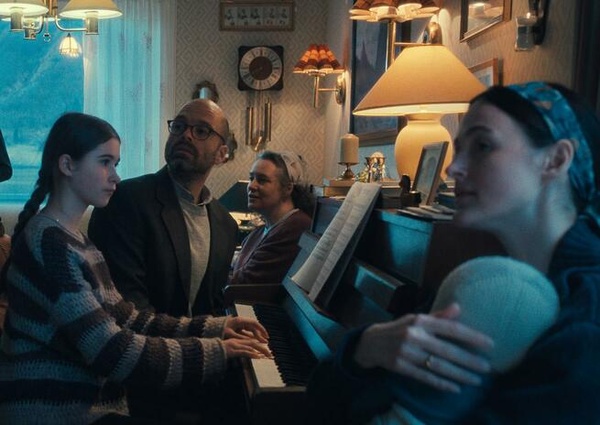
At the same time, the family's religious context inevitably weighs on the proceedings, especially when the father, exasperated by the wait for a decision from the Norwegian authorities, decides to seek help from conservative political-religious groups in his country of origin. The case is thus transformed into a European ideological and media battle, with religious minorities accusing the Nordic state of protecting only those who adhere to its secular and progressive vision of society.
Mungiu also shows, however, how this escalation is favored by a system not without cultural biases and xenophobic undertones. The father is interrogated without an interpreter or lawyer and, faced with a linguistic perplexity, is pushed to sign an ambiguous report that becomes the point of no return for the entire affair. What makes the family suspicious in the eyes of the local community is above all the way their family model is interpreted by a deeply secular and progressive society. There is also a very interesting cultural nuance in the multicultural couple formed by a Norwegian woman and a Romanian man: her religious and missionary vocation paradoxically ends up strengthening and consolidating his patriarchal vision.
Mungiu uses few, memorable directorial touches in Fjord
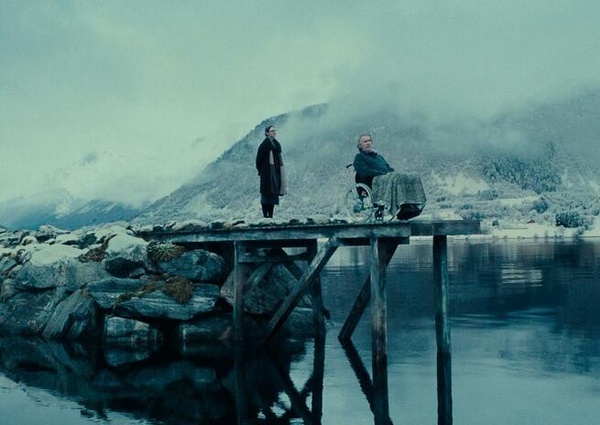
The Gheorghius family is often contrasted with that of their Norwegian neighbors, whose wife will end up working on the defense of the accused couple during the civil proceedings. Here too, however, Mungiu highlights hypocrisies and contradictions: an adolescent daughter in obvious emotional distress, an infirm grandfather who increasingly withdraws into himself feeling ignored by his daughter-in-law. None of them, however, are subjected to the same level of scrutiny reserved for the Gheorghius, except through the director's lens.
Fjord is above all a film of writing and performances, where only at times Mungiu remembers that he is also a great visual director. When it happens, however, the film immediately becomes memorable. There is, for example, the scene (among the best seen at this Cannes) of the conversation between the Gheorghius' mother and the social workers who have come to inform her that her children will be entrusted to a foster home. At a certain point, outside the window, a gigantic Norwegian flag begins to wave: a very simple but devastating image, which immediately synthesizes the weight of the system on the family and the feeling that every gesture of the Gheorghius is now interpreted as possible evidence against them.
Then there are a couple of moments when enormous avalanches detach from the glacier that dominates the local school, built to withstand natural disasters. These are images that perfectly tell the apparent calm of a community that observes the progressive disintegration of this family without ever truly intervening. The only hope, perhaps the only possible form of reconciliation, emerges from the relationship between the rebellious Norwegian teenager and the young Gheorghius daughter, calm and judicious. A relationship made of complicity and affection, not by chance opposed by both the progressive and conservative environments: the only true sign of how a balance can exist only if both parties are willing to change at least a little.
Fjord is one of the few Cannes films not afraid to confront our complicated present
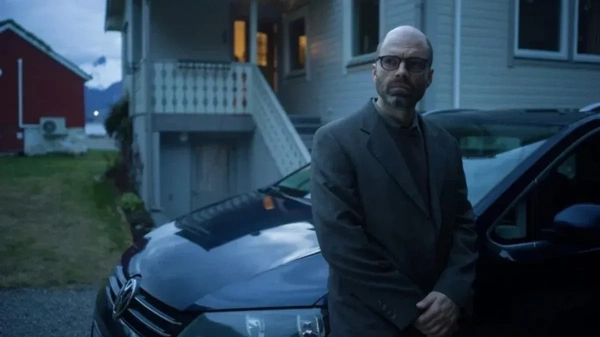
In a qualitatively rather weak Cannes competition, Mungiu forcefully reminds us what it truly means to make auteur cinema: to take a fragment of reality, use it to focus on the contradictions of the present, and force the viewer to confront uncomfortable questions. If Fjord works so well, it is also thanks to the extraordinary performances of Sebastian Stan and Renate Reinsve, two actors capable of continuously giving depth and moral ambiguity to their characters.
Similar articles