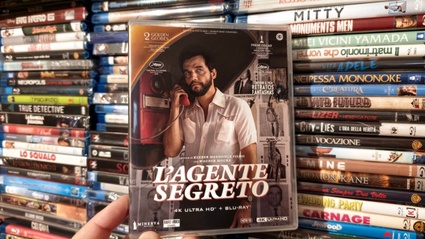
Secret Agent: A Masterful Political Thriller That Delves into the Past
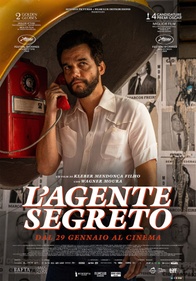
Wagner Moura is a man on the run in 1970s Brazil. An intense and gripping film, awarded at Cannes and nominated for four Oscars. In cinemas now.



Brazil, 1977. Armando Solimões, a former university professor widowed under circumstances that will later be clarified, leaves São Paulo to reach Recife during Carnival week, a period of great ferment for the entire country. Officially, his move is to reunite with his son Fernando, entrusted to his maternal grandparents after the death of his wife Fátima. In reality, the protagonist of Secret Agent is running from someone who wants him dead.
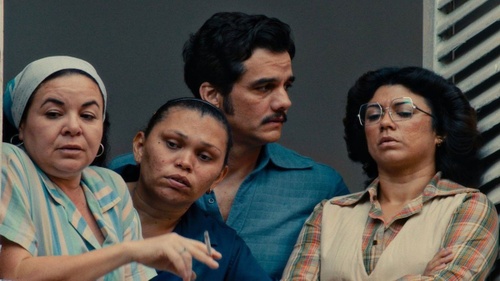
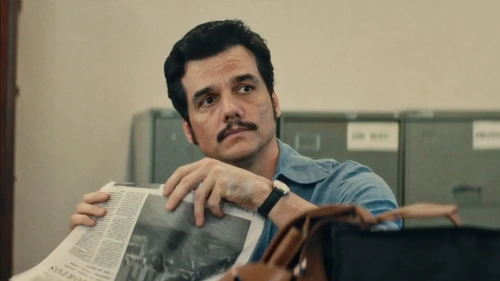
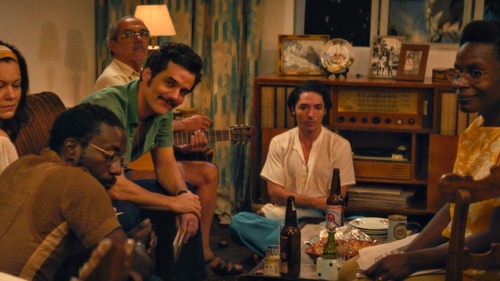
Armando finds refuge in a kind of commune run by the elderly Dona Sebastiana, a former anarchist who has become a point of reference for political dissidents and refugees, sharing her property with other fugitives. The clandestine network of regime opponents finds him a cover job at the state office for archiving identity cards, where he assumes the fictitious name of Marcelo. Meanwhile, the police are investigating the discovery of a human leg in the stomach of a tiger shark, and two hitmen are sent on the fugitive's trail, hired by an old acquaintance of his.

A Director Who Is No Longer a Secret
Those who saw his previous fictional feature, the atypical and phenomenal gangster-movie Bacurau (2019) which earned him the Jury Prize at the Cannes Film Festival, already knew that Kleber Mendonça Filho was an author to watch, ready to make his mark on contemporary cinema. Confirmation came with Secret Agent, which after two other important awards at the French festival (Best Actor and Best Director), received no less than four nominations for the upcoming Oscars, including Best Picture.

After the documentary interlude of the effective Retratos Fantasmas (2023), a splendid reflection on the cinemas of his Recife and on Brazilian cultural memory, the director has returned with an ambitious work that blends political thriller, spy-story, and a metalinguistic meditation on the power of the image, in a present where the past is easier to relive, in all its bitter contradictions, for an always necessary excavation into memory.
We are faced with a film deeply rooted in the places dear to the author, with Recife not just a simple stage for the tormented events but a character in its own right, with its bridges, the streets overlooking the Capibaribe river, the glorious Cinema São Luiz which becomes the scene of clandestine meetings. Those who saw the previous documentary will immediately recognize these places and understand how visceral the relationship with his hometown is, made of love and nostalgia but also of critical awareness towards a complex and often painful history, which is, after all, the history of the entire nation.
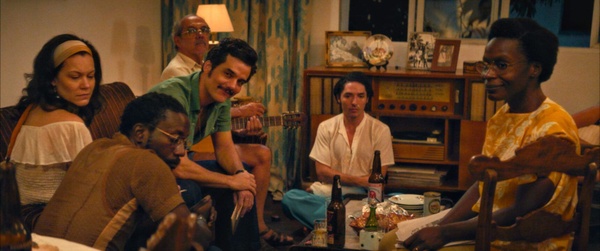
The narrative structure, initially relatively linear, shifts to metanarrative territories when at a certain point we discover how it is actually “told” through audio recordings stored in a university archive in São Paulo, listened to by a young researcher who intends to reconstruct the facts and discover what actually happened to the protagonist. This device transforms the story into a reflection on historical memory, as bitter as it is inevitably liberating for coming to terms with the repressed and the void left by those who are no longer there.
Between Cinema and Reality
The various sequences set in the cinema, with posters and clips of cult films of the era – from The Omen (1976) to Jaws (1975) and many others, including How to Destroy the Reputation of the Greatest Secret Agent in the World (1973) with Jean-Paul Belmondo, from which the title was “borrowed” – are not mere citation but an integral part of the discourse: cinema as an archive, as a place of encounter and resistance against the logic of a power that spares no one.
And the reference to Spielberg's masterpiece takes on a particular significance. The leg found in the decomposing shark's entrails, an apparently grotesque episode, proves to be a powerful metaphor for the violence that the regime tried to hide behind folkloric stories and urban legends. Mendonça Filho enjoys himself in a memorable surreal sequence showing this severed limb coming to life and wandering around the city to attack couples in a park, in a pulp delirium that mixes horror, satire, and social commentary. A passage that might seem gratuitous but which in reality perfectly embodies the ambiguity of a historical period where truth was systematically concealed.
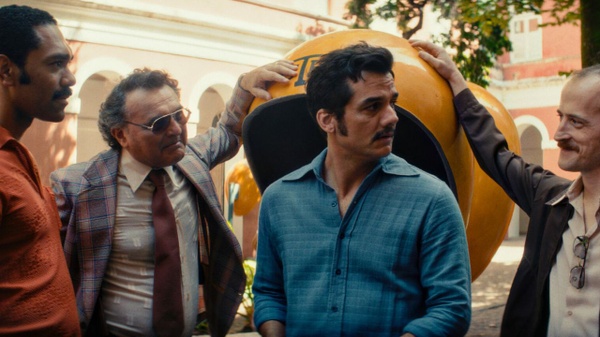
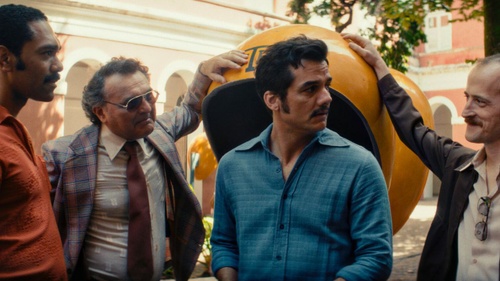
With a roguish yet deeply human protagonist played by a Wagner Moura at his best, and the late Udo Kier's final screen appearance in an intense cameo, Secret Agent is cinema capable of being simultaneously political and popular, accessible and refined. Maintaining an enviable balance between formal rigor and an almost baroque, typically Carioca energy, which emerges in the carnival moments and choral scenes, right up to that epilogue which is chosen not to be shown directly but to be entrusted to newspaper reports, emphasizing how the past must be sought out firsthand in all its tragic inevitability, without easy solutions, happy endings, or routine catharsis.
Gallery




Score
Editorial team

Secret Agent: A Masterful Political Thriller That Delves into the Past
An ambitious and layered political thriller, mixing spy-story dynamics, reflection on memory, and a declaration of love for cinema. Secret Agent confirms Kleber Mendonça Filho as one of the most important filmmakers on the contemporary scene, capable of entertaining and making audiences think, keeping them glued to the screen for over two and a half hours, never heavy or redundant. The director is not content to merely recount the Brazil of the dictatorship, but wants us to feel the weight of those years, the sense of paranoia that permeated every aspect of daily life, the silent resistance of those who continued to hope. A film that knows what to say and how it wants to say it, aware of what it is narrating and able to find the right interpretive key to avoid rhetoric and didacticism, allowing the characters to live their own lives, in a story with multiple stylistic and (meta)narrative nuances.
Similar articles