It, Who is Pennywise? The Story of the Killer Clown
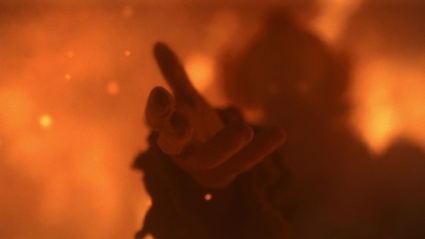
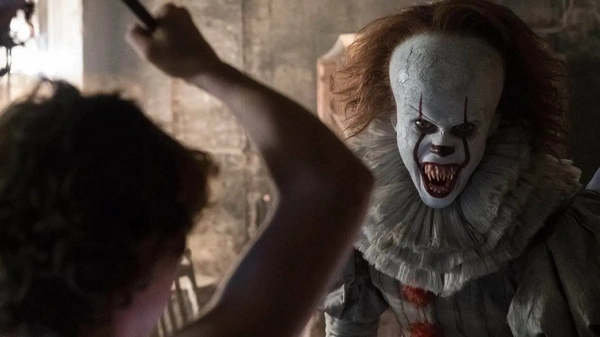
The terrifying clown from It.
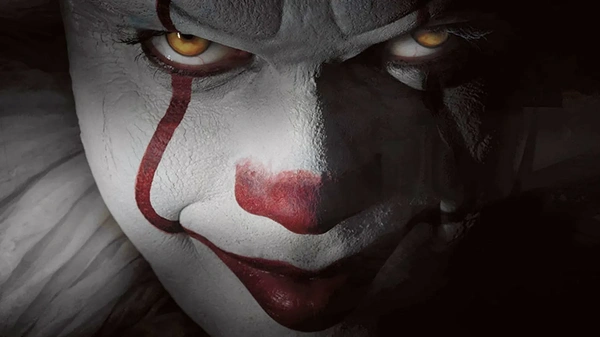


Among the most disturbing creatures ever to appear in horror literature and cinema, Pennywise holds a privileged place in the Olympus of terror. Known as the “dancing clown,” he is not just a painted face that elicits screams of fear: he is an archetype of nightmare, an entity capable of embodying the deepest and most universal phobias. Over the years, his grotesque smile and sharp teeth have fueled the collective imagination, rooting themselves in popular culture. But who truly hides behind the name of It? Here are all the details.
Oh, did you know that we will find the terrifying dancing clown again from October 27th on Sky and NOW with the new TV series It: Welcome to Derry?
- Who is Pennywise?
- Who created him?
- The character's inspiration
- The story
- In which novel does he appear?
- The films and TV series
Who is Pennywise/It?
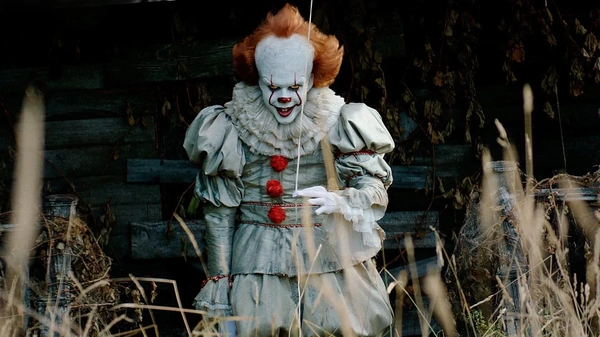
Behind the flamboyant makeup and clown costume lies an ancient and evil creature. It is a primordial and malevolent entity, whose origin is lost in remote and unknown times. It has nothing human about it: it feeds on terror, and the fear of children is its preferred feast. Pennywise, the “dancing clown,” is merely its most recognizable mask, cleverly chosen because clowns, symbols of joy and lightheartedness, can easily transform into unsettling figures, becoming a living nightmare for those who observe them.
Who created It: author
The “father” of Pennywise is Stephen King, universally known as the king of horror. In 1986, the Maine writer published It, a monumental novel that intertwines fear, friendship, and the indelible trauma of childhood. With this work, King not only invents a monster but shapes an absolute antagonist, capable of embodying any terror: from the monster lurking under the bed to the most insidious threat, one that takes on reassuring and familiar guises. Pennywise thus emerges as the perfect face of a universal evil, destined to remain etched in the collective imagination.
It, the character's inspiration
The genesis of Pennywise is the result of a mix of literary imagination, folklore, and dark suggestions from American culture. Stephen King has stated that he wanted to give form to a creature capable of representing all childhood fears. The choice of the clown is not accidental: always an ambivalent figure, it originates as an entertainer, but often causes discomfort due to its heavy makeup, forced smile, and the contrast between apparent joy and hidden unease.
An inevitable reference is John Wayne Gacy, the infamous “killer clown” who, in the 1970s, dressed as Pogo during children's parties while leading a secret life as a serial killer. King has stated that he did not model Pennywise directly on Gacy, but the echo of that true crime story became rooted in the collective imagination, fueling the character's sinister aura.
To these real-life suggestions are added literary and theatrical ones: from the harlequin of darker fairy tales to circus clowns who, over centuries, have oscillated between laughter and terror. Pennywise thus emerges as the perfect embodiment of the familiar transforming into a threat, the ideal disguise for a primordial entity that feeds on fear. It is this dualism, the unsettling residing within the reassuring, that makes Pennywise an archetype of modern horror.
The story of It
The essence of It goes far beyond the clown disguise. It is a primordial entity, originating from an otherworldly dimension known as the Macroverse: a place of non-light, populated by cosmic forces in perpetual conflict between destruction and creation. Within Stephen King's mythology, It represents chaos, voracity, and annihilation, in contrast to Maturin the Turtle, a symbol of balance and wisdom.
According to the novel, the creature arrived on Earth millions of years ago and made its home beneath what, centuries later, would become the town of Derry, Maine. Here it enters a cycle of hibernation and awakening: every 27 years it emerges to feed, preferring the fear of children, which is more intense and untainted. After sating its hunger, it returns to sleep, leaving behind a trail of disappearances and tragedies never fully explained.
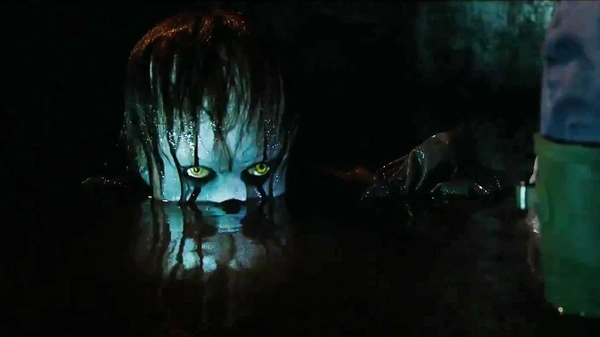
Its power is not limited to metamorphosis: It manipulates reality itself, infiltrating the minds of victims and transforming into the embodiment of their deepest fears. Pennywise remains its most iconic form, but throughout the story, it also takes on the guises of werewolves, mummies, and other archetypal horror figures. Its influence even extends to the town of Derry, poisoning its social fabric: violence, indifference, and omertà become integral parts of a community unknowingly corrupted by its presence.
Opposing it is the Losers' Club, a group of seven children who, in the summer of 1958, manage to uncover the truth and, armed with courage and friendship, confront It in the town's sewers. Their victory, however, is only temporary: twenty-seven years later, now adults, they will be forced to return to Derry for a final, definitive confrontation.
The battle against It transcends the realm of pure horror and becomes a rite of passage: a journey into the dark heart of childhood and the traumas that accompany us into adulthood. King suggests that evil cannot be entirely erased, but only confronted and contained through memory, solidarity, and shared courage.
In which novel does Pennywise appear?
Pennywise's first appearance occurs in 1986, within the pages of It, Stephen King's monumental novel (you can buy it on Amazon). With over a thousand pages, the work is considered not only one of the Maine writer's masterpieces but also a cornerstone of modern horror. In this book, King intertwines ancestral fears, rites of passage, and cosmic mythology, creating a narrative that redefined the boundaries of the genre and consecrated Pennywise as an enduring icon of terror.
The films and TV series featuring Pennywise
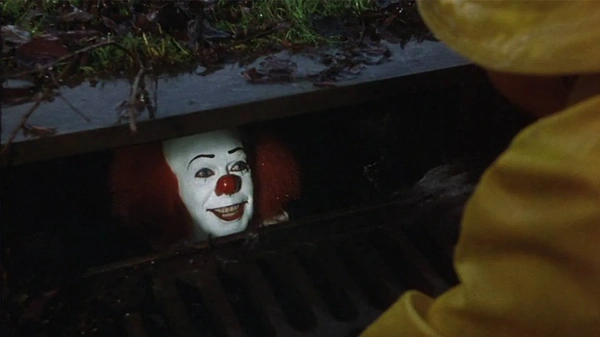
The first adaptation of It dates back to 1990 with a television miniseries that quickly became a cult classic (available on Amazon). In the role of Pennywise, Tim Curry delivered a memorable performance: his clown, a blend of sinister irony and predatory malice, terrified an entire generation and remains a benchmark for television horror today.
Decades later, Andy Muschietti brought the creature back to the big screen with It (2017) and It – Chapter Two (2019). In these cinematic versions, Bill Skarsgård reinvented Pennywise with a more disturbing and visceral approach, enhanced by modern visual effects that amplified its menacing charge. The result was a worldwide success that relaunched the legend of the “dancing clown” for a new generation of viewers. The films are also available on Amazon.
The narrative universe is set to expand further with Welcome to Derry, a prequel series that delves into the entity's origins and its connection to the cursed town in Maine. A project that promises to enrich King's mythology, showing how It's shadow permeated Derry's history long before the events recounted in the novel. Click here to discover all the information about the television series.

Other articles to read:
- How I Met Your Mother: a series that changed our lives
- The Big Bang Theory 5 years after its end: a tribute to the sitcom we loved so much
- Why Severance is a series you can't miss: philosophy, mystery, and plot twists
- Happy Birthday Accountant! Fantozzi turns 50
- Deep Red: Dario Argento's masterpiece turns 50
- The Usual Suspects, 30 years later: when cinema becomes a game of mirrors and illusions
Similar articles