DOOM: The Dark Ages, Hell is No Longer Enough: Slaughter Mode and the Future of id Software
Details of the new mode, the behind-the-scenes of Revelations, and id Software's prospects emerge from the private presentation with Hugo Martin and Marty Stratton.


There's a question we hardly imagine crossing the Doom Slayer's mind: "Shouldn't I stop?" After all, we're talking about a character who, for over thirty years, has resolved disputes with an arsenal capable of making a war seem like a condominium argument. Yet, it's precisely this question that id Software has decided to build Slaughter Mode upon, the new mode arriving in November for DOOM: The Dark Ages – Revelations, the expansion released in July. It's not enough to survive another wave of demons. You have to choose when to cash in what you've earned and when, instead, to put everything back on the line.
We participated in a private press presentation with Hugo Martin and Marty Stratton, who reviewed the choices behind the expansion and showed a work-in-progress video of Slaughter Mode, before answering journalists' questions. The discussion focused on DOOM's combat, the difficulties of expanding an already enormous game, and the future of a studio recovering from a major restructuring. One point must be clarified immediately: this is a preview based on the presentation and developers' statements, not a hands-on test of the new mode.
Gallery


When Stopping Becomes a Mechanic
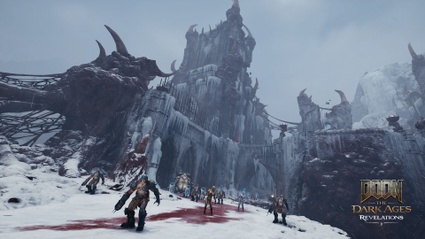
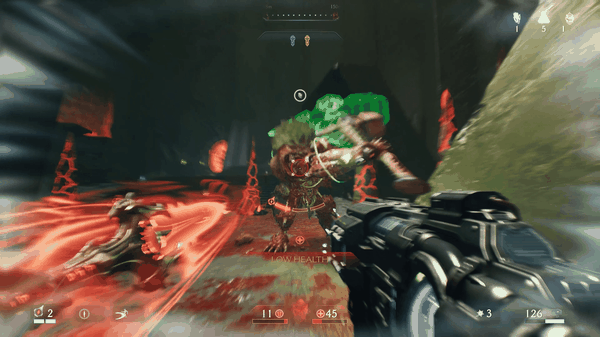
The developers talk about 19 arenas, taken from The Dark Ages, Revelations, and the Ripatorium spaces. Opponents will change with each match, and rounds will increase the session's value. Upon reaching a checkpoint, the player can withdraw and keep the accumulated rewards or continue, hoping to earn a greater prize. If the game ends badly before cashing in, whatever was left pending will be lost. The principle is simple to understand, much less so to follow when you still have a full magazine and an arena ahead.
Martin wants to recapture the tension of Ultra Nightmare, where a single death can destroy an entire run, without imposing the same severity on everyone. Here, the stakes only grow as long as we decide to take the risk: after all, the most dangerous demon might be the one that convinces us to stay for just one more round.
The currency is called Skulls and will be used to increase your rank, unlocking rewards. The video shown during the meeting mentions character and weapon skins, profile icons, and tracks from Andrew Hulshult's IDKFA soundtrack. Weekly challenges are also planned, designed to offer new reasons to return to play. No precise date has been announced: the indicated period remains November 2026, with free access for those who own Revelations or the edition of The Dark Ages that includes the expansion. Free, therefore, does not mean available to those who have only purchased the base game.
A Different Game Doesn't Just Mean More Enemies
The most significant aspect of the meeting, in our opinion, emerged almost in passing during journalists' questions. For Slaughter Mode, id Software has created a system capable of randomizing the composition of encounters, a solution that, according to Martin, the studio had never used in this way in modern DOOM games. In the past, encounters were primarily designed by hand, choosing which creatures to deploy, where to place them, and in what order to have them enter the arena. The new mode will retain some predetermined fights but will make variability one of its foundations.
Here lies the main unknown of Slaughter Mode. Randomization can prolong the life of combat, but also produce less elegant juxtapositions than those built by hand or reduce difficulty to a matter of quantity. It's the kind of difference a trailer doesn't allow you to judge. What was shown makes the ambition clear, but doesn't yet demonstrate the quality of the balancing. The real result to verify will be whether each combination forces new decisions or merely asks you to survive longer.
The Chain Lance, Leonidas, and a New Game Plus That Won't Be There
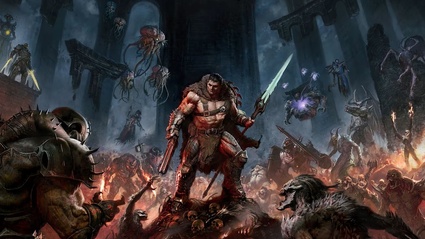
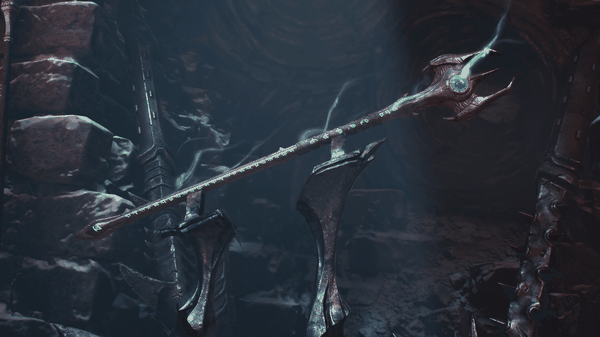
During the meeting, Martin also revisited the genesis of the Chain Lance, recounting a rather eloquent cinematic reference. One of the visual models for The Dark Ages was Leonidas at Thermopylae in 300: sword, shield, and spear. In DOOM's vocabulary, the sword had become the shotgun, the shield had found its own mechanical identity, and the spear was still missing. The idea was not a feature cut from the base game and later recovered, but a design choice developed early for Revelations, through numerous tests and balance adjustments.
This work also had consequences for the Energy Shield. The developers explained that they adjusted its power to prevent players from immediately abandoning the lance once they reacquired it. Higher capabilities return in the endgame. This is understandable: a weapon that changes combat needs time to be understood. The Chain Lance is not just for hitting or parrying, but allows you to grapple onto targets, move quickly, and tackle arenas with a different control of space. A good part of Revelations' depth comes precisely from the need to learn how to use it.
And we come to a question many fans have asked after completing the expansion: why not restart the campaign with all upgrades already unlocked? id Software has ruled out, for this version of Revelations, the introduction of a New Game Plus. Martin attributed the problem to the technical complexity of the structure based on progressively opening paths and returning to already visited levels. Slaughter Mode aims to intercept at least part of that desire: it provides a fully upgraded Chain Lance from the start and allows it to be used even in arenas belonging to the base game.
The distinction is important. We are not facing a roguelike where you have to re-unlock abilities with each attempt, nor a second campaign tackled with advanced equipment. Martin explained that he didn't want to ask players to rebuild from scratch an arsenal they had already spent so many hours perfecting. Variety will come from enemy combinations and risk choices, not from a new weapon progression within each match. It's a sensible answer, but it doesn't replace New Game Plus: those who wanted to re-explore Purgatory with all available tools will still have to forgo it. In our review, we criticized the backtracking, often capable of breaking the rhythm between one combat and another. Slaughter Mode doesn't solve that problem; rather, it bypasses it by prioritizing the best part of the experience.
Revelations Was Almost a Sequel. And the Studio Is Already Looking Beyond
The presentation was not only dedicated to the upcoming mode. Stratton recalled that Revelations, in terms of duration and scope, almost felt like a sequel. Martin reviewed the division between campaign and endgame, with new paths in maps, Master Arenas, Slayer trials, and spaces inspired by classic DOOM. In one of the examples discussed, a door reminiscent of DOOM 1993 becomes accessible only after obtaining the necessary key, granting access to a classic level and the ability to unlock the old shotgun. This is how id Software tried to make re-exploration more than just retracing steps.
However, the final questions also shifted the discussion to the future of id Software. Stratton confirmed that, during the recent restructuring, about half of the studio's personnel left the team. This is a fact that cannot be erased by the optimism of a presentation. The executive argued that the reorganization was undertaken by trying to preserve the studio's ability to develop games and technology, adding that technical collaboration with MachineGames is now closer than in the past. He also emphasized that Slaughter Mode and its trailer were produced internally, without resorting to outsourcing. This is a vindication of the remaining skills, not a cancellation of the impact of the cuts.
As for upcoming projects, the officials explained that id Software is already working intensely on a new major production, without revealing its nature. A second Revelations DLC was not announced, nor was a direct sequel to DOOM. Martin reiterated that there are still stories to tell in the Slayer's universe, but the willingness to explore them does not equate to a production commitment. The possibility of continuing to update Slaughter Mode will also depend on public response and the studio's priorities. To a question about the return of multiplayer and cooperative play, Stratton recalled that The Dark Ages was born during the period of remote work related to the pandemic and that the team had chosen to concentrate resources on the campaign. The door was not closed, but no announcement was made.
DOOM: The Dark Ages, Hell is No Longer Enough: Slaughter Mode and the Future of id Software
Balance will determine how long this idea works. Rewards must make the risk significant, checkpoints must not extinguish tension, and the encounter generator must respect the grammar of weapons, enemies, and spaces that DOOM has refined for years. For now, the closed-door meeting reveals a project with a recognizable identity, more interesting than a simple wave mode. Those hoping for a new story will have to keep waiting. Those who think they know every trick of the Chain Lance will soon find another good reason to wield it. The difficult part, this time, might be knowing when to put it away.
Similar articles