How Jeremy White Allen Became Bruce Springsteen with the Boss's Help
Presenting Springsteen: Deliver Me from Nowhere in Rome, Jeremy White Allen explained that he accepted the role of the Boss at Springsteen's specific request
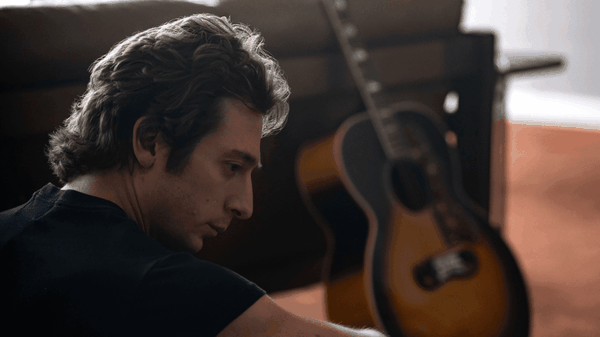


“When I met Bruce, he perfectly embodied the idea I had of him. Seeing him in his element, ready to perform for three and a half hours in front of ninety thousand people at Wembley, was a gift, but also intimidating, knowing that I would have to capture his essence.” This is how Jeremy White Allen recounts that fateful Boss concert where he first seriously considered Scott Cooper’s offer to become Bruce Springsteen in his film dedicated to the tormented writing of the album Nebraska, which you can read our review of here. Now that critics have shown appreciation for his work, while awaiting the public's response and embarking on a long campaign for an Oscar nomination for his portrayal of the Boss in the biopic dedicated to him, White Allen has no problem admitting that he was intimidated by the challenge of embodying one of America's most beloved rock stars, especially on the musical front.
Bruce himself reassured him, as he wanted The Bear's protagonist to represent him on screen and did everything to make him feel at ease: “His stage performances are so physical, almost violent in their passion. But talking to him, you discover an incredible kindness and presence. What I admired most, however, was his immense trust. Trust in those close to him, like Jon Landau at the time of the film, and again trust in us, in allowing us to tell his story and to "take the wheel" for a moment. This great generosity of his is what I found most admirable.
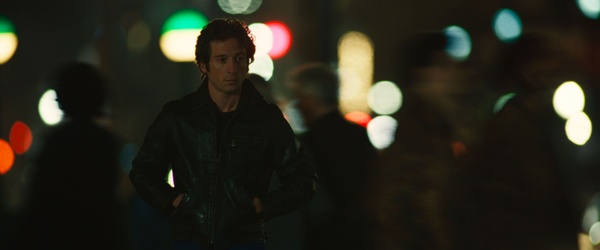
It's not easy to see yourself represented in a biographical film, especially in your weaknesses. What do you think prompted Bruce to immediately say yes to Springsteen: Deliver Me from Nowhere when you proposed it to him?
Scott Cooper – The film Bruce would never have agreed to make is one about Born in the U.S.A. or Born to Run. He himself has publicly stated that Nebraska is his most personal, enduring, and, in his opinion, best work. And I agree. I think he accepted because it was a very specific and narrow period of his life, the most painful chapter. He thought that if the audience understood the Bruce of 1982, they would understand him in a much broader sense. That's why he immediately said yes.
The film is set at a specific moment. At the beginning, Hungry Heart plays on the radio and Bruce turns off the music. Nebraska is an album born by chance. Can we say that the best things happen without planning?
Scott Cooper – Sometimes, as a director, projects choose you, because you feel an urgent need to make them. Nebraska was like that for Bruce. He didn't even think he was making a record, but he was living a life of such quiet desperation that he had to. I, on the other hand, desperately chose to make this film. But many scenes come to me in dreams, believe it or not, so you can never predict everything.
Jeremy Allen White – I think a lot of this film is about honesty and the feeling of being an impostor. At that moment in the film, Bruce is returning home to New Jersey and no longer recognizes the place he came from, nor does he recognize himself. That music no longer sounds honest to him. Turning off the radio is a gesture born from that feeling of fraud, of not recognizing the man who recorded that album. The creation of Nebraska was so instinctive. As Scott said, Bruce didn't know what he was doing, nor if it would become anything. And q
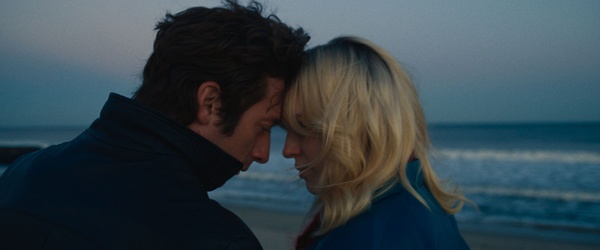
when you work from that premise, you can't help but be honest, because you're not thinking about the end result.
Scott mentioned that the period depicted in the film represents a crucial moment in Bruce's life. A personal and very difficult period. How did you feel when they asked you to portray that particular side of the Boss?
Jeremy White Allen – Yes, this delicate personal period, that of the composition of Nebraska, is at the heart of the film. I think it was a real crossroads in his life. The choices he made in the period depicted in the film allowed him to live the life he has had for the last 40 years. Feeling wanted by him and by Scott [Cooper] for this role made me feel very lucky. I took some time to reflect, due to the enormous pressure associated with such an iconic figure. Initially, I didn't want to risk interfering with the relationship his fans have with him. Then Scott told me: "Bruce really wants you to do it." I replied: “Why didn't you tell me earlier? I won't object.” So I accepted. I must say that Bruce was fantastic throughout the entire filmmaking process, he was very supportive, even after the film's release.
For Bruce, success represented a zone of discomfort. For you, what does it represent?
Jeremy Allen White - I don't know. I think that period, for him, was a turning point, a moment of honesty. The critical success he had with that record was all his own. It debuted at number three on the charts, but its influence has lasted over time precisely because of that honesty. It's a raw, honest record, and I think that's why it's so loved.
Bruce worked in complete solitude on Nebraska, defying the musical rules of the time. Would it be possible to make a similar album today?
Scott Cooper – It's interesting, because when Bruce made Nebraska, the standard process for almost all musicians was to go into a studio to write and record. What Bruce did, recording in his bedroom, was completely unorthodox. Today, many albums are recorded at home. Musicians have the technology to perfect their voice with Auto-Tune. Bruce, however, pursued imperfection. He wanted to recreate the sound he had achieved in his room. When he went to one of the best recording studios in the world, the musicians and technicians made the sound "better," but he was obsessed with finding exactly that raw sound, passed through a four-track recorder, an Echoplex for a short echo similar to those on Elvis records he loved, and mixed through a boombox. All this imperfection gave birth to one of the best albums of the last fifty years. Today, I believe, you can achieve a similar result by pressing a button. Isn't that sad?
Jeremy Allen White - Yes, I think Scott said it all. At the time it was a radical gesture, and that's why the sound of the record is so intimate. You feel close to Bruce, as if you're in the room with him, but at the same time there's an unsettling distance. Today, with home recording becoming common and technology so advanced, I don't know what an equally radical way to make such a record could be. "Nebraska" is the most punk record Bruce ever made, not in sound, but in spirit. That's what separates it from all his other work.
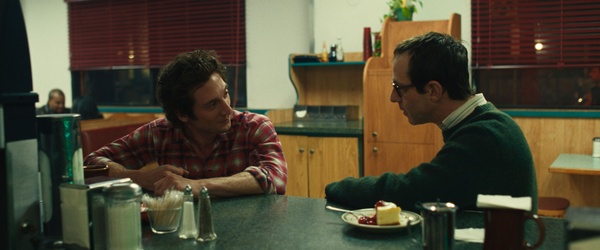
How did you work with the composer, starting with an old wooden piano?
Scott Cooper – The composer, Jeremiah Fraites of the Lumineers, is a huge Springsteen fan. While writing the screenplay, I thought the soundtrack should stem from "Terrence Malick's young rage." I asked Jeremiah for an imperfect, minimalist, raw sound, just as Bruce had made the record and I was making the film. The piano we used was so imperfect that the tuner called it "firewood." But that sound was perfect for scoring Bruce's imbalance, his inability to create a stable relationship.
The relationship with his father is the shadow that looms over Nebraska and your film. How much did your parents' influence affect the writing of this film?
Scott Cooper – My father introduced me to all my musical tastes: opera, classical, jazz, country, and finally to Bruce Springsteen with Nebraska. I listened to it at eighteen, at a time of great uncertainty. When I read Warren Zanes' book dedicated to its making, it spoke to me deeply: Bruce's emotional honesty, his uncertainty, his imbalance, seemed very similar to how I felt. And then the day before we started filming, my father died. His spirit accompanied me throughout the entire production. I dedicated the film to him, and I think he would have liked it very much.
How are you experiencing the rumors of a possible Oscar nomination?
Jeremy Allen White - It's all very nice. But, like Bruce when he made his record, I don't think you can focus on the end result while working on something so personal. If we're lucky enough to attract that kind of attention, it will be good because more people will see the film. But I don't want to focus on that. I'm already thrilled to have made this journey with Scott and Bruce.
Similar articles