Many New Features Coming to The Elder Scrolls Online, But the Real News is the Method
Goodbye annual chapters: Seasons promise less rigidity and more room to update the game progressively, with Season 0 as a dress rehearsal.


After more than ten years, The Elder Scrolls Online is a mature live service, not only for the quantity of accumulated content but also for the way it has, over time, accustomed the community to a recognizable rhythm of novelties, returns, and cycles, creating that sense of continuity which, for many, has been an integral part of the game's identity. This stability has long functioned as a concrete advantage, because it made the experience more legible in its calendar, gave players the idea of a journey that progresses without abrupt changes, and allowed the team to work calmly to produce significant content.
However, when a project reaches such stratification, the fundamental question changes and it's no longer enough to just ask “what new story or zone will arrive,” because it becomes more important to understand how quickly the game can fix friction points, correct what isn't working, and remain manageable without postponing everything to one big moment of the year.
Gallery
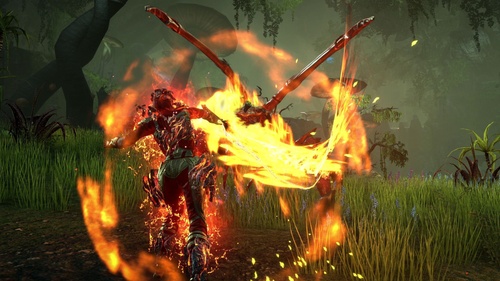
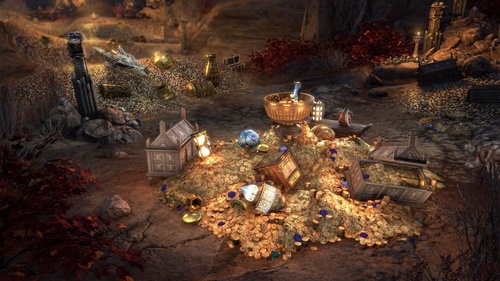
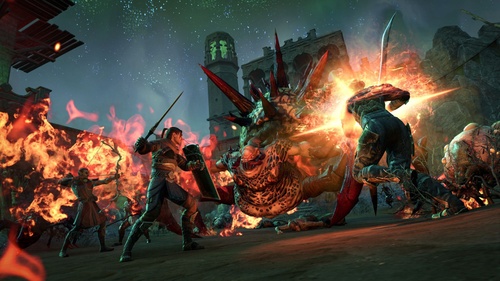
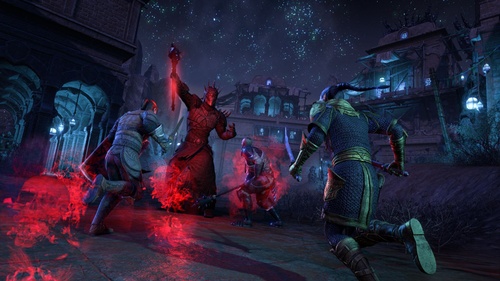
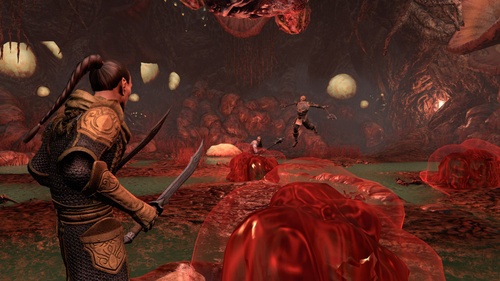
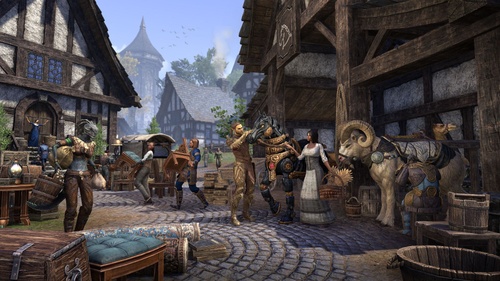
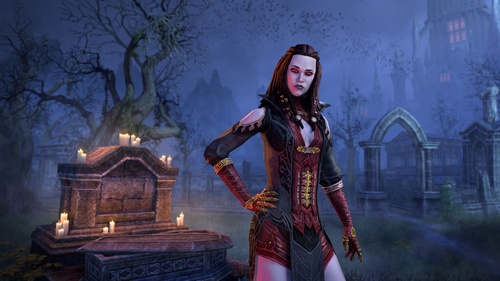
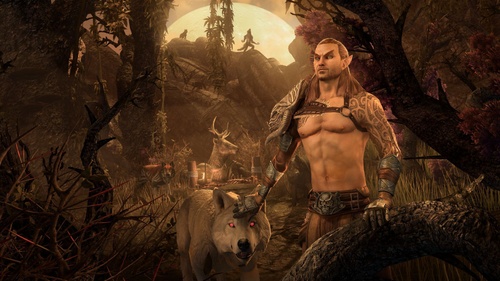

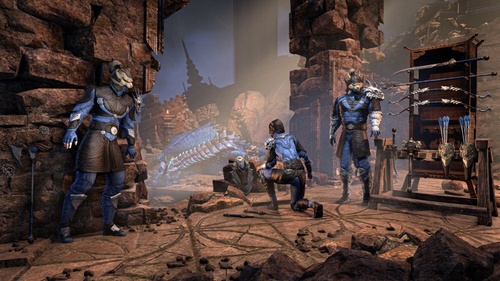
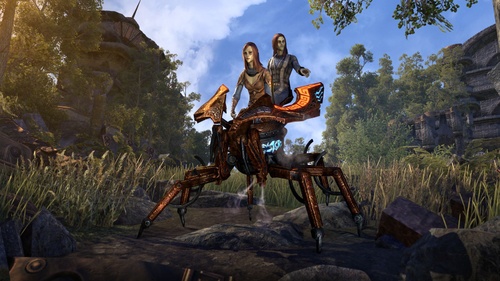

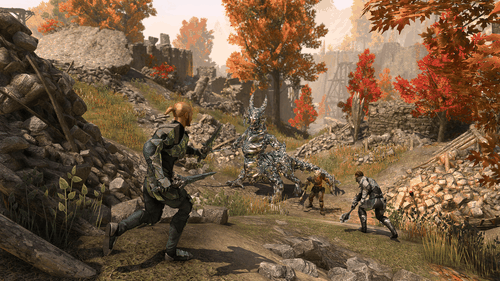
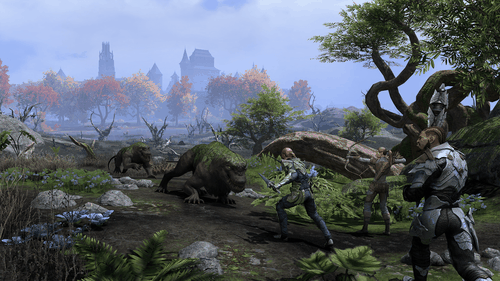
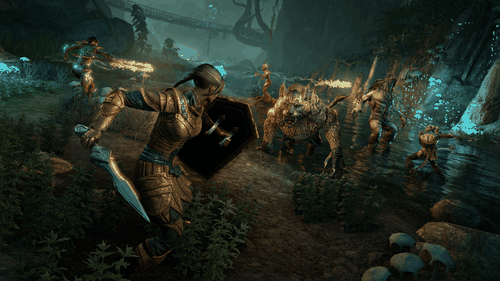
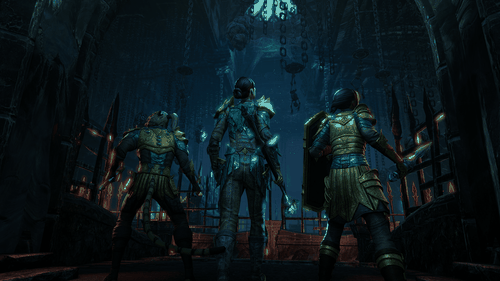

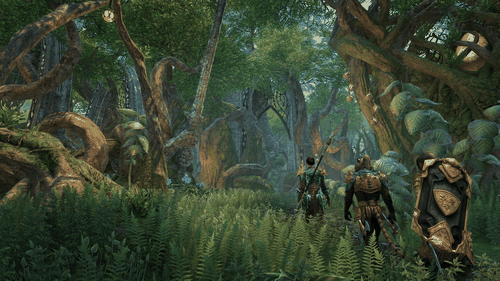

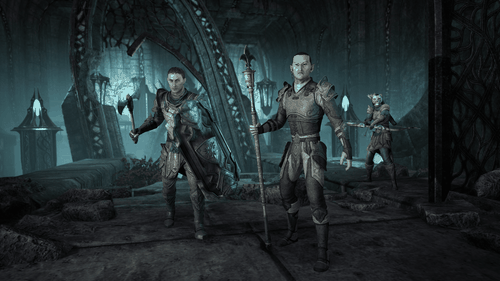
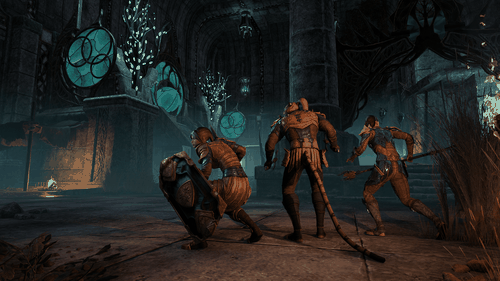
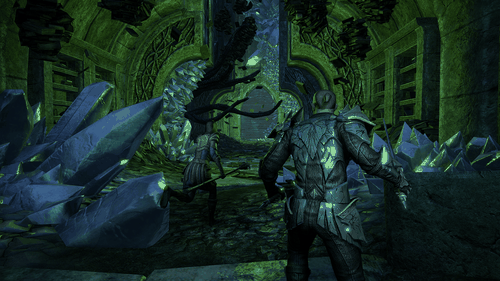
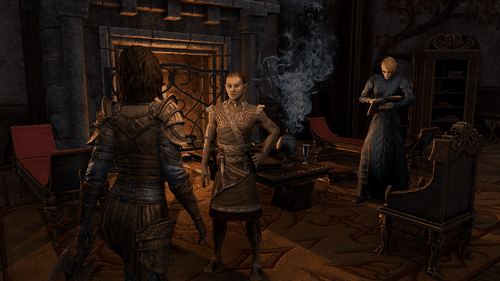


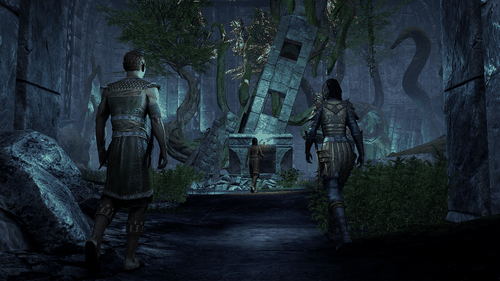

It is in this context that the perspective emerged from the closed-door conference we attended gains weight, because the idea is not described as a race to “do more things,” but as the necessity to regain freedom of choice and intervention, preventing the inertia typical of very large games from transforming small problems into permanent background noise and player requests into an accumulation that, over time, becomes difficult to manage.
From this arises a clearly stated change in priorities: bringing base game health to the forefront, meaning the quality of the base game, its stability, and the clarity of its systems, recognizing that truly decisive interventions are not always those that “make for a good trailer,” but often those that reduce friction, simplify daily life, and make the experience more solid over time.
Chapters Become Seasons: Revising the Production Method
The transition to Seasons, as described in the closed-door conference, is not presented as a simple change of label, but as a methodological correction: a different way of organizing work, priorities, and timelines, so that the production of the “big package” no longer dictates every decision and no longer imposes a constant constraint on everything that falls outside the logic of the main release. The chapter, in this interpretation, is not “wrong” in itself, because it guaranteed order and recognizability, but over time it would have produced two difficult-to-ignore side effects: a structural predictability of releases, because when a formula repeats for a long time, the surprise tends to diminish, and a practical rigidity, because long timelines and massive resource concentration make it more complex to intervene quickly on daily frictions and requests that, however important, risk remaining suspended for too long. With Seasons, the stated goal is to unlock that bottleneck while maintaining a regular cadence, but without obliging themselves to replicate the same scheme every time, because each Season can take a different form and alternate new content with consolidation work, making continuous evolution more credible instead of a single concentrated push.
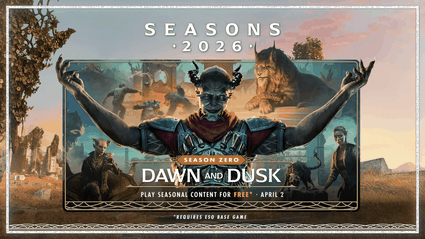
This is where Season 0 becomes important, because it is described as a foundational season, designed to gather the lessons of the transition year and to establish a more flexible base on which to build everything else. It's not just “the first Season”; it's a structural test of the new rhythm, also in how features are released, because the stated philosophy is one of progressive and iterative releases: some functionalities arrive in an initial form, are observed, and then are expanded based on feedback, instead of being delivered as closed and untouchable blocks. A concrete example is Overland Difficulty, planned for Season 0 but not included in Update 49, and therefore expected later in the season, with an optional setting that allows players to activate or deactivate the system and choose between three difficulty levels, applicable to overland zones, delves, and public dungeons, with initial rewards clearly presented as additional experience and gold. It's a detail that says a lot about the new model, because it shifts the focus to choice and adaptability, and above all recognizes that the overland is not a single “tone” valid for everyone.
On the narrative front, the change is equally clear: there is no year-long story as in annual chapters, although stories and quests remain a central element of the experience, but proposed with less rigid formats and cadences. This is accompanied by an even more explicit strategic choice, because no new permanent zones are planned for 2026, while some content will be limited-time and used as experimental ground. The endgame is also repositioned: no new group dungeons are planned during the year, while the addition of a new trial is confirmed, alongside a stronger investment in core systems, overland, and content designed also for those who prefer to play alone. Within the same perimeter fall concrete interventions that make it clear how the Season is not just a container of content, but also a vehicle for revising the base game, such as class modifications, with attention to Dragonknight and two-handed weapon combat, and work on PvP, which is accompanied by a PvP progression system with dedicated rewards, in addition to the “earnable” direction that comes from the Gold Coast Bazaar, designed to give players more control over the value obtainable by playing and reduce the feeling of permanently missing opportunities. In parallel, on the accessibility front, historical content such as Orsinium, Thieves Guild, Dark Brotherhood, and Imperial City are indicated for inclusion in the main game, a choice that has an immediate impact because it simplifies life for newcomers and reduces fragmentation for those who want to return with friends without having to reconstruct a puzzle of purchases.
Accessibility, Simplification, and Rewards: Fewer Barriers and More Player Control
A second axis of the new model concerns the reduction of friction, that is, everything that, in practice, creates separation between players and confusion about what to buy, because in the old scheme, between different editions, discounts, DLCs, and chapters, even a trivial question like “can I play with my friends?” often ended up turning into an obstacle course of checks, overlaps, and doubts about what was really needed, and it wasn't necessarily difficult, it was just easy to get lost. The stated direction tries to reverse this logic: many features and content that were previously tied to the chapter cycle should become more directly part of game updates, with the idea of lowering entry barriers and making it more immediate to understand “what's enough” to stay within the experience without surprises, and here the common thread is one: less complexity to enter and more clarity to stay. It's a simplification that, if it holds, will be immediately felt. To this simplification is added a technical change that, especially for the console community, is almost a promise of normality: calendar synchronization, with simultaneous release of updates on PC and console, to avoid the feeling of living two versions of the same game with different timings, because it doesn't make as much noise as a new zone, but it changes daily life, given that patches, fixes, and improvements should arrive at the same time for everyone and, over time, this tends to make the player base more cohesive.
The same principle is also applied to rewards, which remain the most sensitive part of any live service, but which are here rethought to become more unified and less fragmented: instead of a sum of separate checklists, the focus shifts to a seasonal path that functions as a single container, the Tamriel Tomes, structured on three tracks, one free and two optional premium, so that progression remains accessible to everyone while paid tiers primarily add extra rewards. The idea is to reduce confusion and concentrate progression and rewards into a few legible systems. Advancement comes through weekly and seasonal challenges that cover different playstyles, from PvE to PvP, from overland to group content, with the possibility of renewing individual challenges through a reroll system when they don't suit one's playstyle, and with a setup that tries to reduce the pressure of “I have to do it today” by allowing more space for a personal rhythm. On the rewards front, in addition to cosmetics and seasonal prizes, the presence of Seals of Endeavour is also indicated, with a stated quantity of 8000 obtainable during the season, within a consolidation that aims to remove fragmentation and prevent the player from having to chase scattered micro-objectives every day.
This logic is complemented by the Gold Coast Bazaar, an in-game storefront dedicated to earnable rewards, also designed to retrieve past items that previously returned sporadically or not at all, and here a new currency enters, Trade Bars, with a rather clear message: no direct purchase with premium currency, no maximum cap, progression must come through gameplay. In this sense, the stated goal is not to shift everything to a single track, but to reduce unnecessary tracks, that is, to ensure that players have fewer parallel systems to chase and more control over what to obtain and when, with a setup that tries to reduce dependence on “if you miss it, it's over” and to make the way rewards are earned and redeemed more consistent over time. The value of the system will be seen if it remains a reward accelerator, not a disguised obligation. In parallel, ESO Plus remains active and is enriched with benefits linked to the Tomes, including an accumulation mechanism tied to subscription months that allows, over time, to gain access to premium tracks without having to consider it a “buy it all at once” purchase.
Base Game Health: The Proving Ground for ESO's New Direction
The last macro area is also the one that, more than any other, determines the credibility of the model change, because Seasons can be described in many ways, but in the end, they are judged on one thing: whether they truly manage to let the base game breathe and transform community listening into visible interventions, within reasonable times. In the discussed material, a clear promise emerges, almost “of method” rather than content: to reinvest in base game health and make the relationship with players more transparent and less delayed, avoiding communication only when everything is already defined and can no longer be changed, because that's precisely where distrust arises. This is where players understand if the change is real. It's an ambitious promise, because it touches the most delicate part of any mature live service, namely trust, which is built not with an announcement, but with a repeatable sequence of actions, corrections, and concrete feedback.

The first level of this reinvestment concerns quality of life, and here the intent is explicit: to reduce friction and respect player time, intervening on those points that don't make headlines like a new zone, but that determine whether an experience is enjoyable or arduous, simple or full of small obstacles. The novelty is not just the list of changes, but the idea of a dedicated team working on a queue of requests collected in a structured way, through surveys, summits, and forums, with the aim of no longer treating QoL as a “bonus when there's time left,” but as a continuous line of work.
In parallel, a longer and more delicate project is being opened, that of classes and combat, which is not described as a single definitive patch, but as a multi-year journey of visual refreshes and mechanical adjustments, with a very clear stated goal: to make class identity more legible and increase build viability, that is, to reduce the distance between “it can be done” and “it's worth doing,” without losing the idea of freedom that has always characterized ESO. This framework also includes interventions on lines and transformations that have a strong weight in players' imagination, such as the werewolf rework, which is set up not as an isolated detail, but as part of the same drive to modernize and make the experience more coherent, intervening both on the visual impact and on how that gameplay is perceived and played over time.
On the PvP front, the discourse follows the same logic: it is positioned as a structural investment and not as an aside, through the idea of dedicated progression, specific rewards, and targeted fixes for historical pain points, with an approach that aims to test, gather feedback, correct, and in some cases reintroduce community-requested modes in a limited or experimental form before making them permanent. The value of this approach, if applied well, is that it shifts PvP from a field where one waits for “the big update” to a field where one works by iterations, correcting what blocks or ruins the experience, and building over time a more legible and motivating progression.
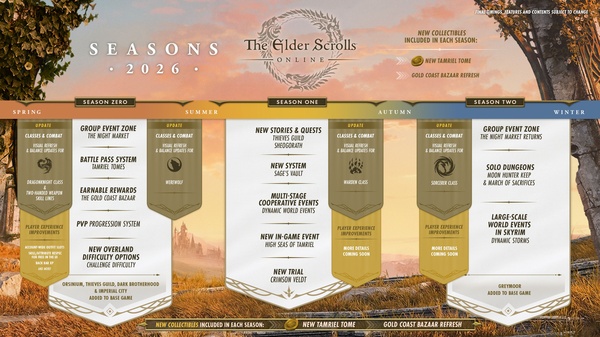
Holding everything together is the promise of the living plan, that is, the idea of showing what's coming first, gathering feedback beforehand, and correcting course without being prisoners of a long and untouchable roadmap, because the stated goal is not just to do more, but to do better and do it with more continuity; changing one's mind can even be healthy, as long as it's clear why and what has changed, and as long as iteration produces real effects on the game. For the player, the final question remains simple and concrete: will transparency be merely communication, or will it truly become a cycle of testing, listening, and iteration that produces visible changes? If the answer is the latter, this model will not only change what comes out, but the very feeling of how ESO evolves, because it will transform the game from “content that arrives” to “an ecosystem that improves.”
Many New Features Coming to The Elder Scrolls Online, But the Real News is the Method
Season 0 is the concrete beginning of the new course: a “foundational” season designed to set a more flexible pace and test a simple idea—introduce changes gradually, listen, and then refine. It doesn't aim to replicate the old chapter formula with a single annual story, but to distribute new features and systems more iteratively, allowing for corrections and adjustments over time. The question, in the end, is practical: will this approach make ESO clearer, more cohesive, and less strenuous to follow, or will it merely shift complexity from one form to another?
Similar articles