Hideo Kojima's Third Act. Falling and Rising Once More
Physint's move to Microsoft tells us a lot about the state of the industry, but also about Kojima: a figure capable of reinventing himself multiple times


When on September 27th, Rockstar presented the long-awaited images of GTA VI to the entire world, fans and critics worldwide took it for granted that Rockstar's next title would monopolize every discussion within the video game industry.
Yet, without anyone expecting it, a new storm swept through the industry, overshadowing the images of Jason and Lucia that had made millions of players' eyes light up.
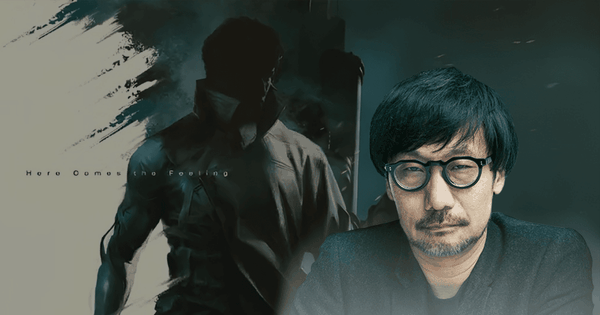
I am clearly talking about the announcement of the partnership between Xbox and Kojima Productions regarding the development of Physint, Hideo Kojima's next action title that aims to be a spiritual successor to the Metal Gear Solid saga.
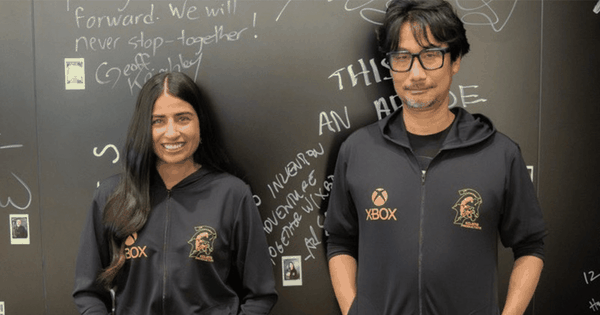
A true earthquake, given that the relationship between Kojima and Sony had been going on for decades. Think of the Metal Gear Solid saga, often identified with PlayStation consoles, or Death Stranding, which was released as a timed exclusive; the relationship between Kojima and Sony seemed indissoluble, but this tells us a lot about the current state of the video game industry where relationships are no longer taken for granted as they once were, and creative ideas are increasingly seen as a risk rather than an asset.
It must be said that Sony's farewell to Physint also has a huge echo due to the way Sony and Kojima Productions announced and managed the communication of the title: from its announcement outside Columbia Pictures Studios with Kojima and Hermen Hulst side by side to photos in PlayStation Studios almost as if Physint were a first-party exclusive.
Thus, the announcement of Sony's departure from Physint offers us a new vantage point on the industry and the challenges it is facing, but also on the evolution of Hideo Kojima, who has already shaped the industry for over 30 years and shows no signs of stopping.
The Zoom Call of Discord
The split between Sony and Physint has its roots in the spending review underway at PlayStation, which led to numerous layoffs and the closure of historical projects and studios, and seems to have also focused on the financial results related to the Death Stranding saga, concluding that Kojima Productions' two titles did not meet the expectations of Sony's management.
The consequence of this analysis gradually eroded confidence in Kojima and the Physint project, leading to a Zoom call between Kojima and Sony managers during which the latter communicated that the company would no longer support the project's development.
Today we know a little more about this Zoom call because Kojima himself spoke about it in an interview with IGN on the matter.
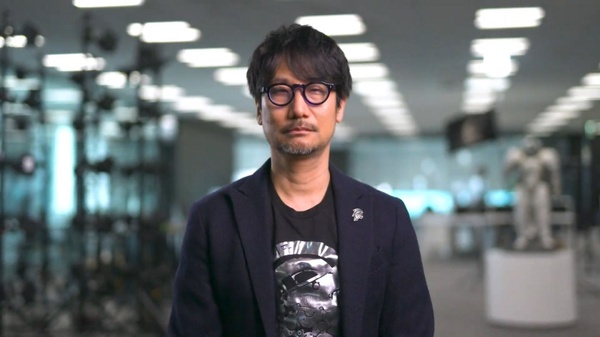
The Japanese designer and director stated that he received the invitation to the call while in the midst of a series of meetings around the world and accepted it without having any idea what it was about.
Upon entering the call, Kojima found himself facing Sony managers who, like a bolt from the blue, communicated their intention to pull the plug on the project.
Kojima himself stated that the way the matter was handled caught him off guard given his excellent relationship of over thirty years with Ken Kutaragi and Hiroki Totoki, but he understands that things at Sony now work differently.
Regardless of how Sony ended its support for Physint, what happened is yet another demonstration of how PlayStation is increasingly focused on short-term financial results with the goal of bringing the balance sheet into positive territory at the end of each quarter, effectively abandoning any ambition to be the creative vanguard of the industry.
Also because considering a product like Physint a simple balance sheet item represents a correct financial view, as Kojima's title would most likely have represented a negative item for years, but not a creative one, and certainly not in line with what Sony had been for years.

In his 30-plus years of career, Kojima has always been able to innovate, guiding the medium towards new evolutions.
By abandoning Physint, Sony has openly declared that it is no longer interested in any of this.
Hideo, Don't Lose Heart
Kojima emphasized how the blow received during the call with Sony brought him back to reliving the moment of P.T.'s cancellation and the need to come to terms with the closure of his project and to ensure a future for those who worked with him.
Exactly as happened with P.T., and Metal Gear Solid V: The Phantom Pain I would add, Kojima did not lose heart and decided to relaunch by expanding the game's concept, putting on the table not only the video game market but also that of the small and big screen, animation, and music, proposing to investors a total IP capable of embracing entertainment at 360 degrees; all surrounded by his name, synonymous with creative excellence and cultural avant-garde.
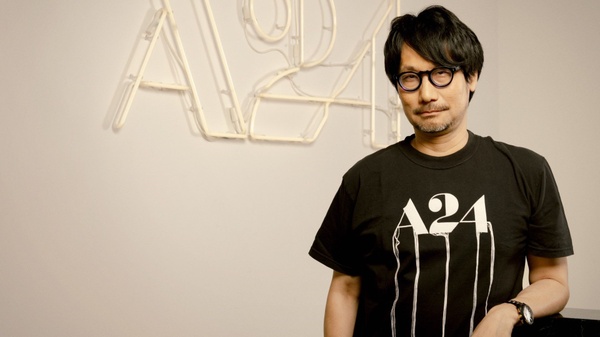
This relaunch, like an experienced poker player, makes even more sense considering Kojima's age, 63, and the fact that, according to him, he might have another 10 years left in the industry; hence the desire to make Physint not only his last cultural legacy but also his most excellent product.
And mind you, this is an operation that good old Hideo doesn't need at all.
Kojima is one of the last rockstars of the video game world, he has innovated the medium many times in the past and has also shown that he can create great experiences without having the backing of a company like Konami, and at 63, Kojima could easily sell the IPs of OD and Physint, remaining in the game as a guarantor figure while enjoying retirement, yet he decided to take another path.
Hideo Kojima not only enjoys the status he has acquired but has understood its potential and leverages it in the best possible way.
He has become the face of his products, a sort of quality seal, and he exercises this authority in a way never before seen in the video game industry: constantly bypassing it.
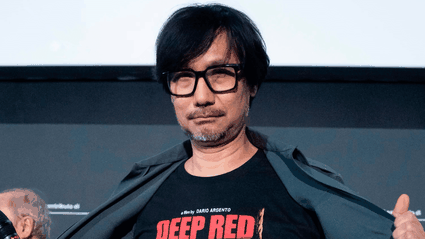
Today Kojima goes to Rome to converse with Dario Argento, is invited to Cannes and Hollywood, dines with Mads Mikkelsen, invites Robert Pattinson and dialogues with Timothée Chalamet, records his podcast exclusively with Netflix, voices a character in Zootopia 2, expands the Death Stranding universe with an animated series with Disney and brings it to the big screen with A24, collaborates with Prada in New York, creates high fashion collections with names like Gresham Blake and Jean François Rey, and much more.
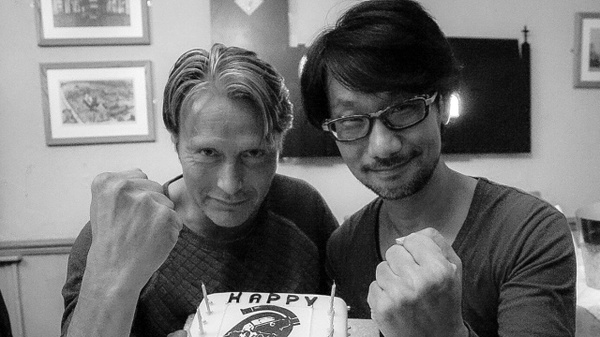
Like an ambassador, Kojima not only represents the video game industry but takes it beyond its borders, positioning himself as a guarantor for it and its potential, and bringing it to the table of the greats.
A Third Act That Doesn't Smell of Compromise
When in May 2026 I met Riley Russell, former Vice President of Sony PlayStation and current Head Studio of Kojima Productions, he confided to me how "today Hideo Kojima has the privilege of being able to choose which directors, actors, and screenwriters to dialogue with."
Today, directors like Guillermo del Toro, Nicolas Winding Refn, and Jordan Peele, or actors like Mads Mikkelsen, Norman Reedus, and Bill Skarsgård come into contact with the world of video games not because it pays well or they are avid gamers, but because of the weight of Hideo Kojima's name and his artistic vision.
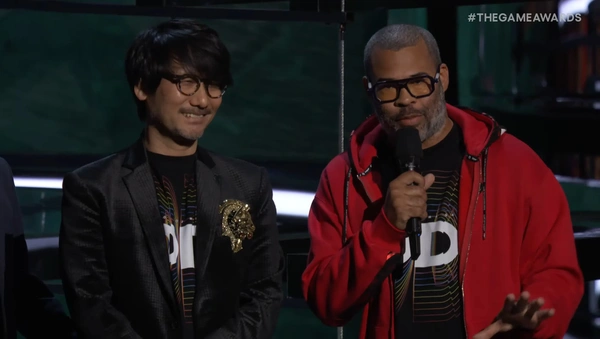
At a historical moment when the video game world seems to look more and more to cinema to maintain its dignity, Kojima does the opposite, maintaining cinematic inspiration but moving the creative vision away from the mainstream and instead focusing on a more authorial product. A choice, also made with Death Stranding, that exposes his products to more obvious risks compared to other successful titles like God of War or The Last of Us.
This means that today Kojima is the only one who can receive a "no" from Sony, not alarm the banks that gave him credit, and relaunch a product that was rejected, managing to find new financiers.
Now, we don't know the details of the agreement with Microsoft, which is not in better waters than Sony, and we don't know how this will evolve in the future. We know, according to rumors, that Sony wanted to acquire the Physint IP and received a refusal from Kojima Productions.
A refusal that means not wanting to betray one's nature, not wanting to lose one's identity, not wanting to lose one's freedom to try new things in the name of an audience to satisfy at all costs.
The Ability to Confront Oneself
In recent years, Cristiano Ronaldo has changed his position and way of playing, adapting to his new physical condition that does not allow him to launch into sprints or dribbles.
Fernando Alonso has gone from an hyper-aggressive driving style to greater car management and reading of movements on the track.
All the greats in a given sector, sooner or later, must come to terms with time and with who they once were, adapting to the new situation or deciding that it is time to put an end to their experience.
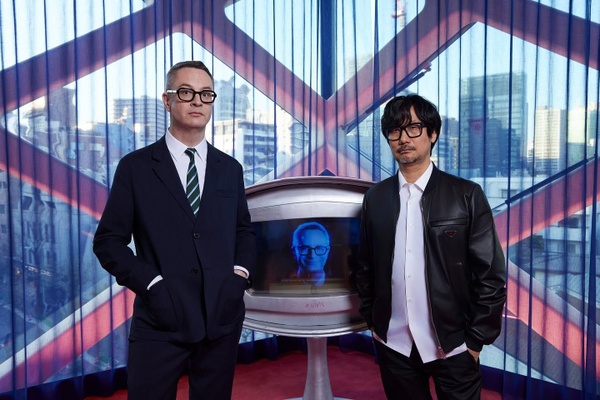
When I speak of Hideo Kojima's third act, I speak of the moment when, after creating Metal Gear Solid and relaunching himself with Death Stranding after leaving Konami, the Japanese designer decided once again to raise the stakes, confronting the best version of himself from the last 30 years.
All with the stated goal of surpassing himself.
In recent years, Hideo Kojima has not only shown himself capable of riding the wave but also of dominating it without fear of getting hurt.
In recent years, he could have rested on the laurels of his achieved success, instead, today Kojima Productions is one of the few software houses to have no less than 3 games in the pipeline, started and in production, 2 of which are new high-budget IPs.
Being optimistic, one of these titles should see the light in the next 4 years, when Hideo will be 67; it goes without saying that by the time projects are finished, he will be well over 70.
To IGN, he himself declared that he might have another 10 years of activity ahead of him, which confirms that in his mind there is a thought about his future and that of his creation.
It's difficult to imagine how Kojima will approach the medium in 10 years, however, wanting to be a bit romantic, his third act could conclude with the creation of a new class of creatives and designers within Kojima Productions capable of carrying forward their ideas inspired by Kojima's, while the latter would maintain a role as a "cultural ambassador" aimed at bringing visibility and dignity to the various projects.
A conclusion that would leave him imprinted in the history of the medium both as a creator and as a patron.
Or, who knows, maybe in 10 years we will be here talking about new projects, new transformations, and new ideas; perhaps a fourth act for good old Hideo.
Similar articles