5 Future Predictions Hideo Kojima Made in Snatcher and Policenauts
Forget Metal Gear Solid and Death Stranding, Kojima started predicting the future as early as 1988



In recent years, many analysts and enthusiasts have highlighted Hideo Kojima's ability to predict a whole series of events decades in advance, so much so that the concept that “we live in Hideo Kojima's world” is rampant on the web.
This idea, initially born as a meme, has gained increasing attention: many of the insights that the Japanese director introduced in the Metal Gear Solid and Death Stranding sagas have since materialized in an almost prophetic way. Just think of the social isolation caused by the COVID-19 pandemic (seen in Death Stranding) or the way artificial intelligence is used to manipulate information in Metal Gear Solid 2: Sons of Liberty.
However, most analyses of Kojima's “predictions” focus on acclaimed works created in historical periods where trends and information were already easily accessible to those who knew where to look; consequently, it was much simpler to imagine the consequences of an emerging technology or social context.
What many ignore is that Kojima, already between the late '80s and early '90s with his titles Snatcher and Policenauts, had ventured into much more complex predictions, anticipating concepts that have only become part of our daily lives today.
We are talking about technologies that at the time still belonged to science fiction; such as flat-screen TVs, virtual assistants, self-driving cars, or the impact of space travel on the human body. In Snatcher and Policenauts, Kojima did not limit himself to staging these elements, but described their internal mechanisms, anticipating their real-world application 30 or 40 years in advance.
E-cigarettes and vaping
Between 1988 (the release date of Snatcher) and 1994 (Policenauts), the concept of e-cigarettes was not alien to the tobacco industry; as early as 1965, Herbert A. Gilbert created the first prototype of a smokeless, tobacco-free cigarette, however, it was only in 2003, with Hon Lik, that this technology became real.
In Snatcher, tobacco is now an extremely rare resource since the Lucifer Alpha biological weapon has destroyed or made toxic all plantations on the planet, consequently, tobacco multinationals have created systems with interchangeable cartridges containing liquid nicotine and flavorings.
A system that effectively anticipated vaping and pod mods by more than 30 years, which only arrived on the global market between 2015 and 2017.
But it is in Policenauts that Kojima went even further.
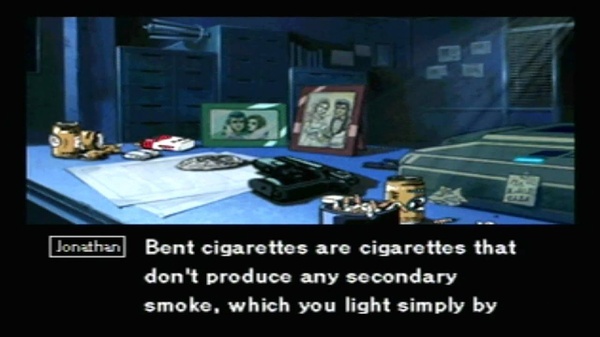
On the Beyond Coast space colony, smoking regular cigarettes is illegal because smoke and ash could damage the filtering systems. Tobacco multinationals have therefore devised bent cigarettes, which, while containing nicotine, do not produce smoke and do not need a flame to light, but only to bend one end. A technology that, in this case too, anticipated IQOS systems decades in advance.
Furthermore, at the time of the two titles, smoking was a social norm in Japan, so much so that according to research from the time, between 55% and 59% of men and 9% and 15% of women were smokers. Data that helps to understand how visionary the introduction of e-cigarettes in the two games was.
Video calls, screen sharing, and filters
Again, the concept of a video call was not new to science fiction, as Metropolis in 1927 had already shown it, nor to the technological sector, so much so that the first video call ironically took place in 1927.
However, Kojima in Snatcher and Policenauts did not just show characters using the technology, but introduced the technical functioning of this as an integral part of the world-building; imagining the current technological and digital infrastructure and also the privacy issues we face today.
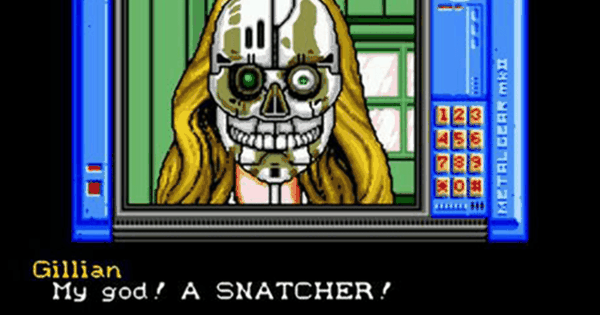
In Snatcher, Gillian Seed can make a video call both through the various phone booths scattered around Neo Kobe and through the screen of his robot assistant Metal Gear MK II (yes, the ancestor of what we later saw in Guns of the Patriots).
Furthermore, to make a video call, the player must remember the number of the person to contact; effectively anticipating the concept of digital address books and personal databases.
But the real insight is related to privacy management. Some of the characters we interact with in Snatcher do not want to show their name or tend to obscure their face or location, and to do so they obscure the camera or tend to filter faces and places: something that anticipated modern filters and the discussion on the right to privacy during remote work.
In Policenauts, Kojima instead predicted the possibility of sharing the screen and exchanging documents and files during a video call. Something totally pioneering for the early '90s.
GPS, satellite navigation, and self-driving cars

Regarding vehicle management in his early video games, Kojima proved to be a formidable visionary.
In 1988, when Snatcher was released, GPS systems were still a very immature technology and far from today's Google Maps or Waze, or even the old TomToms of the early 2000s.
However, Gillian's turbocycle has an integrated satellite navigation system that not only helps him choose the fastest route to his destination but also offers him data on traffic and the location of various objectives and clues.
At the same time, Kojima also emphasizes the dangers that a totally technology-based driving system can have, so much so that the car is “hacked” during the game, endangering the character's life.
In Policenauts, Kojima proposes an even more unthinkable vision for the time. GPS is not only useful for assisted navigation but also allows various means of transport to move autonomously; with characters entering the destination and the on-board computer interfacing with the satellites around the colony doing the rest.
A true prediction of current self-driving systems.
The effects of life in space on the human body

The way Kojima predicted the long-term effects of microgravity on the human body is astonishing, especially considering that at the time, human presence in space was still measured in weeks or months (the ISS space station did not yet exist).
In Policenauts, colonists who have lived in space for years suffer from severe systemic pathologies due to the absence of Earth's gravity, such as severe muscle atrophy, bone density loss, circulatory disorders, and weakening of the immune system.
Again, Kojima did not limit himself to including these negative effects but analyzed them scientifically, effectively anticipating a whole series of issues that are now commonplace given that we have much more data from ISS astronauts.
For example, he predicted that in space, bodily fluids are not pushed downwards by gravity, and this alters blood pressure and the production of stem cells in the bone marrow, leading to a consequent weakening of immune defenses.
Today, such effects are studied daily by NASA both to prevent potential problems for ISS occupants and to avoid issues in view of future space missions to the Moon and Mars.
AI, deep fake, and news manipulation
In the writing and direction of Snatcher and Policenauts, Kojima had a very long view on the evolution of artificial intelligence and its impact on people's lives, both positively and negatively.
In Snatcher, Kojima analyzed how artificial intelligence can create what is now called systemic paranoia in sociology, with the Snatchers not being simple “replicas” à la Skynet, but capable of simulating affections, memories, and daily life. This means that among the citizens of Neo Kobe, there is always the doubt that anyone can be an impostor; consequently, mutual trust collapses, and society needs Snatcher hunters, the only ones who can distinguish truth from falsehood.
It is easy to find a parallel in all this to the enormous amount of AI-generated content on social media that is now taken as true even by news outlets. Today, more and more people know that there is fake content out there, but they are unable to recognize it when they come into contact with it, which creates the same climate of suspicion experienced by the citizens of Neo Kobe.
In Policenauts, the theme of artificial intelligence is instead explored by focusing on its impact on the manipulation of information and society.
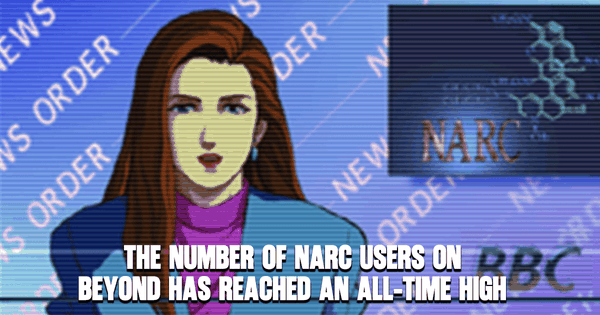
The BBC - Beyond Broadcasting Corporation - uses AI to generate a copy of journalist Karen Hojo, allowing her to be live 24 hours a day, anticipating the phenomenon of AI-generated Anchor Men by 30 years, which are already popular in China with the Xinhua agency or in Nigeria with TVC and Kuwait with Fedha.
But playing Policenauts also shows how the use of AI in news management is a way to manage and filter what happens on the colony.
Karen's copy is used to manipulate information and transmit a sense of calm on the colony, keeping prying eyes away from corporate affairs.
Furthermore, in the game, Kojima also raises the issue, more relevant than ever today, regarding the ownership and use of a character's image rights.
The moment the television company owns the journalist's rights, it can make the AI-generated copy say anything, even against her will.
We have always lived in Hideo Kojima's world

Looking at what Hideo Kojima has conceived and created in all his works, from the first Snatcher in 1988 to the latest Death Stranding 2 in 2025, it really makes one think that good old Hideo has a crystal ball at home with which he predicts the future.
The reality, however, is that Hideo Kojima has always been a technology enthusiast, and he doesn't just research the latest advancements in certain sectors, but tries to analyze and deeply understand the functioning of every single patent.
This means that he manages to include technologies in his video games that may be in their infancy today, but which will be commonplace in a few decades. He did it with video calls, with e-cigarettes, with flat-screen TVs, and even with Hal Emmerich's optical camouflage in the first Metal Gear Solid (the first patent based on optical illusions for camouflage was presented in 1898).
But sometimes it is also his ability to combine centuries-old traditions with modern technologies that makes him a visionary. For example, the basic concept of Death Stranding is based on the figure of the Japanese Bokka couriers, who deliver materials in the rural and mountainous areas of the country. Kojima took a centuries-old figure from Japanese tradition and put ultra-modern technology like exoskeletons on him; most likely in 20 years, when exoskeletons are available at affordable prices, we will say that Kojima predicted that too.
Or maybe we really do live in his world.
Similar articles