From Remothered to Mafia The Old Country: A Chat with Daniele Azara
Between Hollywood IPs and Sicilian soil. We talked about Stormind Games' many metamorphoses with Daniele Azara, Chief Creative Officer.
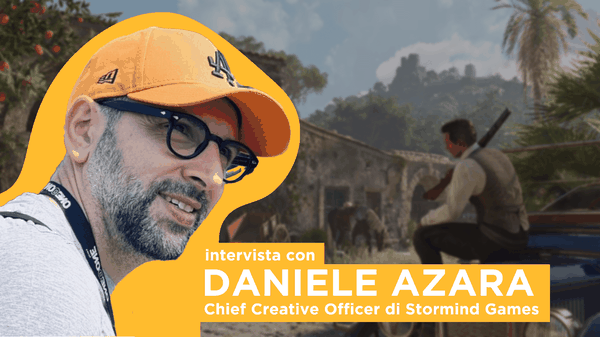


On the occasion of the RE-DESIGN event, organized between Warsaw and Krakow by the Italian Cultural Institutes of the two cities in collaboration with The Italian Trade Agency, the Italian Embassy in Warsaw, and the Ministry of Culture, Italian video games landed in Poland, today one of the nerve centers of the European and global industry.
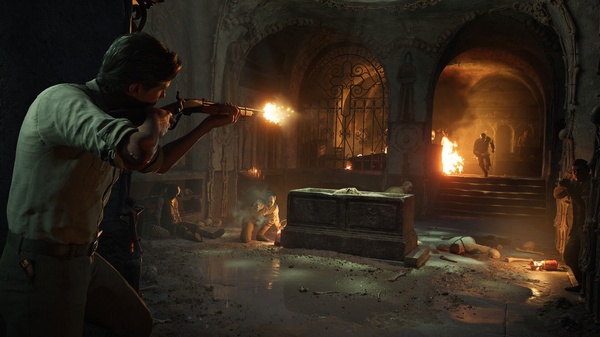
The event was organized for Italian Design Day and saw numerous Italian development studios meet with realities of the Polish industry. The standard-bearer of our national industry was Daniele Azara, Chief Creative Officer of Stormind Games, a studio that rose to prominence with A Quiet Place and the collaboration with Hangar 13 on Mafia The Old Country.
After the event, over a glass of wine and some canapés, we had the opportunity to chat with Daniele about the work on Mafia The Old Country and the state of the Italian video game industry.
What was it like working on Mafia The Old Country? How did Stormind Games influence the title's development?
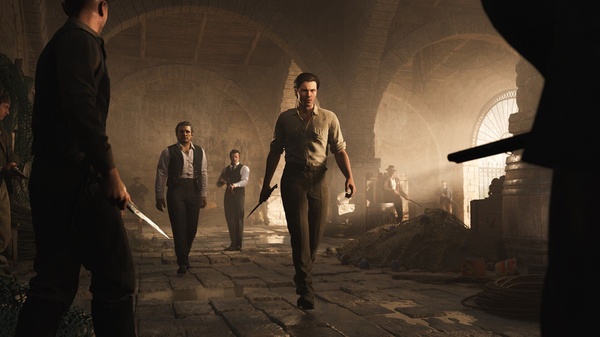
Initially, Hangar 13 had a game world in mind similar to Red Dead Redemption; however, despite their ambitions, it was clear they needed support, even if only due to geographical distance, in recreating the Sicilian setting.
Bringing late 19th-century Sicily back to life is complicated because it's not enough to just create a few assets; it's a job that requires immersion in what Sicily was like at the time, socially and culturally. This involves studying the places, the dialects, the stories of those lands, and even the emotions behind them.
On the other hand, Hangar 13 reacted like a sponge to our input. They came with us to Sicily, to the Giarre area, and were impressed by what they saw.
The curiosity of the Hangar 13 people and their love for Italy overwhelmed them, so much so that I feel I can say that in the end, they became a bit Sicilian.
For us, working on Mafia The Old Country meant working on the foundations of the franchise: what came before the previous chapters and what will come in the future.
Hangar 13 was fascinated by all that historical and cultural aura surrounding the concept of early 20th-century Mafia; for example, they wanted to recreate clashes with Sicilian knives, but they weren't entirely clear on what these were like. So we took them to a craftsman who still produces "liccasapone" today, knives almost 50 cm long, and they were literally amazed by it.
Stormind Games began its journey with the horror genre – the Remothered series – then changed pace with Batora and returned to horror in grand style with A Quiet Place. How did you experience this transition, and what was it like working on such a big franchise?
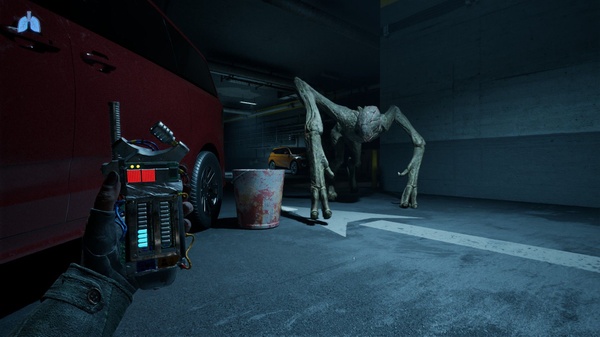
Initially, Stormind was not the designated software house for the game's development, but a support company for it. Then Saber Interactive showed us trust and esteem and assigned us the entire project.
Saber was truly pragmatic, a value that we at Stormind shared from the very first minute, and this greatly facilitated the collaboration.
Working closely with Saber undoubtedly helped the team grow with a transfer of knowledge and know-how.
One of the biggest challenges was getting the game's script accepted. When they accepted it, we had 2 years to develop A Quiet Place, which pushed us to review all production processes and transform ourselves as a company.
After A Quiet Place, Stormind grew. On one hand, we demonstrated our ability to manage Hollywood IPs; on the other, we have more experience and ways to develop our own IPs.
How did the relationship with Hangar 13 and 2K develop during the creation of Mafia The Old Country?
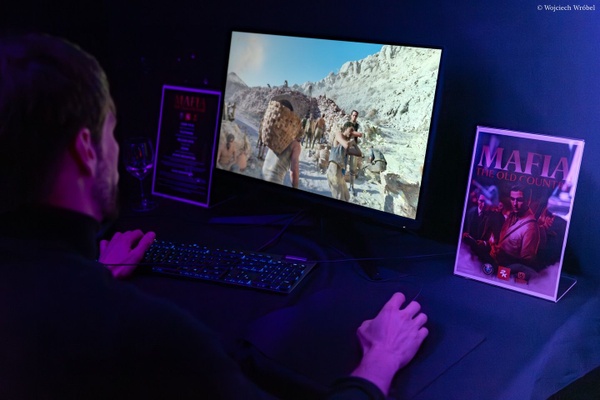
You know, they are Czech and have a fairly strong history of identity and self-determination, and this immediately made them feel in tune with Sicilian history.
The work done to reconstruct Sicily of that era required collecting hundreds of vintage photos which were then analyzed and interpreted.
Hangar 13 approached all of this with enormous humility, trying to understand as much as possible about Sicilian customs and culture of the time. They had a vision of the Mafia as a pop concept in an American key, while in The Old Country, a story of culture, traditions, and emotions had to be told; which is why they relied on us.
As developers, we were good at telling the story of Sicily using a linguistic and visual vocabulary capable of communicating the contradictions of the era to the widest possible audience.
Working with Hangar 13 and 2K allowed us to work on a historic franchise like Mafia, but also to learn a lot from them. Hangar 13 and 2K taught us what it means to work on a Triple-A product, what the timelines and operations are: all things we knew in theory, but practice, as always, is a completely different matter.
Collaborating with 2K allowed us to gain their trust and be mapped as a reliable partner, not only with The Old Country but also for other future projects.
To draw a comparison, it's a process similar to that of Konami and Bloober Team.
However, we remain grounded. One step at a time.
We haven't done anything yet.
Beyond Mafia The Old Country, Stormind Games has Sicily in its blood.
As a studio, it has shown that it's possible to do business and creative business in a territory where the narrative suggests talents flee; instead, you have not only retained them but also attracted others from different parts of the world.
Do you feel the weight of being an established reality in Sicily and Italy?
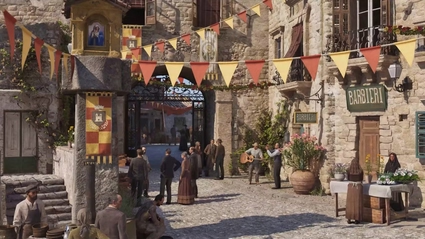
The founders of Stormind Games – Antonio Cannata and Federico Laudani – are Sicilian and love their land. They want to see it grow and evolve.
As a team, we fully embrace this idea and want Sicily, as well as other areas of Italy, to be recognized as a land where many things can be done.
At Stormind Games, we have people from different regions of Italy and also from different countries, and we all feel this cause is ours, both locally and nationally.
At the same time, 90% of our team works remotely, which allows us to have leaner and more dynamic production processes.
However, whenever we have the opportunity, we always bring our partners to Sicily, and they always fall in love with this land.
In reality, it matters little where a studio is born; what matters is what it does.
What Stormind Games teaches is that you can create anywhere, provided there is will and preparation.
Let's talk about the elephant in the room in recent years. What is your relationship with artificial intelligence?
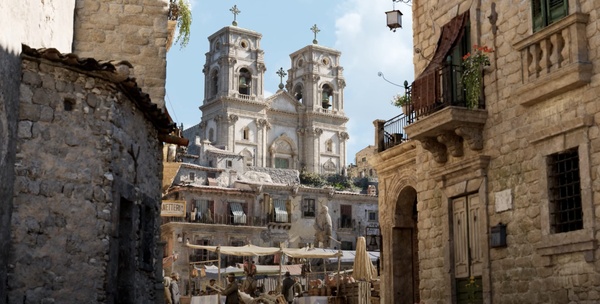
Artificial intelligence is a tool that helps and will undoubtedly help speed up some decidedly mechanical processes, but it can never replace the creativity or artistic flair of human beings.
At Stormind, we certainly look to this technology to speed up a series of processes, with the awareness that everything can be used in the right or wrong way.
We do not adapt to artificial intelligence, but we adapt it to our needs.
More than anything, it needs to be clear who is behind all these AI tools and what the interests of these people are, which certainly do not coincide with the interests of the rest of the world.
One last question. In Italy, we have an unparalleled historical, artistic, and cultural heritage, yet we use it very little, if at all, in the world of video games, so much so that we have to see other realities create games using our cultural assets.
At the same time, in France, a small team based its work on French historical and cultural heritage and created Clair Obscur.
Why hasn't a similar project been born in Italy yet?
Clair Obscur was born in a country – France – with a strong and consolidated industrial structure, which relies on continuous dialogue with the State and an enormous industrial fabric that is not comparable to Italy's.
The French government, for example, treats video games like cinema.
In Italy, we have big players, but they make different choices compared to the French ones; for example, specializing more.
The Italian problem is not a problem of ideas or skills. Clair Obscur was created by people who have enormous cultural background in the processes behind a video game.
This knowledge, combined with the ability to intercept a public demand – that of a turn-based JRPG that looks to the classics of the past – allowed Clair Obscur to be born and achieve the success it has.
And let's be clear, it's not that Square Enix is unaware of market demands; Square Enix simply can no longer create such experiences and must follow larger markets.
Clair Obscur is not just “Frenchness” but also a lot of love for the work that has been done.
In Italy, we have many talents who don't believe in themselves, which leads them to copy those who copy Italy. There are companies that have tried to create products of the highest level, but they haven't been able to reach that necessary next level, perhaps out of fear or lack of self-confidence.
Then a discussion about the audience also needs to be opened.
In France, people love art, and the government supports artistic initiatives as a means for the evolution of collective thought.
In Italy, support for art is scarce and doesn't always work well.
And this can be said of many other sectors of the country; so ultimately, it's not a problem of the Italian video game industry, but rather a structural problem of the country.
_______________________________________________________________________
With this conclusion on the Italian system, we left Daniele free to enjoy the event, with the promise to reconnect to talk about Stormind Games' new projects in the pipeline
Similar articles