Scarpetta, the review of the series with Nicole Kidman: the difficult transition from novel to TV
How is the new series based on Patricia Cornwell's novels?


Translating a character like Kay Scarpetta to the screen means confronting an imposing narrative legacy. The forensic pathologist created by Patricia Cornwell is a figure who helped define the contemporary imagination of investigative fiction. With the series developed by Liz Sarnoff for Prime Video, this character finally arrives on television after decades of failed attempts. The result, however, is a more unstable television product than the project's prestige might suggest, but still promising.
- The plot
- A narrative structure that struggles to find balance
- The cast
- An ambitious and sprawling adaptation
- Conclusion
The plot of Scarpetta
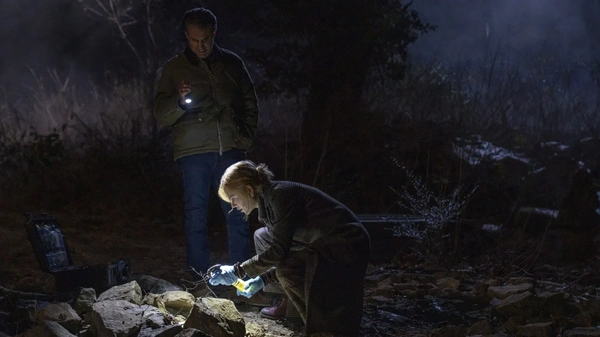
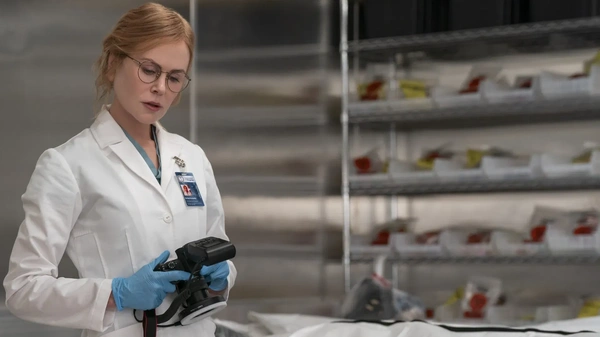
The starting point is the classic one of contemporary crime. Kay Scarpetta, played by Nicole Kidman, returns to her role as Chief Medical Examiner of Virginia to investigate a brutal murder linked to a case that marked her professional past in the nineties.
The narrative unfolds on two distinct timelines, alternating the present with the initial phase of the protagonist's career. The choice has an obvious logic: to bring two moments of the character's life into dialogue and observe how time has modified relationships and obsessions. On paper, this structure offers an interesting perspective on the myth of Scarpetta.
A narrative structure that struggles to find balance
The problem arises when the series tries to reconcile too many narrative directions simultaneously. The criminal story coexists with an intense family drama centered on the relationship between Kay and her sister Dorothy, played by Jamie Lee Curtis. Around this core, further narrative threads accumulate.
The effect is a progressive dispersion of the narrative focus. The series seems to constantly oscillate between different registers without managing to find a stable balance.
This instability is particularly evident in the relationship between the investigative dimension and the emotional one. On the one hand, Scarpetta tries to build a story about the psychological burden of a life spent in close contact with death. On the other hand, the criminal plot progressively pushes towards more eccentric territories. The two components do not always interact convincingly.
The graphic violence of some scenes suggests the ambition to place itself in the territory of the darkest crime shows of contemporary television, but the narrative context does not always seem able to sustain this intensity.
A high-level cast that supports Scarpetta
The cast inevitably becomes the main element of cohesion. Nicole Kidman builds a restrained, almost hypnotic Kay Scarpetta, who moves with her usual confidence in the territories of television psychological thrillers. She is a magnetic presence, capable of giving weight even to the most fragile passages of the writing.
Jamie Lee Curtis, on the other hand, chooses the opposite direction. Her Dorothy is a more unpredictable figure, dominated by an almost destructive vitality that makes the character one of the energetic poles of the series. The contrast between the two interpretations produces some of the most interesting moments of the entire project.
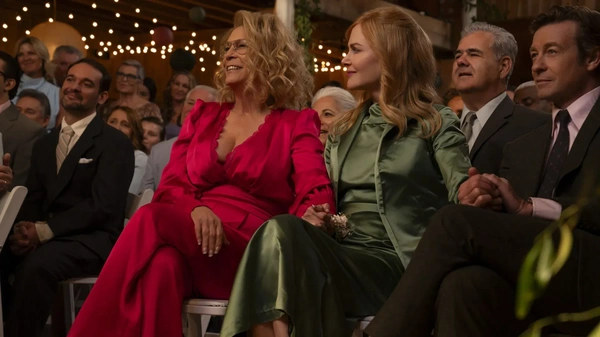
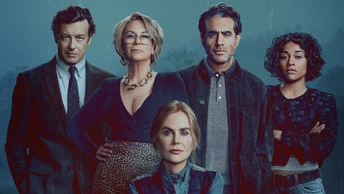
Around them revolves an ensemble that includes, among others, Bobby Cannavale, Simon Baker, and Ariana DeBose. The feeling is that the performers work with great conviction on often irregular narrative material.
An ambitious and sprawling adaptation
The choice to adapt Cornwell's saga by combining elements from multiple novels probably contributes to this impression of overload. The operation allows many narrative ideas to be put into play, but reduces the space to truly develop their implications.
Instead of delving into a central investigative line, the series often seems to chase new thematic deviations. The result is a narrative that proceeds by accumulation rather than progression.
Scarpetta remains, however, a television product difficult to ignore. The charisma of the performers and the aura of the source material guarantee a certain degree of involvement, even when the narrative structure loses compactness. The problem is that the series never manages to transform its ambition into a truly coherent form. Instead of renewing television crime, it ends up oscillating between different identities without truly choosing a direction.
Scarpetta, conclusion of the review: a series looking for direction
The final impression is that of a project that possesses all the elements to work, but struggles to organize them into a clear vision. Kay Scarpetta remains a powerful character, and the series demonstrates how much her narrative universe still has strong television potential.
For now, however, this first screen incarnation seems more interested in expanding its scope than in finding a solid narrative center. And it is precisely in that lack of center that Scarpetta ends up losing some of its strength, while remaining a promising television project... perhaps for a second season?
The TV series, consisting of 8 episodes, is available on Prime Video from March 11, 2026.
Score
Editorial team
Scarpetta, the review of the series with Nicole Kidman: the difficult transition from novel to TV
Scarpetta finally brings one of the most influential characters in contemporary crime to the screen, supported by a high-caliber cast and Nicole Kidman's magnetic presence. The ambition of the adaptation is evident: to merge investigation and psychological tension.
The result, however, often appears scattered. The numerous narrative threads struggle to find balance, and the series seems to oscillate between different genres and registers without a fully defined direction. It remains an interesting and at times engaging, but also uneven, project that hints at potential still searching for its definitive form.
Similar articles