Diablo IV, Season 11: The Return of Narrative, the Paladin, and a New Path to Mephisto
Between Divine Gifts, Sanctification, and the return of the Lesser Evils with Azmodan, Blizzard tries to make the season more “full” and prepare for Lord of Hatred, releasing April 28, 2026


With the announcement of Diablo IV: Lord of Hatred (scheduled for release April 28, 2026), Blizzard seems to want to refocus on a point that is often treated as an accessory in modern ARPGs: a recognizable narrative line, capable of creating suspense and a sense of progression even when the game, by its nature, is based on seasonal cycles that repeat almost infinitely.
In this case, however, unlike the third installment of the franchise, Blizzard wanted to add targeted surrounding elements, trying to leverage seasonal content by also inserting story elements, thus advancing the world's lore and creating a recognizable context to ensure players want to return to Sanctuary. Since we welcomed the Spiritborn among the playable classes, we have also seen a rather intriguing threat resurface, represented by one of the Prime Evils, namely Mephisto.
In simple terms, the narrative has shifted from what could be perceived as “side content” to a more direct path, where certain events and revelations have put Mephisto back at the center, taking the place of the late Diablo.
In this light, Lord of Hatred presents itself as a coherent next step: if the previous cycle brought the Prime Evil back to the surface and put the saga back on a more compact track, the seasonal cycles and the expansion itself seem to want to capitalize on that work and transform it into a campaign that doesn't just offer “another chapter,” but tries to organize the experience around an antagonist who works well precisely because he isn't just a final target.
Mephisto, by definition, is not the kind of enemy who only exists in the final confrontation: he is a narrative agent who acts through attrition, contamination, conflict between allies, tension between what is desired and what one is willing to sacrifice to obtain it. I almost feel like I'm rereading the Sin War trilogy, and my only complaint to Blizzard is that they should write many more lines of dialogue in the game and many more books.
It is in this framework that Season 11 takes on a more interesting role than usual: not just a parenthesis of mechanics, but a possible bridge between what has been exhumed and what could be the new development of a story that is now more than twenty years old.
The return of the Paladin: the perfect class to clash against Mephisto
The arrival of the Paladin class in Diablo IV is particularly interesting if viewed through the lens of Diablo II, because that's where this archetype established a very precise grammar, and I'm not just talking about aesthetics or nostalgia, but about how it made you play. In the second installment of the franchise, the Paladin was, first and foremost, a “support” character: he didn't just rely on melee attacks, but on a logic of aid and control that revolved around auras, which are active and constant buffs that changed the character's presence on the field.
In Diablo IV, the approach is a bit different, but it learns from the past to rewrite all those builds we wore out in the game in modern terms. The first that comes to mind is the Hammerdin, but today we also find interesting rotations that focus on simply reflecting damage or on controlling the field with AoE abilities. The abilities, therefore, are not carbon copies of Diablo II's auras, but their natural evolution within a more dynamic system. This is an important difference, because it clarifies that we are not talking about a 1:1 return of the class as it was, but a product that has undergone an evolution, also taking something from Diablo III's Crusader.
The feeling is that Blizzard chose to bring back the Paladin precisely because it is an immediate symbol of the world of Diablo II, and because it ties in well with a cycle where Mephisto returns to prominence, thus to a phase of the saga that wants to regain a darker and more “serious” tone. And if I have to put it as simply as possible, this is what makes the Paladin interesting: not just because it's a class many wanted, but because, when it works, it makes you feel something that Diablo II did very well: making you feel inside a living and reactive world.
What really works in Season 11: interconnected systems, cleaner progression, and content that dialogues with itself
Season 11 works when it stops being a separate parenthesis from the rest of Diablo IV and instead becomes a season that brings order: it doesn't just add a “new” mechanic, but tries to ensure that time spent has more continuity, more sense of advancement, and less feeling of repetition for its own sake. The most obvious starting point is the reworking of item progression, where Tempering and Masterworking are finally made readable even for those who don't want to study systems as if they were a rulebook: the first concerns customization, i.e., choosing what type of enhancement to apply, the second concerns “prestige” growth, i.e., bringing an item to a higher and more solid version of itself.
Regarding Tempering, the concrete difference is that you are no longer chasing a lottery: now you select the affix you want to apply via a Tempering Recipe and obtain it directly, accepting a clear compromise, namely that the item can have only one tempered affix, with the possibility that on Ancestral items that tempered affix may even be elevated to a Greater Affix. The fact that Tempering Charges can be reset without limits also changes the tone of the experience, because customization is no longer a lost cause, but a process you can refine until you feel you've found the right combination. Masterworking, on the other hand, follows a more linear and “measurable” path: it is based on the item's quality and increases base damage, armor, or resistances, as well as gradually improving affix values, up to the maximum limit, where you can attempt the final leap with a Major Expedition bonus that significantly enhances an affix; and here the choice to allow recalculation without resetting already obtained quality avoids that typical ARPG frustration where you feel you've wasted hours for a single wrong outcome. The increase in base affixes on non-unique items, from three to four, goes in the same direction: it makes the search for the “right” piece more credible and prepares the ground for a system like Sanctification, which requires a definitive action and therefore needs, first, to give you items truly worth “finalizing.”
Alongside items, the season works on combat in a less flashy but more useful way, because it revises monster behavior and the weight of affixes to make encounters less predictable: enemies have clearer roles, react more dynamically, and elites that generate minions who inherit part of their affixes raise the pressure simply but effectively, as they force you to read the situation instead of treating every group as a target to be swept away without thinking. Here the result is not “more difficult” in an absolute sense, it is more consistent: the game demands attention when needed, and this makes character growth feel real, because if the world doesn't react, even the increase in power loses value.
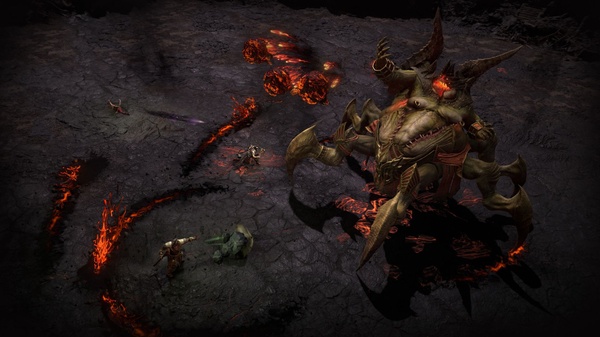
The third element, which makes Season 11 more vibrant than usual, is the return of the Lesser Evils as a distributed and recognizable presence in activities, with Azmodan completing the picture: they are no longer just names to be evoked in a separate context, but influences that enter game modes and change their rhythm and priorities, so that you have a practical reason to alternate different content instead of always doing the same thing. Azmodan becomes a permanent world boss and can also be summoned at a specific point, with rewards linked to Corrupted Essence, while Duriel and Belial enter their contexts more organically, Helltide and The Pit, and Andariel finds space in the Underground City, with mechanics and rewards that encourage re-entry. It's a simple fit to understand even for the reader: it's not “one more activity,” it's a way to make existing activities dialogue, giving them a reason to be in the seasonal path.
Upon this structure rest Hadriel's Divine Gifts, which have a rare merit: they are explained in two lines and then understood by playing. Each Gift has a reward and two variants, a Corrupted and a Purified one, so the choice is concrete—more risk with a negative effect or more safety with a positive effect—and progressive enhancement creates a natural incentive to rotate between different content. In practice, you no longer just do The Pit or just Helltide “because it's convenient,” but alternate activities with a clear objective, and this, in a seasonal ARPG, is worth more than many promises.
When you want to finalize your equipment, Sanctification enters as the final step: it can add a bonus, elevate an affix, introduce special affixes, even root very rare powers, but it does so with a serious rule, because the item becomes unmodifiable, so it's a choice to make when you feel the piece is truly the right one, not when you are still experimenting. And, in the background, the restructuring of seasonal progression through the Season Rank makes the path more orderly, with functional rewards and defined objectives, while changes to defense and healing try to give more weight to survival: here it's important to clarify something for the reader, because the term can be confusing; the Tempering mentioned earlier refers to item enhancement, while Tempering as a defensive characteristic is an indicator that summarizes, more immediately, how much real “durability” the character has after mitigations.
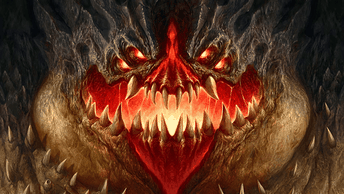
Diablo IV, Season 11: The Return of Narrative, the Paladin, and a New Path to Mephisto
Season 11 shows a more self-aware Diablo IV: fewer isolated gimmicks and more interconnected systems, between Divine Gifts, Sanctification, and the return of the Lesser Evils with Azmodan. Item progression becomes more readable and rewarding, because Tempering and Masterworking reduce the feeling of a “lottery” and make it clearer when a piece truly deserves to be finalized. The Paladin rekindles classic imagery and attracts players, but also raises a delicate issue: if perceived power too greatly exceeds that of other classes, there's a risk of shortening the experience and skewing comparisons. The real test will be maintaining variety and understanding, not just speed of growth.
Similar articles