Seven Comic Gifts That Will Save Your Christmas
Blasphemous popes, dreams, love stories, history, current events, and fantasy: reads for all tastes
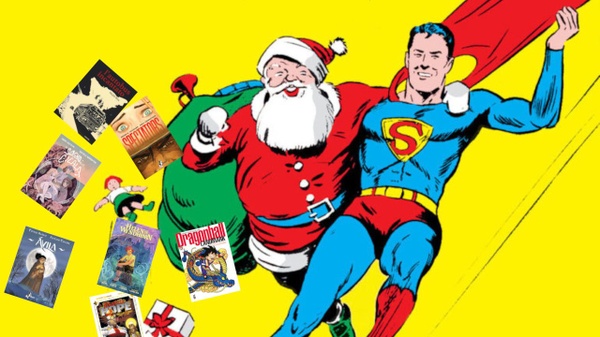


A book is one of the most common lifesavers when it comes to gifts, but also a bit cliché, right? Since Christmas is imminent, we've put together a list for all procrastinators to make a good impression by always picking from library shelves, but from the comic section. Given the strong expansion of comics in Italy in recent years, there's no better time to cater to all tastes. And if the person you need to buy a last-minute gift for doesn't usually read comics, we've tried to suggest the type of person each volume would be particularly suitable for.
Battle Pope

Robert Kirkman's debut comic: that alone would make Battle Pope an unmissable read for many. This series, originally published through the independent label founded by the American author, is the launching pad through which the creator of The Walking Dead and Invincible first stepped into the world of American comics. And not just him: the first chapter is entirely drawn by Tony Moore (also an author of TWD), while from the second, he alternates with other names who have since become relevant in the industry, such as Matthew Roberts and Cory Walker. As understandable from the title, the protagonist is the Pope, or rather, a future Pope, driven more by the opportunities connected to the role than by genuine faith. A womanizer and prone to excess, Kirkman's anomalous pontiff proves of little use to humanity when the day of judgment finally arrives.
However, the Creator cannot leave Earth at the mercy of demons, and so he asks the Pope himself, to whom he sends his son for help, to resolve the situation with punches and bullets. Perhaps unknowingly, Battle Pope is both the epitome and the death of '90s comics. With the recklessness of a twenty-year-old and the audacity of an outsider, Kirkman exaggerates all the concepts on which Image of the time rested: hypertrophic protagonists, action movie dialogues, and a lot of '90s irony. From this latter part, Battle Pope carries an exaggerated machismo, which today appears ridiculous in its staging, but which Kirkman himself admits in the introduction is a product of another era and (rightly, I add) no longer in line with today's sensibilities. The idea of a degenerate Pope, more than a satire against religion or the system (in this sense, our own Don Zauker is more effective), is an excuse to play the most sacrilegious prank possible and stage a series of iconoclastic gags so exaggerated that they could only be conceived by a group of post-adolescents left unchecked.
Recommended for: those who wait outside the church drinking an alcoholic aperitif during ceremonies, those who know Schwarzenegger's filmography by heart.
Spectators
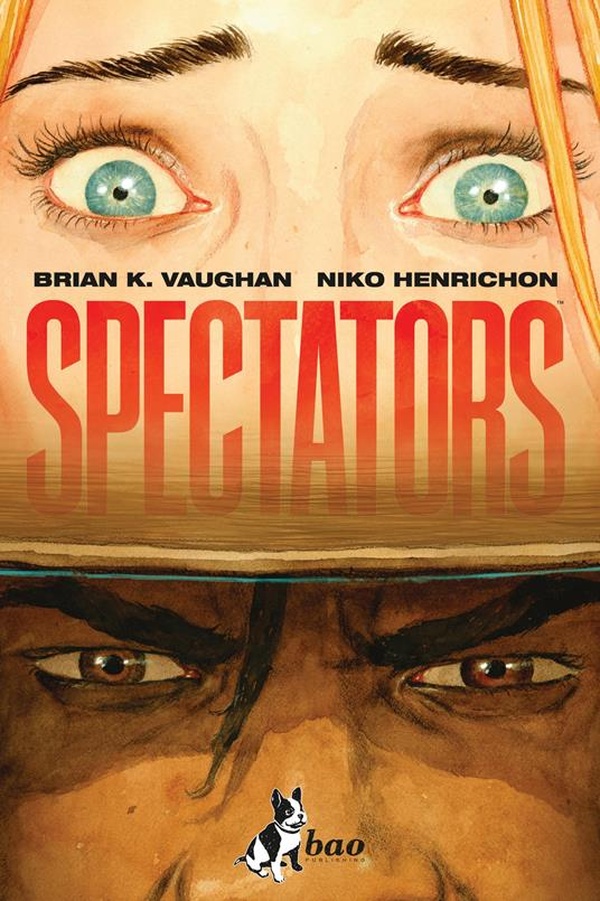
What would you do if your soul after death remained trapped in this mortal dimension, while the end of the world dawned on the horizon? I imagine the first answer that might come to mind isn't "The Peeping Tom!", yet that's exactly how things go in Spectators, a very recent graphic novel by Brian K. Vaughan (Lost, Saga) and Niko Henrichon (Pride of Baghdad), brought to Italy by Bao for Lucca (along with the author himself!). Okay, obviously things are a bit more complex: Val, the protagonist, loses her life during a mass shooting, one of the many reflections of contemporaneity that Vaughan inserts into a story that explores the most dramatic consequences of the present through the lens of cynicism. Val's soul is trapped precisely as humanity faces its fate, yet what attracts her attention (and that of other souls in the same situation) is the sex of mortals, perhaps the most human act we are capable of, where masks fall and for brief moments we touch the divine. Accompanied by other souls remaining on this plane of existence, Val guides the reader to the apocalypse, sowing along the way food for thought on the human condition and history, all while maintaining a story that is always sparkling and entertaining.
Recommended for: cynics, apocalyptic thinkers, those who believe we live in interesting times and are not easily embarrassed.
The Cicada's Dream

Writing about teenagers, when you are no longer a teenager, is one of the most difficult things for a writer to do. The Cicada's Dream, written by Dario Sostegni and illustrated by Raffaele Sorrentino, has a cast of characters composed almost exclusively of teenagers, all with a credible and recognizable voice. And that's not all: it speaks of absence, right from the start, from the first panels where we witness time passing in front of the flyer asking for information about Devid, who has disappeared. Devid is Villa's brother, and things at home are not going well: her father now lives only in the absence of his son, or at least that's what Villa says, who has secretly moved in with her friend Giulia for some time. However, an encounter with a strange child leads Villa and her group of friends into a dreamlike dimension, where the typical disorientation of the protagonists' adolescence takes shape, accompanying the delicate phase of defining one's self through conflict with others.
Perhaps even more difficult than writing about teenagers is telling the story of adolescence, but it wouldn't seem so observing the result of the communion of intentions between Sostegni and Sorrentino. The blue in which Sorrentino's soft and delicate drawings are printed helps to delineate that placid and dilated atmosphere of summer afternoons that permeates the entire story, even before giving way to magical realism. The thin lines, perfect for embodying the subtle inadequacy with which one moves at that age, alternate with the intense blue of shadows, nights, and the dreamlike. Too many difficult things hit all at once for it to be a coincidence: the final compliments therefore go to Canicola, a publishing house always very good at offering space to Italian talents, also drawing from self-productions, and to stories outside the mainstream canons.
Recommended for: those who still remember that afternoon at the beach, those who haven't quite come to terms with themselves yet.
Helen of Wyndhorn

One of next year's blockbusters will be Supergirl, a comic book movie largely based on a miniseries written by Tom King, drawn by Bilquis Evely, and colored by Matheus Lopes. It will be, probably, despite the trailer not even remotely touching the visual originality of the original work. If you've read Supergirl: Woman of Tomorrow, you know what I'm talking about; if you haven't yet, remedy it as soon as possible. Now, however, imagine the same trio of authors at work on a graphic novel without the limitations imposed by a major like DC Comics, and you'll have Helen of Wyndhorn, a new mini-series from the acclaimed King&Evely&Lopes partnership, published by Bao Publishing.
The Helen of the title is forced to rediscover the places of her lineage, the Wyndhorns, following her father's death, but from her arrival at the mansion, something seems amiss: the butler is unsettling, and the absence of her grandfather hovers over the walls like a presence. Soon, reality and fantasy merge, and Helen realizes that perhaps the family stories weren't all tall tales. Here, Bilquis Evely can give full rein to all her versatility, equally at home in the atmospheres of an 18th-century English novel and in the more frantic pages where the universes of Conan the Barbarian and The Wizard of Oz seem to find a meeting point.
Recommended for: those obsessed with dark academia, Buffy fans, those who played What Remains of Edith Finch and were enchanted by it.
Dragonball Landmark & Forever
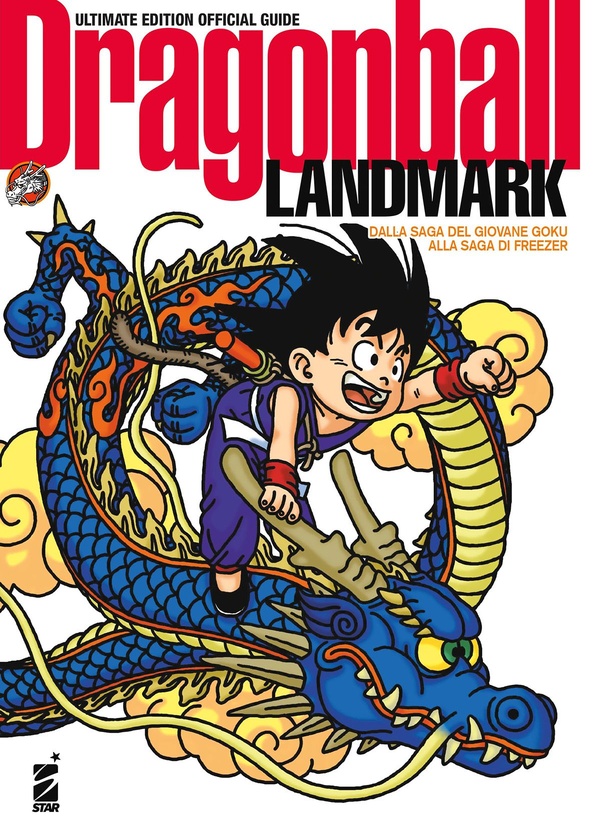

While the rest of the world uses letters to separate generations, in our parts we use a simpler method: the flagship cartoon of generalist TV of the era. And those born in the '80s are undoubtedly the Dragon Ball generation. The work of the late Akira Toriyama has survived subsequent generational phenomena, now handed down from father to son given the time that has passed, and is today a small classic. And like any cult object, it has become the subject of endless curiosities and debates on which Dragonball Landmark and Dragonball Forever try to put an end to.
This is the definitive guide to the manga divided into two volumes by chronological scan: Landmark, the first, covers events from child Goku to Frieza, while Forever covers from the cyborgs to Majin Buu. Inside, in addition to numerous color illustrations, it is possible to find the answers to all questions about Toriyama's manga. The world maps with descriptions of individual areas, characters, battles, loves, and also quizzes, behind-the-scenes stories of the creation told by Toriyama himself, the best gags, even nude scenes, an index of all events with chapter and volume indications, and again, and again, and again... Whatever aspect I may not have mentioned in this list, trust me, it is present and treated in detail. The encyclopedic vocation, however, does not prevent the two volumes from being spectacular also from a graphic point of view, with a layout that echoes that of Japanese magazines, rich in illustrations, headlines, and graphic elements.
Recommended for: those born in the '80s, those who occasionally suggest a Gem Boy concert or a zarro night, those who want to go to Japan next year.
Avila
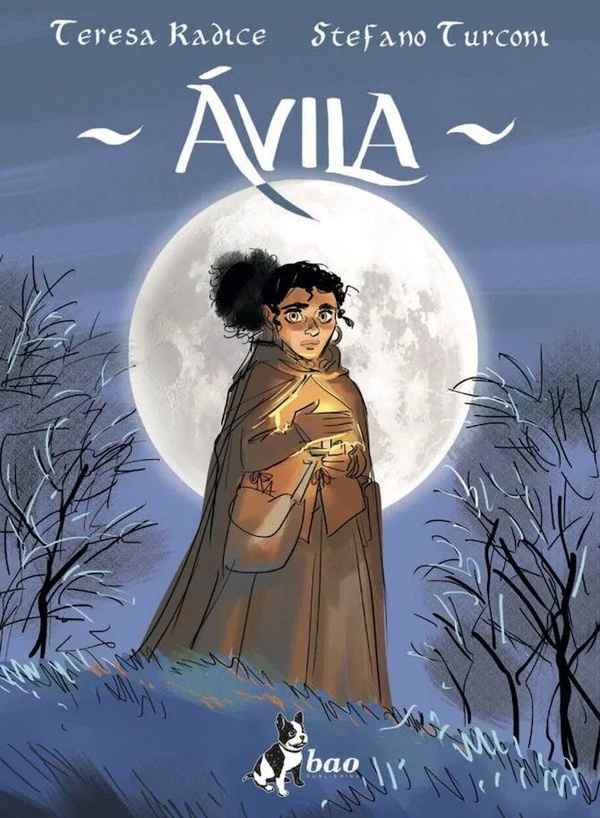
For lovers of adventure comics, every new volume from the duo Turconi & Radice is an event. The authors of The Forbidden Port, The Girls of Pilar, and The Earth, the Sky, the Crows have managed through their works to define their own space within the varied Italian comic scene, communicating a very precise identity, also through the continuity of publication with Bao Publishing. Eras and places change, but the touch of Radice & Turconi is always recognizable after a handful of pages. This time, the two take us to France in 1630 with Ávila, a girl whose herbalist mother was condemned as a witch for her knowledge and burned at the stake. Ávila, however, knows deep down that her mother is still alive, and the almost two hundred richly illustrated pages by Turconi (if you've never seen the passion with which he draws ancient ships, buy it just for that) accompany us through another new, great adventure scripted by Radice. While countless other works unsuccessfully try to recreate the feel of the '80s, Radice & Turconi manage to decline that idea of great adventure, rich in wonder, emotions, and feelings at the heart of all the great works of that decade, detaching it from its references, not reducing it to a mere homage, but making it the supporting structure of a story that at that point can also veer towards distant settings, infusing magic into the genre of the historical novel (in images).
Recommended for: those who would immediately leave for a trip, Spielberg lovers, those who are tired of forced retro-nostalgia.
The Enchanted Bus

Iran, 1996: almost clandestinely escaping the control of the ayatollahs' authority, a handful of intellectuals manage to organize a bus trip to Armenia, where a conference is taking place. Majid Bita, already author of Born in Iran, also for Canicola, takes us back to his homeland to tell a little-known episode outside the borders of Iran, recounted with a documentary approach and at the same time a great command of the story's rhythm. A road comic in which Majid Bita encloses more than twenty characters in a cramped space like a bus, managing to distinguish each one not only graphically, but also through a distinct voice and personality. While the journey takes an unexpected turn and the threat and control of the State always loom over the 21 intellectuals, the narrative of The Enchanted Bus is here and there interrupted by inserts of interviews with the protagonists years after the narrated events. The abundant use of black, which expands into large patches or spreads in shades, builds a tense, nervous atmosphere, while the sharp, hard graphic signs square faces and construct expressions. The Enchanted Bus is a political thriller that tells the recent past as a warning for the imminent future, a lesson that we stubbornly strive to ignore recently.
Recommended for: those too snobbish to read comics, those who get their news from international newspapers, those who have not yet given in to this present.
Similar articles
Michael and the sequel that will address the decline
Tides of Tomorrow: A Journey That Will Influence Player Choices

GameSir Pocket Taco, the controller that transforms your smartphone into a retro gaming console!