Pluribus takes all possible risks to be the great series it is
After Breaking Bad and Better Call Saul, Vince Gilligan challenges himself with a series that offers a rare viewing experience.
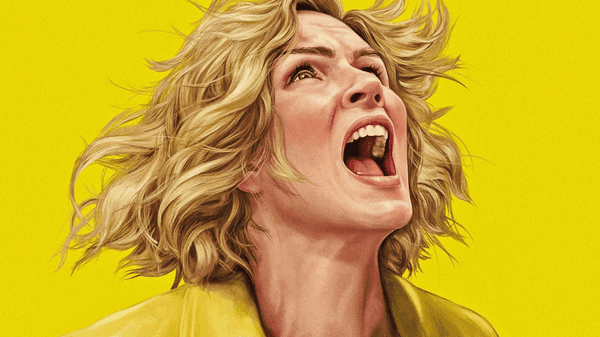


In an interview released during the promotion of Pluribus, its creator and showrunner Vince Gilligan stated that every generation deserves its own stories to love and carry with them, not updates of those of their parents and grandparents. This was to explain why he chose to focus on a new sci-fi idea instead of returning to the world of Breaking Bad, creating something adjacent or similar in tone and genre.
He and AppleTV took an enormous risk, which proves rewarding from the pilot: Pluribus is certainly a great series, among the most memorable seen this year. By its nature, it couldn't be otherwise, being one of the most radical viewing experiences on mainstream platforms. Watching the first two episodes of Pluribus (the only ones available, at the moment) truly offers a unique experience; an adjective often used for products that have just a trace of originality compared to the cultural landscape they comfortably fit into.
What makes Pluribus so different from other series out there?
Pluribus, on the other hand, is a very rare uniqueness and for this reason often unsettling, exactly like its protagonist. However, I am not sure that viewed as a whole it will be “beautiful” in a broad sense, or perhaps in an easy sense, because sitting on the couch watching it is an exercise not always pleasant and involves a lot of mental rumination. Pluribus requires constantly asking questions while Vince Gilligan makes it clear that there is no certain, let alone right, answer, and that one must live with this moral uncertainty. It is not a series for leisure or entertainment, even if it is cynically amusing here and there.
The premise, as explicitly stated in the series, is a kind of alien invasion à la Invasion of the Body Snatchers, but very sui generis. Partly because “invasion” deserves quotation marks, partly because the subsequent apocalypse seems among the most orderly, peaceful, and utopian ever seen on screen. Pluribus takes the entire pilot – which is a kind of self-contained film within the series – to set up its New World and begin to explore it little by little.
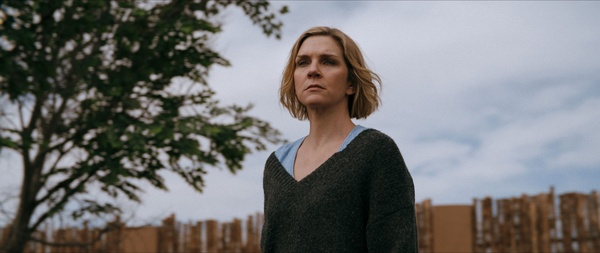
Rhea Seehorn plays Carol, who inhabits this new reality, must interact with it but at the same time is excluded from it, at least for now. Hers is the point of view through which we explore the new reality and, as always happens with Gilligan, the strength of an already remarkable basic idea is enhanced by the human filter through which it is investigated. Carol is described as “the most miserable human being in the world”: she is angry and depressed long before the end of the world breaks out, despite having a secure and successful job, a number of people who love and admire her from afar, and someone close who understands her, takes care of her, and vibrates on her same cynical frequency.
Is being happy proof that you are a better human being?
Carol is not a happy person, but before the triggering event, she is a woman who functions socially: in public, she perfectly maintains a mask of kindness and cordiality, making up for a lack of pragmatism or the excesses of others. Afterward, however, she deals with fits of rage with catastrophic effects, which, upon closer inspection, are not violent or so extreme, but one of the series' first moral imperatives is that she must avoid having them at all costs.
Because Pluribus is a continuous, incessant discourse on freedom: in theory, there's nothing wrong with getting angry, but the fallout on others should make us refrain from expressing it, especially if the impact is as exponential as it is in the series. But isn't it a coercion, a cruelty to keep a depressed person, afflicted by a very serious loss and experiencing a deeply traumatic situation, under the yoke of not being able to vent their anger?
Pluribus is an endless series of similar questions, in a story that never draws a line in the vast narrative landscape it gradually explores between what is right and what is wrong, but rather shows the viewer how difficult it is to do so and how agonizing it is to live with one's decisions.
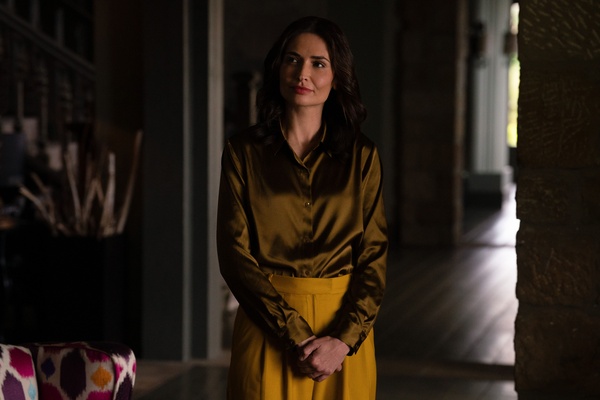
Carol's experience is profoundly unique because it is primarily characterized by solitude: the series was written for Rhea Seehorn, is shaped by her performance and rests entirely on her shoulders. For long stretches, she is practically the only one on screen, with her emotions. Carol is not an easy person, she is unpleasant, but always balanced between being horrible and being that person who rejects easy solutions. In the second episode, for example, she asks to meet others in her same situation. Apparently, the protagonist is unbalanced: the others seem to have already accepted the situation and found some serenity in it. White, American, arrogant, and often superficial, Carol appears paranoid, offensive, and a spoilsport by comparison. She treats a woman who has many reasons to detest her and a man who seems to want to show her the positive side of the situation badly: however, what she says highlights how the two deal with the situation by deliberately ignoring its most uncomfortable, painful repercussions. Neither side is right or wrong, but only Carol looks deeply into her choices.
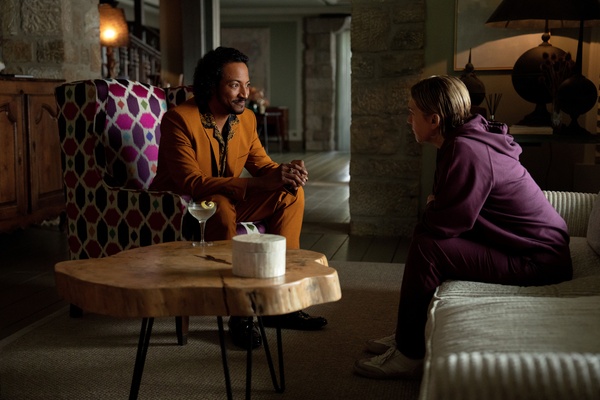
There is also a third front, which makes possible this long reflection between extreme individualism and extreme collectivism, between capitalism and socialism, between a Western perspective and the rest of the world, between the United States and non-United States. A front that, by its very nature, is devoid of malevolence or intentional malice, but responds to biological imperatives that are the extreme negation of individual freedom. It is collective well-being that often leads to the logic of the hive, but which poses a powerful question to Carol's individual perspective and that of the viewer. If the woman's existence is characterized by unhappiness, isn't her individualism a mistake? Wouldn't it be naive to assume that freedom is easy to manage and free of burdens, repercussions, and responsibilities that one must live with every time it is exercised?
Pluribus ends long after the screen is turned off
Pluribus ends long after the screen is turned off, leaving its audience with an endless series of questions and personal evaluations to make. It is an invaluable viewing experience because it completely removes certainties from under your feet: not only is the premise original, but whenever it resorts to a trope of the sci-fi, apocalyptic, dystopian genre, it pushes it in an unexpected direction, see Carol's encounter with the other “survivors.” However, it is a vision that risks being a deterrent for those viewers who perceive this unpredictability as negative: one watches Pluribus to ask questions, not to have one's answers confirmed.
Starting from a strong idea and with such a “radical” approach (at least for today's serial landscape), Pluribus makes uncompromising choices: the pace is very slow, there is a specific rhythm to the series that keeps track of the passage of time with a dedicated counter. The writing does not exploit its flow with classic television logic. Not every moment is filled with events, because the series allows the protagonist and the audience time to reason with her, to make her choices, even if destructive, without the refined logic typical of television narrative economy.
Pluribus takes all possible risks to be the great series it is
This review does not have a final rating because it is based on viewing the first two episodes of the first season, which consists of a total of nine episodes: the last two were kept secret from all press, so there is no way to know exactly if and how the series manages to land its long premise. Given what has been seen in the first two hours of Pluribus - with an always excellent production, more typical of AppleTV, and Gilligan's elegant, effective, and very cinematic direction - it is definitely worth trying, but remember that it requires a minimum of effort and an approach ready for doubt, bewilderment, and even anger. If you are in the mood to be reassured or want to have fun without existential anxieties, it's better to postpone watching it until another time.
Similar articles