Marvel Zombies Devour the MCU in Our Review
Marvel superheroes are hungry
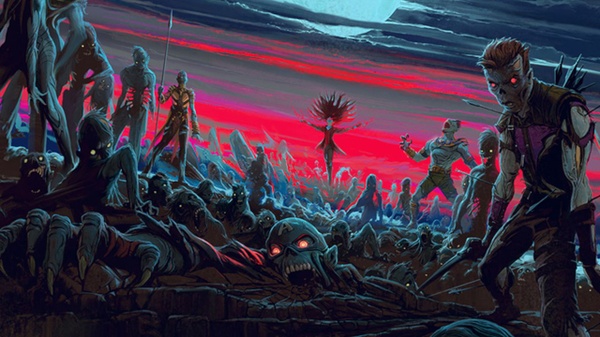


It's a bit paradoxical, but the Marvel Cinematic Universe is a victim of its own success. After 25 years of success, the MCU is now afflicted by the same problems that plagued superheroes on paper and made their big-screen counterparts shine through difference and novelty: a now stratified body of stories, declining quality, and increasingly frequent reliance on major events. A couple of ideas on how to right the ship, somewhat surprisingly, come from MARVEL ZOMBIES (again, this time, no mistake, the official title is like that, all caps).
Not Kirkman's Marvel Zombies
The idea of contaminating the Marvel Universe with the undead is not new and, to continue the parallel, comes directly from print. In 2004, Marvel writer Mark Millar brought his Ultimate Fantastic Four to a parallel universe where Earth is the victim of a zombie invasion that has also spread to the abundant local population of superheroes. Someone high up at the House of Ideas found potential in the idea, to the point of imagining a mini-series entirely set in the zombie universe. To write it, Marvel immediately turned to one of the hottest names in the comic book industry at the time, the creator of a very promising zombie series: Robert Kirkman, the one behind The Walking Dead.
Kirkman, who undoubtedly has a certain fondness for zombies and is also a long-time reader of Marvel comics, didn't think twice, also because he was joined by Sean Phillips on art, an artist on the rise characterized by a realistic style with which Kirkman had already proven comfortable on TWD. The original mini-series, despite excellent premises, is not remembered as a masterpiece and leaves its mark mainly thanks to a single idea by Kirkman: adapting the type of zombie to the context, pushing the definition of undead far enough to include superhuman zombies who retain their abilities, but are driven solely by an ancient hunger. Without having left a great legacy in the comic book universe (a few sequels pop up now and then, but the zombies remain confined to the margins of the great narrative machine), the Marvel Zombies (from now on lowercase, okay?) have established themselves in pop culture to the point of earning a “home” slot in Disney's 2025 calendar.
Marvel Zombies kill the video stars
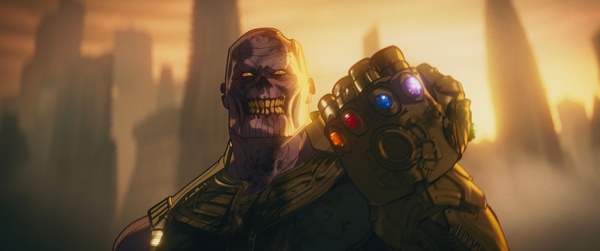
However, the Marvel Zombies arriving on the Disney+ catalog starting today are not the ones seen on paper: after all, Hickman's chosen cast drew from the most representative characters of that specific era of Marvel comics, and ultimately this version designed for screens (small or not so small) does the same. The mini-series created by Bryan Andrews (director of the episode of the first season of What If?! in which the zombies made their first appearance) and Zeb Wells (writer who also worked on the pages of The Amazing Spider-Man) sets aside the plots traced by Kirkman at the time and continues on the path laid out by What If... Zombies?!, the fifth episode of the first season of What If?! which ended with a handful of heroes about to encounter a menacing infected Thanos full of Infinity Stones.
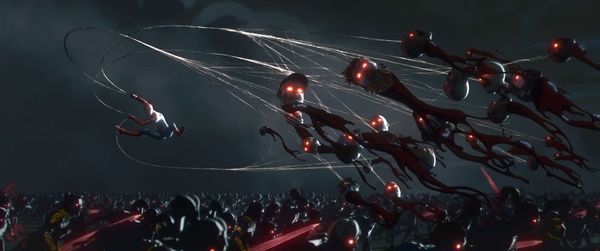
Before mending the rift with the cliffhanger with which the undead had bid farewell to the animated version of the MCU, Marvel Zombies takes its time to introduce the viewer to its universe, which, in addition to George Romero's imagery, owes much to Kirkman's imprint on modern imagination (with TWD, of course) and to the post-apocalyptic vision visually codified by another George, Miller, in his Mad Max saga. Without revealing too much to avoid spoiling the viewing (about two hours for the four total episodes), the macguffin that kicks off the events is a tiny device that crashed in New York that could represent a hope for salvation. Around its delivery, Marvel Zombies alternates a cast of characters that draws from all corners of the MCU, mixing big names and supporting characters who, in such an apocalyptic scenario, find themselves all on the same level against a villain perfectly at home in the horror tones of this corner of the universe.
Marvel Zombies has a slow start, which serves to prepare the ground for the climax of the second half of the season, where the series explodes the scale and scope of the narrated events, although it must be said that even in the first pair of episodes, Marvel Zombies proves to be more lively, vibrant, and above all interesting than the previous animated works from which it originates, confirming the good trend of Marvel Animation recently started with Eyes of Wakanda. The alternative setting allows for flights of fancy and excellent deaths, while the assorted duo Andrews & Wells certainly doesn't hold back, also indulging in a level of gore much higher than one might reasonably expect, as well as a general sense of nastiness from which the series greatly benefits.
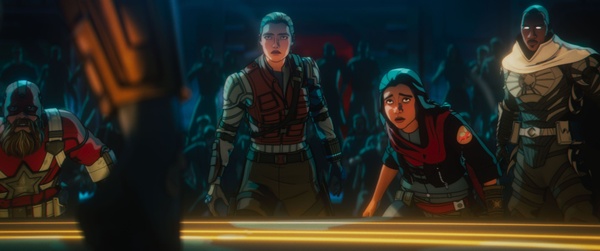
While the animation and writing quality are good in the first part, with satisfying and well-choreographed action scenes, the second part literally launches the series into orbit, raising the stakes far beyond the comprehension capabilities of the human mind and significantly elevating the bar for animation quality at Marvel. Perhaps it's all those moving Kirby Dots that influence me, but if two clues make a pattern, Marvel has understood that animation could be the next golden goose according to the data, and to make its mark, it must meet the challenge of those who are setting the standard ever higher. In other words, and given the previous experience with What If?! animation, Marvel Zombies unexpectedly ranks high on a scale from zero to DanDaDan.
Finally, the last paradox is that Marvel Zombies ultimately doesn't deviate from the classic Marvel production recipe: it takes a comic book story, adapts it to the needs of the MCU, and slaps on the faces that the audience is now familiar with. The difference compared to more or less recent films, undoubtedly favored by animation, is that Marvel Zombies is not ashamed of its comic book origin (and perhaps Wells's hand is in this) and fully embraces the opportunities for exploring the impossible that made superhero comics so successful.
Similar articles