The Life of Chuck is a very different Stephen King, trading horror for wonder
Not everything goes right in The Life of Chuck, but it confirms two undeniable talents: King's writing and Flanagan's visual storytelling.


The Life of Chuck should be seen knowing as little as possible about it, much like life should be lived: no matter how much one prepares, there are inevitable passages, joyful and sad, that you don't truly know until you experience them firsthand. It would be unnatural to make the anticipation of the inevitable ending more defined, Flanagan and King suggest.
Based on the short story contained in Stephen King's anthology If It Bleeds (2020), The Life of Chuck quite faithfully follows its plot, the offspring of an artist and a man who lived an intense life, both inside and outside his novels and, having reached old age, finds himself coming to terms with his own mortality through his characters, with what he has done and what he has not.
The tender and sad apocalypse of Flanagan and King
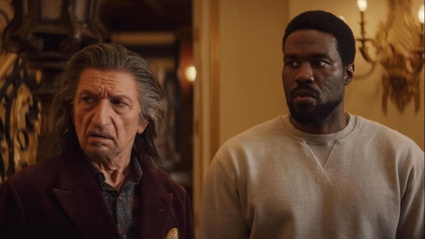
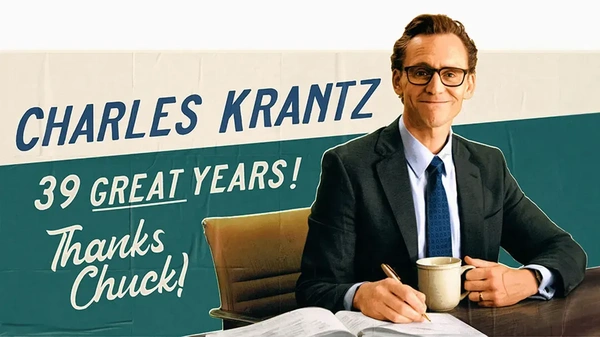
By title, this is Chuck's story, divided into three chapters, but told out of chronological order, with deliberate omissions that initially make him an almost sinister character: the world is ending, or so it seems, in the quiet despair of teacher Marty Anderson (Chiwetel Ejiofor) and his ex-wife and nurse Felicia Gordon (Karen Gillan).
There's a sad tenderness that surrounds their lives, as little by little, cataclysm after disaster, the world as we know it stops functioning and its inhabitants find themselves questioning the point of going to work, continuing their daily routine in the face of the approaching end. Some commit suicide (many), some continue as if nothing happened, some suddenly break with their routine and disappear, walking off somewhere.
The film features astronomer Carl Sagan's theory that if all of the universe's history were reduced to the three hundred sixty-five days that make up the calendar, what humanity has done would be reduced to the last ten seconds of December thirty-first. How can a handful of seconds contain what we perceive as a millennia-long and unprecedented evolution (sometimes an involution)?
The point of the story lies somewhat there: in rediscovering the proportion of the vastness of possibilities and experiences that each single person lives during their existence, however gray and conventional. The poet Walt Whitman in Song of Myself said of himself that he contained multitudes: King takes this almost literally, with a story that transforms the violence, brutality, and horror we are accustomed to expecting from him into the power that grief and small tragedies have on us. Flanagan also embraces the story's warning: the waiting for the inevitable end is hard, when it comes, but denying it to oneself means risking not fully living the time one has available.
Life of Chuck fails to transform its ideas into an emotional film
For a film with such a humanist and moving message, however, The Life of Chuck feels almost affected in its opening. It's as if it never quite hits the emotional chord to make what it's trying to tell reach the viewer's heart, except in the third and final chapter, when for Chuck and for the audience in the theater, it's perhaps too late.
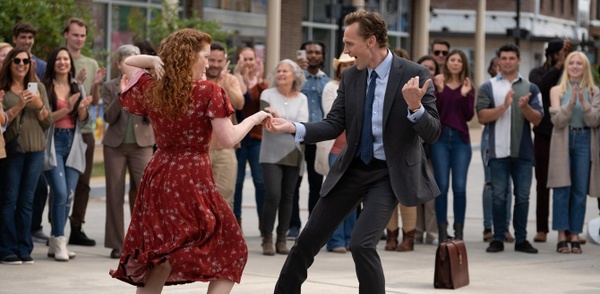
One of the key passages of the film features an intense Mark Hamill as Chuck's grandfather attempting to influence his life trajectory (and, given the order in which the story is told, we already know how effective or ineffective he will be in doing so). Chuck discovered dance through films watched with his grandmother and joined school dance clubs, finding himself very talented. Dance inspires him and helps him open up. However, he has another talent, which his accountant grandfather can clearly quantify: mathematics.
In a long dialogue that is somewhat the emotional heart of the film, somewhat Hamill's moment to shine, the grandfather explains to his grandson, who finds mathematics boring, how it is actually the very fabric of the entire universe, of the stars, of dance. He is obviously right, he certainly wants to convince his grandson to dedicate himself to mathematical studies, abandoning the unspoken dream of becoming a dancer, but after a magical evening at the school dance, Chuck reflects on how yes, everything is mathematics. In the sky, however, he saw a shooting star and it was its “dance” that convinced him to make a courageous move, which gave him one of the most beautiful moments of his life.
That's exactly what The Life of Chuck is like: aware, calculated, perfect in the elegance of its camera movements and in its composition of every single frame (Flanagan is a great visual storyteller), but at the same time it struggles to draw in the heart, the feeling, the emotional impetus. It's all mathematics and little dance, despite being full of emotionally tender, familiar, touching passages. You can feel there's someone behind it who is used to telling stories about the end (personal and of the world) since Midnight Mass. Something, however, tonally just doesn't work, and where it should be most powerful, it leaves you politely composed and vaguely admiring in your cinema seat.
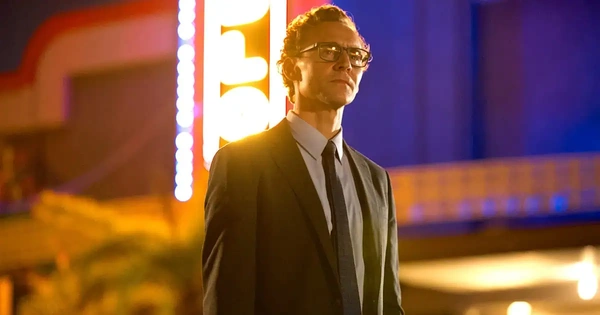
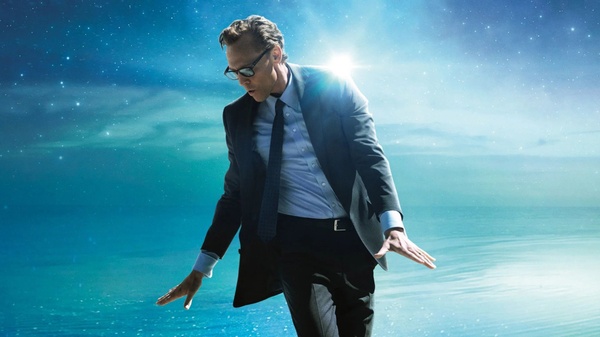
This is despite having a very capable cast, even among the younger generation, moreover called upon to work in subtraction, quietly speaking of feelings and existential questions, sometimes gigantic anxieties, to be reduced to the everyday. In a display of collective skill, Tom Hiddleston, despite being the titular protagonist of the story, ends up somewhat disappearing.
Score
Editorial team
The Life of Chuck is a very different Stephen King, trading horror for wonder
The pairing of Stephen King and Mike Flanagan works best on the writing side this time. The Life of Chuck has the potential to be a powerful and emotional film in its certainly different approach from the “usual” King (a writer who truly contains multitudes), but the film never “hits” the right emotional chord to best enhance its moving and humanist story. It only succeeds in the third part, after several difficult passages.
Conceptually, it's a film with so much to tell, but this time Mike Flanagan struggles to transform the strength of King's writing into great images.
Similar articles