Downton Abbey - The Grand Finale is the series' latest finale dedicated to all its fans
Julian Fellowes' series continues its strange cinematic destiny, with a finale that feels both like a farewell and the end of a chapter, not a story.
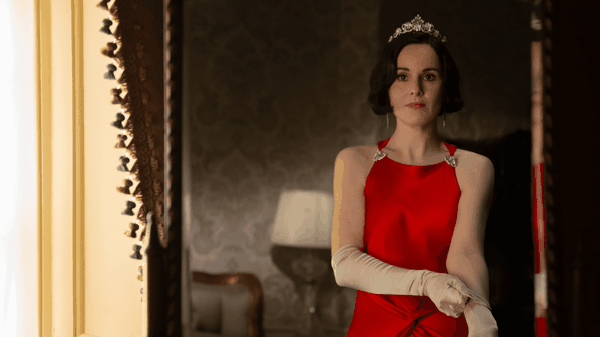


With Julian Fellowes deeply engrossed in writing his new creation The Gilded Age (increasingly beloved by audiences across the pond, and growing in international popularity), one might almost have expected a crossover of the two worlds, American and English, in Downton Abbey - The Grand Finale, perhaps even a cameo from the new cast. Instead, nothing: the cameos and tributes remain within the confines of the English series, which even manages to create a sort of final “in memoriam” for characters who died during the series and actors who have passed away in real life (so yes, there is a tribute to Maggie Smith, the unforgettable Lady Violet, to whom the film is dedicated).
The film, despite its title, is a bizarre conclusion to a story that now boasts a cinematic trilogy which, from the very first chapter, was seeking the perfect closure to its television counterpart. Instead, somewhat surprisingly, while seeking yet another finale, Downton Abbey continues to thrive on the big screen.
Furthermore, while the fortunes of the Crawley family dwindle (as Mary says, “the generational transfer of properties like this is a miracle in itself”), the production grandeur of the cinematic offshoot of the ITV series increases: vintage cars, a deluge of luxurious and stylish 1930s sets and costumes, and many outdoor scenes, including a trip to Ascot for the very English and posh horse races viewed from the royal box, and a country fair with rides and tents. Universal spared no expense to give former viewers unparalleled luxury.
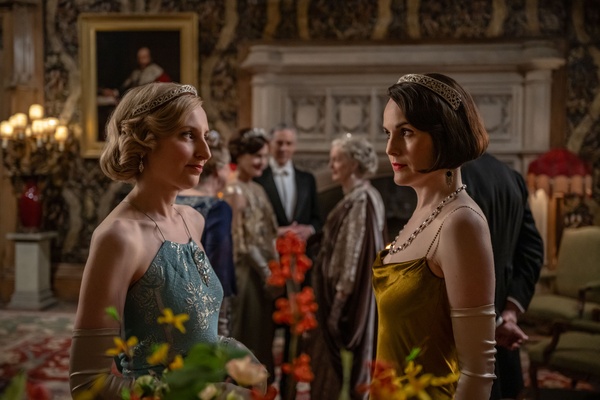
The new Downton Abbey film tells of a generational passing of the torch
The only thing truly attempting to put an end to the events of the highly successful TV series, which debuted on the small screen fifteen years ago with the first of fifty-two episodes, seems to be time itself. The entire cast has understandably aged in appearance, which provides another narrative hook for the season, finding in the protagonists' new wrinkles the inspiration to continue its story. More than a grand finale, as the title suggests, this film is the end of a chapter and the passing of a generational torch. The film, in fact, focuses on the beginning of Lady Mary's (Michelle Dockery) “reign” over the family manor and her administration, which also coincides with having to face the scandalous divorce her husband forced upon her. For Robert Crawley, the Earl of Grantham (Hugh Bonneville) and his wife Cora Crawley (Elizabeth McGovern), the time for rest would theoretically have arrived, but the scandal and some bad economic news from across the pond put everything in doubt, setting the stage for a plot that simultaneously sees the organization of the annual agricultural fair and various changes occurring among the downstairs staff, reflecting what happens upstairs.
As revealed in the advanced stages of the film, it is 1930: the Great Depression is not yet entirely behind them and, as from the first episode of the season, important social, customary, and historical changes force the protagonists to come to terms with the passage of time, to decide how to preserve the long family tradition of Downton Abbey. Lady Mary is, as always, the most pragmatic, but also the most adventurous character, even making an old mistake a second time with the newcomer Gus Sambrook (the usual, impeccable Alessandro Nivola). The film revolves entirely around her, somewhat lost by yet another social trial to face, but reassured by the fact that her relationships with the rest of the family are almost idyllic.
Downton Abbey is a grand farewell operation designed for fans of the series
The conflict in Downton Abbey - The Grand Finale comes from the outside, from social pressure as well as from new characters who turn out to be the villains of the situation. Those who are already familiar to the series' audience each have their small moment of vindication or maturation, for what is also a grand fanservice operation, that is, giving fans exactly what they want for their darlings. Even the always unlucky Lady Laura (Laura Carmichael) not only gets her vindication, but for once doesn't figuratively pull her sister's hair. The film makes veiled irony about this, while allowing all its characters, nobles and servants, to find a serene maturity, an unexpected solidarity. Fellowes also manages to keep together the Crawleys' need to increasingly abandon the splendors of the past (the poor Earl is forced to contemplate the idea of an apartment in London “like in a sandwich” while “strangers” live on the floor above and below) while maintaining that sparkling aura of a life of ease and luxury that has always been part of the somewhat classist pleasure of following this series.
The film also functions a bit like a memory quiz, because having reached the third generation of Crawleys and the third cinematic incarnation after the end of the series, it is now clearly speaking exclusively to a loyal audience. For newcomers, the film offers practically nothing but a very thin plot, summarizable as “here's where character x ended up and how their story will probably continue.” Taking this limitation into account, the film manages to weave a pleasant plot, telling precisely of a passing of the torch and an era, and even suggesting the next. Lady Mary, in fact, knows that her reign over Downton is temporary, that the day will come when she will have to step aside and entrust the management of the property to her son George, provided that she too can achieve “the miracle” of still having something to leave to those who come after.
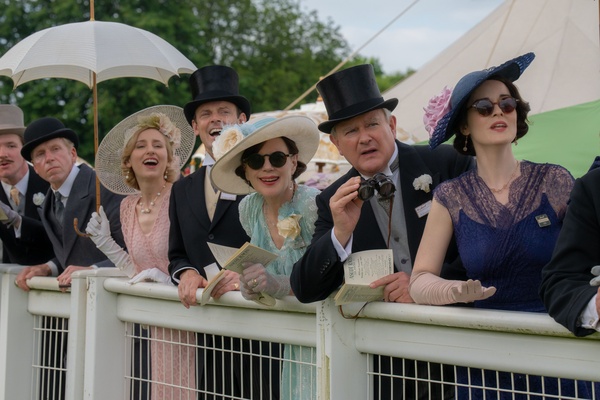
In this sense, with a touch of cynicism and much awareness of how the entertainment world works today, it is easy to see how Downton Abbey - The Grand Finale serves only to close with a worthy finale the story of the first generation in charge of the story, which not by chance opened with the tragedy of the Titanic and continued with the First World War. It is a well-crafted film, which does not even lack too much of the sharp irony of the lamented (both in and out of the plot) Lady Violet, a film that closes a chapter more than a story. The impression is that a final word is being put, for now, only on this generation of nobles and servants, waiting for time, wrinkles, and nostalgia to do the rest. 1930 means that, waiting a few years and allowing The Gilded Age to express its full potential, there will be a way to tell the story of the new generation in charge of Downton (that of sisters Mary and Laura) and an entire new brood of young heirs who will have to contend with the Second World War and the end of the British Empire.
Score
Editorial team
Downton Abbey - The Grand Finale is the series' latest finale dedicated to all its fans
Downton Abbey - The Grand Finale is far-sighted enough to bid farewell to its more mature cast and give its loyal audience a worthy finale (satisfying every last curiosity about the fate of all surviving characters and bringing back as many former cast members as possible for cameos and appearances), while leaving the necessary space for future returns and maneuvers.
Similar articles