Vultures: Scavengers of Death, challenging the zombie epidemic one turn at a time
90s survival horror makes a powerful and interesting return with this new turn-based tactical game
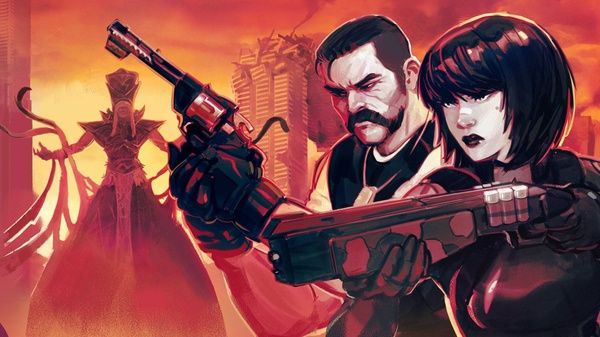


When I was asked to review Vultures - Scavengers of Death and I looked for information about the type of game, the premises took me by surprise. On paper, the idea of fusing the visceral, limited horror of old-school Resident Evil-style with the ruthless tactical chessboard of an XCOM-esque title seemed like a gamble. Yet, for someone like me who never tires of exploring the gaming offshoots of zombie epidemics, willingly getting lost in the narrative intricacies of bio-weapons, and no matter how much it feels like déjà vu, the allure of this peculiar hybrid was irresistible. I had never encountered a title capable of translating classic survival horror through the filter of turn-based strategy, and the curiosity to see the result with mouse in hand immediately took over.
From the very first minutes, Team Vultures' debut work demonstrates a magnetic and well-defined identity. The atmosphere instantly captivates, powerfully evoking the glory days of the 32-bit era thanks to a blocky retro aesthetic and a level design that constantly invites the pleasure of discovery. Fortunately, the studio had the clarity to draw heavily from nostalgia while discarding the ballast of the past: forget the annoyance of tank controls. Here, environmental exploration is measured and responsive, while maintaining that constant sense of tactile oppression guaranteed by the claustrophobic necessity of managing every single, vital inventory slot.
The real stroke of genius, however, emerges as soon as the exploratory tension spills into combat. Abandoning real-time action and trigger-happy panic, clashes transform into strategic puzzles. Managing action points, calculating distances on the grid, and weighing the use of ammunition that is counted drop by drop becomes the only boundary between survival and game over. It's an approach that trades sudden scares for a creeping, chess-like tension, where every wrong move comes at a high price. A surprisingly cohesive amalgam that captivated me from the first turns, demonstrating how even the most classic of undead nightmares can find new, macabre life when approached from the right perspective.
Vultures: Beyond the Mists of Salento Valley: B-Movie Heroes
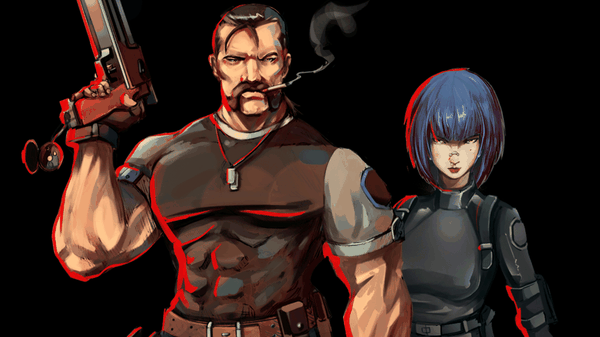
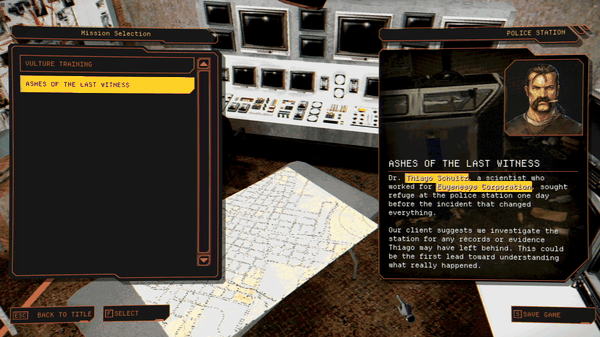
The narrative framework of Vultures - Scavengers of Death transports us to the streets and structures of the desolate Salento Valley, a metropolis wiped out by a viral epidemic triggered, as per best tradition, by the experiments of an unscrupulous corporation: Eugenesys. As agents Leopoldo and Amber - members of the special mercenary unit VULTURE - our task is to delve into this Dantean circle divided into missions to recover vital samples, keys, and intelligence. The premises for an excellent b-movie are all there, and the clear homage to the infected narrative of classic Capcom serves as an excellent launchpad.
Unlike many modern productions that relentlessly pursue psychological depth, not always succeeding, here the screenplay makes a very precise choice consistent with its retro soul: to keep the story dry and entirely at the service of the action. Leopoldo and Amber are not tormented souls seeking catharsis, but rather two classic "badasses", tough and pure, who fight their way through the nightmare with lead and tactics. The narrative wisely relies on aseptic and direct pre-mission briefings, sacrificing introspection to avoid diluting the pace.
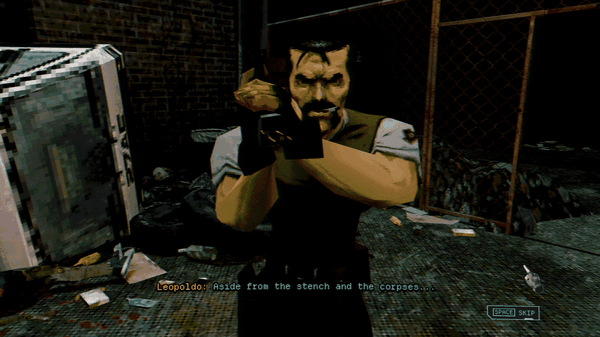
This is a functional decision that perfectly aligns with what the title intends to offer. In an old-school survival horror, the plot is often an accessory, a fascinating pretext to justify the next shootout or the next dead end. There is no real need to delve into the protagonists' past or witness complex redemption arcs; it's enough to know who to hit and where to retrieve the next resource. An essential and no-frills approach that leaves the stage free for what is the true, ruthless beating heart of the production: the game system.
The Chessboard of Survival
If the narrative wisely steps aside to pay homage to tradition, it is on the ground of raw gameplay that Vultures - Scavengers of Death plays its winning cards, proving to be one of the most satisfying surprises in the recent independent scene. Fusing two seemingly distant genres - old-school survival horror, based on perennial resource scarcity, and tactical turn-based strategy - required millimeter-precise balancing. The final result is a hybrid that not only works, but enhances the strengths of both game design philosophies, keeping the player glued to the screen through an amalgam of methodical exploration and cerebral combat, capable of delivering enormous satisfaction.
Even before drawing weapons, survival in Salento Valley passes through environmental exploration. From this point of view, the title demonstrates a full understanding of the genre's classics. Moving within scenarios is never a simple act of transition from one skirmish to another, but rather a primary necessity and a constant calculation of risk. Exploration is incredibly functional and effective: the placement of objects, locked rooms, and alternative paths are structured to distribute resources sparingly, pushing players to literally scour every single corner of the level, while also paying attention to threats lurking, especially in the dark.
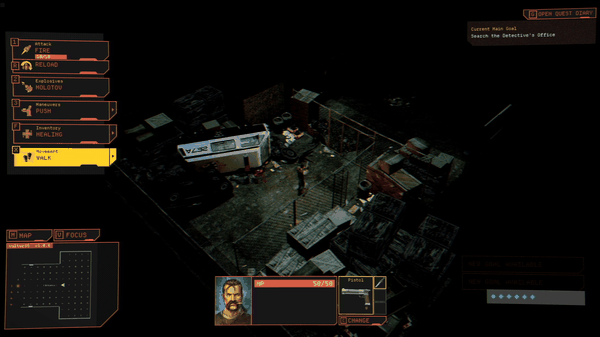
The level design shines with its intelligent architecture, tangibly rewarding curiosity. The player is constantly encouraged to deviate from the main path to discover any secrets, find a handful of extra bullets, hidden weapons, or a crucial healing item. This drive for thorough exploration perfectly intertwines with the sense of impending threat: every new opened door could hide salvation in the form of resources, or another lethal encounter. The developers have managed to build maps that develop organically, offering natural cover, deadly bottlenecks, and advantageous zones that are not mere aesthetic embellishments, but elements to constantly interact with, preparing us seamlessly for the tactical phase.
The transition from exploration to actual combat is managed excellently, introducing dynamics that incentivize cunning even before brute force. In Vultures, you are not forced to engage every enemy head-on. On the contrary, the ability to bypass opponents and attack them from behind allows you to start the fight with a significant tactical advantage, guaranteeing extra damage or a priority turn that often proves decisive in thinning enemy ranks before they can react.
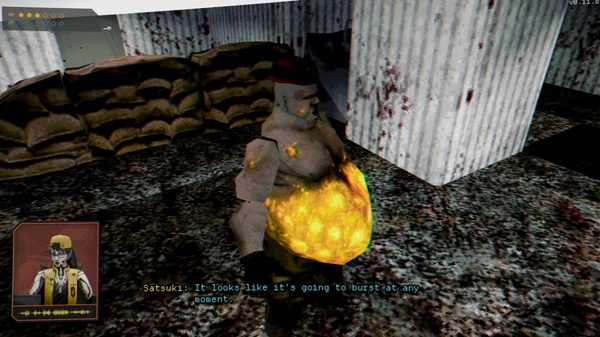
This is where one of the most interesting and tense mechanics of the entire production comes into play: noise management. In several scenarios, horror manifests as dormant threats. Not all zombies or aberrant creatures on the map are immediately "active"; many lie on the ground or are hunched over, yet are clearly marked by the interface as hostile entities. These enemies will only awaken if a loud noise attracts their attention (or, of course, if directly attacked). This dynamic reverses the approach to combat, forcing the player into critical decisions in fractions of a second: using a powerful firearm, like a shotgun, will guarantee the immediate elimination of the target in front of us, but the roar of the shot will inevitably awaken nearby undead, if present, transforming a controlled skirmish into a desperate encirclement. This creates a constant dichotomy between an aggressive, noisy approach and a more cautious, silent style, made of melee weapons and evasive maneuvers, which, while equally risky, allows for maintaining spatial control of the situation.
Lethal Synergy: Leopoldo and Amber
The beating heart of the combat system obviously lies in the management of the two protagonists, Leopoldo and Amber. Their asymmetrical abilities are not mere variations on a theme, but impose radically different approaches that complement each other, finding exceptional support in a level design that plastically adapts to their characteristics.
Leopoldo is the ultimate expression of brute force. His ability kit is dedicated to physical control of the battlefield. He doesn't just inflict massive damage, but possesses the ability to manipulate enemy positioning. Being able to push a zombie away, moving it from himself or making it collide with environmental elements, allows for constant reorganization of defensive lines. The same goes for position swapping: since Vultures implements the concept of opportunity attack, moving when near an enemy implies a reaction from them. Using, by sacrificing an action point, the position swap not only could put us in a more advantageous position for repositioning, but it blocks the enemy's reactivity, allowing us to move without the risk of being attacked. Leopoldo, in essence, acts as a tactical pivot precisely because of his brute force: his ability to absorb damage and literally shift the weight of the conflict makes him fundamental for overturning a hostile chessboard.
Amber, on the other hand, is the queen of agility and rapid movement. If Leopoldo is the hammer, she is the scalpel. Her superior mobility grants her the ability to cover greater distances and bypass enemy lines with ease. The highlight of her equipment is the tactical grappling hook, a true game-changer in terms of positioning: thanks to this tool, Amber can reach elevated areas inaccessible to basic infected, exploiting the verticality of level design built precisely around this tool to obtain clear lines of fire or to escape compromised encirclement situations, ensuring a fluidity of action that greatly modernizes the traditional and measured pace of turn-based strategy games. Not to mention the "non-conforming" use of the grappling hook to hook enemies and make them fall from elevated areas to eliminate them in one fell swoop without even engaging in a real fight.
It should be noted that it is not possible to select which character to use in missions, with the exception of the final one. For all others, the protagonist is fixed, precisely by virtue of a level construction strongly based on Leopoldo and Amber's specifics. A choice I appreciated, on the one hand because it circumvents the potential obstacle, for an indie team, of having to invest too many resources in managing a level design compliant with both characters, risking compromising the final product; on the other hand, because assigning precise levels to specific characters actually helps to enhance them, allowing for more experimentation with levels without being forced to adapt them to a dual approach.
Strategy Applied to Horror
The combat system is based on a rigorous economy divided between Movement Points (MP) and Action Points (AP). Every single step on the chessboard and every trigger pull requires a carefully calculated expenditure, severely punishing those who act on impulse. In Vultures, not all moves carry the same weight: different abilities, as well as different attacks and weapons, consume a variable amount of points. The impossibility of doing everything in one turn forces you to plan actions in advance, trying to anticipate the reactions of the artificial intelligence and optimizing your resources so as never to be exposed to an approaching horde.
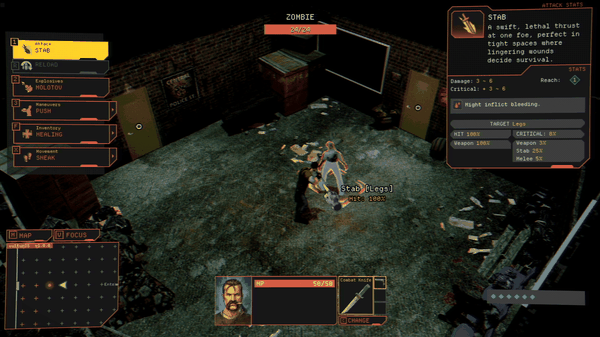
The true stroke of genius, however, lies in the evolution of the classic Resident Evil formula into a deep and layered tactical mechanic: anatomical aiming. Selecting a target doesn't simply mean clicking on an enemy, but scientifically choosing which body part to hit, weighing the different success percentages and relative AP costs. Aiming for the head, for example, represents the ultimate gamble: it requires a greater expenditure of Action Points and has the absolute lowest success rate, but it rewards the risk taken with devastating critical damage or, in some cases, an instant kill. Conversely, aiming for the torso offers the guarantee of a sure hit, but with standard damage easily absorbed by tougher creatures.
However, it is by aiming for the legs that the title best expresses its hybrid nature. Crippling an infected is no longer just a desperate expedient to save bullets as it was in the 90s, but becomes a strategic choice of the first order. With a targeted shot to the lower limbs, there is a very high probability of immobilizing an enemy for an entire turn; temporarily excluding them from the tactical equation allows you to focus the offensive on the most urgent targets, granting us precious maneuvering space without wasting the few available resources to definitively eliminate them.
This surgical precision is contrasted by the judicious use of higher-impact weapons, which drastically change the rules of engagement. The shotgun, for example, foregoes the versatility of specific anatomical aiming to offer a single but devastating area attack. In addition to hitting multiple targets simultaneously, the peculiarity of this weapon is its ability to push back hit enemies. This backward push perfectly intertwines with Leopoldo's positioning abilities, transforming the shotgun from a simple instrument of death into a fundamental tool for crowd control and for clearing the infamous bottlenecks created by the level design.
Further enriching this complex tactical framework is a layered system of status alterations. Enemies are not mere health point reservoirs to be emptied: by exploiting different abilities and the surrounding environment, it is possible to stun, bleed, or burn aberrations, applying lethal debuffs over time. Interweaving point economy, targeted shots, area attacks, and status alterations transforms Vultures' combat into a ruthless chess puzzle, where lateral thinking and coolness are the only true lifelines.
This meta-game dynamic instills a constant and satisfying sense of progression, once again forcing players to make long-term strategic choices: is it better to invest all credits in explosives and medkits to ensure survival in the upcoming mission, or grit your teeth, rely on basic abilities, and save for a structural upgrade that will change the fate of the entire campaign? A decision loop that confirms how Vultures, even when safe within the base walls, never stops making us obsessively weigh every single resource.
Some Stumbles in the Dark
As often happens in ambitious independent productions, Vultures - Scavengers of Death also has to contend with its limitations, showing some uncertainties on the purely technical side. While the game design is rock solid, the execution creaks under the weight of too many bugs and some structural rough edges.
During the exploration of Salento Valley, the most recurring flaw concerns occasional softlocks. It can happen that the interface inadvertently freezes, or that an enemy's turn struggles to resolve, leaving the game suspended in limbo, forcing a mission restart. In a title where tension is built step by step, and where overcoming a fight requires meticulous mathematical calculation, seeing excellent tactical progression vanish due to a code glitch is undoubtedly frustrating and badly breaks immersion. Added to this are some minor imperfections related to the camera: although the blocky aesthetic is fascinating, the management of the isometric view can, in particularly narrow environments or those rich in vertical elements, obscure the view, hiding valuable resources or making it difficult to immediately read the chessboard.
How much do these flaws ultimately weigh on the final experience? Fortunately, not enough to sink it. These are certainly annoying criticalities when they occur, but they never corrupt or diminish the excellent core gameplay of the work. The gameplay loop is so satisfying that it pushes the player to overlook them and retry the approach. Furthermore, it is important to acknowledge Team Vultures' commendable post-launch support: the developers are actively monitoring player feedback, consistently releasing corrective patches to eradicate these early defects. In short, there are some rough edges to smooth out, but the overall impact does not in any way compromise the value of the title.
The Artistic Side of Vultures
To bring the nightmare of Salento Valley to life, Team Vultures opted for a low-polygon graphic style, fully embracing the evergreen retro aesthetic of the PS1 era. Far from being a mere nostalgic gimmick or a cost-saving expedient, this choice proves incredibly functional to the tactical nature of the game. The blocky, angular, and pixelated models allow for a clear and immediate reading of the chessboard, helping the player to distinguish at a glance cover, elevation changes, and resources. This three-dimensional pixel art is enhanced by excellent use of dynamic lighting, which casts menacing shadows and creates a decaying and oppressive atmosphere, worthy of the best classics of the genre.
On the sound front, the title chooses the path of subtraction: ambient music remains subdued and alienating, leaving the stage to sound effects. The noise of the undead's uncertain footsteps, the metallic reloading of weapons, and the deafening echo of a shotgun blast in the silence are not just a pleasure for the ears, but crucial elements that dictate the very rhythm of survival.
Score
Editorial team

Vultures: Scavengers of Death, challenging the zombie epidemic one turn at a time
Vultures - Scavengers of Death wins a seemingly impossible bet: fusing the claustrophobic anxiety of 90s survival horror with the lucid ruthlessness of a turn-based strategy game. While featuring a deliberately accessory b-movie narrative and prone to some early technical hiccups, Team Vultures' title proves to be a gaming experiment of absolute depth. The meticulous inventory management, the ingenious use of environmental noise, and a deep combat system, enhanced by anatomical aiming and the tactical peculiarities of Leopoldo and Amber, keep players glued to the screen mission after mission. An intelligent and punishing hybrid that demonstrates how the zombie apocalypse still has much to offer when approached from the right angle.
Similar articles