Teenage Sex and Death at Camp Miasma Confirms Jane Schoenbrun Will Shape the Future of Cinema
The voice behind I Saw the TV Glow returns with a film that confirms their ability to weave nostalgia and meta-literary reflection into a genre horror film. However, spontaneity has been replaced with an at times irritating self-awareness.
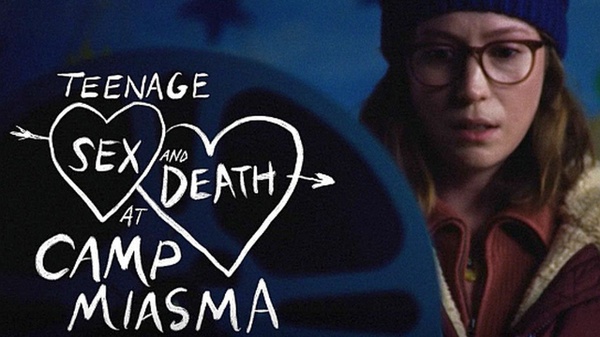


After I Saw the TV Glow, expectations for Teenage Sex and Death at Camp Miasma were sky-high. You could feel them in the air even entering a Debussy theater packed to the steps, with accredited attendees sitting everywhere just to not miss the film, shrewdly placed by Frémaux as the opening of Un Certain Regard. Considering the alternative and hipster Hollywood cast – Hannah Einbinder, Gillian Anderson, Zach Cherry, Dylan Baker – and the horror setup of the project, it’s no exaggeration to say that, among younger cinephiles, it even overshadowed the festival’s “official” opening. And there’s a reason why Schoenbrun is already being talked about as a generational voice: their work has the rare merit of truly going in a different direction, of speaking to two close but often conflicting generations, using the same cultural references as a secret language and a way of being in the world.
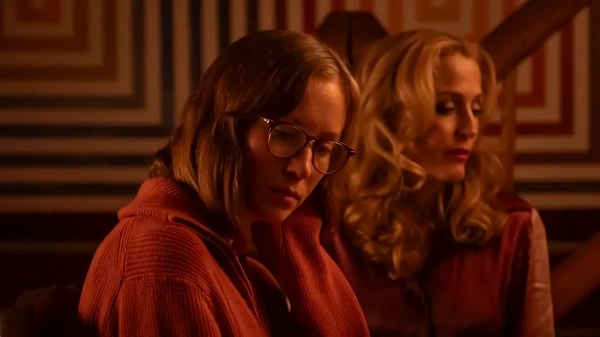
Here, however, that promise becomes even more strained, more controlled, almost more self-aware than necessary. If I Saw the TV Glow had the force of an emotional fever and an almost desperate urgency, Teenage Sex and Death at Camp Miasma seems more interested in showing how smart it knows itself to be than in truly letting go.** The film opens with Hannah Einbinder in a state of pure excitement for having found, in an old gas station, the DVD of one of the best sequels to Camp Miasma, the fictitious horror franchise that gives the film its title. She plays Kris, a writer and director who made a name for herself by directing “a remake of The Shining from the shower curtain’s point of view,” and right there Schoenbrun lays everything on the table: a taste for paradox, a queer and trans reading of genre cinema, the pleasure of remaking an imaginary from within rather than merely commenting on it. Kris has her chance: Hollywood wants to transform the old Camp Miasma franchise into a new marketable IP, but to do so, it must clean up its transphobic origins and manage the mediocrity of the endless sequels that followed, giving the ultra-violent villain Little Death an origin story that justifies their blind bloodlust. In the opening credits, the film immediately makes it clear that it will also talk about its own ecosystem: VHS, video games, gadgets, merchandise, the entire small universe of cultural debris that a cult film drags along when it stops being just a film and becomes an object of devotion.
The best thing, however, remains Schoenbrun’s ability to build a world that smells of true memory, of fetish, of emotional archive. When Kris asks for a DVD player to rewatch the film, the receptionist pulls out a dusty device that seems as old as the VHS tapes and the film projector with which the foundational film of the saga will later be re-watched. It’s a cinema that knows well how to look at the media and rituals of the past, but also how to transform them into something desirable and “aesthetic,” almost a generational pose. And this is where the first friction is felt: Schoenbrun is perhaps the cinematic voice that, more than others, has managed to build an imaginary based on home video, but does so with a gaze that is simultaneously inside and outside that world, as if looking at a nostalgia that already knows it has been museified.
In Schoenbrun’s cinema, everything speaks of identity in transformation, and here this tension is felt more sharply than elsewhere. Kris tries to approach Billy, the enigmatic protagonist of Camp Miasma, who retired to private life immediately after that film. The mission should be simple: interview her, perhaps convince her to make a cameo in the new reboot, use the past to reactivate the franchise. But Billy is not just a former horror actress: she is an obsessive and stubborn figure, trapped in the myth of her own film like a more eccentric, more ironic, and yet more seductive Norma Desmond. She lives in the abandoned campsite where the film was shot, now covered in snow, and spends her time rewatching the film with a projector and painting allegorical pictures of Little Death. Her way of being on screen is over-the-top, grotesque, vaguely inconsistent: turban, house clothes, takeout fried chicken, mini cereals, supermarket snacks. It is she who tries to crack Kris’s hyper-awareness, but in the end, it is the film itself that continues to look at itself in the mirror with a somewhat too complacent confidence.
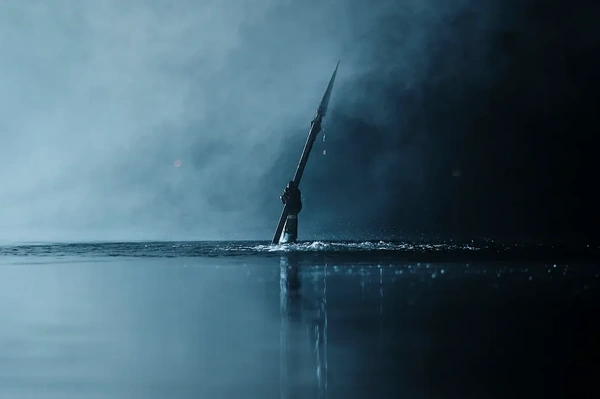
At this stage, the film shows its limit, or at least its most irritating side. Teenage Sex and Death at Camp Miasma brings together many things, almost all with the prefix “meta” in front, but when it tries to become body, emotion, urgency, it doesn’t always maintain the same intensity. It is a deliberately exaggerated horror, full of brilliant red blood and landscapes that become pictorial backdrops in Billy’s paintings; it is also a film built with a low-budget aesthetic that continually tries to ennoble itself, as if awareness alone were enough to trigger magic. And precisely awareness is its weapon and its problem: Schoenbrun seems to want to overturn camp not through naivety or loss of control, but through an almost excessive lucidity about the mechanisms that produce that effect. The result is brilliant, certainly, but at times also a little too conscious of wanting to be so.
The expression inside baseball seems tailor-made for this film. Teenage Sex and Death at Camp Miasma clearly originates within social and parasocial circles like Letterboxd, Mubi tote bags, and Film Twitter: places where the allegorical value of a scene from a low-budget horror film is obsessively analyzed which, perhaps by chance, perhaps by necessity, has become a symbol of queer awakening for entire generations. Today’s art is increasingly designed for fans, in the most internet-based sense of the term, and Schoenbrun’s film moves precisely there, at the point where the desire to read everything ends up becoming a system of belonging itself. The problem is that while it ironizes about this obsession, the film falls into it with almost identical enthusiasm.
Seeing it at Cannes accentuates all this. The audience laughs when the protagonist whispers, ecstatic, “split diopter,” because they recognize not only the lens but also the somewhat arrogant and somewhat enamored cinephile gesture that term carries with it. The passages evoking Norma Desmond, however, remain quieter, and there a generational fracture is almost physically felt: the film also speaks of a relationship with past cinema that, for those a few years older, is not just repertoire but living memory (raising the suspicion that Billy Wilder’s cultural relevance is waning). In this sense, Teenage Sex and Death at Camp Miasma also functions as a remake of Sunset Boulevard in the era of zombie IPs and the cult of cult, but Schoenbrun seems more interested in declaring their own intelligence than in allowing the film to be authentic, alive.
Being the ideal audience for a film – even if perhaps now a bit outside the target age group – makes it harder to admit that here the urgency and passion of the previous work have been replaced by a much more controlled, much more self-aware, much more self-congratulatory game of references. The film has two extraordinary protagonists, who have a lot of fun amplifying the ironic and erotic dimension of the source material. But while I Saw the TV Glow started from a similar grammar to talk about an intimate, profound, almost devastating experience, Teenage Sex and Death at Camp Miasma often prefers the brilliance of the operation to the necessity of truly digging beneath the surface. Its limit, in the end, is precisely that of believing itself more intelligent than it manages to be.
And yet, the moment it hints at a less controlled vulnerability, when the cinephile game cracks and the film stops wanting to explain everything, then yes, for an instant, it comes alive again. It is there that something personal is truly felt, and it is there that the film finds its best deviation. When the protagonist strips not only of her clothes but also of her irony, she recounts with a rare fragility what it means to discover a new part of herself and her desire by inhabiting the shoes of a film character. It is a powerful passage precisely because it hints at the vulnerability of its creator, Schoenbrun, who for once seems to reflect not so much on past cinema and its importance, but on the self who witnessed those films. “Maybe too much horror movie fucked me up,” says the protagonist, and it is finally in that doubt (not in the granite cinephile certainties of the rest of the film) that Teenage Sex and Death at Camp Miasma gives its best.
Score
Editorial team
Teenage Sex and Death at Camp Miasma Confirms Jane Schoenbrun Will Shape the Future of Cinema
From there, its most interesting and most irritating limit also becomes clearer: the know-it-all and “highbrow” parody of “lowbrow” content with a limited budget, which, when it stops being a simple cinematic game, tries to become something else, something more alive, stranger, more its own. The problem is that too often the film resembles an almost infinite collection of acute observations, brilliant jokes, and daring reflections on the cinema it loves and looks to, rather than a starting point capable of truly building something. It has the flaw, perhaps inevitable, of believing itself more intelligent than it ultimately manages to be, and this fully certifies its cinephile and vaguely parasocial DNA. But precisely when it stops explaining itself and allows itself to be traversed by doubt, the film finally manages to resemble something original.
Similar articles