Nioh 3 Review: Team Ninja Revolutionizes the Soulslike Genre
Nioh 3 rewrites the rules of the soulslike genre. Discover our review of the new title in the saga.


In a few years, we will look at the video game landscape of the last decade and describe it by paraphrasing Gino Bramieri: "Once upon a time, everything here was Soulslike." Then we will stop at 2026, noting the change of course set by Nioh 3.
In recent years, in fact, the video game market has been literally invaded – and saturated – by titles that have adopted the soulslike mechanics created by FromSoftware and added a series of elements to create their own vision of Soulslike. However, almost none of these experiences have been able to completely detach themselves from the genre's dictates – despite trying – thus ending up in that cauldron called “more of the same”.
The Nioh saga, however, has been able to avoid the mistakes made by others, offering an interpretation of the soulslike genre based on the distinctive elements of Team Ninja's history: frenzy, action, and a strong presence of technical components.
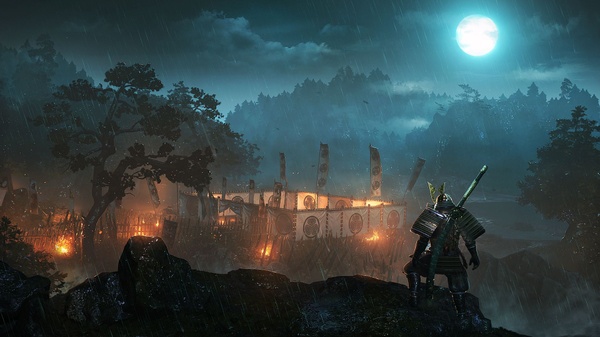
The Nioh franchise has been widely celebrated by critics and fans for its ability to take the framework provided by FromSoftware and mold it with elements belonging to other genres. The combat system, for example, has always looked more to Ninja Gaiden than Dark Souls, with its stance system and Ki management. The looting system encourages the player to constantly change equipment. The plot is told clearly to the player, thus moving away from Miyazakian ideology.
Nioh 3 represents a further step forward for Team Ninja, which not only takes the best of the previous chapters of the saga but also draws lessons from the experiences the team has offered from 2020 to today. A Summum Opus that draws on the successes and missteps made in previous years, offering the public a product that maintains the strong identity of the Nioh saga, taking elements like open areas from Rise Of The Ronin, parry management from Wo Long, or the dual combat style from Stranger Of Paradise.
The result is a game that represents Team Ninja's full maturation and the ultimate expression of the franchise, but also an evolutionary push for the soulslike genre, offering a way out of the post-Elden Ring saturation.
- Nioh 3. A New Story and a New Protagonist
- Nioh 3 Gameplay, Between Open Maps and Dual Combat Styles
- Nioh 3's Technical Sector, a Wonderful Journey Through Japanese History
- Does Nioh 3 Represent the Evolution of the Soulslike Genre?
Nioh 3, a New Story and a New Protagonist
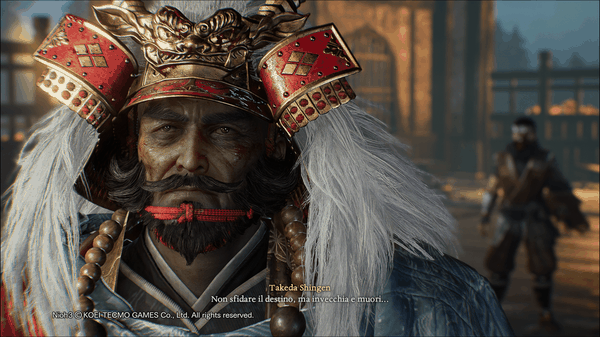
Nioh 3 deviates from the previous two chapters by proposing an entirely new story and a character that do not intertwine with the events narrated in the first two Nioh games. However, the team's desire to build the plot around real historical Japanese figures remains, combining elements of fantasy and real events.
This is why it is necessary to take an overview of real events to understand the game's story, which is set, initially, in Genna 8, 1622. A historical period that saw Japan emerge from a series of events that were, to say the least, bloody; such as the siege of Osaka which led to the destruction of the Toyotomi clan and the end of the war for the shogunate, with the appointment of Ieyasu Tokugawa as Shogun, who ushered in an era of relative peace under the guidance of the Tokugawa family.
And it is from this moment of peace that the story of Nioh 3 begins.
We will play as Takechiyo, Ieyasu's grandson, soon to be appointed Shogun. The game will begin within the walls of Edo Castle – the old name for Tokyo – during the preparations for the ceremony, which is, however, interrupted by the attack of an army of Yokai.
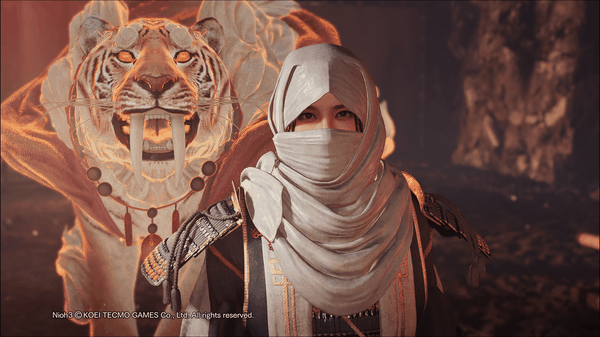
During the escape from the castle, we discover that the attack was orchestrated by the protagonist's brother, Kunimatsu, who, blinded by envy, was consumed by darkness. The clash with Kunimatsu does not go in our favor; however, just before he delivers the final blow, a mysterious force saves us and drags us back in time, exactly to the Sengoku period, in the midst of the battles that would lead Ieyasu Tokugawa to become Shogun.
We soon discover that we were saved by a woman named Himiko, queen of the Yamatai kingdom, who explains that her brother Hiruku, driven by a hunger for conquest, sent copies of himself through time to take control of various influential figures in Japanese history, including Kunimatsu.
With Himiko's help, we will then travel through various temporal eras of Japanese history, passing through the Warring States period (1572), the Heian period (1190), the Yamatai era (247), the Bakumatsu period (1864), and the Edo period (1622) with the goal of defeating Hiruku and confronting our brother Kunimatsu again.
Nioh 3 Gameplay, Between Open Maps and Dual Combat Styles
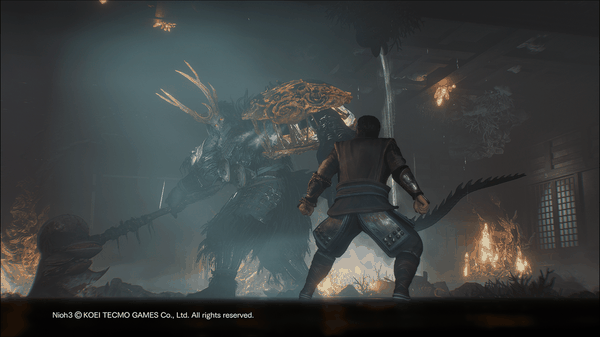
Nioh 3 takes the already excellent gameplay of Nioh 2 and elevates it to the power of two; meaning it will be possible to use two different combat styles: that of the Samurai and the Ninja. The Samurai style looks to the history of the franchise, with more rigid movements and careful management of Ki and weapon stance. The Ninja style, on the other hand, is clearly derivative of the Ninja Gaiden saga and offers a more hack-and-slash-like experience, with faster movements, less attention to Ki, and greater dynamism in various combos.
The two combat styles are not mutually exclusive, but rather complementary, with Team Ninja itself pushing the player to switch between them, so much so that this function is also the only way to parry a series of enemy attacks that would otherwise knock us out.
The presence of two combat styles also offers an enormous quantity of options regarding the raw gameplay. We can combine different combos, thanks to the wide presence of available weapons, exhausting the enemy with the samurai style to then attack them with the ninja style, or attacking them from a distance with the Ninja style to draw them in and then attack them from behind with the samurai style. The combinations and approaches to consider are truly numerous, and it is up to the player to build them based on their playstyle.
Each of these two styles then has specific weapons available, which in turn have specific skill trees to unlock. All of this translates into an experience that will allow you to experiment for dozens of hours before finding the perfect build.
Speaking of builds, it should be noted that Nioh 3 maintains the characteristic looting system typical of the saga. Every enemy, even the most common, will drop equipment and weapons, so be prepared to find your menu full of stuff from the very first minutes of the game.
As I listed among my tips before starting Nioh 3, use the first hours of the game to test anything you come across, so you can understand which type of equipment suits your playstyle.
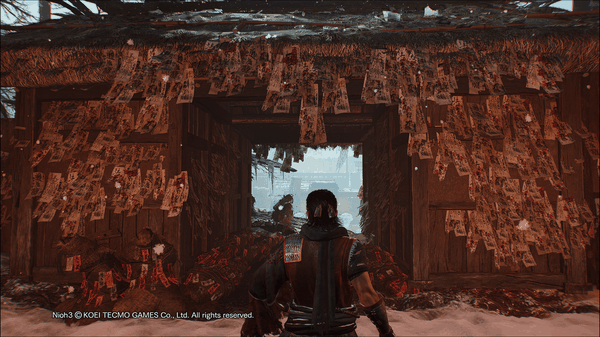
Another major novelty introduced by Nioh 3 is the presence of open maps, which players can freely explore and discover secondary missions, points of interest, hidden bosses, and many other things; all while clearly facing combat with a high level of difficulty.
The maps are divided into areas, each with a recommended level for exploration, which in a sense guides the exploration of these; something that might make some people turn up their noses. Nothing prevents, of course, the possibility of throwing oneself into areas above our level, with the awareness, however, that even common enemies could eliminate you with a single blow.
Each area of the maps offers many different activities. These range from enemy bases to liberate to mini-bosses to defeat, passing through haunted villages and friendly yokai to find. All of this is then surrounded by a series of secondary missions that, while not brilliant in writing, offer information about the game world and the people who lived there before the arrival of the Yokai.
Another element is represented by the crucibles. Areas of the demonic world where the difficulty level rises and we will be subject to a series of debuffs, such as life corrosion. The crucibles will be the last stop of each historical era, as it is from there that the various enemies draw their inhuman power. Each crucible has its own design, based on the historical era, and specific enemies. Our task will, of course, be to enter the crucibles, defeat the various yokai and the boss of the moment, and purify the crucible.
Nioh 3's Technical Sector, a Wonderful Journey Through Japanese History
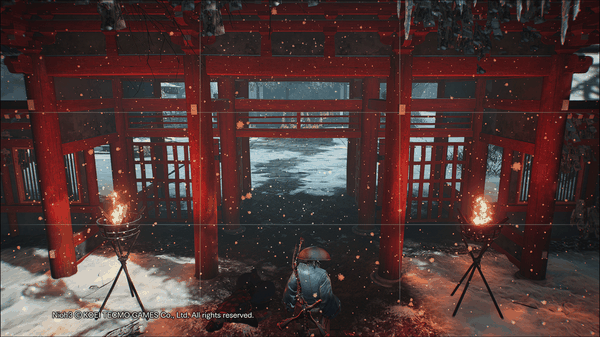
The Nioh saga has always been based on real historical elements, events, and characters, and the Nioh 3 saga is no exception.
As mentioned, the game will take us through different historical eras, and each of these has been meticulously constructed, adding details and design elements typical of the historical period.
A perfect example is given by the Heian period – in my opinion, the best recreated. Exploring the surroundings of Kyoto, it is possible to find references to the "Mujokan" aesthetic, with Buddha statues and cherry blossoms, the last wooden pagodas before the advent of the Kamakura period, or the various magical or protective rituals written on paper sheets surrounding the various temples.
Team Ninja has shown an excellent ability to recreate the aesthetics of the various Japanese eras, which makes Nioh 3 also a pleasant discovery walk through them, so much so that at times I missed the possibility of exploring a living, not devastated, city.
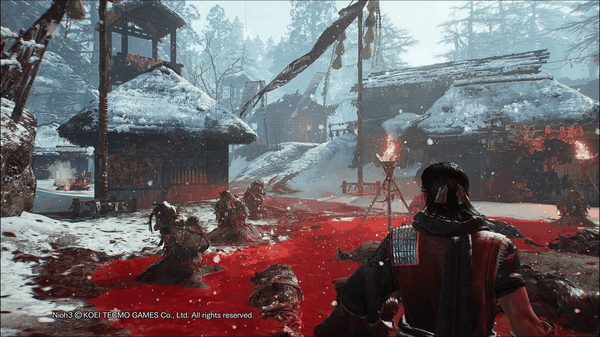
I played Nioh 3 on PlayStation 5, and graphically, the game allows you to choose between the two classic modes: graphics and performance. Since Nioh 3 graphically does not aim for photorealism, I decided to opt for the performance mode. Here, perhaps, lies the game's biggest flaw. As already reported by many players who tried the demo, the resolution and FPS are unfortunately not always stable.
Nioh 3 has many elements on screen, especially during boss fights, and this means that the game can occasionally stutter. To be clear, it doesn't happen all the time and, above all, it doesn't undermine the final experience. However, purists of stable 60 FPS might turn up their noses. It is not certain, however, that Team Ninja will not release a patch to fix this.
The audio design is well-made, with well-realized environmental sounds and good management of 3D audio – very useful for understanding if there are enemies ready to attack you from behind. Nioh 3 also holds its own in terms of sound. The soundtrack accompanies the moments of greater action, especially boss fights, and offers a good variety of epic-sounding music – which on some occasions reminded me of The Witcher 3.
The game is dubbed in English and Japanese, with the latter being clearly superior in my opinion, while for Italian, we have to settle for subtitles.
Does Nioh 3 Represent the Evolution of the Soulslike Genre?
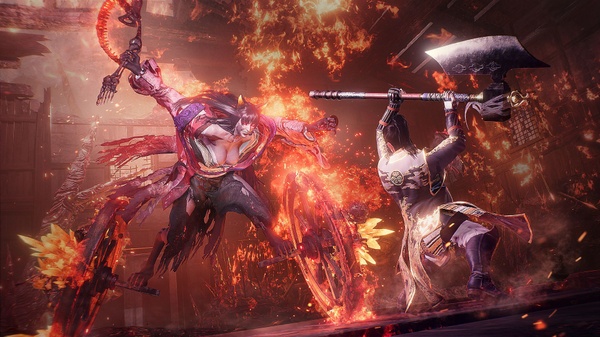
In the various Nioh 3 preview contents, I did not hide that, in my opinion, Team Ninja's title represents an evolutionary step for the soulslike genre. This statement remains true if one accepts, and clearly has the desire, that the soulslike genre can evolve – or at least needs an evolution.
The use of the open map with its various points of interest of Ubisoftian heritage and the introduction of the two combat systems, serve to reduce the barriers to entry for those approaching the saga for the first time. However, the difficulty level remains high, allowing for more relaxed exploration phases with sudden spikes in difficulty during boss fights.
Even in narration, Nioh 3 offers its own way of understanding things. The main events are narrated clearly, while it is up to the player to explore the various areas and complete secondary missions to discover more about the game world.
When I speak of the evolution of the Soulslike genre, I refer to all those things in Nioh 3 that offer a better experience compared to Elden Ring. The combat system is much more fun and fluid. It abandons the attack-and-retreat scheme and makes way for a true dance of lights, moves, and abilities that do not lower the difficulty level; on the contrary.
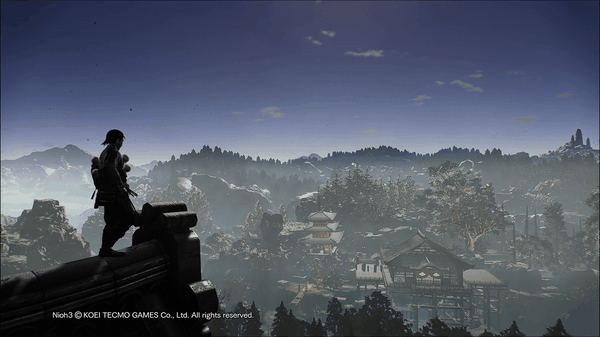
The open map is also managed excellently, giving the player a space that is not enormous and with the right amount of things to do. Of course, the presence of various flags on the map breaks the magic of exploration – a big point in favor of Elden Ring – but it also allows a wider audience to enjoy the game.
If we were to find flaws in Nioh 3, there would be the already mentioned frame rate drops on some occasions and enemy AI that is not always top-notch.
However, in a market saturated with copy-and-paste experiences, where the only novelty is to increase enemy difficulty and make the lore as complicated as possible to understand; Nioh 3 is a welcome change that decides to use soulslike mechanics as it pleases, without clinging to unwritten dictates that now seem more like chains than creative inspirations.
Team Ninja's work represents an alternative for those who want to develop soulslikes, and the hope is that other software houses will follow suit.
Score
Editorial team
Nioh 3 Review: Team Ninja Revolutionizes the Soulslike Genre
Nioh 3 represents Team Ninja's full maturation and a true evolution for the soulslike genre.
With its dual combat style and open map, the game manages to lower the entry barriers for newcomers to the saga without, however, making any compromises on difficulty. This translates into an experience capable of satisfying and entertaining both long-time fans and those new to soulslikes.
Criticisms regarding frame rate management and enemy artificial intelligence should be noted, but nothing that, overall, undermines the gaming experience.
In a market now saturated with titles that are merely opaque copies of FromSoftware's works and that fill the "more of the same" cauldron, Nioh 3 stands out not for its soulslike mechanics, but for the way it masters them at will and combines them with a series of identity-defining characteristics, resulting in an original game that brings a breath of fresh air to the genre.
Similar articles