S.T.A.L.K.E.R. 2: Cost of Hope – DLC Review: Adding New Depth to the Original Game
The expansion introduces the Iron Forest and the Chornobyl power plant, while Update 2.0 improves A-Life, performance, and world behavior.


When S.T.A.L.K.E.R. 2: Heart of Chornobyl arrived on November 20, 2024, fifteen years after Call of Pripyat, expectations were much higher than those reserved for a normal sequel. GSC had built an enormously larger and more spectacular Zone, preserving factions, anomalies, artifacts, and the freedom that had defined the original trilogy. The problem is that at launch, a significant part of that vision was not yet working as it should have: technical issues, AI behavior, and especially an A-Life far from expectations accompanied the game's first months (those who were with us on day one will remember it), forcing the studio into a long update process.
Since then, Heart of Chornobyl has changed a lot. Patches like 1.5 extended A-Life simulation to events occurring far from the player, while subsequent updates continued to address AI, balancing, performance, and faction behavior. The path now leads to Update 2.0 Back to the Zone, a free update released alongside Cost of Hope, which again intervenes on the Zone's simulation, introduces new weather conditions and gameplay options, and accompanies the transition to a more recent version of Unreal Engine 5. It's important to separate the two things immediately: 2.0 improves Heart of Chornobyl for everyone, while Cost of Hope is the paid expansion that adds a new story, new regions, and the return to the center of the conflict between Duty and Freedom.
It is precisely this simultaneity that makes Cost of Hope more interesting than a simple additional DLC. It arrives at a time when GSC seems to have finally brought S.T.A.L.K.E.R. 2 much closer to the game it wanted to create in 2024, but instead of merely adding more missions, it also tries to intervene on density, level design, and the role of factions. The question thus becomes inevitable: does Cost of Hope only add new content to a finally more stable Zone, or does it truly change the game and the way S.T.A.L.K.E.R. 2 is explored, played, and interpreted?
Duty and Freedom Return to the Center, But Their War Is More Interesting Than the People Who Fight It
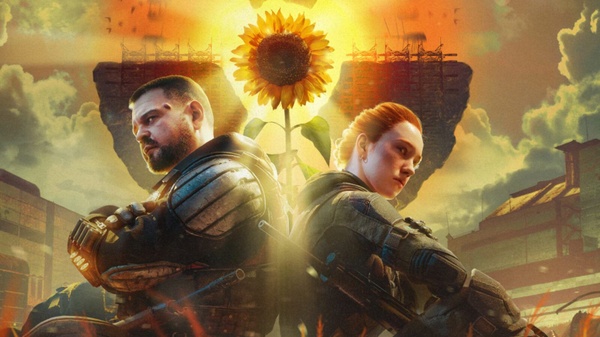
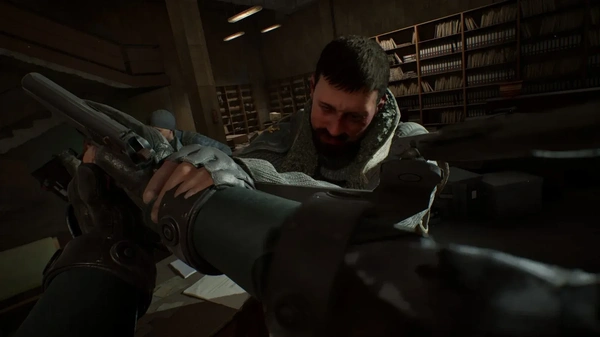
Cost of Hope begins when Skif intercepts a mysterious signal from a PDA and reaches the Iron Forest, where a series of anomalous events directly involve Duty and Freedom. The fragile truce guaranteed by the D4 Treaty, which had temporarily frozen one of the series' historical conflicts in Heart of Chornobyl, thus begins to show its cracks. Skif arrives to understand what is happening in the new area and quickly gets dragged into a rivalry that the main game had only suspended.
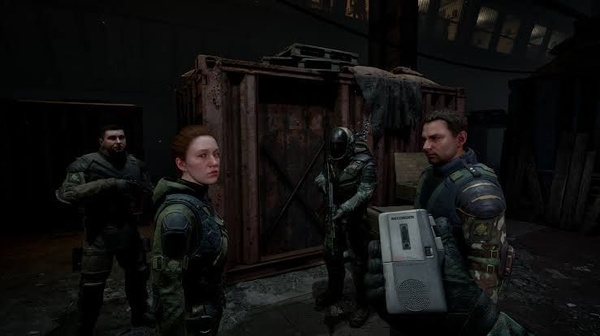
Representing the two factions are Zulu for Duty and Mavka for Freedom, initially forced to collaborate in the face of the same problem. The further the story progresses, however, the more it emerges how the two factions interpret what is happening in opposite ways. Duty continues to see the Zone as a threat to be contained, while Freedom considers every new discovery something that must be studied and not destroyed for fear of its consequences. Skif thus finds himself between two incompatible interpretations of the same event, with both sides willing to omit information or bend it to their convenience (as the saying goes, trust is good, but not trusting is better...).
It is one of the most interesting narrative ideas of the expansion, but also one of its most obvious limitations. Duty and Freedom work better as ideologies than as groups of people. Many NPCs remain almost exclusively tied to their faction's position, and even Zulu and Mavka, despite being the main faces of the conflict, struggle to build an equally strong personality. It's clear what they defend, much less who they are when separated from the flag they carry.
The comparison with Ward and Spark makes the problem even more evident, because Heart of Chornobyl had already worked on the contrast between controlling the Zone and rejecting those who claim to dominate it. Cost of Hope tries to make Duty and Freedom less schematic through half-truths, personal interests, and suspicious assignments, but it doesn't always manage to transform these ambiguities into equally incisive narrative consequences.
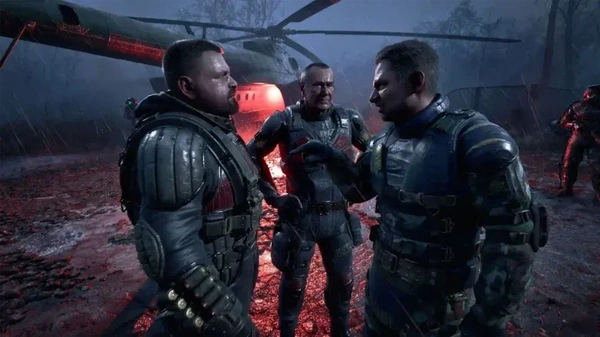
The choice between the two fronts remains concrete, however. At a certain point, Skif must take a stand, and from that moment, missions, events, and parts of the story change, making it impossible to see everything in a single playthrough. The crossroads therefore works on a structural level, even if the emotional one remains weaker. Cost of Hope recovers one of the most recognizable conflicts in the series and finds a good reason to bring it back to the center, but fails to build characters as strong as the ideas they are supposed to defend.
The Zone Didn't Need More Space, Just a Better Way to Redistribute It
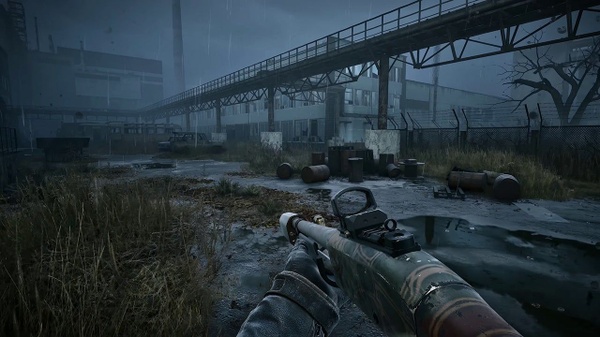
The Iron Forest is probably the best example of what Cost of Hope tries to do with exploration. It's not simply a new portion of the map to traverse: power lines, industrial plants, abandoned structures, and anomalies make the space more enclosed, vertical, and difficult to read compared to the large open areas of Heart of Chornobyl. Navigating requires greater attention, and some anomalies don't just function as obstacles, but force you to first understand the rules of the environment and only then the path to follow.
It's an important correction to one of the base game's limitations. After dozens of hours, some traversals ended up being long journeys between points of interest (our stamina knows something about that). Cost of Hope, instead, works on density, alternating exploration, combat, and more structured situations, without adding unnecessary extra space to the map.
The best examples come when the DLC takes already known systems and combines them in less predictable ways. In one laboratory, you have to manage a strange mercury-like entity attracted by artifacts, while in another sequence, a very slow elevator transforms the ascent into a defense against increasingly dangerous waves, until the arrival of a pseudogiant. None of these situations reinvent S.T.A.L.K.E.R., but they break that feeling of routine that could become evident in the advanced stages of Heart of Chornobyl.
The Spatial Anomaly takes this idea even further. It is a surreal and labyrinthine environment, built through deformed rooms, unintuitive passages, and staircases suspended in the void. Here, it's no longer enough to correctly read the map: the geography itself becomes unreliable. And it is probably one of the moments when Cost of Hope best recaptures the identity of the series, because it forces you to doubt what seems safe again.
The other large area of the expansion is the Chornobyl nuclear power plant, absent as a freely explorable zone in Heart of Chornobyl despite its weight in the series' history. Cost of Hope finally brings it back to the center, but avoids using it only as a nostalgic callback.
Those familiar with the original chapters will find references and familiar environments, but the DLC does not pretend that recognition alone should bear the entire weight of the experience. The power plant works because it has been adapted to the level design and systems of Heart of Chornobyl, with new paths and dangers capable of giving it an autonomous role even for those who hold no nostalgia for Shadow of Chornobyl.
This is probably the point that best unites the two new regions. The Iron Forest tries to make exploration denser, while the power plant reclaims a historical location without limiting it to fan service. Cost of Hope becomes interesting not because it makes the Zone bigger, but because some of its new areas finally have enough identity to justify the journey.
Longevity also depends heavily on how you approach the Zone. Primarily following the story makes Cost of Hope significantly more compact, while exploring the new regions, completing side activities, and revisiting the crossroads between Duty and Freedom can easily extend the experience to twenty hours or more. Not everything can be seen in the same playthrough, so those who want to follow both factions have a concrete reason to load a previous save. This duration is consistent with the scale of the expansion, without the feeling that GSC has artificially lengthened the journey.
New Threats Alongside Update 2.0 Change the Zone More Than It Seems
Cost of Hope intervenes more cautiously on the bestiary. The main novelty is the Amok, a very resistant humanoid mutant that should not be faced by simply emptying a magazine into it (unfortunately, we are not the Doom Slayer). Its weak point is on its back, thus forcing you to look for an opening, move around the target, and manage space differently during the fight. It's a simple addition, but it works because it modifies the player's behavior instead of just increasing health and damage.
The rest of the expansion relies mainly on already known creatures and some of their variants. Considering how the Iron Forest and the Spatial Anomaly manage to make exploration less predictable, we would have preferred to encounter more truly new threats capable of exploiting the peculiarities of these environments in the same way. Cost of Hope compensates through combinations of enemies and more refined situations, but the feeling remains that the bestiary could have dared more.
The arsenal also grows without revolutions. Among the new weapons, the Arev stands out, an assault rifle distinguished by its behavior, aiming sway, and customization possibilities with various attachments. The additional equipment expands alternatives without changing the gunplay of Heart of Chornobyl. Cost of Hope is more convincing for the way it changes the situations in which we fight than for the new weapons or creatures with which we do so.
However, Back to the Zone, the free Update 2.0 released alongside the expansion, intervenes more profoundly on the experience. The distinction is important, because the new story, regions, and branching paths belong to Cost of Hope, while the improvements to A-Life, artificial intelligence, weather conditions, difficulty, and various exploration systems are available to all owners of Heart of Chornobyl. The transition to Unreal Engine 5.5.4 also contributes to making the overall picture more stable compared to the version released on the market in 2024.
The most evident difference concerns A-Life itself. The Zone more often produces situations without waiting for Skif's arrival. Groups of stalkers move autonomously, can encounter other factions or mutants, fight among themselves, and occupy certain locations. It thus becomes easier to stumble upon the consequences of something that started elsewhere, at least partially recovering that feeling of a world independent of the player that was much less convincing at launch. Unbelievable behaviors and some problems in NPC movements remain, so talking about a definitively resolved system would be premature, but the leap from the original version is evident.
Weather also gains more weight. Fog not only changes the appearance of the Zone but reduces visibility and the ability to perceive creatures and people at a distance. The same limitation applies to enemies, allowing certain conditions to be exploited to approach without being detected. In addition, there are binoculars, new possibilities to customize difficulty, more detailed statistics in the PDA, further activities for advanced stages, and greater variety in encounters between humans and mutants.
All these interventions make Cost of Hope better to play, but it is necessary to avoid confusing the two products. The 29.99 euros for the expansion pay for the new campaign, regions, missions, weapons, and alternative paths. 2.0, on the other hand, is the new free starting point for S.T.A.L.K.E.R. 2. Cost of Hope therefore benefits from a more lively and stable Zone, but its value must be judged on what it actually adds, not on the problems of the base game that GSC has finally begun to solve. A plus, therefore, for all those who, at the time, did not play the title and can now pick it up in its best form.
Score
Editorial team
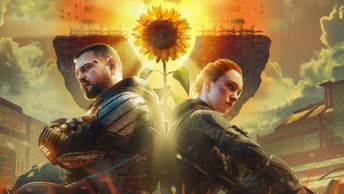
S.T.A.L.K.E.R. 2: Cost of Hope – DLC Review: Adding New Depth to the Original Game
Cost of Hope is convincing because it understands that S.T.A.L.K.E.R. 2 didn't just need more surface area, but places, encounters, and choices capable of giving exploration new weight. The Iron Forest, the Chornobyl power plant, and the Spatial Anomaly succeed where the base game sometimes faltered. Duty and Freedom bring a historical conflict back to the forefront, even if the characters remain less strong than the ideas they represent. The bestiary is not very daring, but mission design and density compensate. Update 2.0 improves the overall picture, without, however, being counted in the value of the DLC.
Similar articles