Digimon Story: Time Strangers, the review of the digital monsters' return!
Digimon return to digivolve in a content-rich JRPG for the delight of Greymon and co. fans!


Digimon Story: Time Stranger: Is it the JRPG Digimon fans have been waiting for?
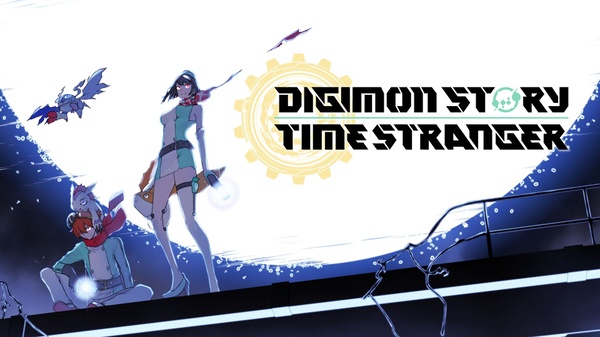
Have you always dreamed of a classic JRPG dedicated to your favorite digital monsters? Bandai Namco has heard your prayers, so come with us to the Digital World and enjoy our review of Digimon Story: Time Stranger! From the very first announcements, it was clear that Digimon Story: Time Stranger was not a project taken lightly, starting with the development team, Media.Vision, the creators of the Wild Arms saga, Chaos Ring, and many other Japanese role-playing games, who had also previously worked on Digimon with Cyber Sleuth. First, we'll have to choose whether to play as the female protagonist, Kanan, or the male protagonist, Dan, twins who are part of the secret agency ADAMAS, dedicated to preserving global security and combating anomalies related to interference between our world and the Digimon world. Kanan and Dan (totally interchangeable) will find themselves in an extremely dangerous situation, not only for them but for the fate of the entire world. Trouble begins in Tokyo, specifically in the famous Shibuya district, and the majestic government building is at the center of it all.
It doesn't take long to realize that one of the worst Digimon anomalies ever is underway and that the Japanese government itself is hiding something from the population. The situation quickly takes an unexpected turn, and without spoiling the plot of Digimon Story: Time Stranger, know that you will be literally dragged into an adventure that will take us to Iliad, the Digimon island, and different timelines, creating a plot where reality, mysteries, and unknown worlds intertwine. We will meet several characters such as Inori, a girl who seems to have a deeper connection than she realizes with the anomalies that could lead to a global crisis, but also the mysterious Digimon Aegiomon, with the appearance of a boy with horns and goat feet, and the resolute Minervamon, one of the twelve Divine Digimon who defend the Digi World. But I will leave you the pleasure of discovering all the plots of this story that tries to shuffle the cards multiple times and provide good support to the game, succeeding only partially: I enjoyed following the narrative, but there are no shortage of stereotypical elements and plot twists that I had guessed several hours before they were revealed, and I certainly don't consider myself a screenwriting expert.
In any case, the plot of Digimon Story: Time Stranger leads us by the hand to discover two major themes of the game: the different environments to visit between the human and digital worlds, and the boundless presence of Digimon to fight and recruit into our ranks. It is clear from the early stages that the scale of what we have to deal with is significant, especially regarding the number of digital monsters, which is over 450, a figure that will delight collectors and completionists, who can enjoy trying to own them all. The gameplay is classic: you move freely in a world divided into different areas (also explorable thanks to the fact that we can ride some Digimon) with dialogues, shops, and secondary activities, until you have to fight, an activity we will mainly carry out in dungeons. Along with us, we can bring three active Digimon, three on the "bench," three guests (depending on the plot's needs), and a plethora of others in the inventory. The combat system of Digimon Story: Time Stranger will reveal itself when we physically clash with a hostile Digimon or when we hit it using a free attack on the map from one of our monsters (an action that will give us a certain advantage) and start a classic turn-based battle. Each Digimon has a type (data, vaccine, virus, etc.), but the attacks it uses also have a dominant element (water, fire, and so on), and these two factors will create an elaborate system of weaknesses and resistances. We can use normal attacks or exploit primary abilities (belonging to the Digimon itself) or secondary abilities (equipable), naturally spending the due number of ability points with each hit.
Digimon Story: Time Stranger and the beauties of the combat system
The more we fight, the more we will discover the weaknesses and resistances of enemies, so much so that once we learn their secrets, we will see on screen exactly the percentage of damage our hit can inflict. If a normal hit deals 100% damage, an unsuitable one will only deal 50% or 30%, while one to which our opponent is particularly weak could reach percentages like 300%. The ability to swap, before each turn, the active Digimon with those on the bench will help us unleash the most effective attacks possible, keeping in mind that our fighters will also be vulnerable to enemy attacks, risking being knocked out and out of the game until we revive them or the combat ends. During each battle, based on the actions we perform, we will fill the X-Arts bar, which we can use by pressing a specific button and which could turn the tide even in the most complicated battles. The usable X-Arts will increase over time, as we can acquire new ones through the classic skill tree where we spend Anomaly Points, similar to the protagonist's experience points.
Speaking of skill trees, in Digimon Story: Time Stranger we will find several, and their use intertwines with the personality of our Digimon. There is great attention paid to this factor, and while each "monster" in our group has its own nature, with certain actions we can modify it, perhaps by chatting with them between explorations. Personality will vary the growth of the Digimon's different stats, as well as unlocking various abilities. Furthermore, we can use our Anomaly Points on specific skill trees linked to particular traits of our companions, so it will be important to best manage Digimon personality variations and point spending on skills. If we have unlocked an attack bonus for courageous personalities, it will be better to encourage our companions to lean towards that nature, while waiting to expand our range of bonuses. But how will we expand our collection of digital monsters? Every time we fight, we will collect a certain amount of data on opponents; once we reach 100%, we can recreate an instance of them, but if we wait until we have reached a data percentage of 200%, the result will be a stronger Digimon.
In the same way, as battles progress, our little friends will level up, and we can evolve them with the famous digivolutions that can take different paths and branches to complete our collection and give us increasingly powerful and varied companions. We can also perform a digivolution to return to the original Digimon and take new paths. We are facing a true playground for enthusiasts who can enjoy trying to recreate their favorite Digimon and power it up in many ways, perhaps by sacrificing another or by using the virtual farm that we will access at a certain point in the plot of Digimon Story: Time Stranger and which we can manage as a training ground for our companions and where we will find raw materials to reuse. Leaving a group of Digimon on the farm while we complete some primary or secondary missions could be a really good idea.
Digimon Story: Time Stranger, between the joy of collecting and something to review
The gameplay of Digimon Story: Time Stranger offers several commendable aspects (although talking to digital companions to manage their character is a bit tedious), but to grasp its importance, it is necessary to play directly at the highest difficulty level among the three available, as the first two are really too simple and allow you to progress through the game without thinking too much about what to do. Furthermore, two additional levels, "Mega and Mega +," are available, but these will be unlocked after the first run and are only recommended for gamers looking for truly difficult challenges. I should also mention that, among the secondary activities, there is also a collectible card game where we have to defeat other players in best-of-five battles, managing the five cards we have drawn from our deck. Victory is awarded based on the card's level and type, as well as a certain element of randomness, but to be honest, precisely because of this latter factor, I found it not very strategic and unappealing. Of course, as you may have gathered, Digimon Story: Time Stranger is packed with content, but it often lacks variety, for example, the dungeons, which are too often repeated and similar to each other, meaning that the game's strong points are the boundless roster of Digimon and a battle system that performs best at higher difficulty levels, leaving room for factors that don't work as well.
From a technical standpoint, Digimon Story: Time Stranger is not quite what one might expect from a next-gen title released on PC, Xbox, and PlayStation 5 (where my test took place). Although vast and long-lasting (no less than 50 hours), the game has outdated graphics that are best in the representation of Digimon, but fall short in almost everything else, from poorly detailed environments and characters, to passersby who don't even have faces, as if they were mannequins. Shadows are rendered insufficiently, and especially in the first hours of the game, there are several "stutters" due to a questionable frame rate. It's a shame, because the rendering of the Digimon is not bad at all, and some bosses are truly noteworthy, but the rest doesn't compare. There's good Japanese voice acting, and thanks to Bandai Namco for translating all texts into Italian, but a little more attention to the subtitle graphics wouldn't have hurt: when you have to read them on a white background, it's quite difficult. The soundtrack is nothing special; in many hours of gameplay, not a single theme stuck in my mind, with the exception of the catchy "Wherever You Are," the main theme.
Between one digivolution and another, Digimon Story: Time Stranger proves to be a solid JRPG, with a good combat system that will delight fans looking for an experience that leans towards collecting and completionism, but there are several elements that prevent it from elevating further. The Media.Vision team has achieved a decent result, but there's an impression that with a little more attention, the game's quality could have been made more consistent.
Score
Editorial team
Digimon Story: Time Strangers, the review of the digital monsters' return!
Digimon Story: Time Stranger is a good turn-based JRPG that, in terms of content, represents a true encyclopedia of our favorite digital monsters. With a little more attention, we could have celebrated a top-quality title, but that doesn't mean that, especially if you're a fan of the brand, you can enjoy a pleasant adventure, perhaps overlooking some technical problems and a lack of variety in the dungeons. With a truly remarkable amount of content and interesting gameplay (not without some flaws), Digimon Story: Time Stranger is highly recommended for all those who hold Digimon dear, while it loses interest for other gamers, not so much for its belonging to a specific brand, but for some undeniable flaws that certainly don't sink the production, but clip its wings. A decent role-playing game that focuses more on quantity than quality.
Similar articles