Styx: Blades of Greed, the review: the return of the nimble-footed goblin
The famous stealth saga is still spry but with a few aches and pains here and there during the adventure.
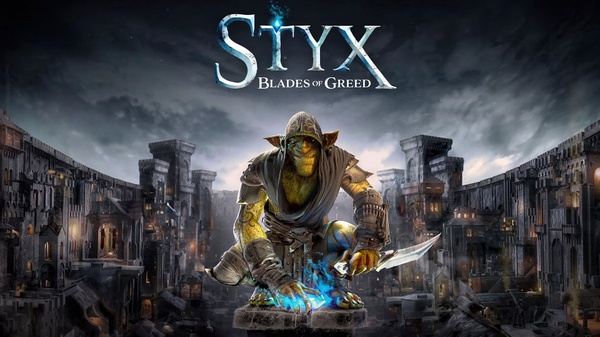


In the realm of stealth games, those where you have to proceed cautiously and scrutinize every corner discreetly, Styx certainly carves out a respectable place for himself. And those who have already donned the putrid robes (don't tell him, he might get offended given his temper) of the beloved goblin in the two previous intense and decidedly punitive chapters will certainly know this. Because, let's face it, Styx is certainly not a simple game and, among stealth games, it is probably one of the most difficult.
And don't think that in Styx: Blades of Greed, the latest chapter in the saga and the subject of our analysis, the cards will change in that formula that to call difficult seems almost an understatement. There's nothing to be scared of: the franchise carried forward with great care by Cyanide Studio rewards the player who has a keen eye, who makes no noise, and who manages to sneak past the most astute guards, also taking home a considerable loot.
This new chapter sets up interesting premises, starting with some carefully crafted cinematics and gameplay elements (as we will see) with satisfying traits. However, and unfortunately there is a however, graphically it seemed poorly refined (at least on PS5, the version we tested) in addition to having repetitive and sometimes somewhat trivial missions.
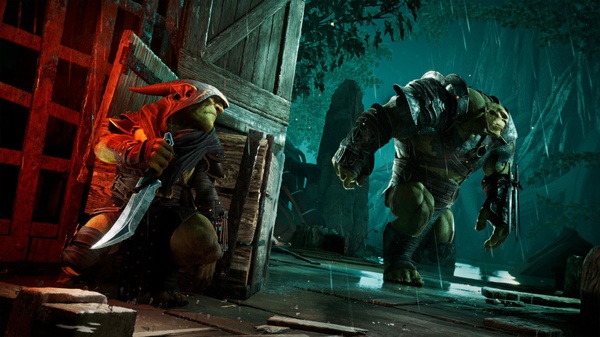
A Goblin Who Craves Quartz!
To play Styx: Blades of Greed, do you need to have played the two previous episodes? We would say yes for a very simple reason: the story picks up where the previous one left off, when our heroes were fleeing in their airship. This is a shame, because perhaps a small summary or some narrative device could have attracted curious players who had never donned the robes of the master of stealth. However, nothing prevents a player from approaching the saga and being carried away by stealth gameplay that has been expanded in some aspects.
Back to us: after fleeing Korrangar, razed to the ground by the Stone Golem, Styx, Djarak, and Helledryn (his allies) crash near the Wall with the airship. The three are hunted, wounded, and without a plan, but do you think Styx will sit idly by? He will get to work, put all his cunning into play to turn the group's fortunes around and get his hands on Quartz, the world's most precious and dangerous resource.
We won't tell you anything else because Styx's story is more convoluted than expected (especially that of the previous episodes) and it would take too many words to summarize it for you. However, if you love fantasy and stealth games, our advice is to pick up the previous chapters, namely Master of Shadows and Shards of Darkness.
As we anticipated, Styx is not an easy title to tackle, and if you decide to rush in without a well-planned strategy, then you will see that "Game Over" screen more often than expected. Once you have decided on the difficulty level (and don't think, even on easy you will see hell) you will be ready to become a determined goblin, a true and authentic master of invisibility.
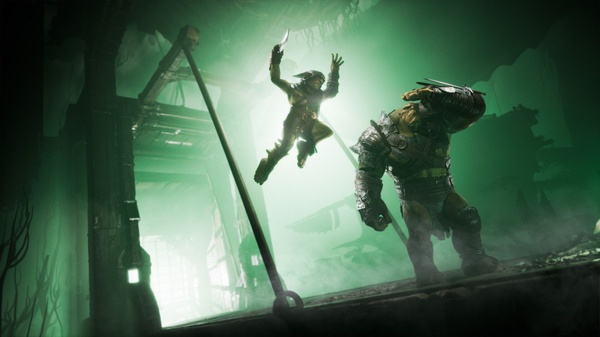
The abilities acquired in the past will certainly not be lost in Blades of Greed, including the beloved invisibility (essential in some situations) and the creation of clones. Styx can therefore sneak through the narrowest passages, crouch, leap between various ledges while climbing, and exploit the surrounding world to gain significant advantages. It will indeed be essential to blend into the shadows and extinguish any candles that illuminate gloomy places to prevent the bad guys from seeing us while they sip a mug of beer. But let's not forget the silent kills, those stabs that will put the various sentinels obstructing our endeavors to sleep forever.
Styx: Blades of Greed therefore rewards the silence of actions, but if something goes wrong, should we be ready for combat? In theory, yes, we can do it, but it's more appropriate to take a step back: in these cases, we will always lose, and a couple of slashes will be enough to never see the light of day again. Also because the "melee" combat system appears quite clumsy and ineffective: after all, we are still talking about a stealth game, and that's how it should be in some ways.
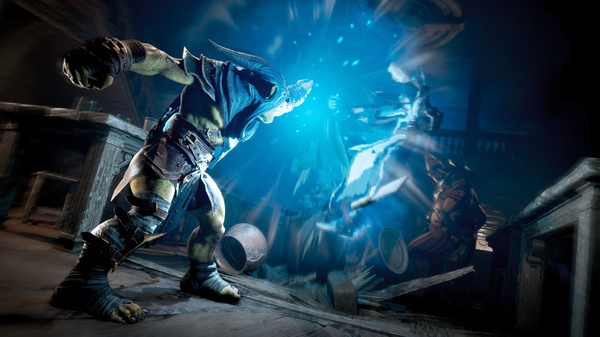
Between New Abilities and Some Technical Uncertainties
In Cyanide Studio's title, and this is undeniable, there has been a marked upgrade regarding the protagonist's movements and the possibilities to make oneself as stealthy as possible. Among the new unlockable powers, we can use Mind Control, which will allow us to borrow a guard's body and explore an area without running the risk of being sliced up. Even more interesting is Time Jump, a technique to move through various areas while the world is slowed down for a few seconds. This means that you can easily take down various guardians, especially the more massive ones that cannot be eliminated with a single stab.
New abilities therefore merge with old ones to create a more dynamic and solution-rich game context. This is an aspect that we appreciated and that makes the experience more interesting. However, in the long run and once you have figured out how to exploit the various powers, the game becomes a bit repetitive, as do the side missions entrusted to us by the various NPCs. The narrative structure, although not miraculous, did not seem so bad to us. It's a shame about the lack of character customization for the supporting characters, who are given little prominence compared to the gruff and steadfast Styx.
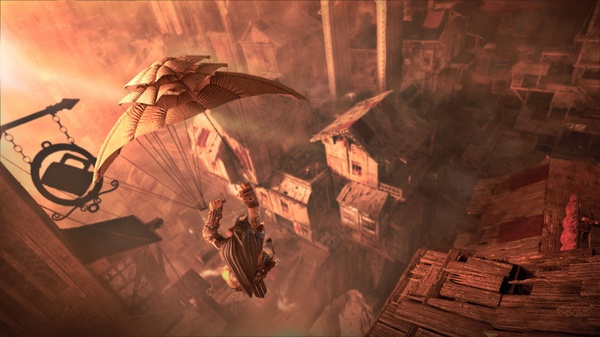
Although Styx: Blades of Greed confirms itself as a decent stealth game in a fascinating fantasy setting with interesting gameplay flashes, we cannot turn a blind eye to some technical problems it suffers from. During our infiltrations on PS5, we encountered several framerate drops, issues with general lighting, and "blurry textures," meaning game elements that appeared out of focus. We understand the compromise with hardware that is now almost 6 years old, but in this case, the "problems" were impossible not to notice, especially when those slight stutters caused us to be discovered by opponents a few too many times.
In any case, this work offers a freedom like few others in its genre, also exploiting incredible powers that combine with the "green goblin's" basic arsenal. Of course, sometimes you also run into some glitches, moments when opponents managed to see us through a wall and even pull us through by grabbing us, but all in all, it plays without too much trouble.
Score
Editorial team
Styx: Blades of Greed, the review: the return of the nimble-footed goblin
Styx: Blades of Greed is the third chapter of Cyanide Studio's now long-running saga, which, in a sense, marks a definitive point for the entire trilogy. Lovers of raw stealth, seasoned with some interesting special abilities, will find great satisfaction in reaching the credits, provided they compromise with an evident underlying repetitiveness.
The merit of this production is that it takes us back to a golden age of the genre, one marked by various Metal Gear and Hitman in some ways, where every misstep could jeopardize the entire strategy we had planned. There are also some minor technical issues that do not compromise the experience as a whole.
If you missed the gruff goblin, then you will be able to empathize with him just as in the previous installments. And, despite some stumbles, fans of the genre will have a blast.
Similar articles