Assassin’s Creed Shadows: The Claws of Awaji Review – A Rather "Divisive" Epilogue
The first DLC set on Awaji Island concludes the unresolved plotlines, but with repetitions, frustrating missions, and an uninspired Yasuke, it risks leaving a bitter taste.
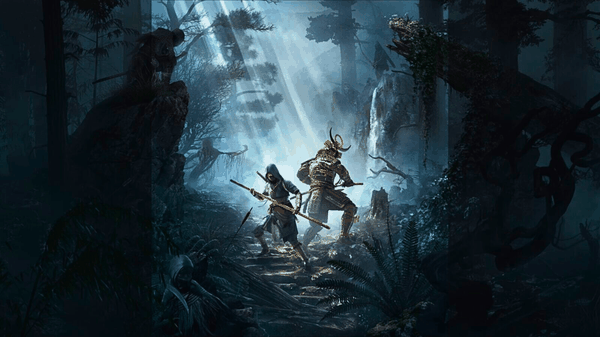


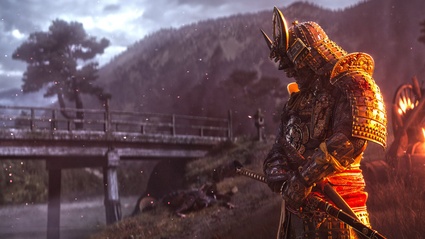
With Assassin’s Creed Shadows: The Claws of Awaji, Ubisoft inaugurates the first DLC of the chapter set in feudal Japan, content that takes place at the end of the main campaign and requires completing the epilogue as well. It is therefore an endgame expansion, conceived as a natural continuation of the story, but which also carries a burden of expectations: many players expected answers to questions left unresolved by the base game's ending. The release of the DLC, developed by Ubisoft Bordeaux (also responsible for Mirage), was immediately perceived as more than optional content: here an epilogue is played that some have called “the true ending” of the adventure.
The name itself, The Claws of Awaji, refers to the island that serves as the setting for this new phase of the struggle between Assassins and Templars. A harsh and hostile territory, full of ambushes, patrols, and constant tension, where the player is pushed into a more pronounced hunter and prey dynamic compared to the base game. The expansion therefore promises to combine two souls: on one hand, the narrative conclusion with the truth about Naoe's mother and the remnants of the Order in Japan, and on the other, gameplay that seeks to introduce some novelty into an already proven formula.
But the question that accompanies this content is inevitable: are we truly facing an essential chapter of the saga or a simple extension designed to prolong the Shadows experience?

Assassin’s Creed Shadows: The Claws of Awaji is a DLC that could have done better
From a narrative perspective, Assassin’s Creed Shadows: The Claws of Awaji presents itself as the direct continuation of the main events, but remains trapped in the shadow of the incomplete ending of the base game. The story picks up with Naoe's mother and the new Templar faction of the Senzokua, but the resolution appears weak and uninspired: the dialogues between mother and daughter do not convey the expected emotional charge, and even the great antagonist Yukari fails to establish herself as a memorable enemy.
The narrative progression follows a familiar pattern: three lieutenants to defeat before the final confrontation. On paper, Awaji introduces an interesting element, because the island is hostile and full of ambushes, and enemies react more aggressively. However, this dynamic, which could have made the campaign more tense and engaging, remains a barely hinted-at idea, never fully developed.
The comparison with other DLCs of the “new RPG trilogy” is inevitable. Odyssey dared with The Fate of Atlantis, taking players into a unique and surprising mythological context. Valhalla, despite its limitations, managed to propose expansions like The Siege of Paris, with a strong and recognizable historical identity. The Claws of Awaji achieves neither the ambition of Odyssey nor the historical charisma of Valhalla: it remains anchored to a more contained, almost timid plot, which formally closes the narrative lines but without leaving a truly lasting memory.
As for longevity, the DLC settles at 8-10 hours of gameplay, varying based on the time dedicated to secondary activities. A value that, while honest, risks leaving a feeling more of a duty completed than a truly satisfying adventure.
The gameplay of The Claws of Awaji adds some potential, make way for the Bo!
On the gameplay front, The Claws of Awaji alternates moments where it seems to want to experiment with stretches where it remains stuck in Shadows' already known loop. The opening of the DLC, with the brief 2D sequence reminiscent of the old Chronicles, is an example of how the series could allow itself more creative freedom. It is a brief but inspired passage, which demonstrates how Ubisoft can still surprise when it dares. Unfortunately, after this opening, the DLC returns to familiar tracks: camps to clear, temples to explore, towers to synchronize. It's the same structure already seen, just on a smaller map.
The real novelty is the introduction of the Staff, a new weapon for Naoe with a dedicated skill tree and three distinct stances. The combinations of high, low, and neutral strikes allow you to break opponents' guard, destabilize them, and create openings in offense. It doesn't radically change the combat system, but it manages to make encounters more dynamic and finally gives the character a technical and stylistically satisfying alternative. It is one of the best aspects of the expansion and, although it doesn't revolutionize the gameplay, it brings a breath of fresh air.
The challenge level is set high: opponents have adaptive levels that can reach 55, and the density of guards, ronin, and shinobi on Awaji Island makes every movement tense. Every road can turn into an ambush, with traps, sudden patrols, and ronin ready to block the way. In this context, some boss fights manage to stand out: the one set in the swamp, where Naoe must locate a rival shinobi by exploiting sound clues and deceptions, is a rare example of a truly stealthy encounter and one of the most memorable sequences of the entire package.
Added to these are disguise and tailing missions, which, though marginal, restore the feeling of living as an assassin again, with a rhythm less tied to brute force and more oriented towards cunning and infiltration. It's a shame that these moments remain exceptions: the core of the experience continues to revolve around the activity loop already seen in the base game.
The critical point remains the management of progression: the hunt for the twelve captains linked to Lieutenant Tomi turns into a frustrating bottleneck, without clear clues and with the concrete risk of blocking the narrative rhythm for hours. A choice that seems more designed to artificially inflate the duration than to stimulate player creativity.
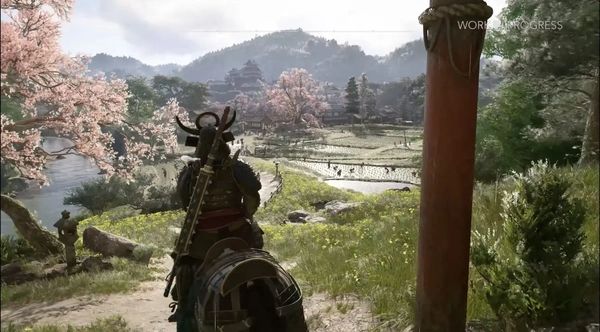
While Naoe gains a versatile new tool like the Staff, Yasuke remains an almost static character, with few additions compared to the base game. His brute strength continues to be effective in open combat sections, but the feeling is that the character has been crushed by the repetition of the same mechanics, lacking any real evolution in terms of gameplay. Some boss fights, in fact, seem designed to force the player to play them with questionable results: prolonged clashes, opponents with exaggerated health bars, and attack patterns based on devastating combos that reduce the fun to a series of endless dodges.
This choice not only weighs down the pace but also brings out a broader problem: Yasuke appears as an imposed supporting character rather than a co-protagonist. The contrast with Naoe is evident: the shinobi enjoys variety and new options, while the samurai finds himself trapped in an increasingly unstimulating role. The progression does not sufficiently reward those who decide to invest time in him, and the moments when the game forces his presence end up accentuating the feeling of rigidity.
It's a shame, because Yasuke had all the credentials to become the symbol of a different power, complementary to Naoe's stealth. Instead, in the context of the DLC, he almost seems like a hindrance: rather than enhancing the diversity of the two protagonists, the gameplay highlights the imbalance. And when the sections dedicated to him become frustrating or poorly calibrated, the impression is that it's a missed opportunity, a burden that reduces the overall impact of the expansion.
Environments a little too familiar in Assassin’s Creed Shadows: The Claws of Awaji
From a visual standpoint, The Claws of Awaji does not substantially deviate from the base game (here's the review): the island is fascinating and well-constructed, but it doesn't introduce elements truly capable of differentiating it from the rest of Japan already explored in Shadows. Wave-beaten beaches, glimpses of intricate forests, and misty swamps create a suggestive landscape, but the feeling is that of moving through a territory that, were it not for the reduced map, could easily belong to any of the previous regions.
On the technical front, the main novelty is the update of cutscenes to 60 fps on PC, which contributes to making the sequences more fluid and integrated with the rest of the gameplay. However, this improvement fails to mask the weaknesses of the facial animations, still too rigid and plastic for a title of this scale. The lack of advanced motion capture is clearly perceptible, and it nullifies part of the emotional weight that certain scenes could have conveyed.
In terms of artistic direction, Ubisoft confirms its ability to build vast and evocative scenarios: just stop to observe a sunset over the sea or the mist enveloping a village to rediscover that contemplative beauty typical of the saga. Yet, it lacks the unique visual impact that would make Awaji Island an iconic place, capable of standing out in players' memories. There's no equivalent of Athens or Paris: Awaji is simply another stop, well-executed but without that identity that makes you remember it over time.
Score
Editorial team
Assassin’s Creed Shadows: The Claws of Awaji Review – A Rather "Divisive" Epilogue
Assassin’s Creed Shadows: The Claws of Awaji leaves a mixed impression. On one hand, it offers a captivating setting, a weapon capable of refreshing the combat system, and some missions that evoke the saga's most authentic spirit. On the other hand, however, it remains anchored to familiar patterns, with frustrating sections and an epilogue that feels more like an obligation than an achievement. It's content that completes the experience, but rarely manages to truly elevate it beyond a mere task.
Similar articles