It: Welcome to Derry, the ending explained: what really happens in episode 8
What does the ending really mean?
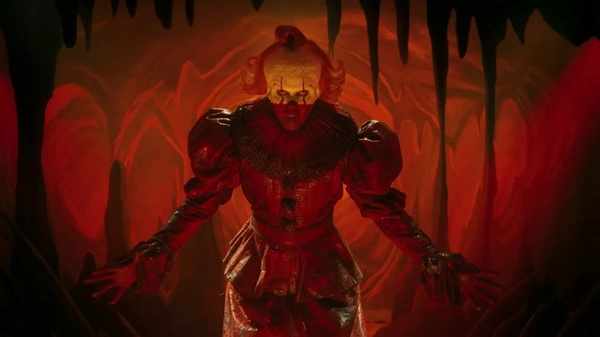


It: Welcome to Derry expands Stephen King's universe by returning to the origins of the Evil that plagues Derry, Maine, long before the events recounted in the films It (2017) and It – Chapter Two (2019). Set in 1962, the HBO series builds a true foundational myth of the city, immediately suggesting that Derry is not just the setting for horror, but an active and conscious component of it. It is in this context that a finale rich in meaning takes shape, reinterpreting the entire mythology of It from a broader perspective.
From the first episodes, Welcome to Derry clarifies its ambition: not simply to explain who (or what) Pennywise is, but to place the creature within a more complex system, made of repeating cycles, ritual sacrifices, collective memory, and systematic trauma repression. Through disturbing visions, recurring symbols, and a dense network of direct and indirect references to other Stephen King works (It, The Shining, Doctor Sleep), the series prepares the ground for an ending that should be read as a piece of a shared narrative universe.
What is It: Welcome to Derry about?
It: Welcome to Derry is a supernatural horror series that serves as a direct prequel to Andy Muschietti's It films, but at the same time significantly expands the myth created by Stephen King in his 1986 novel. Set in 1962, the story follows the arrival of the Hanlon family in Derry, an apparently quiet town where disappearances, visions, and increasingly disturbing acts of violence begin to occur, often linked to children.
The series tells the awakening of Pennywise and investigates why Derry is a "cursed" city, showing how evil manifests cyclically and is systematically ignored, repressed, or justified by adults. Through multiple narrative lines—military, civilian, and child—Welcome to Derry intertwines racism, collective fear, historical memory, and the supernatural, suggesting that Pennywise is not the only corrupted entity: Derry itself seems to actively participate in the horror.
How does It: Welcome to Derry end?
The seventh episode, The Black Spot, represents the true point of no return for the season. The massacre at the eponymous club, set on fire by Clint Bowers and his racist militia, marks one of the most traumatic events in Derry's recent history and echoes one of the key moments in King's novel. Pennywise feeds on the terror and violence generated by human hatred, manifesting directly and devastatingly once again.
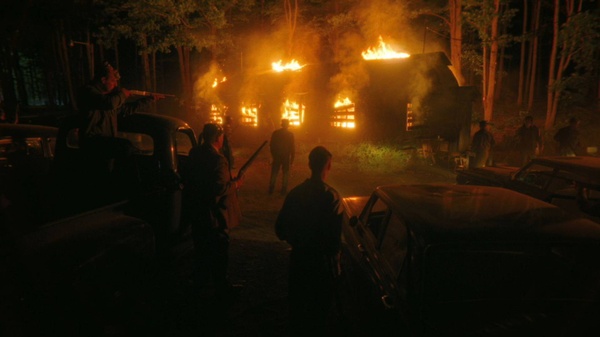
During the attack, Dick Hallorann saves Hank, Ronnie, and Will, but the price is high: Rich dies protecting Marge, while Pennywise kills Stan Kersh and definitively shatters Ingrid's illusion, showing her the Deadlights and revealing himself for what he truly is. In parallel, General Shaw carries out his plan to exploit the entity as a "weapon," having one of the pillars that imprisoned the creature removed and destroyed, convinced he can control it.
The episode seems to suggest that Pennywise is about to go into hibernation, but the finale overturns all certainty: the creature awakens again, appears in Will Hanlon's house, and exposes him to the Deadlights. The season thus closes on a disturbing revelation: the cycle has not been broken, Derry is not safe, and Evil never truly sleeps.
The club fire, the racist massacre, and Pennywise's violent return demonstrate that Evil does not merely strike in the shadows, but thrives when collective fear and human hatred openly explode. The creature's presumed new phase of hibernation is almost immediately disproven: Pennywise reappears before Will Hanlon, showing him the Deadlights and implying that the cycle has not been interrupted, but only accelerated.
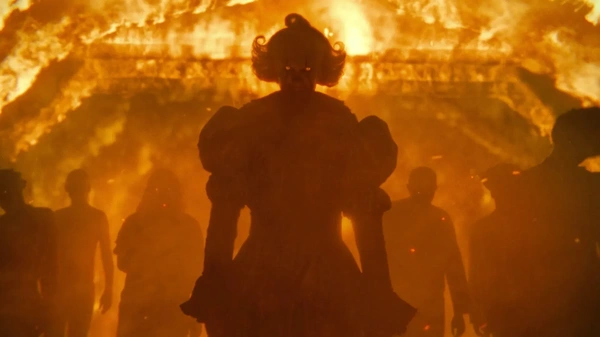
In the final episode, Winter Fire, a thick fog envelops Derry as Pennywise takes direct and systematic action. After killing the school principal, the clown lures most of the children into the auditorium, where he hypnotizes them and begins to take them away, replicating his predatory pattern on a large scale. Ronnie, Lilly, and Marge follow him, while Pennywise provokes Leroy by emotionally striking Will, making the confrontation personal and irreversible.
The explanation of the ending of It: Welcome to Derry
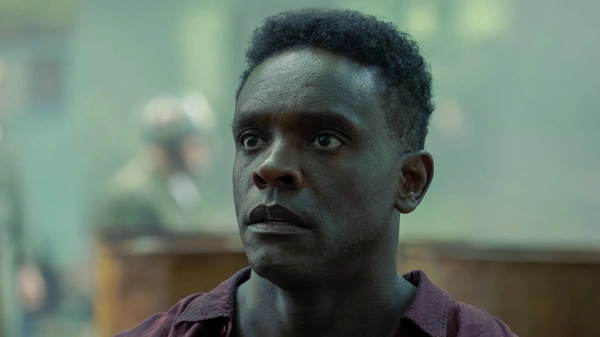
To save the children, Leroy relies on Dick Hallorann, who, thanks to a special drink prepared by Rose, manages to silence the voices in his mind and focus his gift, tracking Lilly through the ritual dagger.
The final episode definitively clarifies the nature of Pennywise (here you can find his story) and why his plan goes far beyond simply feeding on the fear of Derry's children. The creature perceives time non-linearly: past, present, and future coexist, allowing him to know in advance his defeat at the hands of the Losers' Club, as seen in It – Chapter Two. Precisely for this reason, Pennywise attempts an even more radical strategy: to eliminate the ancestors of those who, years later, will be responsible for his downfall.
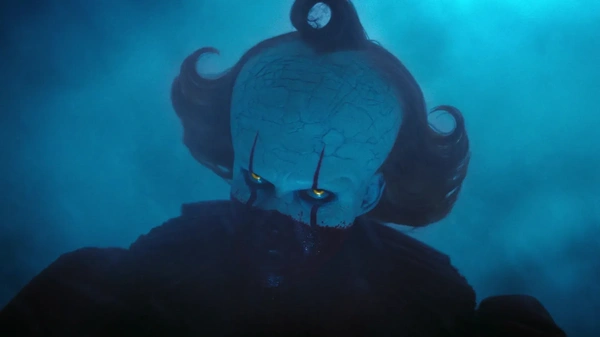
The most explicit revelation concerns Marge Truman. Pennywise separates her from the group because he has understood that she will become the mother of Richie Tozier, one of the key members of the future Losers' Club. By killing her, Richie would never be born, thus altering the timeline that leads to his destruction. It is a crucial moment that confirms how Pennywise is not just a cyclical predator, but a cosmic entity capable of manipulating destiny.
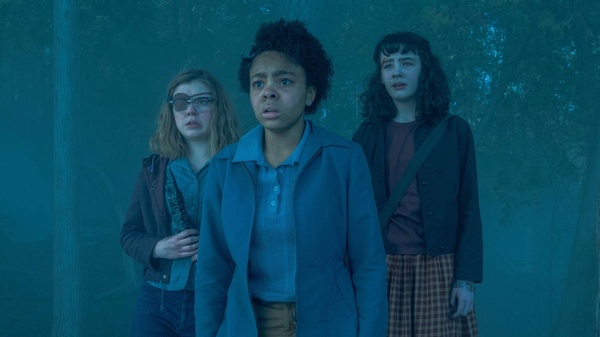
The plan to stop him revolves around the ritual dagger, destined to become the last pillar of the "cage" that imprisons the creature. However, the artifact is not neutral: the further it moves from its place of origin, the more it influences Lilly's mind, suggesting that even the tools created to contain Evil inevitably bear its weight. Only when the dagger passes into Marge's hands, free from influence, does the group understand how to use it correctly.
The role of Dick Hallorann is fundamental; thanks to the drink prepared by Rose, he fully connects with his gift, the "shining." His power temporarily blocks Pennywise, frees the children from the Deadlights, and gains the necessary time to complete the ritual. But the army's intervention, led by Shaw, causes new victims and once again demonstrates how human greed is one of the creature's favorite weapons.
In the decisive moment, when all seems lost, it is the spirit of Rich Santos that makes the difference. Rich, a symbol of empathy and altruism, manages to cross the veil separating the living from the dead and helps his friends bury the dagger, sealing Pennywise in his prison. It is not a definitive defeat, but a temporary regaining of balance, consistent with the entity's cyclical mythology.
The epilogue of It: Welcome to Derry and its connection to Stephen King's universe
After the battle, Welcome to Derry takes time to show the emotional consequences of the events. At Rich's funeral, his spirit appears to comfort his parents and inspire Hallorann to use his gift to help others, completing his narrative arc. Hallorann leaves the army and Derry, announcing that he will go to work in a hotel: an apparently lighthearted remark that, for Stephen King fans, anticipates his future at the Overlook Hotel in The Shining.
Marge confides in Lilly what Pennywise revealed to her about the future, hypothesizing that the creature might go back in time to strike other ancestors of the Losers' Club. Lilly, however, responds with a key phrase: if Pennywise goes even further back, it will be someone else's battle, narratively opening the door for future seasons.
It: Welcome to Derry, who is the old woman?
The final time jump, set in 1988, directly connects the series to the films: Ingrid Kersh, now elderly and institutionalized at Juniper Hill, witnesses the death of Elfrida Marsh and meets young Beverly Marsh. The phrase she utters ("In Derry, no one ever truly dies") retroactively reinterprets one of the most disturbing scenes in It – Chapter Two (available on Amazon), suggesting that Pennywise chose that form.
Click here to read our review.
Similar articles