Iran Explained by Cinema: 5 Essential Films to Understand What's Really Happening
In these dramatic hours, we bring you five titles that exposed the distortions of an Iranian society on the verge of imploding.
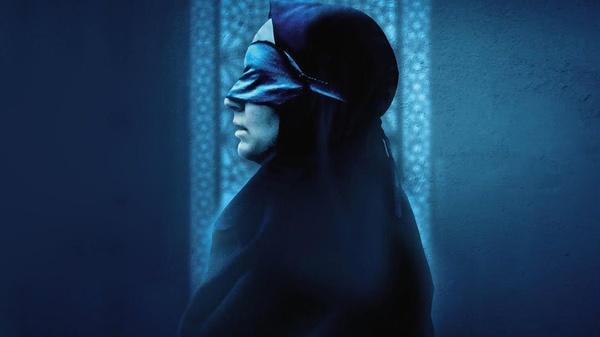


Talking about Iranian cinema today, with news outlining a bleak future and an increasingly inflamed Middle East, is certainly not simple, and can be bitter and painful, since the seeds of what could have been were already inherent on the big screen for many years. Perhaps no one could have expected a new, potential, third Gulf War, but that the die was cast and that the ayatollah regime was nearing a more or less premature end seemed obvious, as we have been taught by the numerous protest films released in the last decade – and beyond – which have indeed guaranteed their directors prestigious awards but also heavy sentences in a homeland that has done everything to silence them.
On the other hand, there is a paradox in censorship: the more a state tries to stifle dissenting voices, the more those voices find unexpected channels to be heard. Contemporary Iran, which had transformed the control of artistic expression into a kind of state policy, with films having to pass through rigid controls to be shot and then distributed, was not spared in its distortions by the implacable eye of the camera. A camera that showed us a society where women cannot sing, dance, or show themselves without a hijab even on screens, and where those who dare to protest are publicly shamed, if not worse. Yet, precisely from this context of systematic oppression, one of the most vital and courageous scenes has emerged, of which we offer a brief insight into five titles that outlined the mirror of a theocracy nearing its inevitable fall.
The Seed of the Sacred Fig (2024, Mohammad Rasoulof)
The film tells the story of Iman, promoted to investigative judge at the Islamic Revolutionary Court just as protests erupt in the country after the tragic death of Mahsa Amini, the student beaten to death while in police custody, who became a symbol of the protests. The plot unfolds almost entirely in the family's apartment – Iman, his wife Najmeh, and their two daughters Rezvan and Sana – transforming the domestic space into a microcosm of decaying Iranian society. The plot is extraordinarily private, focusing on the dynamics between Iman's family members, largely within the confines of their home. The intensifying street protests are represented through sounds and footage recorded with cell phones from the 2022-23 demonstrations.
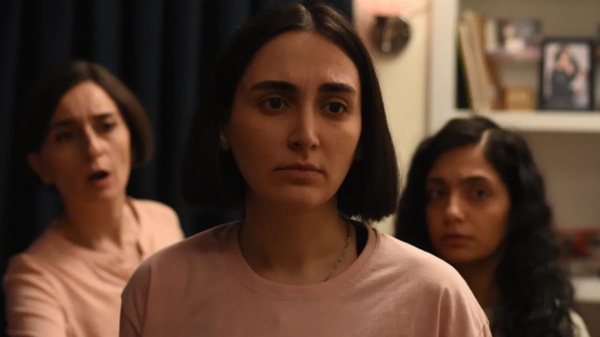
Rasoulof constructs a psychological thriller where growing paranoia contaminates the most intimate relationships: when Iman loses his service pistol, he immediately suspects his daughters, progressively transforming from a caring father to a ruthless inquisitor. The film's strength lies precisely in its ability to show how state violence penetrates intimacy, corrupting family ties and turning anyone into a potential tormentor. Here, reality breaks into fiction, contaminating it with the urgency of the present. The scenes where the daughters secretly watch videos of the protests on smartphones, confronting the brutal violence of the state against peaceful demonstrators, are among the most powerful in contemporary cinema, precisely because they do not require further dramatic artifice beyond what actually happened.
Kafka in Tehran (2023, Ali Asgari and Alireza Khatami)
A man wants to baptize his son with a Western name, clashing with the resistance of the registry office; a student is summoned by the principal for inappropriate behavior; a man, during his driving test, is forced to strip to show his tattoos. These are just some of the eight stories that make up this anthology film set in Tehran, a portrait of a deeply divided society oppressed by religion, an unsettling prelude to what has happened in recent days.
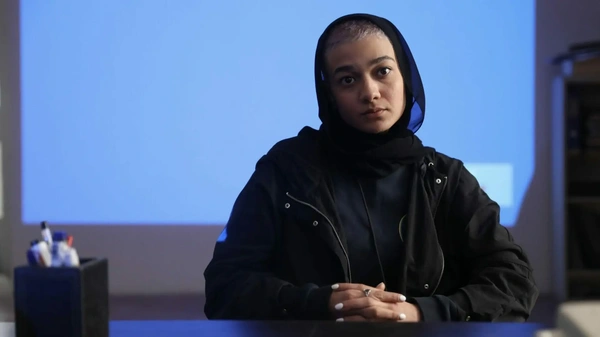
Fixed shots and a central use of off-screen sound, with the interlocutor always hidden from the audience's gaze, who witnesses firsthand the moral process imposed each time on the unfortunate protagonist. The result is a bitter and paradoxically ironic narrative, in which the inquisitorial soul of the unseen obtains very different responses: from a youth less willing to be quiet and submissive to an adult world now aware of how things work. A simple film that, in its apparent linearity, manages to say a lot: an unfiltered kaleidoscope suspended between hope for change and resignation. And that ending, contaminated by vaguely apocalyptic tones, seems to dramatically anticipate what has happened in these last hours, with the collapse of an old society that leaves behind ruins of an unknown destiny.
My Persian Garden (2024, Maryam Moghaddam and Behtash Sanaeeha)
Seventy-year-old Mahin, a widow for thirty years, is the mother of two adult children who have long resided abroad. Her daily life of solitude slowly unfolds in a suburban villa with an attached garden, occasionally shaken by visits from some friends her age. Tired of that increasingly oppressive inertia, she decides to meet someone who can rekindle in her the desire to fall in love again, unaware of the turn the evening will take after that renewed intention.
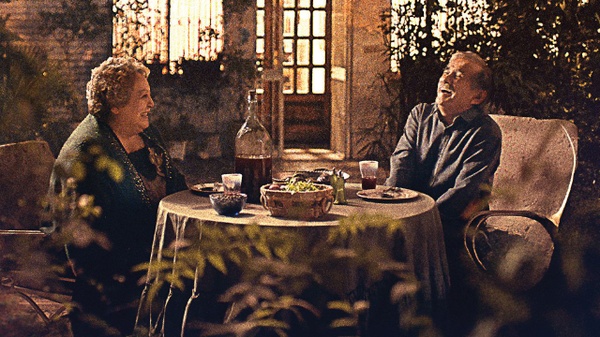
It's not just the Iran of the young, but also of the elderly who were once young and regret the freedoms granted to them, starting with the protagonist herself who finds herself engaged in heated discussions with the morality police, who were threatening a teenager who went against the rigid, ultraconservative precepts of the regime. A message of female empowerment that is embedded in a more intimate story, already revolutionary in its own way in telling a love story between septuagenarians. Mahin inviting a man home, preparing dinner, drinking illegal wine, putting on makeup and wearing a dress she likes represents a total subversion, all obviously hidden from the nosy neighbor who could report her. The two faces of a country more divided than ever, still and especially in these dramatic hours.
A Simple Accident (2025, Jafar Panahi)
Jafar Panahi is an iconic figure in Iranian and world cinema: arrested multiple times, convicted, banned from making films, yet never subdued, always finding methods to deceive those who were supposed to enforce such a ban.
His latest film was also shot secretly in Iran, another courageous choice that earned him the Palme d'Or at the Cannes Film Festival. The plot follows the consequences of a trivial car accident, but as always in his cinema, the everyday becomes political: every interaction with authorities reveals systemic corruption, every attempt to solve the problem bureaucratically clashes with the arbitrariness of power.
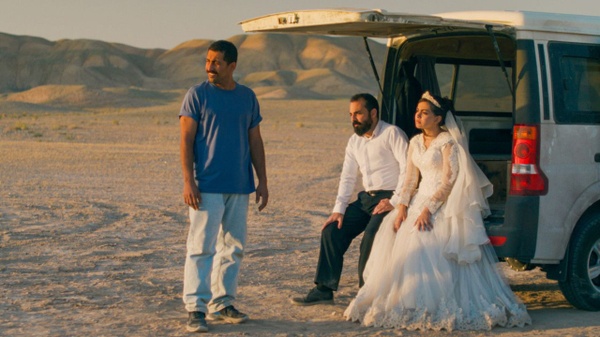
The premise triggers a series of events that force a core group of main characters to come to terms with a past they thought they had closed accounts with forever, a past of violence and torture suffered under the regime. The camera moves through the streets of Tehran, capturing the city as a living stage, offering us glimpses of a metropolis inexorably changed and now the theater of a war that spares no one and nothing.
Leila's Brothers (2022, Saeed Roustaee)
The film follows the protagonist and her four brothers as they struggle to stay afloat in an Iran suffocated by fraud, class struggles, rivalries, and a shaky and uncertain economy that threatens to bankrupt many. Leila has dedicated her entire life to caring for her family, and it is she who devises a plan to avoid probable bankruptcy: start a business using everyone's savings. But when she discovers that her father Esmail has secretly hidden a fortune in gold coins to offer to the community and become the new patriarch of the clan – the highest honor in Persian tradition – the situation takes a dramatic turn, in a crescendo of recriminations, betrayals, and violence.
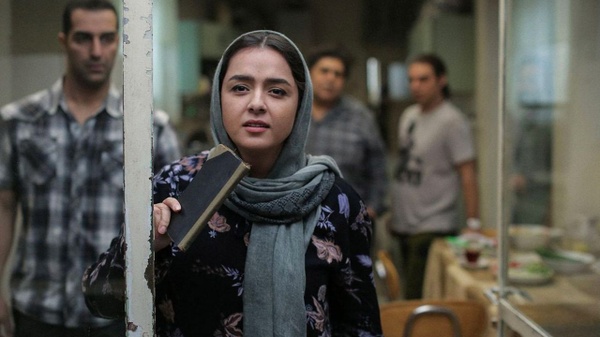
International sanctions and widespread corruption are at the heart of a story where the patriarchal system oppresses women's ideas and proposals, which are often relegated to the background even by their own family members, crushed by prejudice that forces them into a life of invisibility. Every single glance at the camera by actress Taraneh Alidoosti thus becomes an act of resistance, a testament to what Iranian women endure daily and which we will now discover whether it is destined to change or not.
Bonus: In the Shadow of the Cypress (2023, Hossein Molayemi and Shirin Sohani)
The fragile balance between a father marked by deep trauma, which leads to intense and uncontrollable fits of rage, and the daughter with whom he shares a life of silence, in an isolated house by the sea. When the girl considers abandoning her irritable parent after yet another outburst, the unexpected appearance of a whale, beached a few meters from their home, changes everything, becoming an emotional catalyst that forces both to confront repressed pain, guilt, and the desire for redemption.
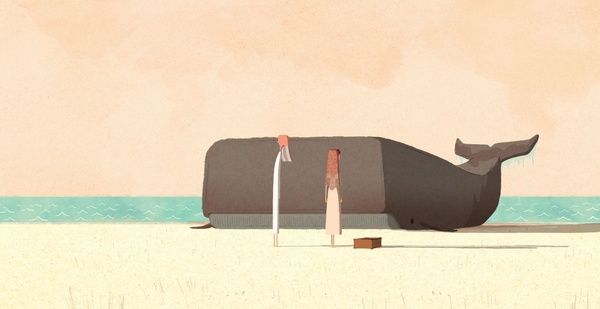
This short film, awarded an Oscar for Best Animated Short Film, is an essential and highly symbolic narrative, where nature becomes a mirror of unhealed inner wounds, which we discover in flashbacks of a distant war – but with dynamics all too clear and known, and which underlines, if there were still any need, the cyclical nature of certain geopolitical dynamics – that has left indelible scars on those who remained. A simple visual style capable of changing according to the characters' emotions, ideally suspended in the belly of this whale which becomes a metaphor for a burden to be shed at all costs, before being dragged down into the abyss. Abysses that are tragically current.
Similar articles