Ed Gein: The True Story Behind the Monster Who Inspired Modern Horror
Discover the true story of Ed Gein.
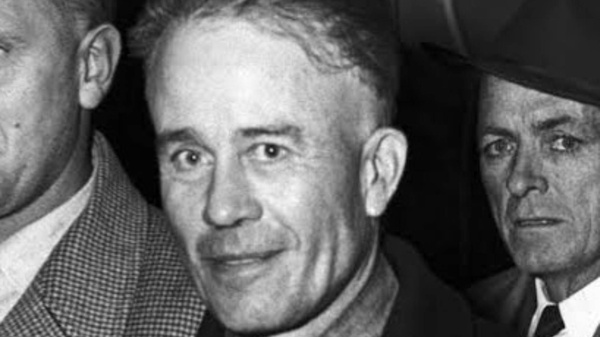


With the arrival on Netflix of the new season of Monster dedicated to Ed Gein, the spotlight returns to illuminate one of the most disturbing figures in American true crime. Behind the seemingly anonymous face of a provincial man lay a universe of macabre obsessions, capable of fueling the collective imagination and inspiring some of cinema's most famous monsters. But who was Ed Gein really? And why does his story continue to embody, even today, the very archetype of evil?
Warning: The following article contains references to disturbing real-life events. Reading is recommended exclusively for an adult audience.
Who is Ed Gein?
Edward Theodore Gein, known to history as Ed Gein, is one of the most unsettling names in American crime. His fame has transcended the boundaries of true crime, transforming him into a true horror icon. Born and raised in the rural Midwest, in a severe and isolated family context, Gein appeared to be an ordinary man. But behind that ordinary facade lay a universe of morbid obsessions, marked by necrophilia, desecrations, and crimes that would indelibly impact the collective imagination and popular culture.
The True Story of Ed Gein
Behind the cinematic horror embodied by figures like Norman Bates in Psycho or Leatherface in The Texas Chain Saw Massacre lies a real and disturbing root: Ed Gein. His story, marked by an oppressive childhood, morbid obsessions, and a macabre relationship with death, shocked America in the 1950s, leaving an echo that still resonates in the collective imagination today. Grave desecrations, gruesome artifacts kept in his home, and cruel murders transformed that Wisconsin farmer into a dark legend, the “monster next door” who seemed to embody the nightmare hidden behind the normality of rural America.
Origins
Ed Gein was born on August 27, 1906, in La Crosse, Wisconsin, into a family marked by deep imbalances. His father George, a chronic alcoholic unable to hold a steady job, unleashed frustration and violence within the home. His mother Augusta, on the other hand, dominated the house with obsessive religious fanaticism: she preached the absolute corruption of the outside world and considered sex and women, with the exception of herself, as instruments of the devil.
In this suffocating climate, Ed, shy and introverted, developed a morbid bond with Augusta, who forbade him all social contact. At school, he was diligent, but his unkempt appearance and eccentric behavior made him a target for marginalization. After his father's death in 1940 and that of his brother Henry in 1944, who died under circumstances never fully clarified during a field fire, Gein was left alone with his mother. Her death in 1945 represented an irreparable trauma for Ed: he lost the only point of reference in his existence and plunged into total isolation.
The family home in Plainfield gradually transformed into a mausoleum of his obsession. Some rooms, like his mother's, were sealed and preserved intact as relics, while the rest of the house slid into a gruesome decay, a prelude to the aberrations that would mark his story.
The Crimes
The horror exploded in all its brutality in the late 1950s. On November 16, 1957, police arrived at Gein's farm in Plainfield to investigate the disappearance of shopkeeper Bernice Worden. The scene that presented itself to the investigators surpassed all imagination: in the shed, they found the woman's body hanging upside down and horribly mutilated. But what awaited inside the house was even worse.
The dwelling proved to be an authentic museum of horrors: human remains transformed into ornaments, skulls used as bowls, masks made from flayed faces, chairs upholstered with skin. Investigators discovered that Gein had spent years desecrating graves in local cemeteries, exhuming the bodies of women who reminded him of his mother. With the body parts, he made clothes, trophies, and everyday objects, driven by the obsession to relive her presence.
In addition to numerous acts of desecration, Gein confessed to two murders: that of Bernice Worden and that of Mary Hogan, a tavern owner who mysteriously disappeared in 1954. Behind his actions, however, there was not only a murderous impulse: Ed was dominated by the delusion of becoming his mother, trying to reconstruct her body through a macabre costume of human skin.
This psychiatric component, halfway between necrophilia and loss of identity, made his figure even more disturbing and made him the matrix for some of the most famous monsters in horror culture: from Norman Bates in Psycho to Buffalo Bill in The Silence of the Lambs, and Leatherface in The Texas Chain Saw Massacre.
The Arrest of Ed Gein
Ed Gein was arrested on November 16, 1957, a few hours after Bernice Worden's body was found on his farm. At the time of his capture, he appeared surprisingly calm, almost indifferent to the gravity of the charges. During interrogations, he confessed with disarming naturalness, describing without hesitation the cemetery desecrations and murders committed, as if speaking of everyday actions.
Psychiatric evaluations revealed a devastating clinical picture: schizophrenia, psychosis, and a profound inability to distinguish reality from the delusions that obsessed him. Although found responsible for Bernice Worden's murder, Gein was deemed not guilty by reason of insanity. He thus avoided the death penalty and prison, being committed to the Central State Hospital for the Criminally Insane in Waupun, Wisconsin. He spent the rest of his life in that facility, a living symbol of a horror that continued to cast its shadow far beyond the walls of the psychiatric hospital.
When Did Ed Gein Die?
Ed Gein died on July 26, 1984, at the age of 77, from respiratory complications due to cancer. He spent over three decades confined in Wisconsin psychiatric hospitals, away from the world and under constant surveillance, until the last days of his life.
He was buried in the Plainfield cemetery, the same place he had desecrated years earlier with his macabre acts. His tombstone soon became a destination for the curious, scholars, and true crime enthusiasts, until it was repeatedly vandalized and finally removed. Today, his grave remains anonymous, as if the community wanted to erase all tangible traces of a man who, with his delusions, had transformed rural America into an endless nightmare.
Ed Gein in Pop Culture
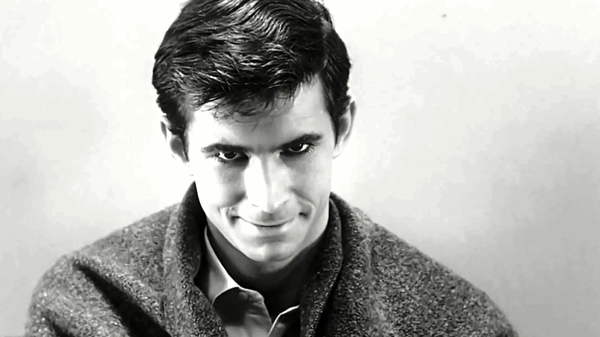
Ed Gein's story has left an indelible mark on popular culture, becoming one of the most prolific sources for the horror genre. His figure has inspired some of the most iconic characters on the big screen:
- Norman Bates in Alfred Hitchcock's Psycho
- Leatherface in Tobe Hooper's The Texas Chain Saw Massacre
- Buffalo Bill in Jonathan Demme's The Silence of the Lambs
These archetypes have translated Gein's obsessions and deviances into universal symbols of fear, giving rise to an imagery that still continues to terrify audiences today.
But the echo of the “Butcher of Plainfield” did not stop at cinema. His story has been revisited in horror novels, countless true crime documentaries, and even in music: rock and metal bands have transformed his macabre legacy into an extreme metaphor for the dark side of human nature.
Monster: The Story of Ed Gein, the New TV Series

Ryan Murphy brings viewers back to the heart of horror with a new season of the anthology series Monster, this time entirely dedicated to Ed Gein. The Story of Ed Gein will debut on Netflix on October 3, 2025, reconstructing in all its complexity the story of the infamous “Butcher of Plainfield.”
Charlie Hunnam, beloved face from Sons of Anarchy, will play the protagonist, while Laurie Metcalf will portray Augusta, the authoritarian and obsessive mother who indelibly marked Gein's life. Alongside them, Tom Hollander will be Alfred Hitchcock, the director who drew inspiration from the Gein case to create the legendary Psycho.
The series does not merely recount the most heinous crimes but explores the psychological and familial roots of the horror, depicting the transformation of an ordinary man into one of the most unsettling figures of the twentieth century. At the same time, it reflects on the immense cultural influence that Gein's story has exerted on cinema, literature, and popular imagination, reminding us how fragile the line between news and myth truly is. Here you can find all the information.
Similar articles