Spider-Man Noir: Anatomy of a Shadow Between Earth-90214 and Prime Video
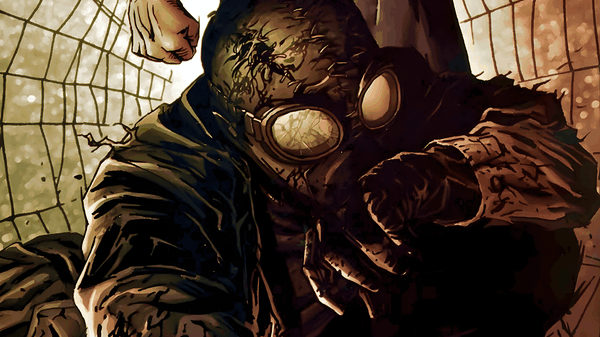


A peculiar, almost tangible tension is felt when an icon of underground comics makes the definitive leap towards global media saturation. 2026 marks precisely this boundary for Spider-Man Noir, transforming a daring stylistic experiment from 2009 into a pillar of contemporary pop culture. Through the publication of the hardcover volume by Panini Comics, which occurred on February 12, the desire to recover the dirty and nihilistic roots of a character who resisted the allure of color to settle into an imagery of lead, smoke, and unresolved ethical dilemmas emerges clearly. Is it possible that this editorial rebirth is the prelude to a new form of serial narration, where the hero no longer seeks the light, but finally learns to master the darkness?
The Roots of Mud and Lead in Earth-90214
The genesis of this version of Peter Parker is not based on atomic science fiction, but rather on a hardboiled deconstruction that openly flirts with magical realism and pulp. In the context of 1933 New York, the protagonist leaves the high school lab to make his way through the social ruins of the Great Depression, acting as a disillusioned activist under the wing of a deeply compromised Ben Urich. Power does not stem from a controlled accident, but from the curse of a mystical idol that restores a tribal destiny to the boy, linking the hero to the cosmology of the Spider-Totem. This narrative choice tends to eliminate solar heroism to embrace lethal violence, where the use of extreme force against Norman Osborn's organized crime becomes the only accepted currency in a corrupt metropolis.
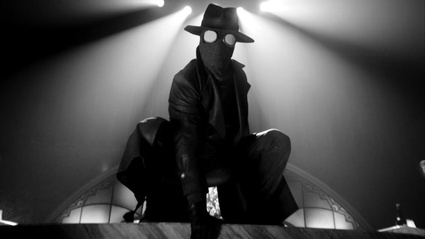
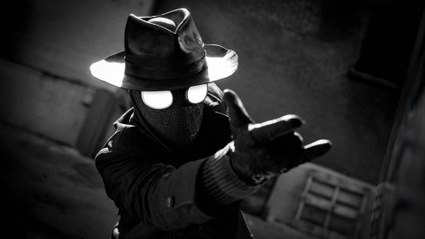
It is precisely in this darkness that the directorial talent of Carmine Di Giandomenico shines, whose pencils have shaped an aesthetic that we now perceive as universal for the franchise. The Italian artist acts as a lead actor, visualizing the scene and rehearsing the movements before fixing them on the page, rejecting all hyper-technology to prioritize anatomy in motion. The costume itself is configured as a makeshift assembly, composed of an aviator's uniform inherited from Uncle Ben, tragically devoured alive by the Vulture in this iteration, a kevlar vest, and tactical goggles that filter the vigilante's rage. Although Di Giandomenico's style is technically impeccable, there remains the caveat of a narrative that risks appearing too dark for those accustomed to the lighter iterations of the Web-Slinger, making the Panini volume a work dedicated to a distinctly adult audience.
The true thematic leap in quality occurs with the sequel Eyes Without a Face, where the analysis shifts from street crime to the aberrations of Nazi collaborationism and eugenics. Here the reader encounters a disturbing version of Adrian Toomes, a former sideshow freak known as the Vulture who has developed a craving for human flesh, an element that marks the definitive break with the Silver Age canon. The plot is not limited to presenting masked enemies, but deconstructs figures like Doctor Octopus, transforming him into a paraplegic scientist linked to the pro-Nazi movements of the Friends of New Germany. Thus, a exquisitely historical horror is established, focused on the practice of lobotomies conducted on Ellis Island on African American citizens to annul their will, a fate that irreversibly strikes Robbie Robertson as well.
Animated Mediation: From Niche to Global Pop
The media explosion of the character would not have been possible without the intervention of the animated feature films dedicated to Miles Morales, which managed to translate the darkness of the original material into an enormously successful postmodern pastiche. In Spider-Man: Into the Spider-Verse (2018), Noir is introduced as a two-dimensional, hyper-stylized figure constantly enveloped by a wind that does not belong to the surrounding world, bringing with him an obsession with fighting Nazis and an unprecedented comedic streak. Nicolas Cage's voice gives the character a melancholic and at the same time absurd gravity, capable of transforming dark elements such as the lack of chromatic perception into a brilliant narrative device, as demonstrated by the famous Rubik's Cube sequence.
This mediation operation had the merit of simplifying the radical political themes of the comic to make them digestible for a family audience, without however betraying the visual essence of Di Giandomenico. In the subsequent Spider-Man: Across the Spider-Verse (2023), Noir's role is consolidated as part of a multiversal coalition, reaffirming the importance of his noir aesthetic within a hyper-colorful narrative structure. The success of this animated version convinced the producers of the goodness of a live-action project, acting as a fundamental media bridge that transformed a forgotten vigilante from the 1930s into an icon recognizable by millions of viewers. Thus, an interesting paradox is established, where the lighter and more satirical version of cinema saved the cruder and more political version of the original panels from oblivion.
The Television Turn and the Paradox of Ben Reilly
The debut of the Spider-Noir series on Prime Video, set for May 27, 2026, represents a breaking point in the adaptation protocols of comic book movies. It is not only the first live-action series dedicated to a multiversal variant, but a project that boasts a cinematic budget and the creative vision of Oren Uziel and Steve Lightfoot. The decision to entrust the direction of the first two episodes to Harry Bradbeer conveys the image of a high-profile product, where the production of Phil Lord and Christopher Miller guarantees qualitative continuity with the animated universe. The choice of Nicolas Cage, who describes his character as an amalgam between Humphrey Bogart and Bugs Bunny, introduces a note of eccentricity into a world otherwise dominated by cynicism.
Here emerges the strategic decision to abandon the youth of Peter Parker in favor of Ben Reilly, an aged private investigator who has already consumed his disillusionment in the shadows of the underworld. Ben Reilly is an unlucky veteran who hung up his costume after a personal tragedy, living a daily life that directly recalls the nihilistic atmospheres of Chinatown. This metamorphosis of the hero allows the series to explore a hardboiled fantasy register, enriched by the presence of monsters and conspiracies that transcend simple organized crime, winking at readers who remember the appearance of Felicia Hardy as the disfigured White Widow in more recent comic stories.
Comparative Analysis and the Legacy of the Shadow Vigilante
Comparing the Panini volume with the series' anticipations, an ontological divergence in the characters' destinies emerges that deserves in-depth reflection. While in the original comic Robbie Robertson suffers the trauma of lobotomy, in the television version he acts as the pulsating and optimistic heart of the narrative, serving as a counterpoint to Ben Reilly's cosmic pessimism. The figure of Flint Marko also undergoes a significant rewrite, going from being a brutal henchman killed by the police to a bodyguard tormented by a mysterious condition that causes him memory loss. This narrative polarity tends to transform the raw political activism of Di Giandomenico's panels into a narrative closer to Hollywood's atmospheric noir, where the charm of mystery prevails over physical tragedy.
The evolution of Spider-Man Noir, born as a niche experiment in 2009, culminates today in an unprecedented mainstream consecration. The passage through animated cinema and the global explosion with the Miles Morales films allowed the character to acquire a dramatic dignity superior to that of many main heroes. The 2026 series represents the culmination of this journey, transforming a passing curiosity into a prestige drama capable of competing with major contemporary television productions. It is an achievement that testifies to the intrinsic strength of an aesthetic capable of constantly regenerating itself through different media, moving from the carnal violence of Toomes to the divistic charm of Cat Hardy.
The perfect conclusion to this journey into darkness lies in the series' official tagline, which reverses the most famous motto of Spider-Man mythology to adapt it to a world that has stopped believing in redemption. The statement that from no power comes no responsibility sanctions the birth of a broken hero, a man who no longer seeks to save the world, but to survive his own inner ruins. Whether it's the revolutionary Peter Parker of the comic or the disillusioned Ben Reilly of television, Spider-Man Noir remains the symbol of ethical resistance possible even when all else seems lost. Ultimately, the work published by Panini and the Prime Video series are two sides of the same silver coin, precious compasses for navigating the moral storm of our time.
Similar articles