Steven Spielberg: the director, divided between dream, history, and reality, whom we never stop watching
From personal trauma to masterpieces: a journey into the cinematic universe of the master who reinvented Hollywood


"A film is, to all intents and purposes, a mosaic, composed of fragments, which ultimately forms a face."
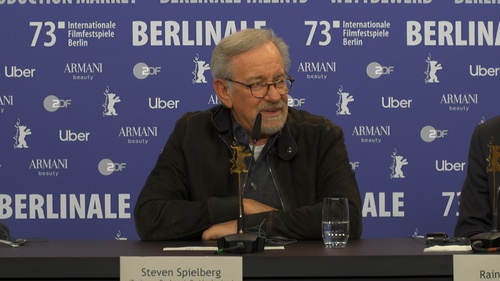
With this sentence, Steven Spielberg concluded his 2023 Berlinale press conference (where he received the Golden Bear for Lifetime Achievement from Bono Vox, ed.), answering what making a cinematic work meant to him.
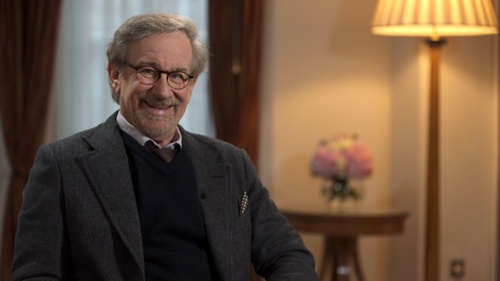
This is also one of the images from the documentary "Spielberg - The King of Hollywood," airing on Sky Documentaries
on October 25 at 10:50 PM, streaming on NOW, directed by Michaël Prazan, which once again attempts to explain the work of the great American director, his family life, traumas, fragilities, main themes, and his omnivorous nature.
Unlike "Spielberg," the other documentary by Susan Lacy, released in 2017, which celebrated his artistic production through interviews with actors and colleagues, here we witness a chronological overview (including unreleased home movies) of what he has been delivering for over 50 years.
Indeed, Spielberg, like Fellini, Kubrick, Tarantino, and a few others, is not just a (sur)name; over time, he has transformed into an adjective, a recognizable style, which in his case has managed to span works of great success and entertainment, to more intimate and personal stories, to connections related to history (American, but not only), to characters who have entered the collective imagination. To say today that a film is "Spielbergian" immediately refers us to its author without any doubt.
Gallery
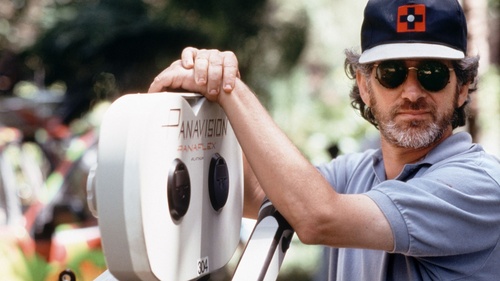
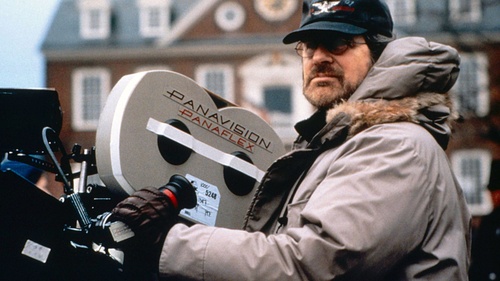
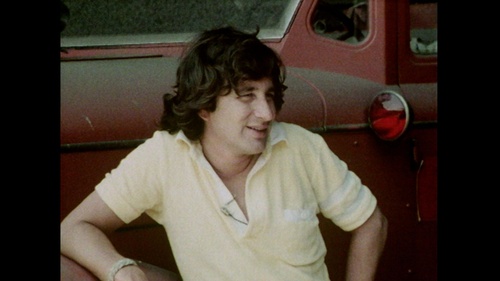
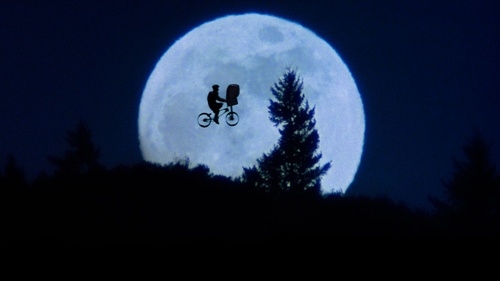
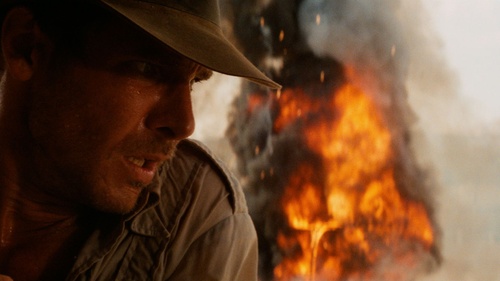
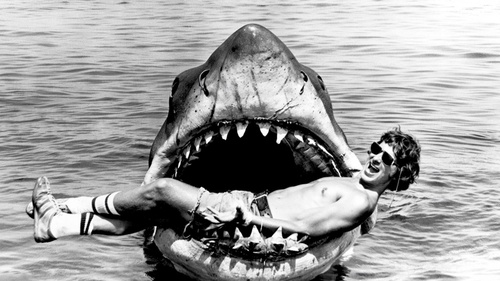
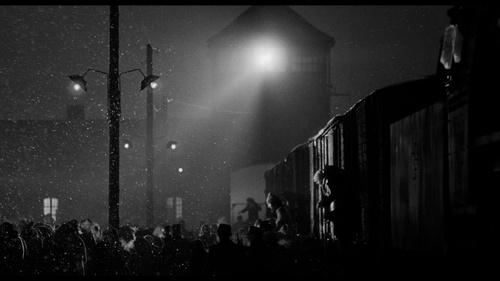
Fragments of memory and epic.
Reality, the kind that changes history. It is there that the director found further inspiration, trying to connect the value of actions with that of ideals. Lessons in cinema and style. As in Schindler's List, his absolute masterpiece, awarded seven Oscars, including Best Picture and Director, in which he managed to process the tragedy of the Holocaust, the concentration camps, and the true, heroic figure of Oskar Schindler, a member of the Nazi party, who saved 1100 Jews from that horror. Or as in Saving Private Ryan (another five Oscars, including Best Director) which marked a further analysis of World War II (Empire of the Sun is also beautiful in this regard), serving as a backdrop to an incredible story, full of courage, in which Tom Hanks, having landed in Normandy, tries to retrieve a soldier, the only (perhaps) survivor of four brothers. Experiences, news events, always reconstructed with meticulousness and cunning, to make them fascinating and engaging: from Munich, narrating what happened at the Munich Olympics in 1972, the scene of one of the most brutal and bloody attacks, to Lincoln, centered on the figure of one of the most crucial American presidents, played by Daniel Day-Lewis, awarded an Oscar. And again, Bridge of Spies, a superb spy movie set during the Cold War, The Post, focused on publishing and the 1970s Pentagon Papers scandal, up to The Color Purple, among the most touching and beautiful, though underestimated by critics, in which hope and unconditional love between two sisters are explored with a Whoopi Goldberg in a state of grace.
Steven Spielberg and childhood traumas.
Spielberg grew up, as we hear in the documentary, particularly traumatized by his parents' separation, yet enveloped by the desire to tell the story of his mother, his sisters, a struggle between art and family, a theme that emerged in many of his works, and moreover marginalized for being the only one of Jewish origin. Considered immature, a director "only interested in narrating childhood," and at times little celebrated for this, he actually ventured from the beginning of his career into personal challenges, into real risks, which then became cult works to be emulated.
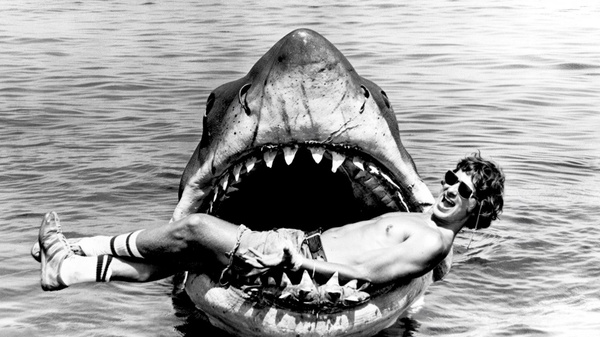
Just think of Duel (1971) and Jaws (1975), which this year marked its 50th anniversary, and whose set was plagued by budget overruns and unforeseen events (today we can consider it the first box office success), in which the (invisible) fear of the unknown, of a deserted and crowded America, is addressed. A country to tell, also in his very personal and autobiographical The Fabelmans, where he exceptionally managed to open up his memories, his childhood dreams, his first time at the cinema, dazzled by Cecil B. DeMille's The Greatest Show on Earth.
The Workaholic of the big screen, who became King of Global Entertainment.
From "Spielberg - The King of Hollywood," beyond the successes, the productions (with Amblin and Dreamworks companies) for directors like Zemeckis, Joe Dante, and even Akira Kurosawa, hidden sides of the young director re-emerge, the continuous, almost rootless displacements. "Living with fear is part of my DNA. In front of my window, as a child, in New Jersey, there was a bare, scary tree, it looked like it had tentacles, arms with long fingers and nails, it terrified me." Since then, each of his films has created anticipation: in Ready Player One, born from Ernest Cline's novel-game, where the 'Spielbergian' language draws vital sap, reconstructing 1980s pop culture, inserted into the futuristic 2045.
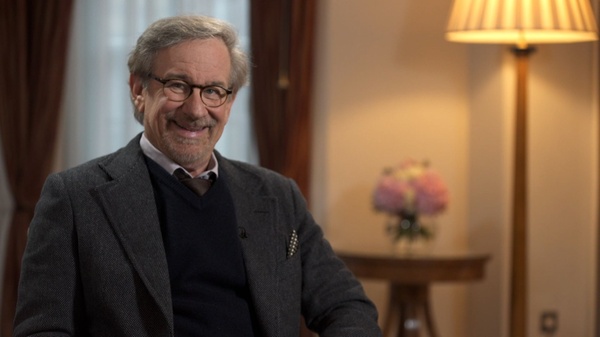
An incredible game, worth living until the final message, "reality is real," and it's better than virtual. But for him, dreaming meant riding E.T.'s flying bicycle, taking care of the Big Friendly Giant, or a Peter Pan (Hook) who has forgotten how to fly, and then tries to win back his children and identity. It meant opening up to adventure (and archaeology), both as Indiana Jones, the character created by his friend George Lucas, protagonist of four films, and in visually recreating the themed world of Jurassic Park. Avant-garde and prehistory, intertwined with alien features (as in War of the Worlds), deceptively chasing (Catch Me If You Can), or perhaps remaining stuck at the airport by bureaucracy (The Terminal).
"Cinema was not a means to exorcise something I wanted to get rid of; in reality, it was a way to collect things I wanted to keep with me for the rest of my life." Words (and images) of Steven Spielberg, the King of Hollywood.
Similar articles