SAW – We've Seen the 4 Film Collection 4K
The origins of the horror saga that changed torture movies in a 1000-copy box set



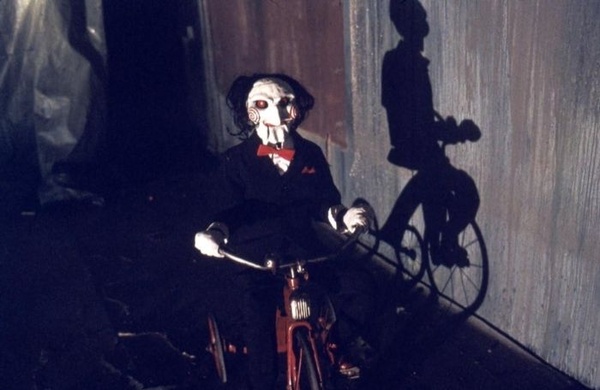
When it arrived in cinemas in 2004, few would have imagined that Saw would become one of the most enduring and influential horror franchises of the new millennium. Born almost as a very low-budget gamble by James Wan and Leigh Whannell, the film revolutionized contemporary horror thrillers by building a deadly game dominated by lethal traps, psychological manipulation, and a constant sense of physical and moral despair. From that moment on, the figure of John Kramer, aka Jigsaw, played by Tobin Bell, rightfully entered contemporary horror imagery alongside the great boogeymen of the past.
Plaion Pictures Italia now re-releases the first four chapters in a collector's box set that allows viewers to follow the complete evolution of the saga from its origins to the transformation of the Jigsaw myth into something much larger than the individual. A journey that starts from a gritty, minimalist thriller set almost entirely in a filthy abandoned bathroom and arrives at an increasingly complex narrative mosaic made of flashbacks, temporal games, elaborate traps, and characters destined to inherit the killer's legacy.
Saw 2004 - The Beginning of the Trap That Changed Modern Horror
The first film remains the most surprising even today. Two men wake up chained in a filthy bathroom without knowing why. On the floor, a corpse, a gun, and a series of recorded tapes force them to participate in a perverse game orchestrated by Jigsaw. The film's brilliant idea was not just the brutality of the traps, but the way it transformed physical suffering into a perverse moral journey. Kramer does not consider himself a murderer: according to his philosophy, victims always have a chance to save themselves, but only through pain, sacrifice, and an awareness of the value of life.
With very few resources, the film built a growing tension culminating in one of the most iconic endings in modern horror. The revelation of the "corpse" in the center of the room, accompanied by the notes of "Hello Zepp," the iconic theme of the entire saga composed by Charlie Clouser, has become an absolute cult moment, replicated and reinterpreted in subsequent chapters without ever completely losing its impact.
Saw II - The Game Expands
The unexpected success quickly led to the production of Saw II, filmed in a very short time but capable of intelligently expanding the saga's universe. This time there isn't a trapped couple, but an entire group of individuals locked in a house riddled with deadly traps. In parallel, Detective Eric Matthews tries to catch Jigsaw, but finds himself involved in a psychological game much bigger than him.
The second chapter enormously expands Kramer's character. If in the first film he was almost an invisible presence, here he becomes the center of the scene: he talks, provokes, manipulates, and explains part of his philosophy. Saw II also begins to build the narrative continuity that will make the franchise different from most serial horrors of the time. The connections with the first episode are continuous, and the ending once again demonstrates how much the saga loves to play with time, perception, and deception.
Saw III: Pain, Revenge, and Madness
With Saw III, the series takes another step forward into even darker and more disturbing territories. John Kramer is now consumed by brain cancer and confined to bed, but continues to direct his games through Amanda Young, a survivor of the first film who has become his follower. In parallel, a man devastated by the loss of his son is dragged into a path designed to force him to confront the desire for revenge.
Saw III clearly accentuates the gore aspect of the saga, introducing some of the most brutal and memorable traps in the entire franchise. But it is also the chapter that most deeply explores the relationship between Kramer and Amanda, showing how Jigsaw's philosophy can be interpreted and distorted by those who decide to inherit his role. Behind the blood and mutilations emerges the tragic side of characters now unable to distinguish redemption from madness.
Saw IV: Jigsaw's Legacy
Saw IV gathers the consequences of everything that had happened in the previous films and definitively transforms the saga into a gigantic narrative puzzle. The film opens with Jigsaw's autopsy, who died at the end of the third episode, but his presence continues to dominate every event. Through flashbacks and new deadly games, fundamental details about John Kramer's past, the origins of his traps, and how his thinking is destined to survive beyond death are revealed.
Saw IV represents the moment when the saga definitively stops being just a series of elaborate tortures and becomes an interconnected narrative universe, where every detail can have consequences in subsequent chapters. It is also the film that definitively establishes the central idea of the franchise: Jigsaw may die, but his legacy will continue to live through those who choose to carry on his work.
Saw Film Collection - Theatrical and Director's Cut Versions
Revisiting them today, the first four films show the evolution of a saga that profoundly marked horror cinema of the 2000s. Not only for the explicit violence or the sadistic inventions of the traps, but for the ability to build an increasingly ambitious plot around one of the most recognizable villains in contemporary cinema. The Plaion box thus allows us to return to the origins of a phenomenon that, for better or worse, redefined the very concept of modern serial horror.
The films are presented with different edits, except for the first film, where the 4K and 2K discs always offer the "Director's Cut," a designation that has caused a lot of confusion among fans over the years. Here it is worth a closer look.
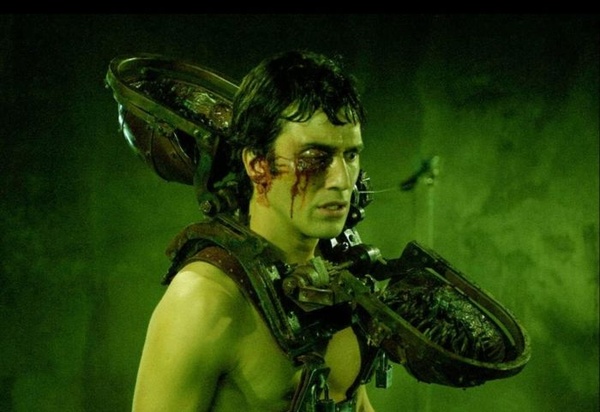
Unlike, for example, Saw III, which has truly very different versions, the first Saw does not have a truly radically alternative Director's Cut to the Theatrical version released in cinemas in 2004. American Home Video editions contributed to the circulation of an "Unrated/Uncut" variant, later renamed in some markets as "Director's Cut."
The differences are limited but present: some more explicit gore details, alternative shots during Dr. Gordon's mutilation, small editing changes, and slight variations in the ending. In some cases, certain scenes are even slightly shorter than the theatrical version, which is why the duration remains practically identical. The new Italian edition from Plaion Pictures Italia and Midnight Factory uses precisely this "Director's Cut," which has now become the most widespread standard edit of the film in the modern Home Video market. The remaining films can be viewed in the Theatrical 4K + Director's Cut 2K version on a separate BD-50 disc. Saw II: Theatrical 93', Director's Cut 95'; Saw III: Theatrical 108', Director's Cut 114'; Saw IV: Theatrical 93', Director's Cut 96'.
Saw Film Collection - How it Looks
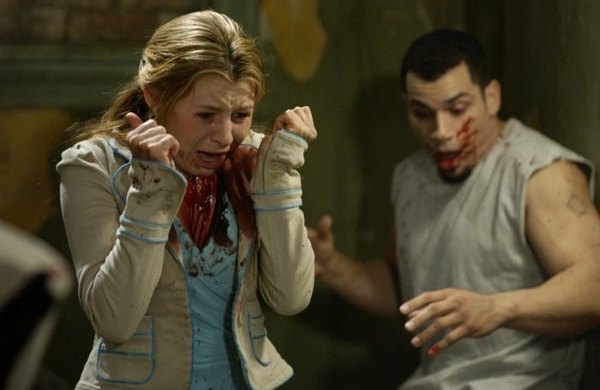
An important note is related to the source master, because according to our research, the 4K masters of Saw and Saw II were made from native 4K masters, while the subsequent two chapters were from upscaled 2K material. All 4K versions benefited from new color grading with HDR-10/Dolby Vision, further bringing the viewing experience closer to the original concepts of their respective cinematographers, with the first and fourth films restored with high sensitivity 500 ASA negative, resulting in a grainy and "rough" image.
The first film comes closest to a truly striking result, as always with dark settings and low lighting favored by an OLED screen, as in the case of our Panasonic Z85 55". Here, HDR allowed for further refinement of lights and colors, for a spectacle to be enjoyed down to the smallest detail. Regardless of the 4K/2K source masters, the leap in quality compared to previous 01/Eagle Pictures editions is palpable, with superior contrast and chromatic variations where, for example, blood appears even darker and denser.
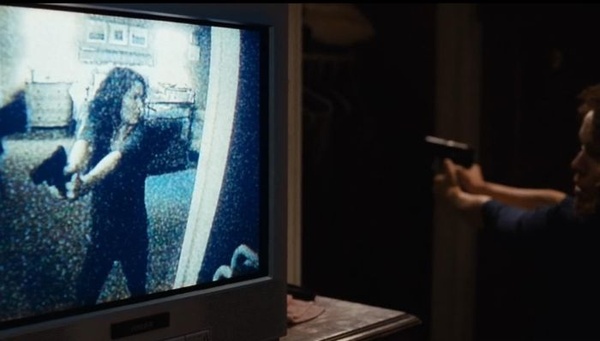
Image format for all is 1.85:1 (3840 x 2160/24.97p), HEVC encoding on a triple-layer BD-100. The second chapter technically follows the pattern of the first, where probably the same 500 ASA negative was used, with copious background grain for an overall picture that is still more detailed even in the background. A step below III & IV, both upscaled from 2K DI, where the differences with their Full HD counterparts are less noticeable, although the lower dynamic compression of the lights gives the sensation of greater proximity to the native footage, with some background elements inevitably slipping further into shadow.
Saw Film Collection - How it Sounds
DTS-HD Master Audio 5.1 Italian and English (16 bit), where the Italian track still features some English inserts with subtitles. The localized track offers a decent listening experience, without particular flourishes or elements supporting the soundtrack, especially for the two rear channels. The listening experience from the second film onwards alternates more dynamic transitions, fueling the most gruesome moments. The involvement increases when switching to the original track, where spatiality increases, as does the richness on each discrete channel and the subwoofer's additional depth. After all, we are talking about works that are also over 20 years old.
Saw Film Collection - The Rich Special Features
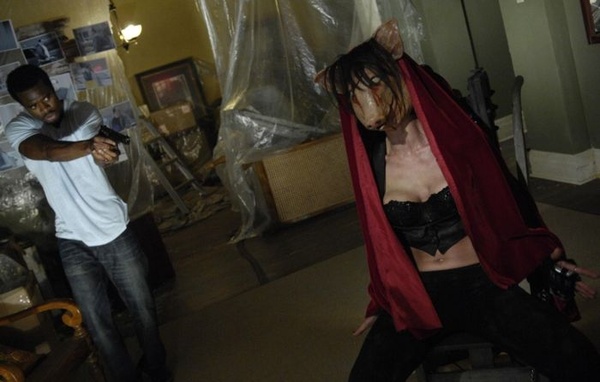
This splendid 1000-numbered-copy edition builds an extremely comprehensive archive dedicated to the Jigsaw universe. The eight discs included in the box set gather historical audio commentaries, making-of documentaries, storyboard comparisons with the final footage, featurettes, and retrospective materials that allow viewers to follow the series' evolution from within. Over 5 hours of material documenting the surprising production growth of a series that went from a small independent horror to a global phenomenon capable of redefining modern torture movies in just a few years.
Saw
On the UHD disc, we find 2 audio commentaries: the first with director James Wan, screenwriter and star Leigh Whannell, and Cary Elwes; the second with producers Marc Burg, Gregg Hoffman, and Oren Koules. The 2K Blu-ray adds the most substantial part of the extras, starting with the documentary "Game Changer: The Legacy of SAW," dedicated to the film's cultural impact on modern horror. Also present are the original short film that gave birth to the project, the making-of "Hacking Away at SAW," in-depth features dedicated to Billy the Puppet, and an alternative storyboard sequence.
Saw II
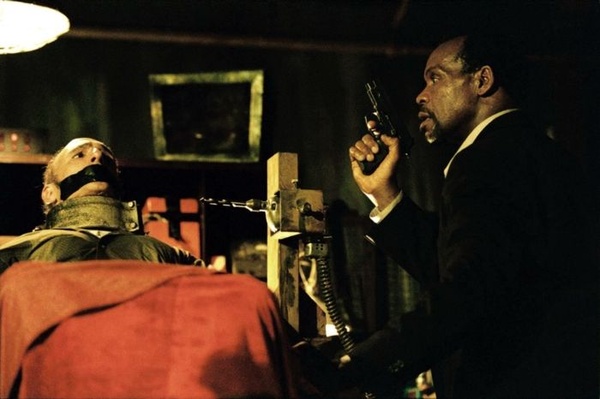
The UHD disc includes 3 different audio commentaries, including those from director Darren Lynn Bousman, Donnie Wahlberg, and executive producers Wan and Whannell. The 2K Blu-ray further explores the behind-the-scenes with retrospective interviews with Bousman and Tobin Bell, documentaries on the production, focus on props and storyboards dedicated to some of the film's most iconic traps, from the furnace to the famous "needle pit."
Saw III
On the UHD disc, 3 different audio commentaries involving the director, producers, cinematographer, and the saga's historical editor Kevin Greutert. On the 2K Blu-ray, there are featurettes dedicated to the evolution of Amanda's character, the construction of the traps, and the writing and directing process of the film. These materials clearly show how, starting from this episode, the saga was becoming increasingly complex from both a technical and narrative point of view.
Saw - 4 Film Collection Limited Edition 1000 copies Plaion Pictures

Saw IV
UHD disc with 2 audio commentaries for the film, one with Darren Lynn Bousman and actor Lyriq Bent, the other with the series' producers. On the 2K Blu-ray, several retrospective contributions including "Game Over" and "The Work Continues," in which Bousman and Tobin Bell retrace the evolution of the saga and the growing importance of John Kramer's character in contemporary horror imagery. The material is completed by the director's production diary, focus on props, a deleted scene, and even the X Japan music video.
For all, the second and third commentary tracks are in original language without Italian subtitles; the rest of the materials are subtitled.
The box includes 4 postcards with artwork from the original posters, a booklet with textual insights by Nocturno, and an A4 poster with original franchise creativity by Paolo Barbieri.
Score
Editorial team

SAW – We've Seen the 4 Film Collection 4K
Plaion Pictures re-releases the first four Saw films in a limited numbered box set of 1000 copies that chronicles the saga's evolution from a claustrophobic thriller-horror to a narrative universe dominated by Jigsaw's legacy. The 4K HDR/Dolby Vision editions improve contrast and visual rendering, while the discs include Theatrical/Director's Cut versions and numerous special features, offering one of the richest Home Video collections dedicated to the famous horror franchise.
Similar articles