Can the Oscars make a difference? Yes, even for films that don't exist yet, as The History of Sound proves
After many years of vain attempts, Oliver Hermanus managed to produce his film thanks to one of the actors receiving a nomination.
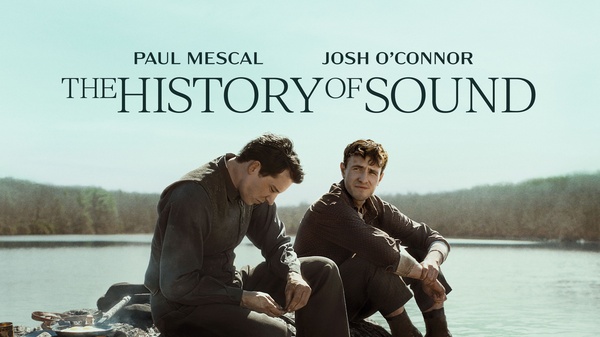


Finding an idea, adapting it into a screenplay, and assembling the cast and locations are only part of the pre-production process that leads to making a film. The crucial step, often the most critical, is finding the necessary money to shoot. Oliver Hermanus, director of the musical drama The History of Sound, released this week in Italy, knows this well. A film he began working on shortly before the pandemic, after falling in love with a story he was reading during a flight.
In 2020, after transforming it into a screenplay with his writer during lockdown, Hermanus convinced two then-rising stars, Paul Mescal and Josh O'Connor, to play the protagonists Lionel and David; two Boston conservatory students who, in 1917, embark on a journey to collect and preserve local American music of the era, with an invention developed by Edison that would, in fact, mark the beginning of the music industry.
However, The History of Sound had to wait for years for the right moment to be made. Both protagonists remained faithful to the project, as did Hermanus and the writer Ben Shattuck, author of the original story. What unlocked the situation was Paul Mescal's Oscar nomination for another film. While the American film industry discovered him through his intense performance in Aftersun, investors began to believe in a project that featured him as co-protagonist, outlining a deep relationship with Josh O'Connor, as Hermanus told me in a long Zoom chat we had a few months ago, waiting for the film, presented in competition at the Cannes Film Festival, to arrive in Italy.
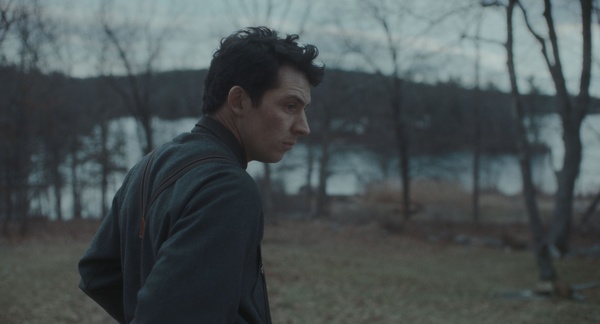
You mentioned reading the original story on a plane and immediately feeling the urge to adapt it. What struck you so much?
Oliver Hermanus – It had a lot to do with the context in which I read it. I had just finished a film about the army in South Africa, which was quite aggressive and focused on toxic masculinity. Reading this story while I was promoting that film was like encountering its opposite: something beautiful, warm, intelligent, and very essential in its construction. I immediately wanted to see it as a film, and that desire immediately turned into the will to make it myself.
You developed the screenplay during the pandemic, working remotely with writer Ben Shattuck. Do you think that period influenced the final film?
Oliver Hermanus – The interesting thing is that Ben and I had never met in person. We got to know each other exclusively through his material, and it was also his first time as a screenwriter. The lockdown meant having very few distractions: we were in different countries, different time zones, but completely immersed in the work. It almost became a lesson: if you lock yourself away somewhere with a screenplay for six months, you probably work more, think more deeply, and stay more focused. That intensity allowed us to experience the story much more immediately.
Paul Mescal and Josh O'Connor were involved from the beginning, even as project funding proved complicated. What did their loyalty to the film mean to you?
Oliver Hermanus – I was incredibly lucky that both Paul and Josh remained attached to the project for years. It's a true testament to how actors react to material: if they love the characters and the words they have to say, hardly anything will stop them from wanting to be part of the film. The screenplay was written very quickly, but the funding took much longer. Then, when Paul was nominated for an Oscar for Best Actor for Aftersun and we were at the Oscars, we sensed a shift: suddenly many people were interested in funding The History of Sound. From then on, everything happened very quickly.
The wax cylinder phonograph is central to the film. How did you approach it both thematically and practically?
Oliver Hermanus – By today's standards, these instruments are extremely fragile—we're used to durable materials like those of smartphones. But we found and used real phonographs; in fact, we bought two, and we had to learn how to use them. I, for one, had to understand them well so I could explain to the actors how they worked. The principle is extraordinary in its simplicity: you load it, it engraves the wax as you speak into the large microphone, and then you can change the needle from recording to playback mode. It's incredible that it worked from the very first time, when Edison invented it. He thought it would only be used to record people's wills—he never imagined that the entire music industry would be born from it. Thematically, it represents memory: the idea that something as ephemeral as sound can be preserved.
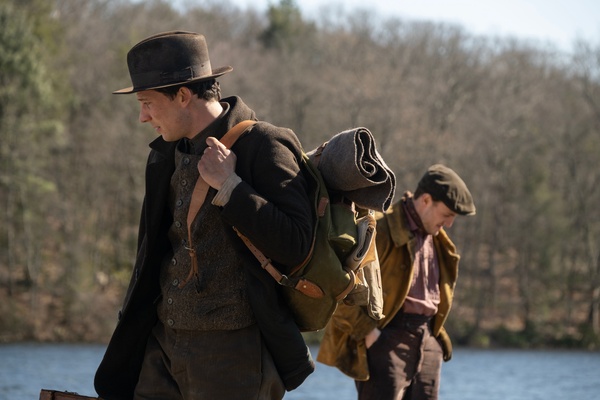
The film traverses various locations and landscapes. How did you approach historical reconstruction?
Oliver Hermanus – It's a film deeply connected to the landscape: much of it takes place outdoors, the characters are constantly walking. For some sequences, we had to go to Italy, because it wasn't possible to recreate that environment elsewhere. Filmmaking always involves a certain amount of illusion: you're constantly building places from other places. It's a part of the process that I really enjoy—this kind of "treasure hunt" in finding settings that can substitute for others. Sometimes shooting in the real location can even be limiting, because it doesn't match how you imagined it. I prefer the creative challenge of building that world through choices of framing, season, and perspective.
This is a queer love story that doesn't center on social repression. How do you position yourself in relation to this tradition?
Oliver Hermanus – Many queer films—including some I've made—revolve around the difficulty of the relationship, the fact that society or historical context makes that love impossible. That tension becomes the heart of the story. I wanted to move away from this pattern. In this film, the problem isn't that these two men can't be together because they are men: it's that they take for granted that there will always be more time, more possibilities, more people. It's a very universal experience. In the end, the realization is that that first bond was the most significant. So yes, it's a queer story, but its emotional core is about something broader: the way we tend to take love for granted.
Music plays a central role in the film, with a strong presence of folk songs. How did you work on this element?
Oliver Hermanus – Music was always conceived as another character in the film. We continued to revise and change our choices right up to the moment of filming. I wanted each song to be a story in itself—a ballad about love, loss, family, or grief. In this sense, the film itself functions like a song: it tells the story of these two men. The idea was to complete this circle—music as a form of storytelling, and storytelling as something that spans generations. These songs, passed down through time, continue to tell the same fundamental experiences of life and love.
Similar articles

Hope: Can Korea Make Better Action Films Than the United States? A Review of the Sci-Fi Blockbuster from the Cannes Film Festival

Beast of Reincarnation Review: The Game Freak Without Pokémon That Fails to Make a Mark
The Whisper Man, the return of average films?