The Testaments: The Dystopia of The Handmaid's Tale Isn't Over Yet
A sequel to The Handmaid's Tale, the series has landed on Disney+'s catalog with its first three episodes: let's find out more about this return to Gilead.
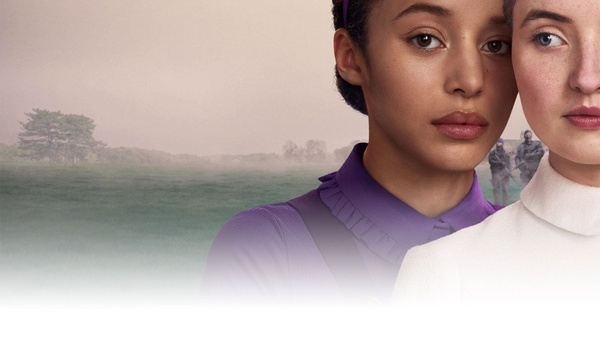


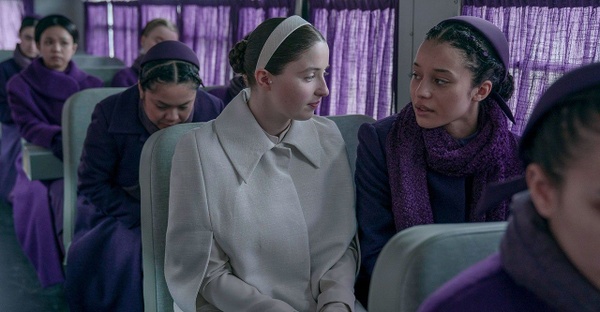
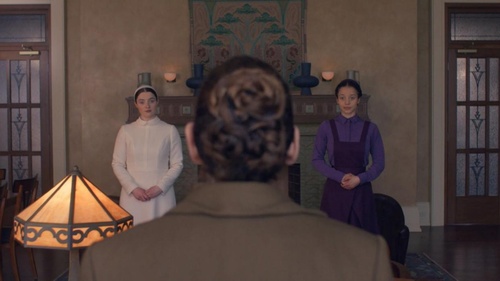
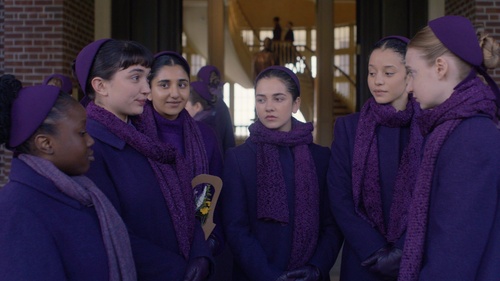
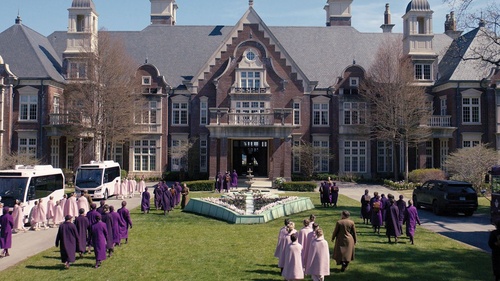
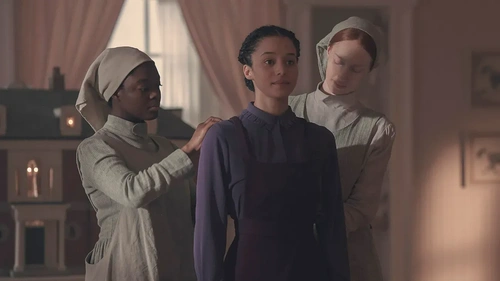
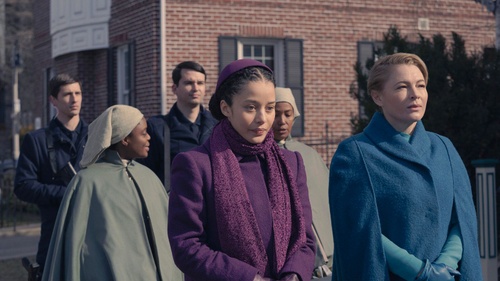
Agnes MacKenzie is the daughter of a high-ranking Commander, privileged by birth and status, raised in the orderly halls of the preparatory school run by Aunt Lydia. The girl has almost everything that is considered desirable in Gilead: a family, a position, the prospect of a good marriage. The only thing she lacks is, of course, the ability to choose for herself. Agnes is a so-called Plum, due to the color of the dress she wears which also identifies her by rank.
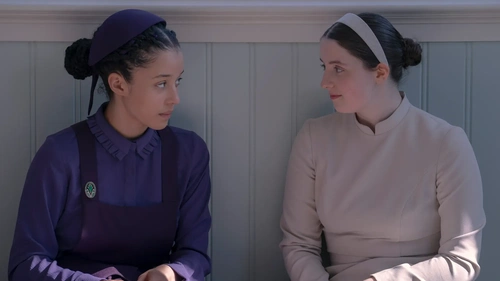
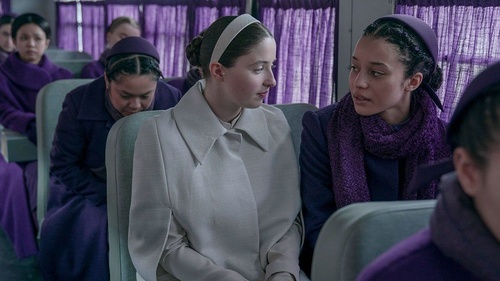
In The Testaments, she is soon joined by her peer Daisy, a Pearl Girl – a term the regime uses for young women from outside who have converted to the cause – who carries with her a story of loss and a restlessness she cannot entirely suppress. The encounter between the two could trigger a series of unexpected events that could forever change that ambiguous and cruel microcosm.
Those Who Don't Die Meet Again
A potentially thorny question hangs over the entire operation even before the season's opening episode begins: was it really necessary to return to Gilead? The answer, all things considered, is more negative than positive, at least judging by what was seen in the three episodes initially distributed on Disney+ on Wednesday, April 8. We are, in fact, faced with a sequel series that decides to carry forward extraordinary literary material, which has marked modern seriality such as The Handmaid's Tale.
Also in this case, at its core is Margaret Atwood's novel, which, in response to pressure from her own audience, personally continued on paper the saga that brought her so much success. Years after the conclusion of the aforementioned, here we are dealing with a new point of view, the perspective of those who grew up directly in that system of rigid rules, considering it the only possible type of society, at least until – thanks to puberty – one begins to realize that something is not right.
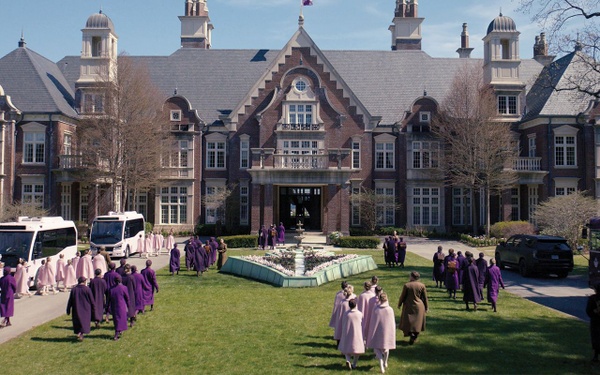
Producer Bruce Miller's choice to transform The Testaments into a kind of dystopian teen-drama is as risky as it is, at its best moments, hypothetically apt and full of nuances about adolescence, an already complicated period even in a normal context. The internal logic of Aunt Lydia's school, with hierarchies and antipathies among classmates, secrets whispered in the corridors, and the discovery of sexuality, functions as a narrative mechanism capable of making systemic violence accessible, which here is never explicit but ends up subtly permeating every single gesture or word. The regime in the first three episodes does not show its most brutal face, the one to which The Handmaid's Tale had accustomed the viewer: here the terror is almost decorative, but ready to explode as a key scene clearly demonstrates, even if it leaves pure violence off-screen.
Echoes and Novelties
Where the series approaches with trepidation, trying to play it safe by winking at fans of the parent series, is in its anxiety to constantly refer back to it. References to events already extensively explored in previous seasons abound, with the feeling of a script that cannot decide whether it is speaking to long-time devotees or trying to broaden its user base. Explanatory is the constant voice-over that introduces us to the background, designed for a novice audience ready to immerse themselves for the first time in this dystopian reality with strongly unsettling implications. The narrative machine, though solid due to its foundations, is currently running at lower levels than expected.
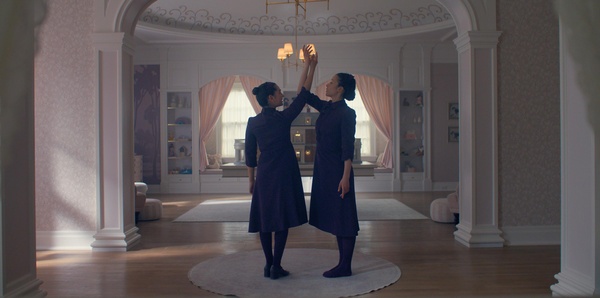
Partially saving the situation is the cast, including old and welcome returns and luxurious new entries. Chase Infiniti, Oscar-nominated for her performance in One Battle After Another (2025), once again captivates the screen and confirms her rare ability to communicate her inner conflict solely through expressiveness. Not to be outdone is Lucy Halliday, who plays a character richer in insights, also due to the flashbacks that show us her actual journey before arriving where she is now. We also find Ann Dowd, who brings Aunt Lydia into new territory compared to the original, and of course Elisabeth Moss, who could not be missing in the now iconic role of June Osborne.
Three episodes are not enough to give a definitive verdict on The Testaments, which with ten total episodes has the necessary room for maneuver to grow and surprise. What emerges from this start is a series full of potential but currently too timid, struggling to find its own distinct voice compared to the original work.
Gallery
Similar articles