Hope: Can Korea Make Better Action Films Than the United States? A Review of the Sci-Fi Blockbuster from the Cannes Film Festival
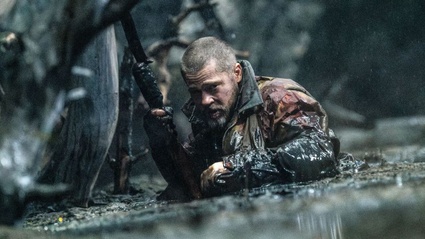
Hope is the most surprising film in competition this year at Cannes because rarely does a genre title so steeped in action, with chases, aliens, and battle sequences, enter the competition.


Talking about Hope inevitably forces one to confront their own cinematic priorities in the blockbuster and action realm. What is truly important to consider a film successful when it centers on action and plays with genre cinema, featuring monsters, aliens, and explosions? It's a question that festival critics rarely have to ask themselves, so Thierry Frémaux deserves a great deal of credit for having the courage to place a film of this type in contention for the Palme d'Or, mostly alongside dramatic auteur films and titles with social and political themes. It's a gamble that will pay off, because it will end up being an important temporal reference point to establish when cinema with aliens, spaceships, long police car chases with blaring sirens, and rifles to reload while under attack became important in conversation, beyond just the box office.
Precisely for this reason, however, I would have wanted Hope to be a film that, beneath its highly commendable craftsmanship, had substance of equal caliber. While the film's direction is spectacular, memorable, and exhilarating, its story and characters are far less inspired and inspiring.
Hope, the Korean Blockbuster Challenging Hollywood
The story of Hope starts far back in time and space compared to recent successful blockbusters. Its creator is the Korean director Na Hong-jin, author of the cult film The Wailing. The director's idea was to make something on a large scale, blending thriller, apocalyptic cinema, horror, and science fiction, with a story set in the border area between North and South Korea. Given the geopolitical tensions on that parallel, it's easier to explain why the population is armed to the teeth, why the elderly fishermen of the village are so good at reloading ammunition, and why members of local trade unions can shoot even large-caliber rifles with seasoned nonchalance. So much so that when a mysterious creature begins to kill local inhabitants and destroy shops and houses, no particular panic is generated: the population takes up arms and begins to hunt the "strange" bear or tiger, whatever it may be, even if it's clear from the damage it causes that it's something much larger and more monstrous.
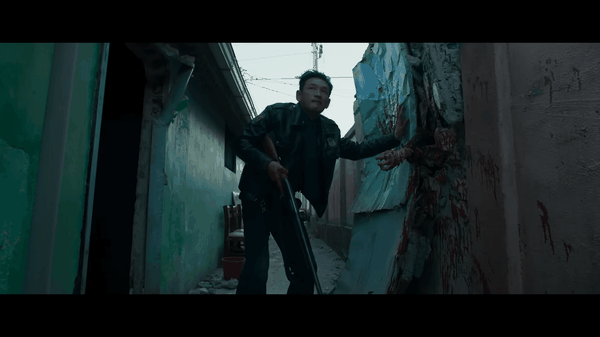
The only one out of place seems to be Bum-Seok (Hwang Jung-min), the local police chief whom everyone considers a particularly obtuse and incompetent person, as confirmed in the first hour of the film, the most tense and successful. Initially, Hope (so titled because it's set in Hope Harbour) seems like a kaiju movie that keeps the appearance of its creature hidden as much as possible. The film is imbued with an intrinsically Korean humor that leaves no escape, with Bum-Seok in his own way proving even more destructive and lethal than the creature itself, which leaves dozens of corpses in its wake.
Western, Horror, and Sci-Fi, but Always with a Korean Twist
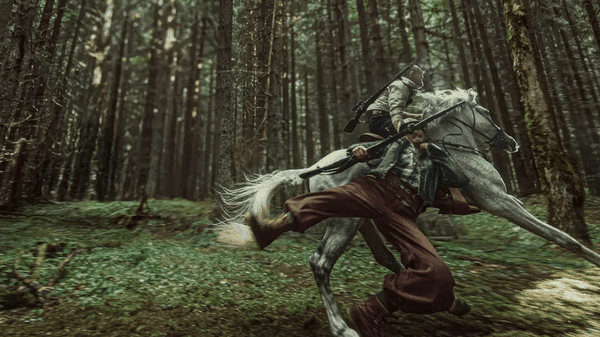
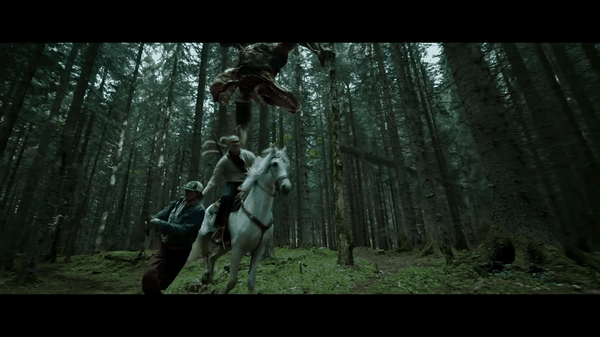
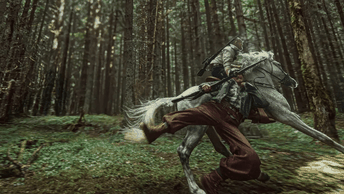
Things get complicated when the film splits to follow, on one hand, its foolish policeman hunting a monster and, on the other, a group of local hunters tracking what will later turn out to be a second creature. The film here takes a very different turn, between survival and even a touch of western. For some reason, these creatures don't attack horses, a device that allows Na Hong-jin to shoot some of the most incredible sequences seen this year in terms of action staging, an accurate blend of slow motion, camera movements, and the ability to create moving horror images.
The direction is undoubtedly the film's strong point, enhanced by a myriad of sequences of enormous visual magnitude, destined to become memorable. The police car chases oscillate between the grammar of "tough" police films of the '70s and Miami Vice, while the parts in the forest more closely resemble Korean horror and thrillers but with decisive splashes of western. One senses ambition, originality, and a great desire to amaze. Na Hong-jin truly manages to thrill audiences in this clash between strange, powerful creatures and barely sketched humans, just enough to allow the viewer to follow the story.
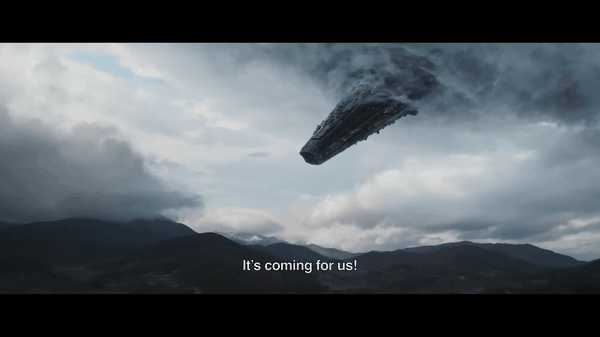
It's difficult to give a balanced judgment on the visual effects, especially when it comes to the monsters in question. Obviously, we are not at the levels we are used to seeing in Hollywood. Hope, however, has a fraction of the budget of those films, having cost between 37 and 50 million dollars: in Hollywood, it would be considered a low-to-medium budget film, and this quality is rarely seen in that price range. What is important to note, in my opinion, is that the creature design seems uninspired and even less biologically coherent. It starts with monsters that look to the tradition of yokai to arrive at more alien creatures, whose biology does not seem to follow interspecies coherence and which adds an additional layer of sloppiness to the visual effects themselves.
Hope Resembles Many Successful Action Films and Franchises
The latter, in the long run, proves to be the film's weak point, with its titanic duration: 160 drawn-out minutes, during which the film makes at least three abrupt turns regarding its narrative direction and genre. Even on a narrative level, Na Hong-jin proves derivative, looking a bit to Steven Spielberg, a bit to the Alien franchise, and a lot to his own country's genre cinema. One of the products the film ends up resembling most is the anime Attack on Titan, especially in how the clashes between humans and gigantic, hostile creatures that suddenly appear and have a mysterious plan to follow are configured. The alien good at throwing objects to neutralize enemies, the one that runs very fast on all fours, and the one with a kind of modular bone protection: the design of these monsters strongly recalls Hajime Isayama's titans, it's unclear how intentionally and consciously, just as the parts in the forest follow dynamics very similar to the second and third seasons of the anime.
What these comparisons clearly highlight is how, in essence, Hope lacks the same narrative and character strength. Due to how the action genre is structured, it often ends up with broad-stroke characters, barely defined by a couple of traits. Some compare Hope to Mad Max: Fury Road for this reason. I disagree: where Tom Hardy, Charlize Theron, and even other supporting characters in that film had a strong defining trait at the core of their actions, here the cast is riddled with stereotypes based on Korean humor, which never become characters to empathize with. The stupid policeman remains so, and indeed, at alternating phases, becomes good at shooting, without a real reason other than the necessities of the plot. Similarly, the empathetic and level-headed young colleague is simply the female supporting character that these types of Korean productions resort to: she has no truly defining trait beyond what is expected of someone like her. On the other hand, the monsters, when they stop being so mysterious, are awkwardly introduced with a whole series of information placed at the end to anticipate a second chapter that further deflates a never truly tense and balanced narrative. The result is a film that often uses its characters to cram in the highest possible number of spectacular sequences, without, however, weaving an equally grand story.
It is this aspect that I found particularly irritating about Hope: it is a good film, yes, but not good enough to break that stereotype linked to spectacular genre cinema, which it actually reinforces. It is not a film that clearly explains how a minimalist, broad-stroke plot can be held together to prioritize action and movement, while still emotionally engaging the viewer. The story, cobbled together and with overly drawn-out comedic timing (sometimes to the point of making certain twists predictable), actually reinforces that dichotomy that wants "serious" cinema to tell important themes and action cinema to enjoy making the biggest bangs of all, without having anything to say. Hope, however, would have a lot to say, considering the peculiar place where it is set and how this mysterious invasion lends itself to being read in this precise historical period. The problem is that the clear impression is precisely that Na Hong-jin is not interested in going beyond a certain visual grandeur, in breaking through certain technical and industrial perimeters of Korean cinema. In this sense, unfortunately, the most relevant comparison is with James Cameron's Avatar, which has a similarly derivative and superficial story precisely because it is interested in something else.
Score
Editorial team
Hope: Can Korea Make Better Action Films Than the United States? A Review of the Sci-Fi Blockbuster from the Cannes Film Festival
It's hard to imagine Hope not being in the final palmarès, considering that fellow countryman Park Chan-wook is leading the jury and that it delivered some of the most exciting directorial sequences of the edition. The real regret is that it doesn't have, except in flashes, stories and characters worthy of its extraordinary visual dimension and dynamism. It will greatly appeal to those who want great visual sophistication from action or who believe that cinema as a technical spectacle doesn't need grand narrative motivations to stand on its own.
Similar articles