The Beauty: Ryan Murphy's new thriller unmasks the obsession with image
Roman premiere of The Beauty: the new TV series on Disney+
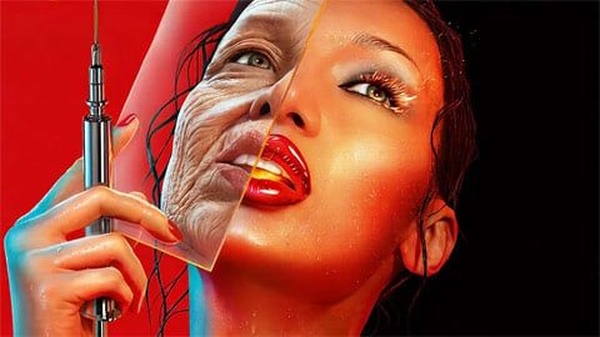


On the occasion of the Roman premiere of The Beauty, the first two episodes of the new FX series created by Ryan Murphy, arriving on Disney+ from January 22, were presented. A TV series that, from the very first moments, confronts us with a story that uses the thriller as a crowbar to question the contemporary obsession with image, body, and identity.
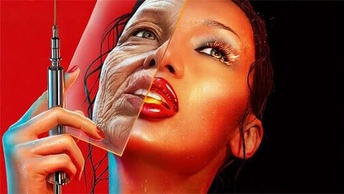
Set in a future so near it seems already present, The Beauty begins in the world of high fashion, disrupted by a series of mysterious deaths affecting international top models. An opening that immediately challenges the very idea of beauty as an absolute value, transforming it into something unstable, fragile, potentially lethal.
The Beauty: The Podcast
From the first scenes, what unfolds for the viewer is a deliberately cacophonous and claustrophobic narrative. The inaugural sequence is a runway show punctuated by the fierce rhythm of The Prodigy's Firestarter: an electro-pop beat that accompanies Bella Hadid's steps and transforms the fashion show into an aesthetic manifesto for the series. Amidst mud, excess, and controlled madness, fashion becomes a narrative language and an anticipation of a rapid descent into violence and body horror.
The body is immediately the first battlefield. A surface to be molded, merchandise to be perfected, but also a place of collapse. Beauty, in the first two episodes, does not offer itself as an answer or solution, but rather as an enigma: an unsettling message that remains deliberately partial, suspended, yet to be deciphered.
The Beauty: Beauty, Body, and Obsession in the TV Series
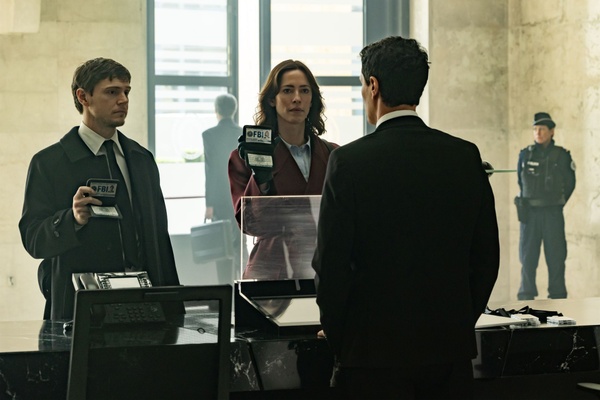
On the narrative front, FBI agents Cooper Madsen (Evan Peters) and Jordan Bennett (Rebecca Hall) are sent to Paris to investigate a series of seemingly unconnected events. The investigation leads them to the discovery of a sexually transmitted virus capable of transforming ordinary people into physically perfect beings. An apparent blessing that carries terrifying consequences. In The Beauty, perfection is never free: every bodily improvement seems to demand a trade-off.
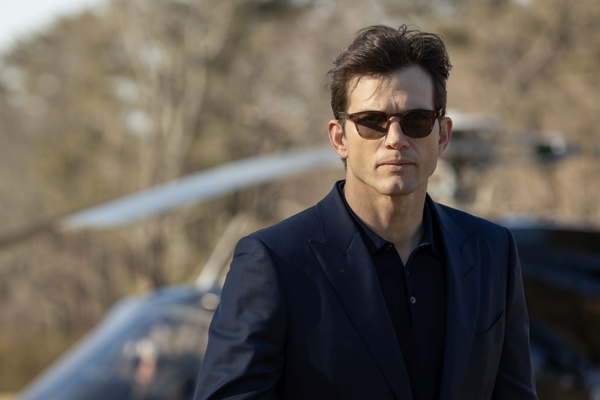
Behind the epidemic lurks the shadow of "The Corporation," led by the character played by Ashton Kutcher, creator of the miraculous drug "La Beauty." Kutcher recounted building the role by observing the behavior of economic elites accustomed to traversing the world without perceiving real limits, with an almost arrogant confidence that transforms every problem into something avoidable or purchasable. The result is a synthetic, industrial beauty, which contrasts with a more imperfect and human beauty, embodied by other characters, such as the one played by Isabella Rossellini.
The Beauty vs The Substance: The Obsession with Youth in Series
The comparison with The Substance is immediate and almost inevitable. Even the least cinephile viewer recognizes the parallel with the film that saw Demi Moore embody and symbolize a system obsessed with eternal youth and constant performance. Murphy expands on that discourse, showing how this obsession no longer concerns only the entertainment industry but now conditions society as a whole.
It is in this context that The Beauty introduces terms like Incel and Chad. Words that in internet language have often become memes, but which in the United States represent actual banners. Incels, in particular, become one of the most interesting turning points in these first two episodes. The character who embodies this condition does not direct hatred outwards, nor does he transform it into explicit ideological violence: he internalizes it, lets it settle until it transforms into a destructive impulse. Involuntarily celibate individuals, by internet definition, usually project their social inadequacy onto what they call "non-people." A categorization that mostly concerns all those women who do not choose them in favor of more objectively pleasing subjects. Consequently, dehumanizing women themselves in view of their personal inability to relate to others.
Here, this character's desire is tragically simple: to be desirable, to escape a self-imposed limbo, convinced that beauty can rewrite his relationship with the world. Murphy inserts one of the series' most lucid reflections here: the need to be pleasing as a prerequisite for access to others, for the very possibility of experiencing sex and attraction. Primal instincts that end up playing a chess game with the human psyche.
Within the macro narrative arc constructed by Ryan Murphy, the casting choice does not appear at all random. On the contrary, it emerges as an integral part of the very discourse that The Beauty intends to pursue. The actors are not mere interpreters, but bodies and identities called to confront directly with the idea of beauty, transformation, and control.
The Beauty Cast: Actors Serving Beauty and Transformation
During the Roman press conference, it emerged that working with Murphy means accepting a constant redefinition of one's role. Jeremy Pope spoke of the need to arrive on set with an open mind, ready to see what is written on the page transform into reality. Anthony Ramos and Pope emphasized the strong physical component of their roles, including training, combat, and preparation that involves using the body as a narrative tool. Rebecca Hall and Evan Peters, on the other hand, described a more introspective and investigative work, built on tension and control.
Kutcher described his approach as a search for "noble" motivations even within morally questionable behaviors, in an attempt to convey the complexity of a character who embodies the most unsettling side of contemporary power. What emerges is a cast that does not merely interpret The Beauty, but actively seems to traverse its themes, becoming an integral part of it.
From the meeting with the cast, the central question of the series repeatedly returned: what would we be willing to sacrifice to feel adequate? Rebecca Hall recounted the pressure she experienced at the beginning of her career, when she was asked to correct perceived imperfections, while Kutcher reflected on how physical appearance influences how the world sees us, often generating prejudices that are difficult to break down.
The discussion also extends to new generations. According to the cast, the obsession with beauty is already a potentially lethal force today, amplified by social media and a constant flow of unattainable models. In this sense, The Beauty does not invent a dystopian future, but rather exaggerates a reality already in progress.
The Cities as Protagonists in The Beauty
The cities traversed by the narrative – Paris, Venice, Rome, and New York – are not mere backdrops, but characters in themselves. Filming in Italy, as several cast members recounted, added an additional symbolic layer to the story: talking about beauty in places that embody a historical, imperfect, layered beauty. In some shots, the city seems to speak for itself, without the need for dialogue.
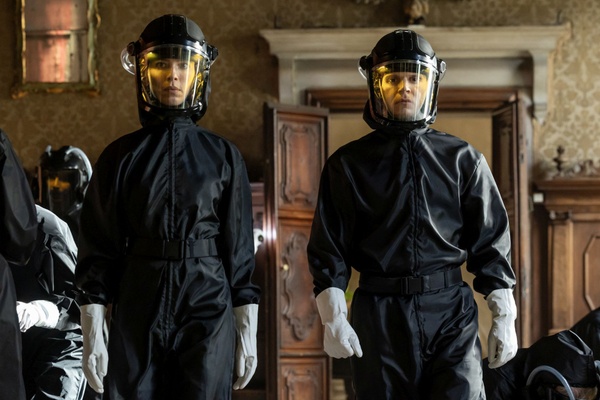
After the Roman preview of the first two episodes, The Beauty presents itself as a disturbing series capable of fitting perfectly into the macro universe built by Ryan Murphy's seriality. A first investigation, concluded with a cliffhanger, into human obsession that keeps the viewer on edge. A narrative that prefers to ask questions rather than provide answers. The viewer, in this way, is faced with an uncomfortable reflection: how much of what we desire is truly ours, and how much is the result of standards we have learned to internalize?
Score
Editorial team
The Beauty: Ryan Murphy's new thriller unmasks the obsession with image
The Beauty, Ryan Murphy's new TV series coming to Disney+, is an unsettling thriller that explores the obsession with beauty, body, and identity. Set amidst high fashion and iconic cities like Paris and Rome, it tells how perfection can come at a terrible price, involving miraculous viruses, intrigues, and social reflections. An intense cast, led by Evan Peters, Rebecca Hall, and Ashton Kutcher, navigates contemporary themes like Incel memes and the impact of social media, leaving the viewer with uncomfortable questions: what would we be willing to sacrifice to feel adequate?
Similar articles