Slow Horses doesn't lose its verve, even in its most political guise: the review of the fifth season
The fifth season of the Apple series focuses more on political satire than action, with a less compelling story than in the past, but always excellently executed.
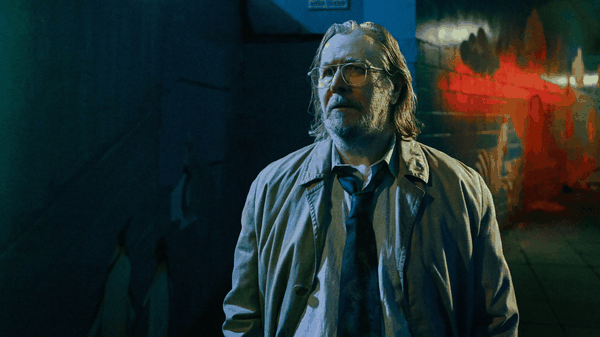


You recognize a great series also by how it manages a transitional season, based on a novel that provides fewer revelations and plot twists than the previous one. Now in its fifth season in three years, Slow Horses is a solid television reality, acclaimed by critics and, thanks to word-of-mouth, is slowly growing in terms of viewership: after Severance and Ted Lasso, it is Apple TV+'s third most popular hit, at least based on rough numerical comparisons (the only ones possible at the moment) from the very few publicly available Nielsen data.
The fifth season marks, in its own way, an important passage for the evolution of the series based on Mick Herron's unique spy novels, bringing "London Rules" to the small screen. Compared to the previous season, which was entirely focused on River Cartwright's character and full of plot twists, revelations, and irreversible events (including many sudden deaths of protagonists), this time the Slough House is dealing with a case more within its scope, in the sense that the stakes are less personal and the protagonists are involved in a peripheral way.
Compared to the first seasons where the pace was very high from the start, this fifth one mirrors what the previous one did, with a gradual start and a progressive, relentless crescendo that finds its climax in the final diptych. The first part of the season, among other things, focuses heavily on the psychological repercussions of what happened at the end of the fourth season. Slough House has been renovated, but from the entrance door that still struggles to open to the depressing atmosphere, all the problems seem to persist in an office still under renovation. The same can be said for the team, or rather, for the entire English Intelligence: with the exception of Catherine Standish's character, Slow Horses returns with a particularly bitter opening note.
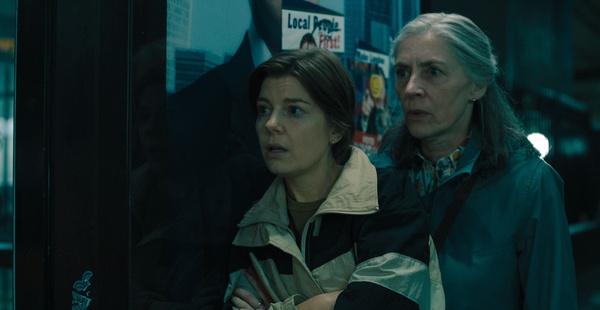
Slow Horses 5 is a caustic commentary on the current populist political scenario
The nags who survived last season are even more depressed and disheartened, and those particularly affected by the events are floundering, searching for a way to maintain precarious control of the situation. Louisa wants to take a leave of absence to take care of her mental health, Shirley is increasingly paranoid and convinced that someone wants to kill Ho, River is developing aggressive masculinity as a response to the painful revelations about the identity of his real father and his grandfather, whose mental health is constantly deteriorating. Things are no better for Taverner, exasperated by Whelan's leadership, and Jackson Lamb himself, who goes from sharp to cynical and nihilistic. Slough House, in short, is absorbing the blow it suffered in the last season, and its boss wants to keep his people as far as possible from the fallout of a terrorist attack that the Park failed to prevent.
Only Shirley is right, someone really is trying to kill Roddy Ho, so the nags find themselves in danger again, in a season that, as always, slowly brings together all the scattered events across London and divided into various narrative threads into a single puzzle. The tone remains mostly harsher, more bitter (Lamb's farts count is perhaps at one, and a silent one at that). The comedic part partly abandons dark humor to dedicate itself to political satire, developing Mick Herron's ability to anticipate English social ills and impulses years and books in advance, just in time for the series to adapt them to current events.
After all, a novel that veers towards nihilism and is full of dark omens could not be better suited to the present time. If the show's first season presented a farcical version of Boris Johnson, here it is evident that one of the two candidates for London mayor is modeled on the populist leader Farage: in a season without a true protagonist, where even Lamb is more sidelined than usual, at the center of the story is a caustic commentary on political machination, the race of the two candidates, and the manipulations and pettiness it entails, adapted to the beliefs and political alignment of each candidate.

It's a crumbling United Kingdom depicted in the fifth season, seduced by a populist, never sincere, and hyper-calculated way of narrating reality, both on the right and on the left (the progressive candidate is played by Nick Mohammed from Ted Lasso). A grotesque dichotomy in its simplicity that the series captures in the small furnishing details of the houses, in the choice of locations for speeches, as well as, of course, in the messes the two candidates make, because the golden rule of Slow Horses is that everyone, from the best to the worst, messes up.
Here, even Lamb messes up and, in an unpredictable plot twist, in the end even River pulls off a first-class agent move (after adding another couple of disastrous choices to his already vast catalog). All against a backdrop of a destabilization strategy invented by England that is used against it and which it cannot contain, while the stakes are high but the unhappiness remains even greater.
Slow Horses is changing and must be careful not to change for the worse
The production remains the flagship of a series that, from its very first sequences, is able to stratify the amount of information it gives to its audience, scene after scene. Slow Horses in this sense is almost too refined and is truly appreciated only on a second viewing, when the intricate plot does not steal most of the viewer's attention. However, the overall quality has somewhat decreased due to a series of changes caused by the pace of production.
So far, each season has had a different director, who has handled all the episodes. After a particularly elegant and incisive season like the one directed by Adam Randall, Saul Metzstein returns behind the camera (who previously directed the third season), who has a very rich visual storytelling style, but not the same formal elegance.
This is also the last season written by showrunner Will Smith, who has already announced his departure from the series precisely because of the frantic pace of work. In this series, one perceives, if not exactly fatigue, the difficulty of maintaining an organic approach across the six episodes that make up the season. The impression is that there is less action than usual, especially in the central passages. The result is three particularly short central episodes (the fifth lasts just 41 minutes, compared to the hour-plus duration of the season finale). Slow Horses is certainly not the only series that struggles to maintain uniformity in episode length, but it is still indicative of the fact that managing a narrative that has become so choral, so focused on two political characters who represent something more than being an integral part of the story, has led to some difficulties.
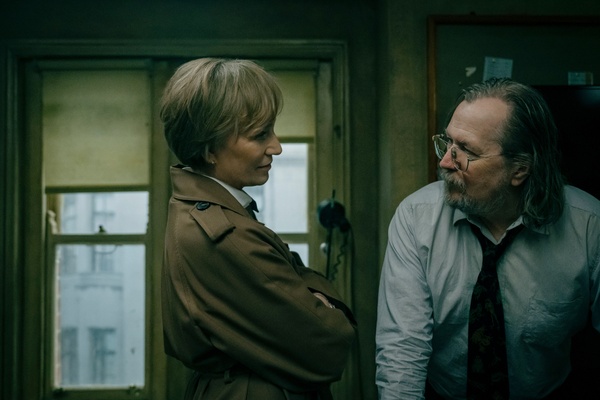
Gary Oldman is always exceptional and the rest of the cast holds their own
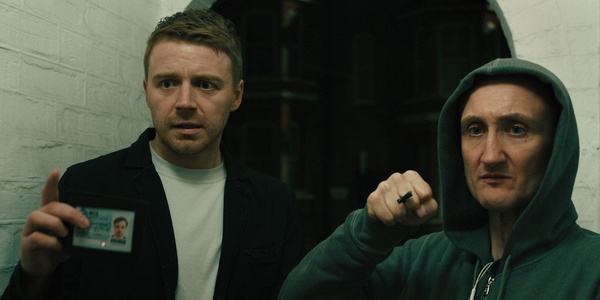
What remains consistently excellent, with truly memorable peaks, is the mastery with which the cast brings these pathetic, ridiculous, yet so entertaining, so easy-to-love characters to life. A round of applause goes, in addition to the usual Jack Lowden (who does so much with so little available here), to Christopher Chung as Roddy Ho, excellent at making explicit the self-suggestion loop that keeps the Slough House hacker within his comfortable fence of convictions far removed from reality. Finally, Tom Brooke also has the opportunity to better explore the character of J.K. Coe, and his interactions with River/Lowden are among the best passages of the season, along with the pathetic half-victories of James Callis as Claude Whelan. The subtlety with which the series slowly compares Whelan to Ho is a testament to its ability to bring out the best from Herron's acute and often ruthless vision of history, operating a deep and incisive adaptation process that gives the series its distinctive personality.
For Gary Oldman, simply, words fail. The fifth season gives the English actor a monologue that, in his hands, becomes a sensational acting performance, in which a story is told, leaving us in doubt as to how much it is functional to exploiting the situation to his advantage, how much it is pure psychological manipulation, and how much it is a true and therefore heartbreaking story. An ambiguity intended by the writing and brought to the screen by Oldman, capable of keeping us glued to the screen, of telling a story and at the same time holding together four or five subtexts, silently dialoguing with other characters listening in the same room. This time too, the interactions between Oldman and Reeves as Catherine and between Oldman and Lowden testify to the very high acting level of a series that, in this sense, never makes a casting mistake and is blessed with a group of protagonists always on point, always effective, each one better than the last.
Score
Editorial team
Slow Horses doesn't lose its verve, even in its most political guise: the review of the fifth season
The fifth season is a transitional one for Slow Horses, focusing on political satire to catch its breath a bit after the many revelations of the fourth, without being afraid to reiterate how difficult it is for its protagonists to change and, if not become better, at least make new mistakes. The living embodiment of this warning continues to be Jack Lowden as River, a perfect foil to Gary Oldman who once again puts on a show by making the most of a single, unique scene. The hope is that the changes that are becoming necessary to maintain this pace will not prevent Slow Horses from continuing to perform at these levels and beyond, when the stakes return to being very high. For now, it remains one of the best series currently running, moving at very high levels and at a frantic pace without ever appearing too fatigued.
Similar articles