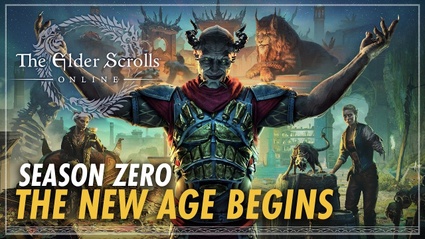
The Elder Scrolls Online: Season Zero in its new seasonal form - Special
ZeniMax Online Studios shelves the centrality of annual Chapters and tests a more flexible, more accessible model, but also one closer to the grammar of modern live-service.
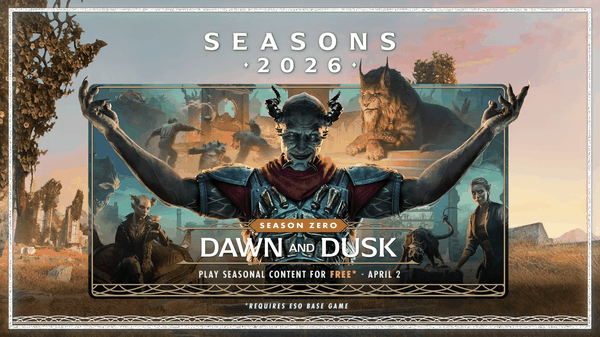


The Massive Multiplayer Online market is going through a critical saturation phase where the model of monumental, fixed-schedule expansions no longer guarantees the necessary management to justify production costs: The Elder Scrolls Online enters its Season Zero with the cumbersome maturity of software that can no longer sell itself as a promise, but also cannot merely "jealously guard" its archive of zones, quests, guilds, and dungeons.
ZeniMax Online Studios makes an internal political maneuver, shifting towards seasonal serialization to make gameplay content more accessible to those who own the base game and to concentrate economic pressure on progression and cosmetic rewards: the comparison should not only be sought in direct competition, but in the structure of contemporary great fantasy sagas that prefer to dilute the broth rather than serve the same soup every time.
ESO today resembles a production that accepts its episodic nature to rely on the strength of the format: just as in the serial adaptation of The Wheel of Time, the density of the cosmogony and the political stratification of the kingdoms matter more than the single decisive magical clash. This Season Zero is a belated pilot episode built for those who have inhabited Tamriel for a decade and are asking for a less mechanical reason to return, acting as an attempt at resuscitation for a body that is beginning to feel the weight of an "obsolete" engine and management model.

The challenge for ZeniMax is to demonstrate that Tamriel can still be a place of discovery and not just a post office to collect daily rewards.
The Renegotiation of Time: Tamriel Becomes Serialization and Commercial Mythology
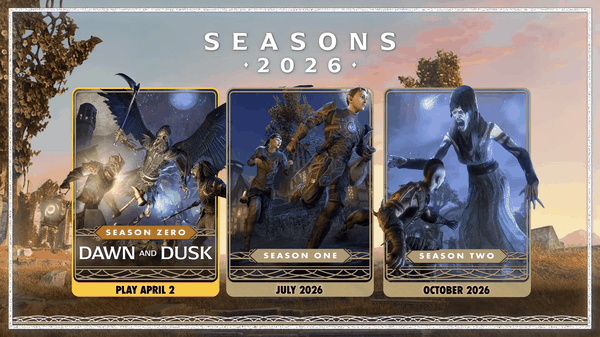
The first truth must be stated without embellishment for the reader: this Season Zero is not a disguised Chapter, and those who expect a monumental region with the solemnity of Morrowind or Necrom will be disappointed, because here ZeniMax is not building everything from scratch but rather trying to put what has been built so far back in order. Content no longer lives only in geographical space but shifts to the calendar, rewards, frequency, and return structure: it is a gesture closer to an editorial reorganization than to a classic commercial expansion that focused everything on the "new zone" as the primary selling point. The Tamriel Tomes system represents the ambiguous heart of this transformation, not just a container of prizes but a true forced permanence device: challenges, pages, and premium paths build a more legible relationship between time invested and perceived value, but risk orienting enthusiasts' behavior too rigidly.
A good seasonal system should not just reward: it must avoid turning every session into a shopping list with a fantasy cover where the meaning of the game is lost behind the accumulation of digital currency. Here the parallel with Elden Ring becomes a useful reference by contrast: in From Software's work, every object carries a fragment of history and an ontological weight, while in the Tomes, the object risks becoming a "simple box to tick" to feed an administrative progression bar. ESO attempts to ennoble the checklist with the lexicon of the tome and scroll, but beneath the veneer remains a live-service machine that works when it gives direction and fails when it tries to pass itself off as deep mythology: the risk is the de-sacralization of exploration in favor of bureaucratic efficiency that satisfies the compulsive collector but mortifies those who seek the sense of wonder typical of the classic Bethesda series.
The Gold Coast Bazaar confirms this dual nature, giving commercial form to the seasonal ritual while simultaneously revealing the tension between a living world and a rotating showcase: in an Elder Scrolls title, the reward should always feel like part of a story, not a simple random extraction from a centralized inventory that responds to seasonal marketing logic. The relaunch recalls the operations of Mad Cave Studios or the reboots of DC Comics: it starts from a zero issue without erasing continuity to reassure purists and offer detractors proof of technical lucidity. Season Zero doesn't rewrite Tamriel, it changes how Tamriel is distributed and monetized, making an intelligent but by no means innocent choice that shifts the focus from "where" to "when" you play: this is the politics of modern live-service, where habit is elevated to an art form to prevent the player from noticing the inherent repetitiveness of the medium.
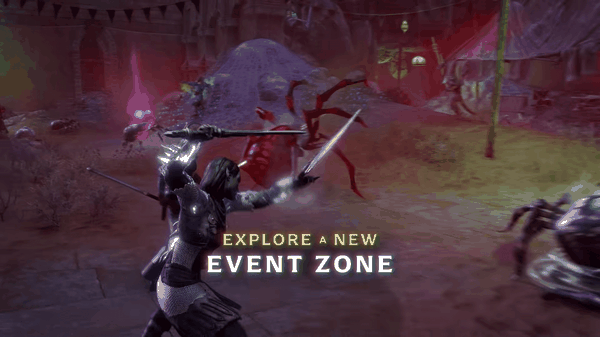
There is no longer room for the naivety of aimless travel, because now every step towards the horizon must be traced by a progression bar that ensures the enthusiast's time has not been "wasted": a cynical but necessary vision for the survival of an ecosystem that counts millions of active accounts. The narrative itself fragments into micro-events that should fuel the social media discussion market, trying to replicate that sense of urgency that only major comic book events manage to generate before an inevitable return to the editorial status quo that freezes any real evolution of the world.
ESO and the MMO Grind: What Changes?
The true mechanical core of this phase is the Scribing system, which finally allows for skill customization through Grimoires and Scripts: it's a necessary addition to break the static nature of builds that have dominated the game for years, allowing players to modify the secondary effects of key abilities to adapt them to their playstyle. However, integrating this mechanic requires a quantity of resources and specific currency like Luminous Ink, which forcefully brings the theme of grind back to the center of the discussion: it's not enough to obtain the base ability, you literally have to "dig" to find the components needed to make it effective, transforming the search for the perfect build into a gold hunt reminiscent of the resource scarcity in a Mad Max.
The most impactful novelty on the game's pace, however, is the Battlegrounds reform, which abandons the historical three-team format (4v4v4) in favor of direct two-faction clashes (4v4 and 8v8): this change profoundly alters the competitive meta, eliminating "third-party" dynamics and forcing players into a more technical and ruthless frontal confrontation. It's a recalibration that caters to PvP purists who have been asking for a less chaotic and more readable environment for years, where individual skill and team coordination weigh infinitely more than the randomness of a lucky positioning between two fires.
The Golden Pursuits fit into this loop as the true engine of seasonal retention: they are not simple missions, but a system of dynamic milestones that reward constant activity with high-value rewards. To this loyalty ecosystem, the Night Market of Fargrave will soon be added: a liminal space that promises to transform the Daedric black market into a cyclical event for collectors and relic traffickers, further fueling the social pressure that forces constant presence to avoid being excluded from rare exchange flows. Although presented as an opportunity, these dynamics act as psychological pressure on time management, forcing players to constantly monitor the calendar to avoid losing competitive advantages or unique aesthetic items.
The addition of new Companions like Tanlorin and Zerith-var is not a mere narrative embellishment, but an update to support systems for solo play: their passive abilities and progression bonuses are calculated to reduce friction in end-game activities, allowing even lone wolves to tackle previously inaccessible content without a coordinated group. The physical perception of action benefits from the animation refresh and the introduction of Skill Styling, which allows players to change the visual appearance of classic abilities: those who have played for over 100 hours know, however, that the combat system remains a spiky hybrid dominated by the practice of light attack weaving, a technical anomaly that ZeniMax has now accepted as a pillar of the end-game.
Season Zero does not resolve the "clunky" nature of combat, but tries to mitigate it through new modifiers that reward positioning and intelligent resource use via the Scribing system. The promise of Challenge Difficulty for overland is a belated act of honesty: for years, exploration has been reduced to a stroll where danger was non-existent and Daedric threats seemed harmless, and it is here that the reference to Dragon's Dogma becomes apt for the need for a world that once again offers real systemic friction to player progression.
Stable Performance, but a Graphics Engine Refresh Would Be Welcome
Analyzing performance on NVIDIA GeForce RTX 4060, SSD, and Ultrawide 21:9 monitor, The Elder Scrolls Online reveals its nature as software layered on an obsolete architecture: we are not dealing with a modern engine like Unreal Engine 5, but a heavily modified custom engine that struggles to handle excessive draw calls in open spaces. The RTX 4060 is an excellent mid-range card, but its 8 GB of VRAM represents an insurmountable limit in Ultrawide resolution: activating ultra textures and maximum view distance in dense environments like seasonal cities inevitably leads to stuttering due to video memory saturation.
Readers must understand that balancing presets is not an option but a structural necessity: it is preferable to lower texture quality to maintain a stable frame-time rather than chasing a sharpness that the engine cannot fluidly sustain. The implementation of DLSS Super Resolution and DLAA is fundamental for cleaning up the image without burdening the CPU, but the lack of native support for full Frame Generation 3.5 is felt when the density of players and pets in congested city hubs degrades performance. The bottleneck does not lie in the raw power of the GPU, but in the engine's inability to process thousands of requests simultaneously without generating those micro-stutters that ruin immersion.
The mandatory use of an SSD is exclusively linked to asset streaming: ESO constantly loads models and textures as you move quickly between regions, and using a solid-state drive is the only way to avoid token timeouts and failed sessions that plagued the launch of Season Zero. The 21:9 monitor expands the field of view but exponentially increases the number of objects the CPU has to manage: on an RTX 4060, the technical advice is to disable reflections on water surfaces and limit shadows to medium level to ensure gameplay remains rock-solid during the most frantic boss fights.
Season Zero does not transform ESO into a next-gen title, but it optimizes its use on mid-range hardware provided one accepts the compromises of code that belongs to another era: stability is the true currency of exchange, and the Sentinel does not accept frame drops in the name of an aesthetic that the engine cannot honor with constant dignity.
The Elder Scrolls Online: Season Zero in its new seasonal form - Special
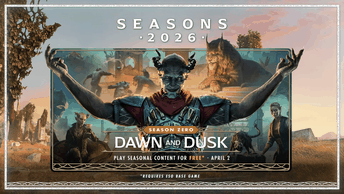
This Season Zero represents the definitive admission that The Elder Scrolls Online can no longer expand indefinitely without imploding under the weight of its own past: ZeniMax chooses the path of intelligent maintenance, transforming the game into a timed editorial service that rewards consistency at the expense of monumental surprise.
Similar articles