Monster - The Story of Ed Gein: When Horror Becomes Caricature
Ryan Murphy and Ian Brennan's new series takes us to discover the story of the cruel serial killer, played by Charlie Hunnam in an unintentionally caricatural story. On Netflix.
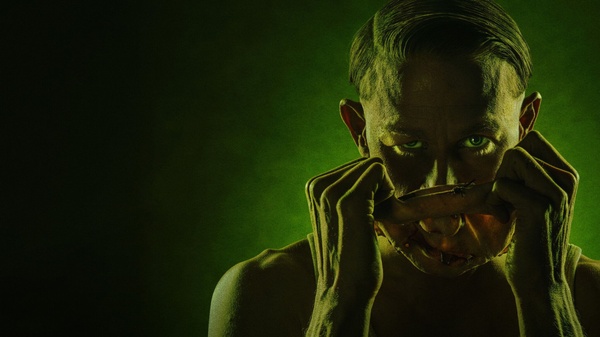


A large part of the general public, in search of crime stories inspired by real-life true crime events, has now become accustomed to the money-making machine of Ryan Murphy and Ian Brennan, and therefore the announcement by Netflix of the third chapter of the Monster saga, after the (questionable) success of Dahmer and the Menendez brothers' family drama, generated much anticipation.
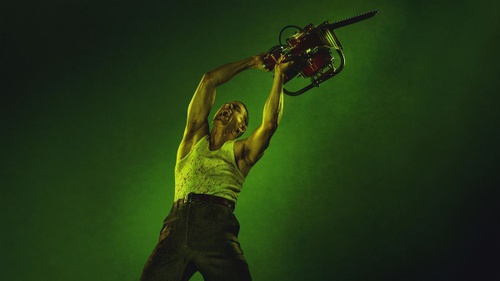
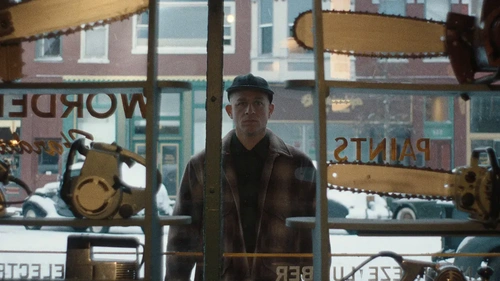
Even greater anticipation given that The Story of Ed Gein features as its absolute protagonist a serial killer who inspired iconic figures in the world of cinema such as Norman Bates in Psycho (1960), Leatherface in The Texas Chain Saw Massacre (1974), and Buffalo Bill in The Silence of the Lambs (1991), just to name the most famous. And it is precisely these three cults that make their appearance in a handful of subplots, more or less substantial, that try to create a parallel between fiction and reality, in eight episodes that attempt to construct a portrait of supreme horror without, however, finding the right narrative balance.
Monster: Man or Monster?
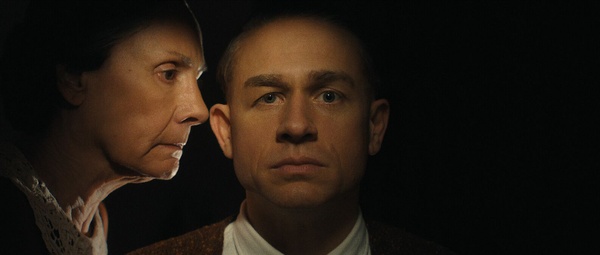
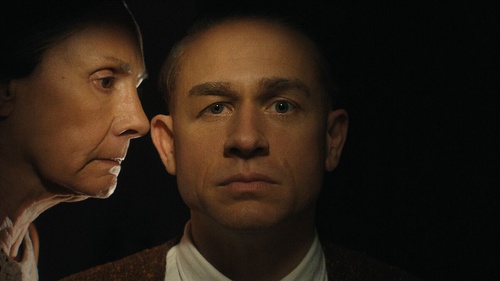
The story begins in Wisconsin and follows Ed Gein, a powerful young man suffering from cognitive disorders and various eccentricities, who works on the family farm under the watchful eye of his mother Augusta, deeply devout and ready to do anything to prevent her son from having contact with other female figures. When the elderly woman suffers a stroke, following the lifeless discovery of her other son - but the audience already knows that Ed had a hand in his brother's demise - and subsequently dies from a fit of rage, the protagonist finds himself alone in the world.
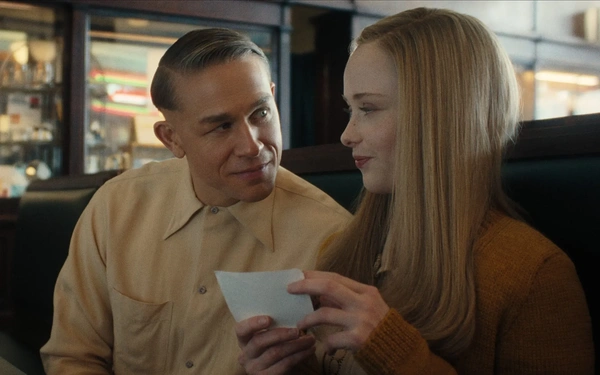
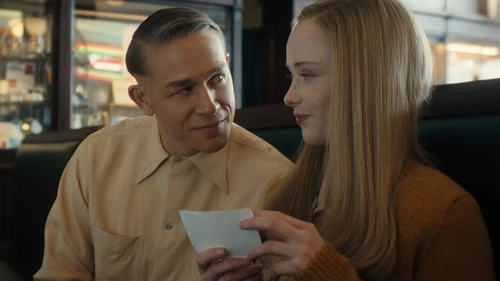
He forms a relationship with Adeline Watkins, a young woman from the town as strange as he is, and begins to commit a series of gruesome crimes, killing women with whom he had sexual relations and desecrating lifeless bodies from cemeteries. A trail of blood far from its conclusion...
Behind the Mask, Little Remains
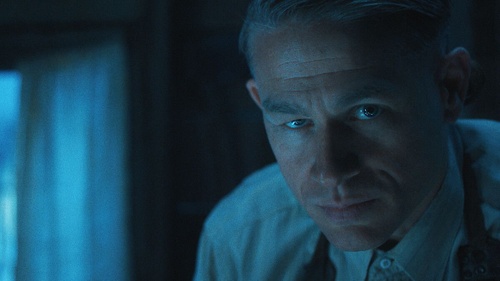
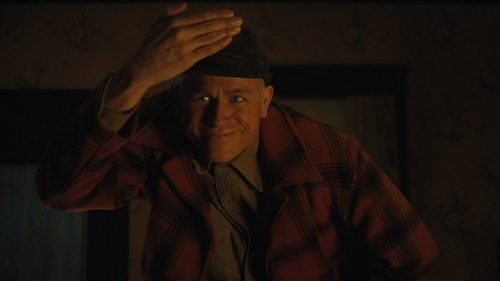
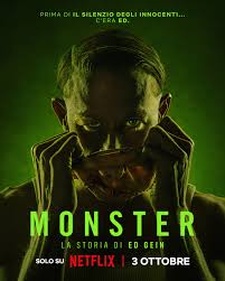
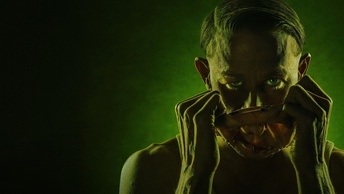
Charlie Hunnam, initially reluctant to take on an admittedly uncomfortable role, portrays Ed Gein as a simpleton with slurred speech and a crooked gaze, swallowing words with a high-pitched tone that risks descending into caricature on multiple occasions. A performance that is at times courageous, but not always supported by a script that gives him thankless and grotesque tasks, with his sexual perversions - primarily wearing women's underwear - giving rise to unintentionally ridiculous passages. A traveling circus show that ends up weakening the dark soul of a killer who, however sick, here seems on multiple occasions justified by his mental deficit.
The audience is pushed to consider him as a human being despite the vile actions he committed, with the final episodes almost attempting to rehabilitate his figure in a sort of repentance and newfound lucidity, coinciding with his collaboration with law enforcement to catch his imitators who infested the States - thus similarities with Thomas Harris's novel character Hannibal Lecter.
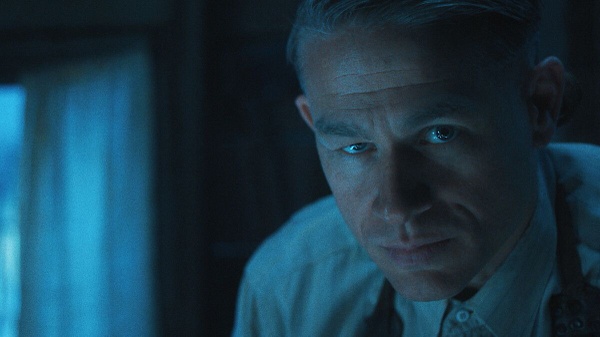
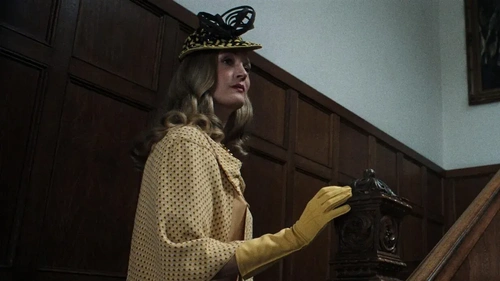
The central problem lies precisely in Gein's accentuated ambiguity, with the series never quite deciding what it wants to be. He himself states at one point: "I don't know who I am or why I do the things I do," transforming everything into a study of the impact of his imagination rather than his reality. Some choices, such as the inclusion of Nazi war criminal Ilse Koch - a completely wasted Vicky Krieps - in a kind of "distant" dialogue with the atrocities committed by our protagonist, are poorly integrated into the context, and the reference to Hollywood's imagery is entirely gratuitous.
From the Small to the Big Screen
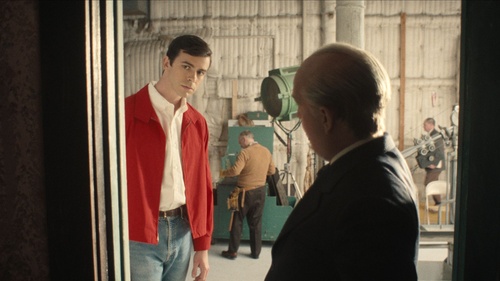
From Anthony Perkins suffering from "sodomy" to an Alfred Hitchcock - an unrecognizable Tom Hollander under decidedly unsuccessful makeup - obsessed with the success of his Psycho, to Tobe Hooper who, during the filming of The Texas Chain Saw Massacre, is convinced that his fellow countrymen deserve that physical and moral filth, what concerns the Seventh Art is treated with extreme superficiality, a useless corollary to the main story which, in the meantime, tries in vain to find its own identity.
The tone of the operation shifts from peaks of high tension, with the drama of potential victims exposed in at least a couple of passages with a certain psychological violence, to the camp of other situations, perhaps in an attempt to make people forget the murderous nature of a character who becomes increasingly cumbersome and unmanageable. All this in an America that becomes saturated with horror, between flea markets selling objects belonging to the criminal and that audience that celebrates exploitation films in the dark of movie theaters.
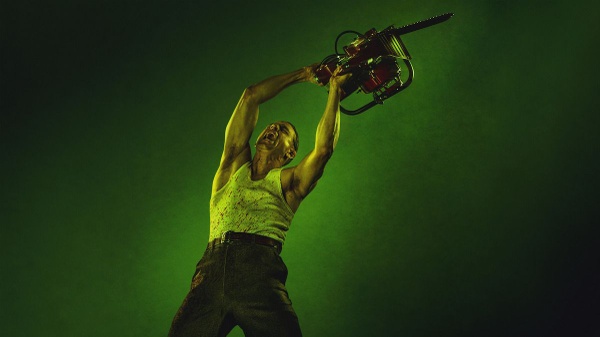
Almost all of the episodes are nearly an hour long, truly excessive for what there was actually to tell and demonstrate, and in fact there is no shortage of dead time to weigh down an already not very fluid exposition, with the aforementioned changes in setting or tone often seeming out of place. There are a few jolts here and there, entrusted mainly to Hunnam's shoulders, who commits with commendable stoicism but can do little to salvage the fate of a story that inevitably falls into kitsch.
Gallery
Score
Editorial team
Monster - The Story of Ed Gein: When Horror Becomes Caricature
Monster - The Story of Ed Gein is the most muddled and grotesque chapter of the anthology project created by Ryan Murphy and Ian Brennan, which gets lost in the missed ambiguities of a character who never moves from his caricature status, despite the commitment of Charlie Hunnam who bares himself, inside and out, to enter the mind of the cruel serial killer. A serial killer who has inspired cinema on multiple occasions, and the series does not hesitate to remind us of this in gratuitous digressions, delving into the making of celebrated cults.
Changes in setting, with Nazi Germany even making an appearance in a poorly focused parallel, try to expand a story that becomes increasingly convoluted, in an attempt to humanize a guilty figure, conscious or not, of unspeakable crimes and to place some of the blame on a system and a nation increasingly accustomed to horror. Just like its protagonist, the eight episodes seem to want to wear the skin of much more famous projects, constantly searching for their own ex(i)s(t)ence between reality and imagination, between madness and cruelty.
Similar articles