Toy Story, when toys revolutionized Hollywood
The first feature film made entirely with computer graphics, Toy Story redefined how childhood stories are told and proved that animation can speak to all generations.
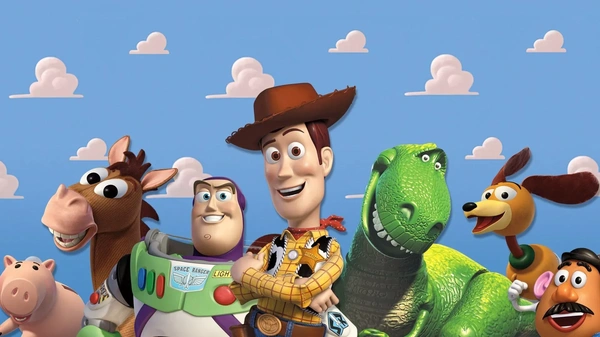


In the course of cinema history, there are works that achieve great commercial success and others that irreversibly alter the language of an entire industry. Toy Story undoubtedly belongs to the latter category. When it arrived in theaters in 1995 (1996 in Italy), audiences were faced with something they had never seen before: the first feature film made entirely with computer graphics. Yet, to limit it to a technical revolution would be to profoundly diminish its scope.
Thirty years later, what still makes the film directed by John Lasseter important is above all its pioneering value. Toy Story changed the way animation was conceived, redefined the relationship between family cinema and adult audiences, demonstrated once again that animation can speak to different generations, and showed how technological innovation leaves a lasting mark only when supported by great storytelling ability.
- When toys opened a new era
- Pixar and the impossible bet
- Woody and Buzz, two different ways to face change
- The revolution of writing in family films
- A saga that grew with its audience
- Toys as a metaphor for human experience
- The legacy
- Why does it continue to move us?
When Toy Story's toys opened a new era
Before 1995, Western animated feature films were still strongly associated with traditional animation. The great Disney classics had consolidated a precise production model, based on hand-drawing and an immediately recognizable aesthetic.
Computer graphics, although already used in some cinematic sequences, was perceived primarily as an experimental tool.
Toy Story suddenly changed the rules of the game. The project was born from the collaboration between Pixar and Disney and represented an enormous production challenge. No one was certain that a film made entirely in CGI could work on a commercial level, nor that the public would be willing to accept an aesthetic so distant from what they were used to.
The film's success demonstrated that digital technology was not just a curiosity for a few enthusiasts. It could become the dominant language of contemporary animation. In subsequent years, more and more studios would follow the same path, helping to radically redefine the sector.
The true insight of Toy Story, however, was not to use innovation as a mere visual attraction. Computer graphics was at the service of the story, and not the other way around.
Pixar and the impossible bet
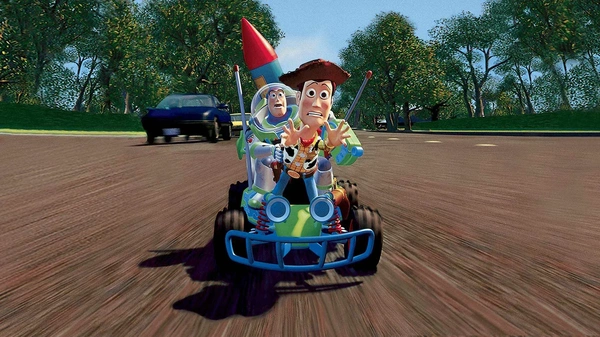
Today Pixar is considered one of the most important studios in animation history, but in the early nineties, its future was far from guaranteed. The company's origins lie in Lucasfilm's computer division, later acquired by Steve Jobs.
The release of Toy Story represented a decisive moment for the entire Hollywood industry. The film transformed Pixar into a reality capable of competing at the highest levels and paved the way for a different approach to animated cinema, based on the centrality of the screenplay and the search for universal themes.
The technological revolution would have been of little use without memorable characters and emotionally authentic conflicts. Pixar understood very early on that audiences don't fall in love with technical innovations. They become attached to stories.
Woody and Buzz, two different ways to face change
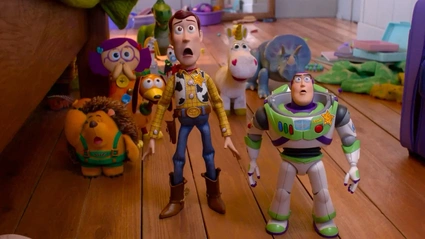
The heart of Toy Story lies in the relationship between Woody and Buzz Lightyear.
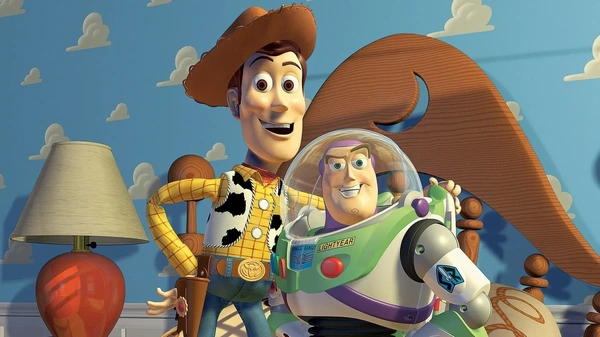
Woody is Andy's favorite toy. He has built his identity around that role. Buzz's arrival suddenly calls all his certainties into question. The fear of being replaced generates jealousy and insecurity.
Buzz, on the contrary, is convinced he is a real Space Ranger. He lives within an illusion that prevents him from understanding who he really is.
Their clash goes far beyond simple rivalry between protagonists. Woody represents the fear of change and the desire to maintain one's place in the world. Buzz embodies enthusiasm for the new, but also the difficulty of confronting one's limits.
Both are forced to redefine themselves. And it is precisely this journey of growth that makes the film extraordinarily relevant even today. The fears that the two protagonists experience also belong to human beings.
The revolution of writing in family films: Toy Story's themes
One of the most innovative aspects of Toy Story concerns its approach to narration.
The film addresses children without treating them superficially and, at the same time, offers adults multiple levels of interpretation. The emotions portrayed are complex and universal.
The fear of losing one's value. The confrontation with someone perceived as better. The need to feel indispensable. The desire to be accepted.
These are all elements that help explain why the film still manages to engage viewers from different generations today.
Animation ceases to be considered exclusively children's entertainment and becomes a tool capable of addressing existential questions through accessible language.
Many subsequent works, such as Shrek, would follow this direction, but Toy Story decisively contributed to making it a concrete possibility within mainstream cinema.
A saga that grew with its audience
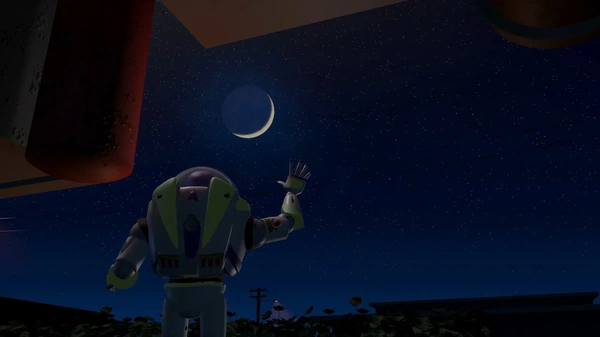
One of the most interesting aspects of the Toy Story universe concerns its evolution over time.
The first film addresses the fear of losing one's place in the heart of those we love. Toy Story 2 expands on this reflection, questioning the meaning of identity and the relationship between immortality and usefulness.
With Toy Story 3, the saga probably reaches its most intense emotional moment. Andy is now an adult and is preparing to leave the home where he grew up. The toys must come to terms with separation and the possibility of being forgotten.
The abandonment of childhood is told without cynicism, but without hiding the melancholy that accompanies every important change.
Toy Story 4 introduces the theme of self-determination. What happens when the role that defined our existence comes to an end? Is it possible to find a new purpose?
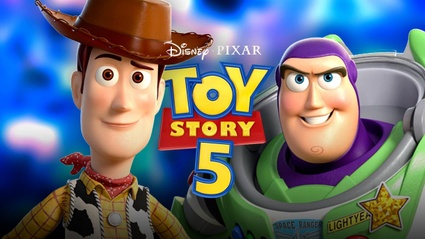
Toy Story 5, the new chapter, deals with the confrontation between past and future and how technology is also changing the world of children. The saga thus continues to question the meaning of growth and identity.
Toy Story's toys as a metaphor for human experience
Perhaps Toy Story's greatest merit lies in its ability to use seemingly simple objects to tell profoundly human experiences.
The toys live in fear of being forgotten. They seek their place within a community. They need to feel useful and loved.
These are emotions that run through every phase of life.
The idea of transforming toys into protagonists allows delicate themes to be addressed with a sincerity that would hardly have had the same force in a realistic context.
Behind the adventure and humor lies a constant reflection on the fragility of existence and the universal need for belonging.
The legacy of Toy Story
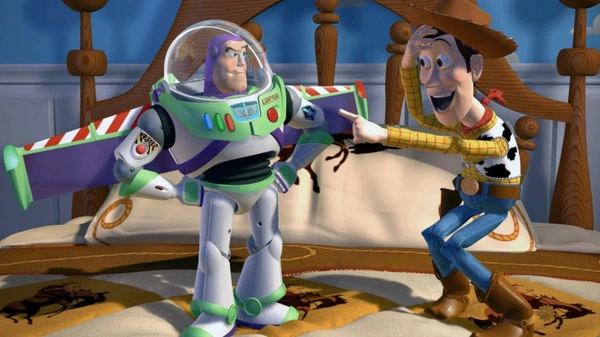
Without Toy Story, the landscape of contemporary animation would probably be very different.
The film contributed to the spread of CGI as a production standard and profoundly influenced the studios that would emerge in subsequent years. At the same time, it consolidated a different idea of animated cinema, less interested in clearly separating child and adult audiences.
Naturally, this transformation also had complex consequences. The rise of computer graphics coincided with a progressive downsizing of traditional animated feature films in the Western market.
Yet, reducing Toy Story's legacy to only the industrial dimension would be limiting. Its most important impact concerns the way it taught us to consider animation as an expressive form capable of addressing any theme.
Why does it continue to move us?
Today, many of the technical aspects that seemed revolutionary in 1995 have been surpassed by technological evolution. CGI has refined and visual possibilities have multiplied.
Yet, Toy Story continues to be discovered by new generations and to move those who grew up with its protagonists.
The reason is simple: special effects age, authentic emotions much less so.
John Lasseter's film changed animated cinema because it demonstrated that technical innovation acquires meaning only when accompanied by a strong human component. It showed that even a story populated by toys can speak of the fears, hopes, fragilities, joys, and transformations that characterize each of our lives.
Thirty years after its release, Toy Story remains much more than a milestone in digital animation. It is the universal story of what it means to find your place in the world, accept change, confront others, and keep moving forward, even when the future is scary.
Perhaps that's why, even today, those four words continue to have the same effect as then: to infinity... and beyond.
Similar articles