Fallout 2, review of the first three episodes: a convincing return to the heart of the apocalypse
The journey to New Vegas has just begun!
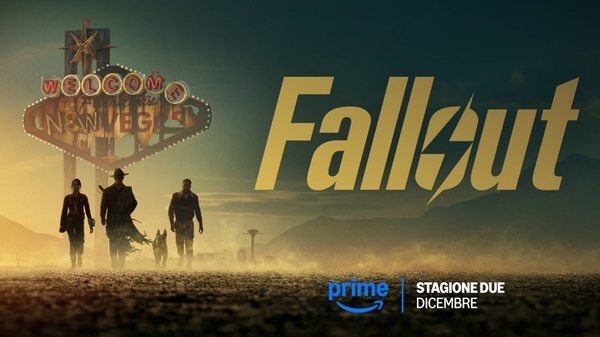


We previewed the first three episodes of Fallout Season 2, coming to Prime Video: here's our review.
After a first cycle of episodes enthusiastically received by audiences and critics, Fallout returns with a second season that chooses a path as risky as it is intelligent: not to reinvent itself, but to refine, expand, and deepen what had already proven to work. The first three episodes of the new season do not overturn the series' narrative structure, but consolidate it with confidence, confirming the adaptation as one of the most successful cases in the landscape of contemporary video game transpositions.
The dominant feeling is that of being in front of a series that knows exactly what it wants to be.
- The plot
- The weight of the past and the scars of the present
- New Vegas: fan service done right
- Cast
- The Vaults as microcosms of conflict
- Aesthetics and world
- A vintage soundtrack for a ruined world
- The limits
- Action and tension: spectacle at the service of the story
- Conclusion
The plot of Fallout 2: narrative continuity and thematic coherence
The second season picks up without hesitation from the end of the first, continuing the trajectories of its main characters with coherence and respect. Lucy, Maximus, and the Ghoul remain central figures, but the story begins to reorganize around new dynamics, particularly the journey that takes Lucy and the Ghoul towards a New Vegas finally embodied on screen.
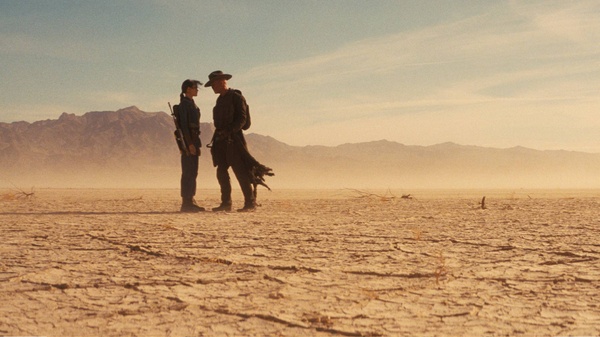
This choice immediately proves effective: the "on the road" structure allows the series to constantly confront the characters with the outside world and their respective moral visions. Lucy continues her path of disillusionment without entirely losing the ethical core that defines her, while the Ghoul confirms himself as the dirty and cynical conscience of the Fallout universe, a character who lives by contradictions and who, precisely for this reason, remains the most magnetic in the series.
The writing avoids easy accelerations and prefers to build tension through dialogue, situations, and small psychological shifts. It's an approach that pays off, especially in the more intimate moments, when action gives way to reflection.
The weight of the past and the scars of the present
Particularly interesting is the continuous comparison between the pre-war world and the post-apocalyptic reality. The second season further accentuates this contrast, using the past as a narrative tool to highlight the extent of the disaster. The idealized America before the war, made of promises, progress, and illusions of control, is reflected in an increasingly unsettling way in the devastated present, making it clear that the consequences of the nuclear holocaust have never truly ended. Fallout insists on the scars left by the past, transforming them into a constant presence that weighs on every choice and every place traversed by the characters.
New Vegas in Fallout 2: fan service done right
The introduction of New Vegas represents one of the most delicate points of the entire season, and the first three episodes show that the series is perfectly aware of the symbolic weight of this setting. It is not a simple fan reference, but a living, layered place that carries history, power, and ambiguity.
The exploration of Fallout's post-apocalyptic landscapes is, without exaggeration, hypnotic. The series manages to capture and convey that sense of wonder mixed with unease that video game fans know well, transforming every exploratory sequence into an almost sensory experience. The glimpses tell silent stories. The dilapidated structures force us to come to terms with a disturbing reality. The ruins, more than mere backdrops, preserve the memory of a lost world.
This first part of the second season strongly consolidates the link between the series and the original material, without ever descending into sterile replication: it is homage and reinterpretation at the same time.
A solid cast in Fallout 2, with some imperfections
From an interpretive point of view, the second season maintains an overall high level. Ella Purnell continues to give Lucy credible fragility, made of hesitations and small emotional lapses, while Walton Goggins remains the series' true ace in the hole: his Ghoul is charismatic, ironic, tragic, and unpredictable, capable of dominating the scene even in moments of apparent calm.

Aaron Moten, as Maximus, continues a more internal and less spectacular arc, but one that is consistent with the character. Not all secondary performances are equally incisive: here and there, characters emerge who still seem to be searching for a full definition, but these are marginal uncertainties that do not compromise the overall coherence of the story.
The Vaults as microcosms of conflict
Parallel to the exploration of the outside world, the series continues to find great narrative strength in the internal dynamics of the Vaults. Even in the second season, these enclosed spaces confirm themselves as perfect microcosms for telling human conflict: small daily clashes that reflect much broader tensions, small problems that hide big questions of power, control, and survival. The challenges faced within the Vaults, seemingly minimal, take on increasing weight, demonstrating how the apocalypse not only destroyed the outside world but also cracked the foundations of the communities that believed themselves safe from it.
Aesthetics and world: Fallout remains Fallout
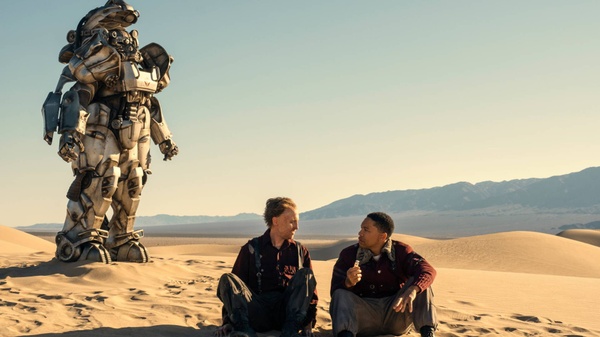
Visually, Fallout continues to distinguish itself. The artistic direction remains one of the absolute strengths of the series: retro-futurism, grotesque violence, visual irony, and horror coexist with surprising balance. The second season further strengthens its imagery, making the game world increasingly recognizable and, at the same time, credible as a television narrative space.
The series does not renounce its satirical soul, but uses it with greater control, avoiding excess and favoring a more subtle critique, especially when it comes to power, control, and illusions of civilization.
Fallout 2, a vintage soundtrack for a ruined world
The vintage-flavored soundtrack continues to be a distinctive element of the series and accompanies the viewer into a harsh and deeply inhospitable world. The seemingly reassuring period songs contrast with the brutality of the images, amplifying the sense of estrangement that permeates the entire experience. In these first episodes, the music is not limited to recalling the aesthetics of the video games but becomes a true emotional commentary, capable of highlighting the abyssal distance between what the world was and what it has become. It is a stylistic choice that continues to work precisely because it never loses its ironic and disturbing charge.
The limits of Fallout 2
If there is a limit in these first three episodes, it is perhaps a certain narrative caution. The second season does not surprise as much as the beginning of the first, preferring a more measured and less disruptive construction. But it is an understandable, almost necessary, choice to give space to the characters and the new dynamics at play.
Fallout 2 does not try to artificially raise the stakes immediately: it prefers to prepare the ground. And it does so competently.
Action and tension: spectacle at the service of the story
While maintaining a more measured pace compared to the series' debut, the second season does not shy away from action, which remains one of the most engaging elements of the narrative. Spectacular sequences are frequent and often surprisingly emotional, but what makes them truly effective is their direct connection to the characters. Violence is never gratuitous or heroicized: it is sudden, dirty, sometimes even unpleasant, perfectly consistent with a world that has lost all form of order. In this balance between tension and storytelling, Fallout once again demonstrates its ability to use action as a narrative tool and not as a mere exhibition.
Fallout Season 2, conclusion of the review: a solid start
The first three episodes of Fallout's second season confirm that the adaptation is not only successful but also intelligent, respectful, and narratively robust. This new chapter does not reinvent but refines: it hones the formula that had already surprised in the debut season, strengthening characters, settings, and the deep connection with the video game universe from which it draws inspiration. The result is a solid and promising return, capable of fueling very high expectations for the rest of the season.
Score
Editorial team
Fallout 2, review of the first three episodes: a convincing return to the heart of the apocalypse
We previewed the first three episodes of Fallout's second season, which confirms and strengthens everything that made the series' debut so convincing.
The narrative continues coherently, the characters remain solid, and the introduction of New Vegas expands the visual and thematic universe with great effectiveness.
The setting is once again one of the absolute strengths, strongly linked to the video game imagery, while the cast almost always proves to be up to the task. A good start that sets the stage without forcing the issue.
Similar articles