Metal Gear Solid: Master Collection Vol. 2 - Review of MGS4's Return
After 18 years, Metal Gear Solid 4: Guns of the Patriots returns in the second volume of the Master Collection
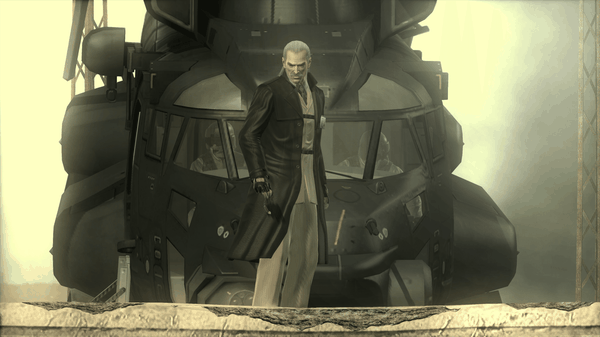


The suffix “Vol. 1”, cleverly attached by Konami to the already Wertmüllerian title of Metal Gear Solid: Master Collection, hinted at an in fact inexorable yet almost unbelievable development: the possibility of a second Master Collection volume that would include Metal Gear Solid 4: Guns of the Patriots. The mythological chapter of the Kojima saga was indeed tied to one of the most indissoluble and persistent legends in video game history: the impossibility of converting it due to its intrinsic link with the chip mounted on the third incarnation of PlayStation.
We speak in the past tense because what you are reading is a review of the Metal Gear Solid: Master Collection Vol. 2, which also includes the mythological MGS 4, as well as Metal Gear Solid: Peace Walker and Metal Gear: Ghost Babel. The impossible has therefore happened, and it is almost superfluous at this point to specify that the presence of the fourth chapter of Metal Gear Solid is (and has long been) the main reason for interest in this Collection.
- MGS 4 and the impossible conversion
- MGS4 and the possible conversion
- Playing Metal Gear Solid 4 in 2026
- Metal Gear Solid: Master Collection Vol. 2 delivers on its promises
MGS 4 and the impossible conversion
In an era where everyone returns, often scraping the bottom of the nostalgia barrel, Metal Gear Solid 4 remained tied until today to its original and sole platform for over 18 years: PlayStation 3. Arriving at the console's most difficult moment, preceded by Microsoft's 360 which seemed almost unreachable in sales while the game was in development, Kojima's work gradually became a symbol of both PS3's technical potential and the progressive but ineluctable regaining of ground in sales by the Japanese giant. If, in the long run, Sony managed to equalize a generation that seemed lost, Metal Gear Solid 4 has been handed down over the years as the standard-bearer of this operation, the unshakeable exclusive. To the point of becoming a legend.
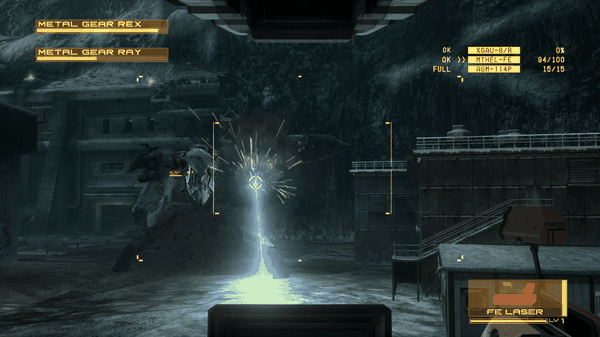
According to the version reported first on forums and then on social media, the reason for this bond was to be found in the anomalous architecture of Cell, the chip that contained the brute force of PS3. Conceived from the outset as an eternal exclusive, MGS4 was allegedly developed by Kojima working directly on Cell's metal, exploiting its unique features in an irreplicable way. More prosaically, the reality presents less noble reasons, more tied to mere money. According to what Ryan Payton recounted over time, Xbox 360 was perfectly capable of running Guns of the Patriots smoothly and without hitches, as verified by a dedicated internal team, but the potential conversion fell through due to the physical storage medium chosen by Microsoft: too many DVDs would have been needed to store the amount of data contained on Sony's dual-layer Blu-ray. Why almost two more console generations passed before the master of Metal Gear Solid 4: Guns of the Patriots left Konami's archives remains a mystery yet to be solved.
MGS4 and the possible conversion
It is not known, similarly, whether the conversion work to bring Metal Gear Solid 4 to PC, PS5, and even XBOX Series & Switch 2 for the first time was complex or not, but the result is quite in line with what was seen in the previous Volume 1 of the Collection. The game, therefore, is substantially identical to its original version; it is neither a Remastered of any kind, much less a Remake: Metal Gear Solid 4 presents itself raw and unadorned as on PS3, except for the possibility of increasing its resolution to today's standards. We played our copy on a good laptop at 1920x1080, thus replicating the original experience, but by connecting an external monitor, we were able to bring the resolution up to 3840x2160: although the monitor was wide, no setting allowed us to extend the game's display to 21:9.
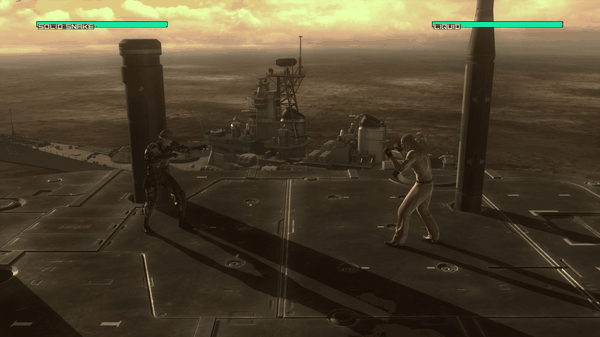
Not having bionic eyes, we leave more technical considerations to others, however, we do not seem to have noticed any significant intervention beyond the resolution upscaling: some textures today appear better than others, but it is reasonable to assume this is the result of the original material being pushed to its limits by increasing the resolution. Technically, Metal Gear Solid 4 in the Master Collection Vol. 2 is a PS360 gen game and it shows, with all its pros and cons.
Playing Metal Gear Solid 4 in 2026
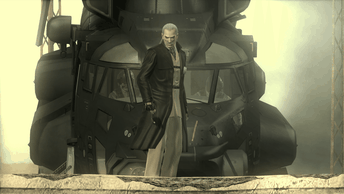
Today, that still perceptible polygon, that movement on the border of the uncanny valley, where faces and expressions pursue realism while in the background a stretched and blurred landscape, where shades of brown abound, shows all the limits of the machine on which it was conceived, undoubtedly has its charm. It cannot be said that it hasn't aged; it has aged well, like a 20-year-old film by a great director like Michael Mann. The technological leap might make certain choices seem naive, but they still hold up, and when contextualized, they even demonstrate a certain ahead-of-its-time quality.
But it is undoubtedly from a content perspective that playing Metal Gear Solid 4 in 2026 arouses the most curiosity, and, we anticipate, also the greatest satisfaction. Kojima's directorial talents and ambitions merge into a monumental work in which the Japanese game designer explores all the dead ends of his own mythology, taking the user/viewer on a rhythmic dance of gameplay and river-like cut-scenes, barely contained by the original double Blu-ray, to the point that legend has it some parts were sacrificed at the insistence of management. One senses the effort to absorb and rework the new direction that action games were taking at the time, without ever abandoning the more committed, political, and somewhat conspiratorial side. But this latter label is unfair, one that can be somewhat sarcastically affixed ex post, because despite many ingenuities, time has proven Kojima right; 20 years ago, in a game for kids, he spoke of private armies, technological warfare, shadow corporate governments, global crises, and a host of other themes that today fill news headlines.
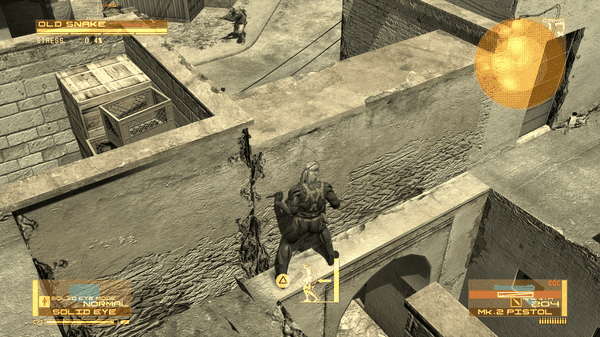
MG4 is a game of tensions, where one already senses Kojima's drive for greatness clashing with the limits imposed by his own saga and Konami. Of course, some say that limits are precisely what channel great art, but that's another discussion. This, however, is a revival that Konami has achieved without particular effort, keeping everything intact (original voice acting included), but giving us the opportunity to play a title that remained almost buried by its own legend and around which today, in front of a finally broad audience, it is hoped that the debate it deserves can be produced.
Metal Gear Solid: Master Collection Vol. 2 delivers on its promises
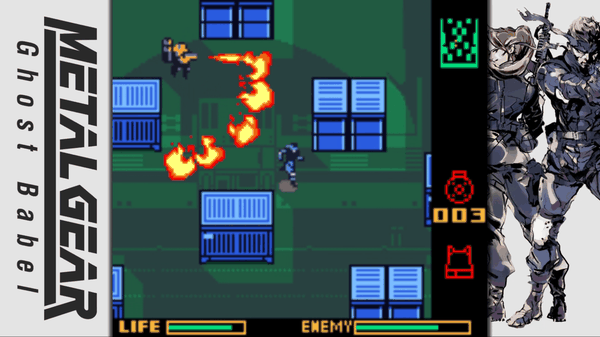
A Collection, by definition, is a compilation of something, and in this sense, Metal Gear Solid: Master Collection Vol. 2 lives up to its title, picking up the baton from the first volume and presenting, in addition to the already discussed MGS 4, also Metal Gear Solid: Peace Walker (in its already re-proposed HD version) and a series of bonuses, including Metal Gear Ghost Babel, a 2000 title for Game Boy Color, manuals, screenplay books, master books, databases, and digital soundtracks. Little to say about the two “supporting” games in the collection; these are faithful conversions, and in the case of Peace Walker, upscaled (up to 3840x2160 and playable in a window on PC). As for the extra materials, the same considerations apply to all: they are all very interesting, useful for understanding the infinite connections and references within the different games, but they are an agony to use digitally. The only justifiable one is the database, conceived as an '80s Wiki of the MGS world (from PS3), but everything else would have deserved (indeed, required, we venture) a physical publication.
Finally, a consideration on its form, at least on PC: the Collection presents itself as a package that includes individual entries for each product, but each element must pass through the “framing” executable of the Collection to start, with options distributed between one interface and another, difficulty understanding which menu to open to exit a game, and the constant uncertainty of doing the right thing. We imagine that on consoles these steps are smoother, even if no less complex.
Score
Editorial team
Metal Gear Solid: Master Collection Vol. 2 - Review of MGS4's Return
The ability to play Metal Gear Solid 4 without having to find a PlayStation 3 after almost 20 years alone justifies the existence of this Metal Gear Solid Master Collection Vol. 2. Following in the footsteps of the first volume, however, the effort put into this well-deserved and welcome revival always seems minimal: it offers what one expects from a collection, but nothing more. In fact, in this case, the menu offered is overall less lavish than the previous one. And the various digital texts included deserve a physical release.
Similar articles