The Toxic Avenger is no longer toxic, rebellious, or counter-current: a review of the 80s b-movie remake
The Toxic Avenger is back but has become inexplicably reassuring and mainstream: a review of The Toxic Avenger


A film like the remake of The Toxic Avenger, produced by the same alternative production company Troma forty years after that low-budget film proudly outside the Hollywood system, lends itself to many bittersweet considerations. The first is that the world of cinema has changed so much technically, becoming incredibly more accessible than it once was and allowing small producers to put together decent films with limited budgets. So much so that today the Troma signature no longer means facing a film infinitely more limited in its aspirations and technical possibilities than high-end releases: in this sense, making a film today is much simpler and more democratic than it once was. In 1984, however, The Toxic Avenger made its viewers argue about its label: for some, it was simply a b-movie, a second-tier film made with makeshift means, for others, the 'b' was too much, it was a c or even a z-movie.
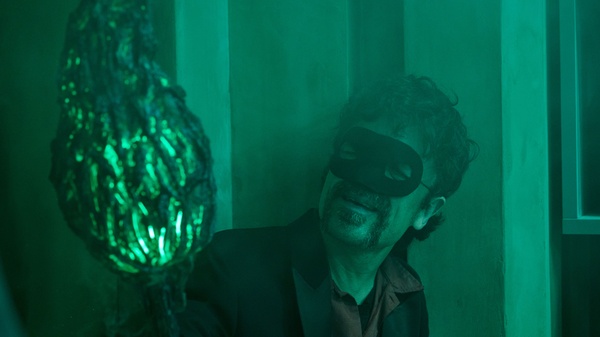
Since the days of Toxic Avenger, making a mid-range film has become much easier
The point was that Troma, until then specializing in slapstick parodies and sexy comedies, gave half a million dollars to Lloyd Kaufman and Michael Herz to make its first horror film, which then became a symbol of the production company itself and, in the months following its quiet release, a success based on word-of-mouth and the work of a handful of New York cinemas in screening and publicizing it. It was indeed limited in its means, with a cast of unknowns (Marisa Tomei appeared in a small role), but it proposed its own model against the Hollywood establishment.
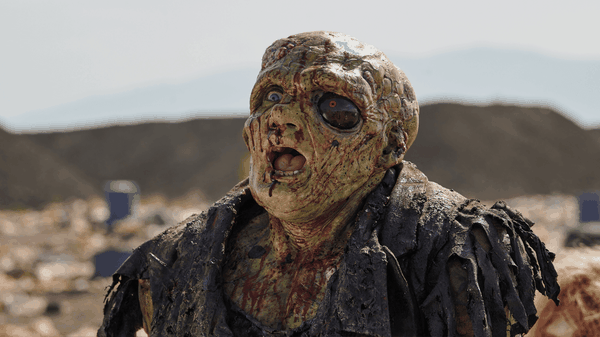
The metaphor was all there: in the parody of the statuesque and successful superhero, who here is instead a stocky and modest-looking janitor, armed with a mop to clean floors, made horrifying by a fall into a vat of radioactive waste that turns him green and monstrous, but grants him substantial invulnerability and superhuman strength. The Toxic Avenger of today finds its modern monsters in Kevin Bacon, Elijah Wood, and Peter Dinklage: the first in the cruel soul of a brother and unscrupulous businessman, the latter two only in appearance, covered in prosthetic makeup that makes them nightmare creatures. Though hunched, clumsy, and unhealthy-looking, both somewhat resemble Universal monsters or those of Del Toro; creatures in their own way sweet, for whom you obviously end up rooting.
This remake does not come from a studio that has taken over this story, pulling out a remake entirely comparable to mid-range films, which will "clean up" the pulp visual effects and ultra-violence scenes of the original, sterilizing its political vision and critique of the commercial cinema world. No, this new film is still produced by Troma, a sign that the democratization of cinematic technology also allows indie productions to conform to mainstream ones. The Toxic Avenger, in short, is well-made, proving the assumption that a clumsy and poorly made film today is only made out of malice or laziness.
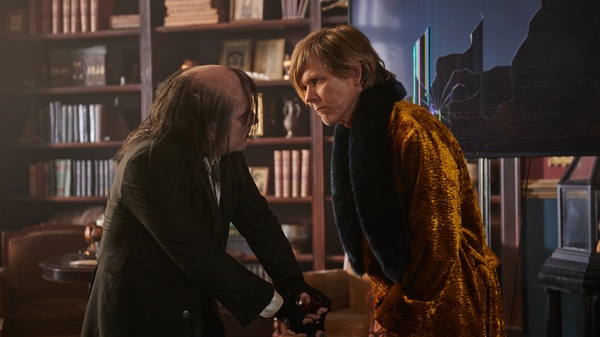
Even Toxic Avenger has conformed to the uninspired cinema of anti-heroes
The problem, however, lies there, in the conformity. The small, great tragedy of this version of The Toxic Avenger is that it has also conformed in its content (or rather, in its reinterpretation) to the stories told by the rest of Hollywood. Peter Dinklage's toxic protagonist is a worker "screwed by the system" who accidentally gains superhuman powers: it seems like the genesis of a villain, but instead, it's that of a differently charming hero, who finds in being green, radioactive, and substantially immortal a way to make his difficult relationship work with an autistic son who struggles to come to terms with his mother's death and feels betrayed by having lost her without knowing she was ill.
Despite the splatter scenes, hands and heads being chopped off, and blood splattering everywhere, the impression is still that of being in front of one of those kids' movies with Jack Black who reconnects with a group of kids who help him rediscover his humanity. To this writer, it strongly recalled the big-screen adaptation of R. L. Stine's Goosebumps novels, which in turn greatly softened the thrill of the original literary stories. The difference, however, is that Goosebumps was intended for a young audience and was an overall well-made project, while The Toxic Avenger here theoretically pursues an adult audience, one that appreciates the original and is ready to revisit it, that wants to see heads explode, blood splatter, eyes pop out of their sockets, and disgusting radioactive blood flow.
What is completely missing is the alternative dimension, outside and against the conventional and standardized system of American cinematography. It's not even clear how intentionally, but The Toxic Avenger, with its reinterpretation, fully inserts its hero into this system that it once so shunned and criticized. Partly because Hollywood has for many years only told stories of anti-heroes who are theoretically "different" but in fact so conventional as to be harmless. Partly because this film, from how it is produced to how it presents itself, is the triumph of habit, of the already seen, without even much inspiration.
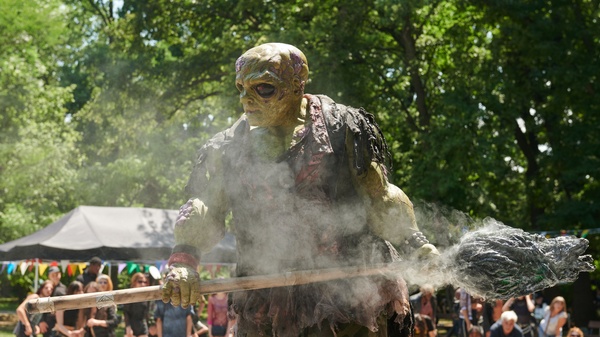
Moreover, it also has rather poor writing and a modest staging. It fails to find a starting point better than the usual, anonymous evil big corporation that crushes the elderly shopkeeper with her cat, the young African American girl fighting the system, and the protagonist, a sick worker betrayed by his own company who decides to rebel. What was once raw and therefore abrasive, sharp, incisive, is now polished, refined, and identical to dozens of other films. The Toxic Avenger is visually better (or perhaps just less rough) but in terms of content, it slides by without friction, leaving very little behind.
Score
Editorial team
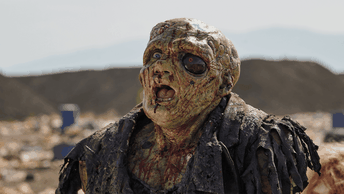
The Toxic Avenger is no longer toxic, rebellious, or counter-current: a review of the 80s b-movie remake
It wants to be the remake of an alternative and excessive film, but it almost feels like a horror for teenagers imbued with familiar atmospheres and themes: completely ignoring the original story of the first Toxic Avenger, this 2023 remake could be an adequate viewing, but knowing what it draws from and what it wants to be, it can only be the mortifying proof that institutional and conventional cinema is colonizing even spaces once independent and rebellious.
Similar articles