The Stranger, Paolo Strippoli's Italian horror continues to impress
Alberto Barbera did well to place an Italian horror film in competition: Venice and Italian cinema need to be associated more often with films like The Stranger.
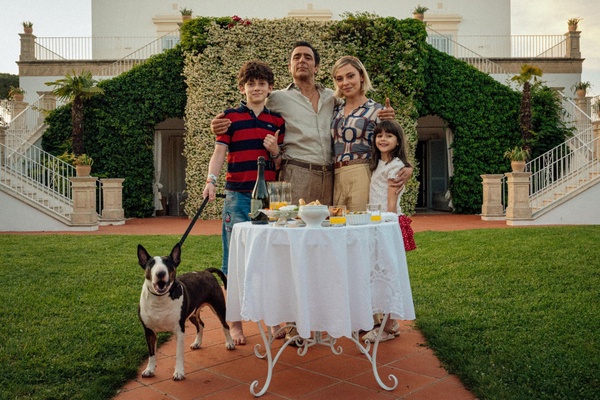


While waiting to discover what the international press will think of The Stranger, it's a pleasure to see an Italian genre film that proves that even here, someone has grasped the importance of commercial horror in contemporary cinematic storytelling, as a genre in which to elaborate eternal themes but also the most immediate contemporaneity. The Stranger certainly belongs to the first group, and this is perhaps its limit: in speaking of parenthood and family relationships between fathers and sons, mothers and daughters, it fails to say something that makes it authentically "Strippoli's version" on a theme that many horror filmmakers have tackled. It lacks a bit of originality, that personal touch that instead captivated in The Valley of Smiles. It's more solid than audacious, but transposing certain subterranean dynamics of well-to-do bourgeois families from the Anglo-Saxon world to affluent Bari in the nineties first and then in 2006 is still a significant achievement.
Gallery
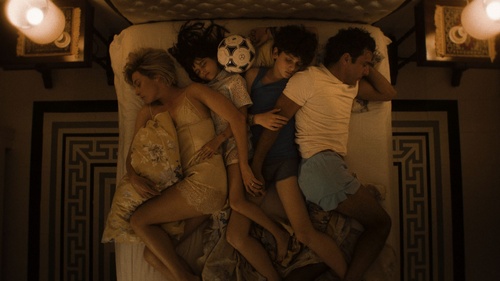
Mother's (Black) Heart
The Stranger revolves entirely around Jasmine Trinca, engaged in a role diametrically opposed to the one that saw her a few hours ago as the protagonist of Nanni Moretti's It Will Happen Tonight. Although, upon closer inspection, the mothers she plays are both committed to finding a way to save their daughter, to communicate authentically with her. The danger in The Stranger seems more menacing, but, as often happens in horror, its nature is determined by the perception of those who fear losing what they have.
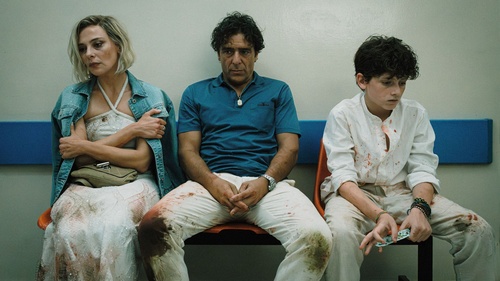
It's a perception dominated by fear, that of The Stranger's protagonist, who explains to her now adult daughter how when you become a mother, you live in constant fear that the fragile being you've just given birth to will break. Children grow up, they get older, but the fear remains. Both for their safety and for people's judgment in the face of their shortcomings, which will cling to the parents, like a fault. When Alice, the daughter of the protagonist Anna, is still a graceful and carefree child, an incident occurs that sends her to the hospital in very serious condition. Alice risks losing a limb and, with it, seeing the aspirations her mother has for her and her future vanish.
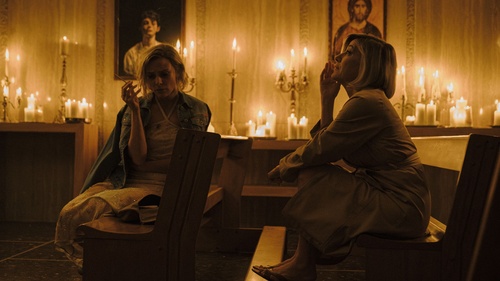
In the hospital chapel, the desperate mother is approached by a woman, the stranger of the title, who predicts that the child will lose her leg, unless she agrees to make a trade. The body weight of Tobia, the couple's eldest son and a future football star, in exchange for the child's averted amputation. Anna puts the well-being of her two children on the scales and chooses Alice's at Tobia's expense.
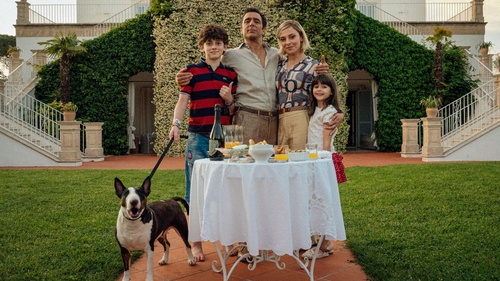
From this first choice, a spiral of hospital returns and subsequent consequences is triggered, which, predictably, require increasingly atrocious exchanges, increasingly diabolical outcomes. The Stranger refuses to take Anna's life or health and always calls on her to make a choice for others. As in many prophecies, the destination is the one foreseen, but the way one arrives there proves to be a trap. Sometimes the outcomes are diabolical, with unforeseen and difficult-to-accept consequences and repercussions, leading to the slow ruin of the wealthy Colonna family.
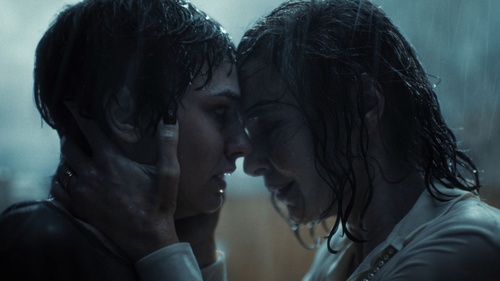
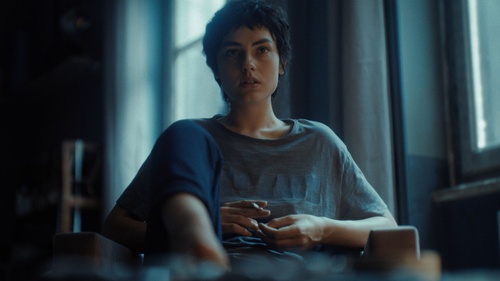
The dark family story is told by Anna herself to Alice in her Roman apartment, on a day of exceptional rain, revealing a tense relationship rich in unspoken words, even from the daughter's side. From the beginning, strange spiral shapes appear around the two, reminiscent of one of Junji Ito's most famous manga, and seem to foreshadow the continuous return and intensification of this kind of curse.
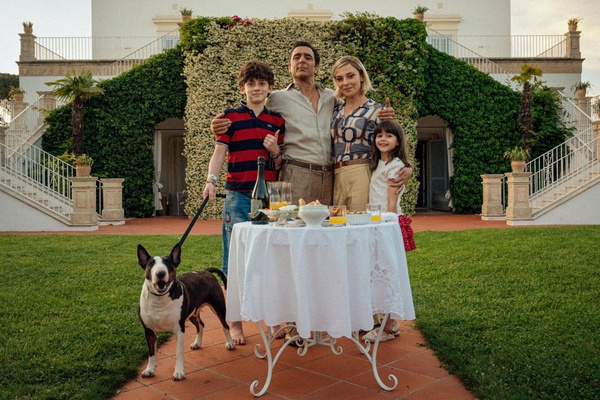
Strippoli's horror roots for Italy
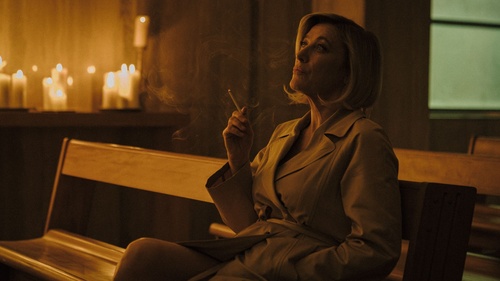
Jasmine Trinca seems to enjoy herself immensely in the role of this possessive matriarch, consumed by an ambition she doesn't even truly understand, who sees in her beautiful and perfect family the redemption from the frustrated ambitions of her youth. Valeria Bruni Tedeschi is even more entertaining in a role that perfectly exploits her characteristic mannerisms and speech, without even asking her to stop being Valeria Bruni Tedeschi, but rather, leveraging her way of nonchalantly dropping the worst bombshells. Perpetually wrapped in a sand-colored trench coat, almost immune to aging (and perhaps this is a clue), the stranger is a bit witch, a bit Oracle of Delphi, shrouded in cynicism and a genuine enjoyment in the anguish generated by the exchanges she proposes to the protagonist. She is deliberately ambiguous, undefined, a bit of a ward witch, a bit of a subconscious projection, but so wicked in her amorality that during the 2006 World Cup final she serenely exclaims: "I was rooting for France."
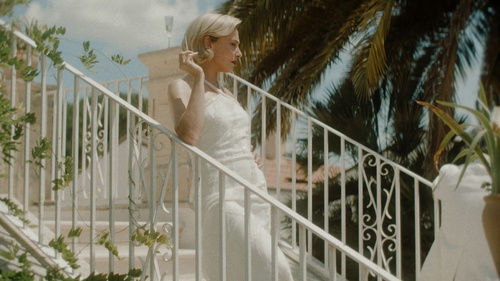
The Stranger indeed has the merit of being among the first to choose to reconstruct the 2000s in terms of image and mentality, setting the story in a wealthy, gossipy, but deep down a bit vulgar Bari. As in The Valley of Smiles, there is an Italian component to the specific flavor of the story that makes it even more delicious: one of the key scenes, for example, takes place precisely during the 2006 World Cup final won by Italy, when Anna's frustration and pain while driving blend with the exaltation and jubilation of the rest of Italy. The raw fish dishes, the Barilla commercial, the sponsorship of the local youth football team, the big Ferragosto party with a white dress code are all elements of Italianness correctly and tastefully inserted into the horror unfolding of the story.
The film cannot avoid some impasses in the ending, after the (very delightful) revelation of the last exchange accepted by the mother. It almost seems to be searching for a dramatic ending, but in the relationship between Alice and Anna there isn't enough substance to dare something beyond a classic morbid and possessive development on the mother's part towards the daughter, even if the film timidly suggests some sharper interpretations (is Anna's final choice also dictated by the fact that, after so many years of silence, her daughter reveals her homosexuality?). Overall, however, Strippoli confirms himself as a director who is not afraid to embrace the horror genre, including all its stylistic features and aesthetics. Scenes like the trembling white coffin, Trinca's upside-down runs in the dark hospital corridors demonstrate how, despite crafting what in fact plays out as a psychological thriller, he proudly claims the genre label. He also has the great merit of not denying the Italian landscape in which to immerse the story, doing so in a very contemporary and sometimes quite refined way (see the use of Baustelle's "Nessuno" in a pivotal scene of the film).
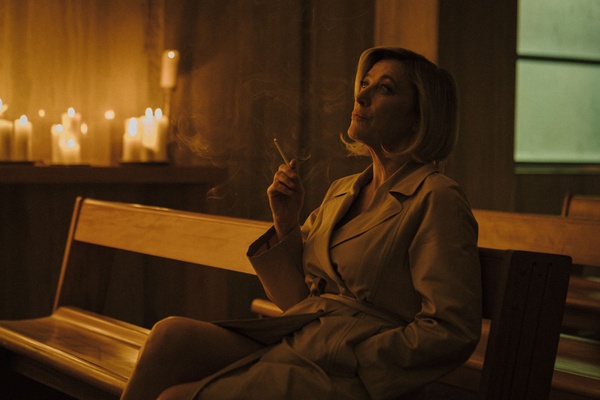
Predictably, the duo formed by Valeria Bruni Tedeschi and Jasmine Trinca is one of the film's strengths: the former torments a Trinca who is sometimes even more sadistic and pessimistic than the sorceress who tests her, delivering absolutely enjoyable interactions due to the broadsides they are both capable of delivering to each other. It is also here, in the encounter between two such recognizable performers and a horror imaginary that never tries to internationalize its Italianness, that The Stranger finds its most convincing identity.
Score
Editorial team
The Stranger, Paolo Strippoli's Italian horror continues to impress
The Stranger is a solid film capable of entertaining audiences, closer to a psychological thriller than true horror. It maintains high tension throughout its duration and makes the Italian setting and the social aspirations of the protagonists an integral part of that agile and contemporary approach that makes Strippoli the Italian answer to a vast movement of international directors who have decided to use genre not as a launching pad, but as a privileged framework for their stories.
Similar articles