Five Nights at Freddy’s 2 continues to speak to fans of Scott Cawthon’s universe, disregarding being a good film
The second installment of the Five Nights at Freddy’s saga also makes the mistake of believing that to make a good adaptation, it’s not necessary to make a good film.


In commercial terms, director Emma Tammi and screenwriter Scott Cawthon are entirely justified in persevering in the same errors that made Five Nights at Freddy’s a film particularly disliked by critics. A box office of three hundred million dollars internationally, placing it among the top twenty-five most profitable video game adaptations in cinema, proves them right in economic terms, as does the enthusiasm generated among fans.
Even more important is the fact that Five Nights at Freddy’s convinced an audience that only occasionally goes to the cinema: young people and those who prefer video games as a narrative medium. Furthermore, unlike other video game box office champions like Sonic, Super Mario, and Minecraft, it didn't do so by relying on a famous title known even to non-gamers, but on a saga born indie and niche, which became popular thanks to fan enthusiasm. Therefore, it makes perfect sense that Five Nights at Freddy’s 2 is even more than the first film an affair among "lore connoisseurs" (a term I heard whispered throughout the press screening, which was attended by a large group of experts on Scott Cawthon's work).
Indeed, the film is at least an interesting operation precisely because of how it allowed itself to be shaped by the desires of the fans, who demanded even greater adherence to the original story, pushing Tammi to replicate not only the horrific and violent vein of the video game, but even the gameplay in the staging of scenes and camera movements, as told in the interview about the film.
Freddy's 2 refuses to transform the original material
In a decade where video games are experiencing the same trajectory as comics in the 2010s – becoming increasingly popular, ambitious, and profitable in cinema – it's worth asking how they are doing it. Unlike the first Marvel phase, Five Nights at Freddy’s doesn't feel the need to truly adapt its language to the big screen. Where ten years ago there was an intention (often misguided) to ennoble comic book material, here there is almost the arrogance of thinking that what works on a computer or TV screen works the same way in theaters.
This is not the case, and it's clear from the beginning of the film, which transports us to 1982, to the first Freddy Fazbear's Pizzeria. Before everyone's eyes, the macabre stabbing of a young girl is dismissed as a tragic accident (and already here an eyebrow is raised). The suspicion is that the plot of the second game itself is weak: a duplication of elements already seen and of which the protagonist Mike Schmidt (Josh Hutcherson) incomprehensibly was unaware. There was another Freddy Fazbear's in town, there were other murders, there was even another animatronic entity that, despite being called Marionette, was actually (allow me the metal reference) the master of puppets. Either local news in the 80s was particularly lacking, or you have to close both eyes not to notice how there is an expansion of the story that was clearly not planned from the beginning and is a bit cumbersome.
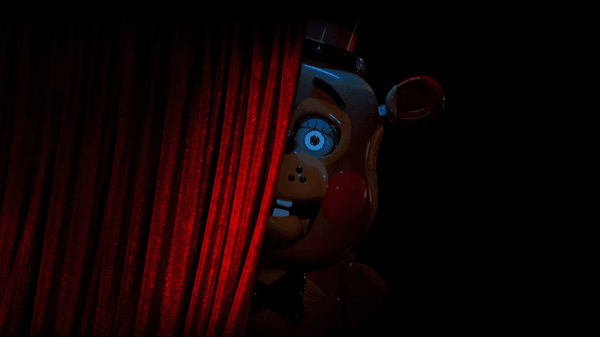
The animatronics from the first film appear here in their primordial version, flanked by new animated puppets in less than optimal condition. All to the delight of fans and the perplexity of those in the theater who perceive how the appearance of the fox or the animatronic child should be an important moment, but the film does nothing to make it so, unless you already know everything and enjoy the punctual arrival of every easter egg.
This second film is therefore a re-proposition of the first, starting with the cast. Not only are the actors the same, but the only substantial variation is that the young actress playing Abby (Piper Rubio) has grown so much that she looks like a teenager, while Vanessa (Elizabeth Lail) continues to be a theoretically ambiguous character who is given very little to do. Not being a gamer, the only real thrill I got was the appearance of Skeet Ulrich as a very slimy character who completes, in a sense, the reunion from the first Scream with Matthew Lillard. Not much, however, also because the film pauses his presence (introduced at the beginning) for almost the entire duration, resolving it haphazardly in the finale.
Freddy's return is less daring and more predictable
The main problem with Five Nights at Freddy’s 2 is continuing to believe that what made the game so popular works in cinema without adaptation. It's clear that this is a story made of atmospheres, of a complex narrative that mixes supernatural and horrific elements with a childlike and joyful imaginary, without shying away from violence. These are elements that lend themselves to cinema, but they must be mediated from one language to another. Scott Cawthon, however, seems primarily focused on dialoguing with himself, with his own work and with those who already appreciate it, writing characters who in 104 minutes never manage to acquire substance: what works in the game, where you embody a character and spend many hours with him, needs to be adjusted for the film.
The only one who remains vaguely interesting is Josh Hutcherson: partly due to the particular empathy he evokes (and which he has never exhausted since The Hunger Games), partly because Abby, Vanessa, and the other supporting characters are forced into absurd itineraries, from one side of the city to the other, which make an already confusing film even more so, lacking an internal economy. So much so that the one who comes out best of all – surprisingly – is Wayne Knight in the small role of a sadistic robotics professor: very caricatured, certainly, but capable of capturing better than anything else what makes Five Nights so loved and distinctive.
The attention to locations and animatronics does not compensate for the inability to construct a film that is not a glorified but less effective version of the video game. Particularly disappointing is Emma Tammi's choice to fall back on a more traditional and banal version of the horror component. Already in the initial sequences of the first chapter, a truly sinister violence was evoked (especially when associated with children) which here is exchanged for the most classic low-level jump scares. The intention, in her words, was to make this film scarier than its predecessor: a missed goal, not due to a lack of scary twists, but due to their extreme predictability, when Freddy, Chica, and the other animatronics could offer thrills of a different and more satisfying nature.
Score
Editorial team
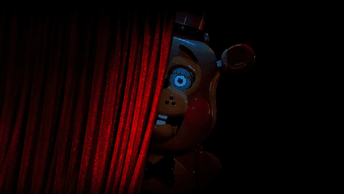
Five Nights at Freddy’s 2 continues to speak to fans of Scott Cawthon’s universe, disregarding being a good film
Five Nights at Freddy’s continues to cater exclusively to fans of the video game saga, focusing more on easter eggs and visual and narrative references to the video game it adapts than on any attempt to engage those unfamiliar with the story. In a sense, it does a disservice to everyone, fans and non-fans alike, because this un-transformative approach prevents the elements that made the saga's video games so popular from showing their potential on the big screen as well.
Similar articles