Aileen: The Story of a Serial Killer: A Standard True Crime on Netflix
The documentary takes us on a journey to discover the true story of serial killer Aileen Wuornos, previously portrayed in the film Monster (2003) starring Charlize Theron. Now on Netflix.
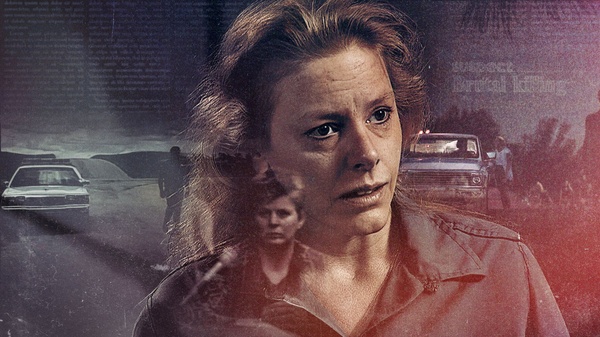


It's difficult now to find a new serial killer documentary that actually has something new to say. Nevertheless, true crime, both in its archival forms and in fictionalized adaptations, continues to captivate the streaming market audience and dominate Netflix charts, with more or less successful variations.
It is precisely in this seemingly saturated but ultimately always profitable context that Aileen: The Story of a Serial Killer, directed by Emily Turner and produced by the BBC Studios Documentary Unit in collaboration with NBC News Studios, is situated. An operation that promises to re-examine the case of Aileen Wuornos, the female serial killer who murdered seven men in Florida between 1989 and 1990, almost forty years after the events, through previously unreleased archival material and new interviews. A competent but emotionally ambiguous operation, which oscillates between the stated intent to add complexity to Wuornos's figure, and to understand her or not, and the persistent temptation to exploit her story for the media circus that the film itself claims to want to expose.
Aileen: Monster or Victim?
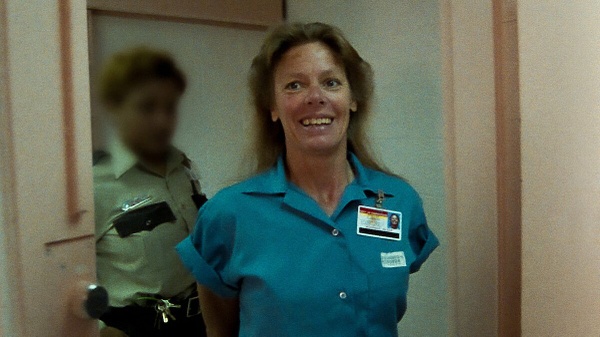
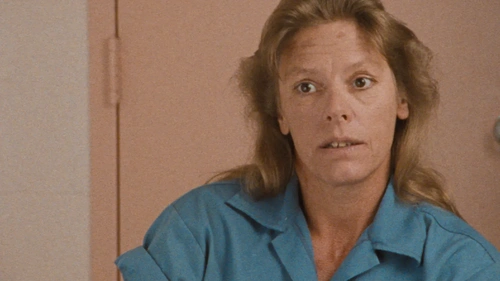
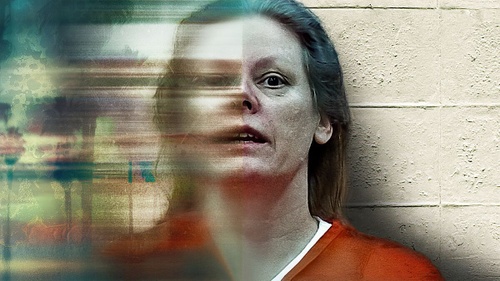
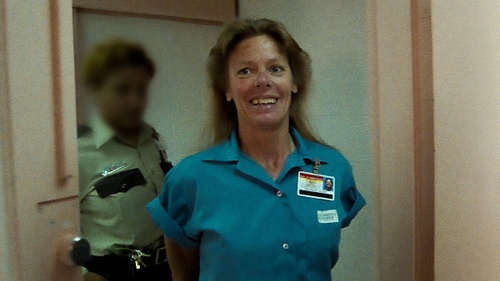
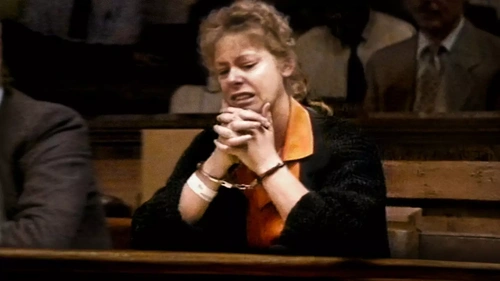
At the beginning of the viewing, we find grainy images of Aileen Wuornos in handcuffs, on death row awaiting her sentence. It's 1991, and America is grappling with a female serial killer, a murderous prostitute who subverts all gender stereotypes associated with serial murder. Newspaper headlines immediately turn her into a tabloid character, but the film's hundred minutes intend to deliver another story.
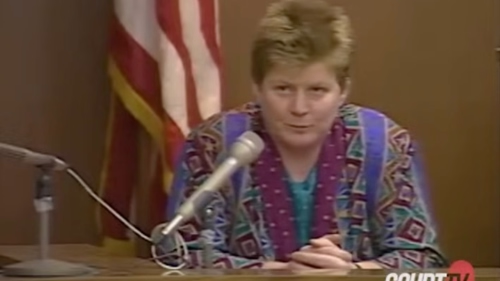
Who was Aileen Wuornos really before the justice system, the media, and popular culture turned her into a monster? This is the question the director tries to address, attempting to construct a layered portrait through audio interviews with those who knew her, archival footage, and especially Wuornos's own words, recorded at different stages of her life and the trial in which she was the protagonist.
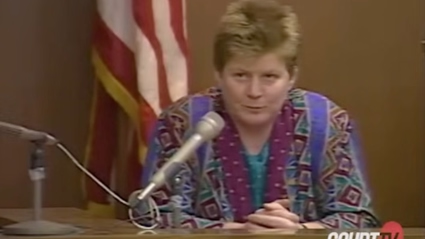
Born in Michigan in 1956, abandoned by her mother, adopted by alcoholic grandparents (although she denies this version), raped as a teenager and became pregnant with a child given up for adoption, kicked out of her home and forced into prostitution to survive. It's a resume of horror that the documentary presents with a wealth of detail, weaving a context that should help us, if not to justify, then at least to understand the causes of abnormal psychotic behaviors.
A Question of Balance
It must be said that it was not easy to approach a story already investigated on several past occasions: few perhaps will have seen Nick Broomfield's documentaries (Aileen Wuornos: The Selling of a Serial Killer from 1992 and Aileen: Life and Death of a Serial Killer from 2003) but the big screen adaptation Monster (2003) even saw its protagonist Charlize Theron, unrecognizable there, awarded an Oscar, thus reaching a very wide audience.
Here, the choice is a structure that alternates biographical chronology, analysis of the legal proceedings, versions with key characters, and meta-narrative reflections on American society.
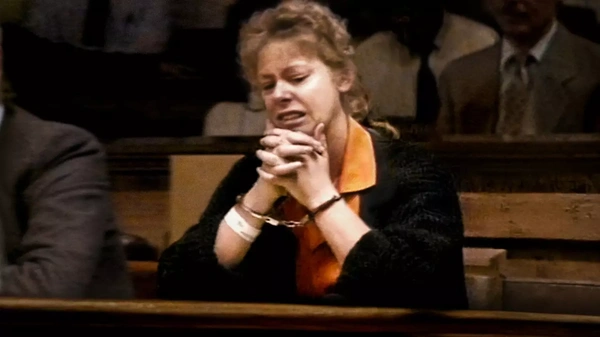
These various souls and subdivisions do not always effectively dialogue with each other, creating an editing that at times seems more like a collection of segments than a cohesive and flowing work, thereby limiting the emotional and shocking impact that such a dramatic story should have on the viewer.
Gallery
Score
Editorial team

Aileen: The Story of a Serial Killer: A Standard True Crime on Netflix
Between archival footage and interviews, Aileen: The Story of a Serial Killer is configured as a technically solid but conceptually ambiguous true crime documentary, afraid to take a clear stance and failing to adequately clarify the ambiguities of a figure who was certainly complex and tormented, first a victim and then an executioner. The portrait of Aileen Wuornos aims to be nuanced and reject easy categorizations, but this choice, while capable of raising doubts about the trial and the motivations of judges and public opinion, does not find adequate support from a poorly blended and unbalanced editing.
Similar articles