The Legend of Heroes: Trails Beyond the Horizon, the review of the JRPG that concludes the Calvard arc!
The concluding chapter of Calvard, with combat system peaks and revisitable graphics
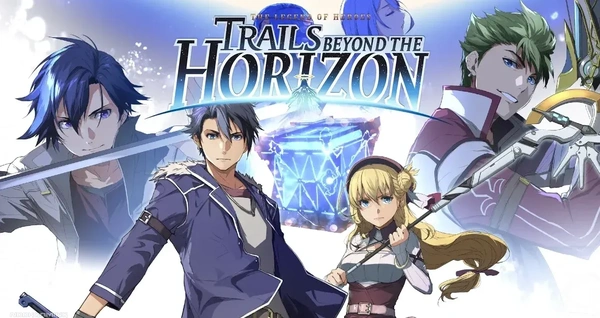


The Legend of Heroes: Trails Beyond the Horizon, the ambitions of the final chapter
The Legend of Heroes: Trails Beyond the Horizon, although it doesn't have numbers in its title, is the direct sequel to The Legend of Heroes: Trails Through Daybreak and The Legend of Heroes: Trails Through Daybreak 2 and has recently arrived on PC, Switch, Switch 2, PlayStation 4, and PlayStation 5. If you're interested in discovering what you'll find at the end of the Calvard cycle, you can't miss our review of The Legend of Heroes: Trails Beyond the Horizon, which we conducted after playing it on Sony's flagship console. Let's start with some key points: the The Legend of Heroes brand is a vast series of classic JRPGs that includes the "Trails" games, a much-loved and prolific "sub-series" consisting of several extremely interconnected narrative arcs.
Trails Beyond the Horizon is, in fact, the final chapter of Calvard, but it performs a narrative task that brings together stories and characters we have come to love in other cycles as well. Although Nihon Falcom titles have enjoyed several re-releases in recent years, it's understandable that newcomers might find it difficult to catch up on every game that forms this large and fascinating world, even though ideally, one should play a list of 12 titles to get a complete version. Knowing the Liberl cycle with the three Trails in the Sky, the Crossbell cycle, and especially the Erebonia cycle formed by the four Trails of Cold Steel is a significant plus for fully enjoying the title we are examining today.
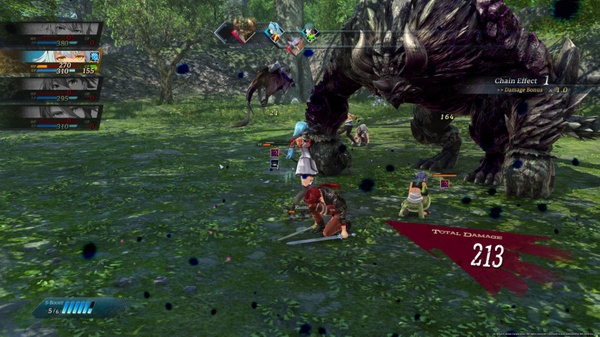
On the other hand, let's clarify immediately that Trails Beyond the Horizon is designed to be exactly what it is: the concluding episode of a trilogy with deep ties to a well-formed and extremely articulated universe. The message is clear, even if the development team has included a glossary where the main characters are introduced and various geopolitical factors are explained, prior knowledge is required. The archive we just mentioned cannot compensate for not having played some previous chapters; rather, it helps to review some concepts from past titles that might need a refresher. Van Arkride and his Arkride Solution are once again protagonists, along with a large group of companions that sees welcome returns directly from other narrative arcs, such as the legendary Rean Schwarzer and Kevin Graham.
The plot revolves around the first aerospace project from Calvard aiming to conquer the sky, in a mix of sociopolitical intrigues that will lead our heroes to find answers to questions rooted in previous narrative cycles like the aforementioned Cold Steel and Trails in the Sky, so much so that there will be three narrative lines dedicated to the groups of Van, Rean, and Kevin. The effort in the scripting phase is enormous, with a significant amount of text (all in English) describing the many aspects of the setting, plot, and characterization of all characters, to the point that in some situations, everything becomes overly verbose, however well-conceived and coherent.
The combat system that excels: is it the best of the Trails?
The structure is extremely traditional, alternating between exploration and combat phases, with the latter being playable in either action or turn-based mode (except in specific cases), exactly as in the two previous Trails Through Daybreak games. Generally, action combat is useful for streamlining phases with weaker enemies, while when in difficulty, it's better to switch to the turn-based combat system, keeping in mind that we can (almost) always freely switch between the two modes. Although refined, action combat is not particularly deep, even though there is the possibility of using special attacks and exploiting various abilities more fluidly than in the past.
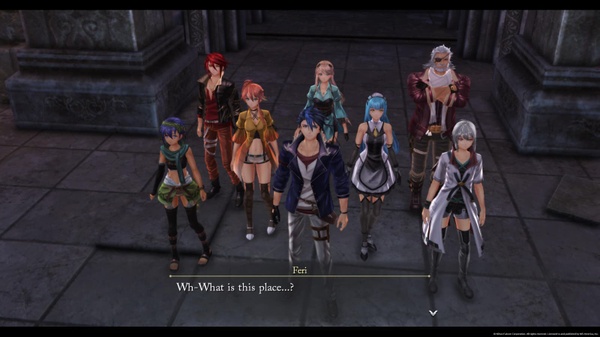
The highlight remains the turn-based mode which, now more than ever, is extremely deep, layered, and satisfying, rewarding players capable of planning and studying every situation, especially if you want to raise the difficulty level and enjoy everything that The Legend of Heroes: Trails Beyond the Horizon has to offer. As far as I'm concerned, the turn-based combat system of this title is capable of outperforming many more renowned products and also stands out compared to other episodes of the same saga, thanks to the great maturity achieved by the Nihon Falcom team.
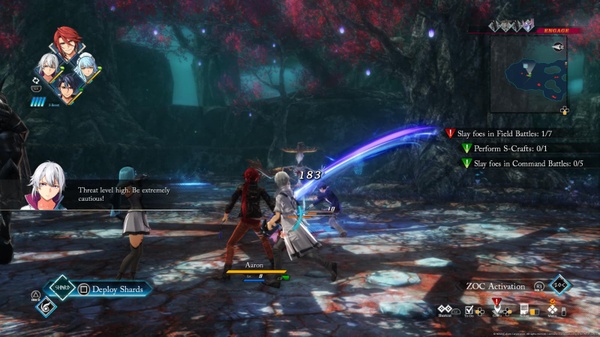
You enter the field with four characters, with the possibility of swapping them with the rest of the team on the "bench," and a timeline appears at the top of the screen indicating the order in which allies and opponents can attack. Once it's their turn, each character can move on the battlefield to reach favorable positions to launch an attack, act in combination with a companion, or evade an opponent's range. There are many actions to perform, ranging from classics like attack, defense, using items, to many commands that can turn the tide of our battle.
Physical abilities, magical arts, and devastating S-Craft moves can make the difference between defeat and victory if used at the right moment. The main ingredients are the synergy between protagonists, many effects to activate, and the possibility of implementing strategies related to ZOC, i.e., time slowdown, which we can use by filling a specific indicator. For example, you might fight a particularly powerful enemy using turn-based mode and manage to stun them; at that point, you could switch to real-time combat, activate ZOC, and take advantage of the opportune moment to hit them repeatedly, gaining a significant advantage, but this is just one of the various strategies you can implement, thanks to the variety of commands and the unique characteristics of the various characters at your disposal.
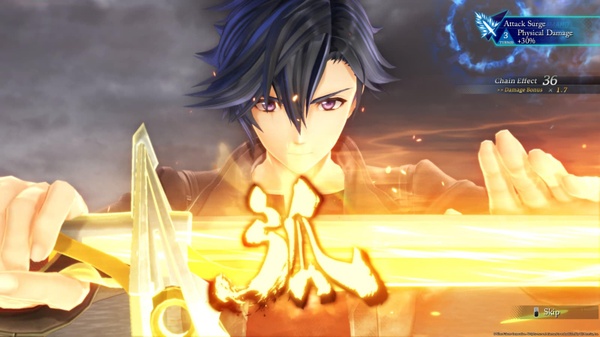
Once again, it's very important to know how to manage the Orbment, a device for each character where quartz can be inserted, crystals with multiple uses that grant bonuses, passive abilities, magic, and special attacks. The quartz system allows combining various crystals to fill specific lines of the Orbment. With proper attention, very powerful magic can be unlocked or one's stats can be greatly improved, with an even more flexible and customizable system than in the past. In short, the combat system of The Legend of Heroes: Trails Beyond the Horizon not only maintains the good aspects of previous episodes but manages to improve even further.
Technical department: outdated graphics, convincing audio
As usual, however, the graphics department disappoints, once again a sore point for Nihon Falcom productions, demonstrating how the available budget does not keep pace with the other components of the game. The visual level almost takes us back to the PlayStation 3 era, and despite it being clear that there is good design for every element, the rendering remains stuck in the past, with stiff animations, poor textures, and poorly detailed models, with the exception of some bosses. There is the option to choose between graphics mode and performance, and I strongly advise choosing the latter, as the graphical impact remains similar in both cases, but at least you can have good fluidity around 60 FPS.
The audio is much better, with the usual excellent Japanese voice acting and the English one proving more than sufficient, but compliments must also be paid to the music, where despite some rather anonymous pieces, there are some themes that immediately stick in your mind and accompany us throughout the game. Longevity easily reaches the fateful 100 hours, especially if you decide to play at higher difficulty levels (with a natural need for grinding) and if you dedicate yourself to the many side missions and activities. I absolutely recommend not rushing and taking all the necessary time to properly explore the game world, as you will have several surprises and can delve into many factors of the general lore. It's impossible not to mention the Grim Garten, an optional dungeon where you can stock up on experience points and very useful items, and which requires some effort to complete.
In summary, The Legend of Heroes: Trails Beyond the Horizon is an excellent JRPG, but graphically outdated, suitable only for those with adequate knowledge of the plot and with a quantity of text that might intimidate some gamers, especially if they are not very accustomed to the English language. For those who love the Trails, Beyond The Horizon is a must-play, offering very interesting plot twists about the game world, closing an era, and opening the door to the future of this incredible The Legend of Heroes saga. If you are a fan of this saga, Trails Beyond the Horizon is an event you cannot miss!
Score
Editorial team
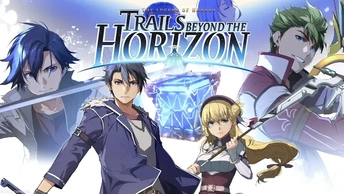
The Legend of Heroes: Trails Beyond the Horizon, the review of the JRPG that concludes the Calvard arc!
The Legend of Heroes: Trails Beyond the Horizon not only epically concludes the Calvard narrative arc but also marks a turning point in the shared storytelling of the entire Trails universe. The events are well-narrated, as always happens with this brand, with significant plot twists that shed new light on much of what we knew until today about this engaging setting. Much attention is given to cast management and countless lines of text that make the world even more vibrant, but the absence of the Italian language could be a significant hurdle for non-English speakers, with the added point that some passages have too many dialogues, risking breaking the overall rhythm. The gameplay is increasingly refined and satisfying, with the turn-based combat system shining brightly and reaching new heights of depth. The music does not disappoint, and some tracks immediately stick in your head, while the graphics remain the Achilles' heel, once again looking like they came from a project two generations old. Of course, no one plays Nihon Falcom titles for their appearance, but I keep wondering when, finally, I will see this team work with an adequate budget, and to this day, I've lost count of how many reviews of their games I've asked myself this question. The fact remains that The Legend of Heroes: Trails Beyond the Horizon is an excellent JRPG that more than adequately concludes a long narrative arc and lays the groundwork for the future of a saga that cannot go unnoticed.
Similar articles

The Social – The Price of Truth: The Review
The Blood of Dawnwalker, the review of the action RPG that promises freedom and fresh blood!

The Legend of Heroes: Trails from Zero & Trails to Azure - il trailer di lancio